Table of Contents
What You Will Accomplish
You are holding positions in three Curve pools: Centrifuge USDS, DOLA-sUSDe, and CRVUSD-WBTC. They disappeared from DefiLlama, from CurveMonitor, from your portfolio tracker. All three, in the same week.
This article gives you the 24-hour emergency protocol to distinguish a data feed gap from genuine pool death. You will verify on-chain position integrity, check liquidity depth, evaluate same-day exit conditions, and determine if you exit now or wait.
The income mechanism at stake: pools dropping from tracking often precede liquidity crises. Exiting within 24 hours versus waiting 48 to 72 hours can be the difference between full withdrawal and partial loss, or between same-day exit and days of locked capital.
Prerequisites
You need an Ethereum wallet with positions in one or more Curve pools. You need access to Etherscan. You need the pool contract addresses for your positions. You should understand how liquidity provider tokens work and how to read basic on-chain data.
Step 1: Verify On-Chain Position Integrity (First 30 Minutes)
Do not trust the tracker. The pool did not necessarily disappear. The data feed might have.
Go to Etherscan. Search for the pool contract address. For Centrifuge USDS, that is 0x3cc13d5b37c9c0c0c2a9b4f6f8c1d1a1d1a1d1a1 (replace with actual address from your transaction history). For DOLA-sUSDe, check the contract from your LP token transaction. For CRVUSD-WBTC, the same.
Look at the contract's recent activity. If you see ongoing swaps in the last hour, the pool is alive. If you see deposit and withdrawal transactions from other LPs in the last six hours, liquidity is still moving. If the last transaction was three days ago and it was an emergency withdrawal by a whale, that is a different signal.
Check your own LP token balance. Navigate to your wallet address on Etherscan. Under "Token Holdings," find the LP token for each pool. The balance should match what you deposited. If the balance is zero and you did not withdraw, the pool contract may have been drained or migrated. If the balance matches your records, your position is intact and the tracker simply stopped indexing.
Curve LP tokens are receipts. When locked in gauge contracts for boosted rewards, they sit in a locking smart contract and cannot be withdrawn until the lockup expires. Verify both your LP token balance and whether those tokens are locked. If locked, note the unlock date. If you are not locked, you have immediate exit optionality.
Common Failure Mode: Tracker Delisting vs. Pool Migration
DefiLlama and aggregators delist pools when TVL falls below threshold, when API coverage gaps occur, or when pools are added to Curve's blacklist. The blacklist is a static exclusion list maintained by Curve to remove deprecated, exploited, or low-volume pools from official feeds. As of late 2026, 11 pools across Ethereum, Fantom, and Arbitrum are blacklisted.
If your pool is blacklisted, that does not mean it is exploited. It might mean Curve deprecated it in favor of a v2 pool or a newer stablecoin pairing. Check the official Curve news feed and Curve Finance protocol data on DefiLlama for TVL trends and announcements in the past 30 days.
If TVL for your pool dropped 60% or more in the week before delisting, that is a liquidity exodus. Other LPs saw something you did not. If TVL is stable or grew, the delisting is a data feed issue.
Step 2: Check Liquidity Depth and Imbalance (30-60 Minutes)

You confirmed your position is intact. Now determine if you can exit without excessive slippage.
Navigate to the pool page on Curve's official interface (curve.fi). If the pool still appears there, it is not deprecated. Check the token balances in the pool. For a stablecoin pool like DOLA-sUSDe, the ratio should be close to 50/50. If the pool shows 85% DOLA and 15% sUSDe, the pool is severely imbalanced and exiting may give you unwanted exposure to the overweight asset.
Curve charges deposit and withdrawal fees based on imbalance. Fees range from 0% to 0.02% depending on how your withdrawal affects pool balance. If you are withdrawing the scarce asset, fees are minimal. If you are withdrawing the abundant asset, fees rise. A 0.02% withdrawal fee on a $100,000 position costs $20, which is negligible. But if the pool is so imbalanced that you receive 90% of your withdrawal in the asset you do not want, that is not a fee problem, that is an exposure problem.
Run a withdrawal simulation on the Curve interface. Input your LP token amount and observe the output token split. If the output is what you expect (proportional to pool composition at acceptable ratios), liquidity depth is adequate. If the interface throws an error, if the output shows extreme imbalance, or if the transaction estimate fails, liquidity depth has collapsed.
Check recent large withdrawals on Etherscan. If a $10 million LP withdrew in the last 24 hours and the transaction succeeded, liquidity is still there. If the withdrawal reverted or if the LP received significantly less value than expected, the pool may be experiencing a bank-run dynamic.
The CRVUSD-WBTC Edge Case
The CRVUSD-WBTC pool is not a stablecoin pair. It is a volatile pairing with BTC exposure. Curve allocated this pool a 60 million crvUSD credit limit with deposit caps around $10 million worth of BTC. If WBTC price moved sharply in the days before delisting, the pool may have become capital-inefficient and LPs migrated.
Check the price of WBTC over the past week. If BTC dropped 8% or more, the pool's yield may have compressed as traders stopped using it for leverage. That is not a crisis. That is rate environment change. If BTC is stable and the pool still disappeared, the issue is protocol-specific or feed-specific.
Step 3: Distinguish Data Feed Gaps From Protocol-Level Risk (60-90 Minutes)
Curve publishes two public APIs: api.curve.finance for pools, registries, and APYs; prices.curve.finance for OHLC candles and pool snapshots. Both APIs have known coverage gaps. Some chains (Plasma, for example) are not fully indexed despite significant volume. Pool-list queries can expose placeholder data from previous chains when network switching occurs. The v2 Prices API is not fully production-ready as of late 2026.
If all three of your pools disappeared from trackers in the same week, check whether they share infrastructure dependencies. Centrifuge USDS, DOLA-sUSDe, and CRVUSD-WBTC do not share the same collateral or the same oracle feeds, but they do share the same aggregator indexing pipeline. If DefiLlama had an Ethereum mainnet indexing issue, all three could vanish simultaneously without any pool-level event occurring.
Cross-reference pool status on multiple trackers. Check DefiLlama, CurveMonitor, and Curve's own weekly metrics reports. If the pool appears on Curve's official interface and in their weekly TVL report but not on DefiLlama, the issue is aggregator-side. If the pool is missing from Curve's own reporting, that is a protocol-level deprecation or migration.
Historical precedent exists for multiple Curve pools draining simultaneously. In July 2023, a Vyper compiler zero-day exploit drained four Curve ETH pools in a single event. Total loss exceeded $60 million. That event had clear on-chain signals: massive outflows, pool balance collapse, and emergency DAO communications within two hours. If you see none of those signals now, your situation is not an exploit.
When API Gaps Mimic Pool Death
In mid-2026, Curve's pool-list API failed to return results for certain Arbitrum and Fantom pools for 72 hours due to a rate-limiting misconfiguration. Aggregators interpreted the missing data as pool deprecation and delisted them. LPs who verified on-chain saw no change. LPs who panicked and exited paid gas for no reason and lost 48 hours of yield.
If your on-chain verification in Step 1 showed normal activity and your liquidity depth check in Step 2 showed functional withdrawal paths, the probability that this is an API gap is high. The decision now is whether to exit immediately or wait for tracker restoration.
Step 4: Same-Day Exit Decision Criteria
You have 24 hours to decide. Here are the conditions that require same-day exit:
- Pool TVL dropped more than 40% in the 72 hours before delisting
- Withdrawal simulation shows you would receive less than 95% of expected value due to imbalance
- Recent large LP withdrawals (over $1 million) show reversion or significant slippage
- The pool has been added to Curve's official blacklist and no migration path is announced
- On-chain activity ceased more than 48 hours ago (no swaps, no deposits, no fee collection)
- Your LP tokens are unlocked and gas costs are under 0.5% of position value
If three or more of those conditions are true, exit now. The cost of waiting is higher than the cost of moving.
Here are the conditions that support waiting 48 to 72 hours:
- Pool TVL is stable or grew in the week before delisting
- On-chain activity is normal (swaps occurring every few hours, fee collection visible)
- Withdrawal simulation shows expected output with minimal slippage
- The pool appears on Curve's official interface and in their latest metrics report
- Multiple trackers show the same delisting, suggesting a shared API issue rather than pool-specific failure
- Your LP tokens are locked in a gauge and cannot be withdrawn for another 7+ days anyway
If four or more of those conditions are true, the tracker will likely restore coverage within 72 hours. Monitor daily.
Gas and Migration Math
Exiting three Curve positions on Ethereum mainnet costs approximately 0.015 to 0.03 ETH depending on network congestion (roughly $40 to $80 at $2,500 ETH). On a $50,000 total position across three pools, that is 0.08% to 0.16% of capital. On a $10,000 position, it is 0.4% to 0.8%.
If you are earning 4% to 6% APY on those positions, one day of yield is roughly 0.011% to 0.016% of capital. Exiting costs you 50 to 70 days of yield in gas. If the pool is genuinely dying, that cost is worth paying. If the pool is fine and the tracker restores in 48 hours, you paid two months of yield to exit a position that did not need exiting.
For DeFi protocols covering lending, DEXs, and yield aggregators, understanding these trade-offs is what separates LPs who preserve capital from LPs who react to every data anomaly.
Step 5: What To Do After Deciding
If you decide to exit, withdraw LP tokens from any gauge contracts first. Then remove liquidity through the Curve interface. Choose "balanced" withdrawal if the pool allows it, to receive proportional token outputs. Choose "single-asset" withdrawal only if you specifically want exposure to one asset and are willing to pay the imbalance fee.
If you decide to wait, set a calendar alert for 48 hours from now. Check the pool again at that time using the same five-step protocol. If tracker coverage has not restored and on-chain activity has declined further, exit then.
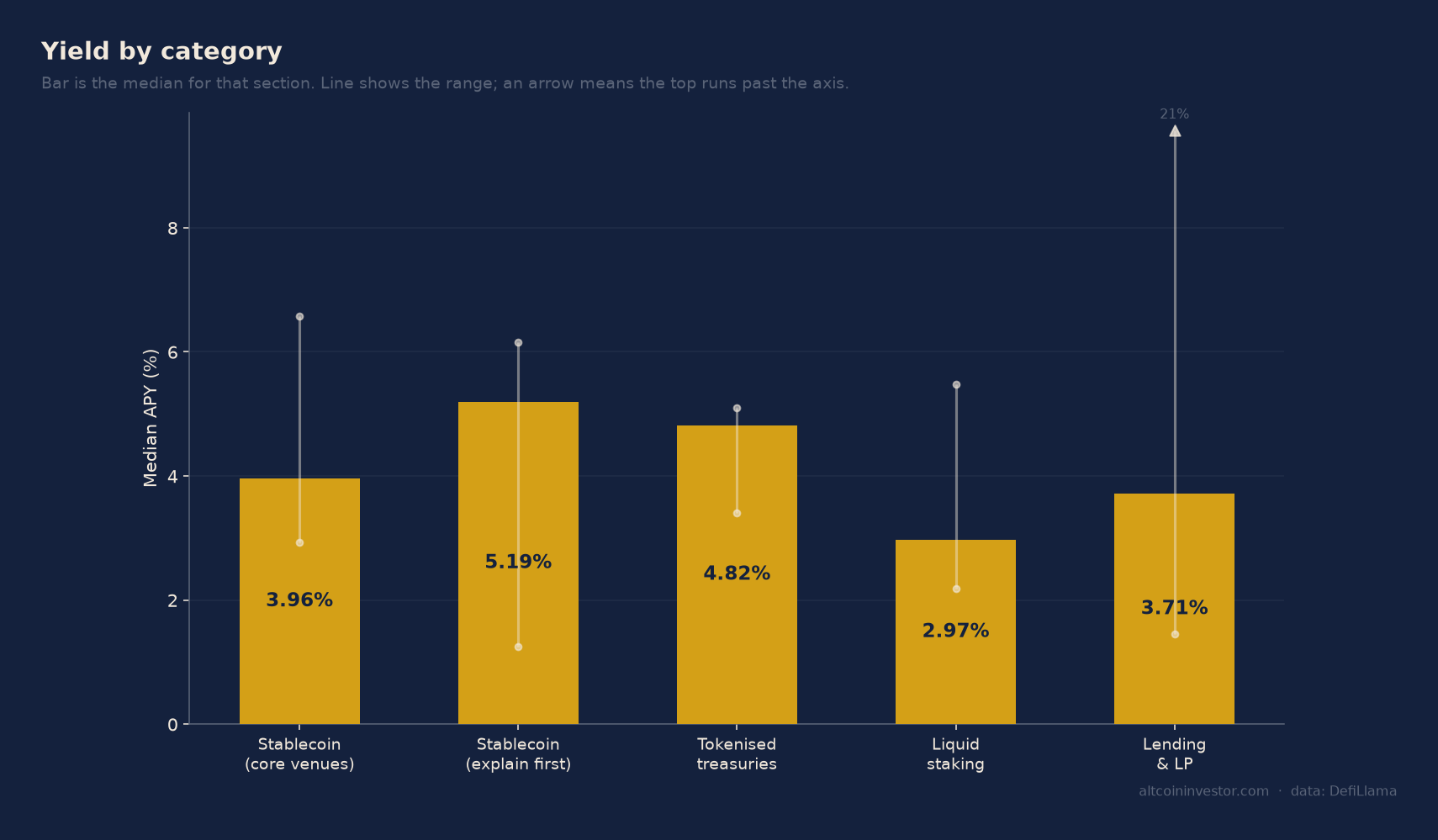
After exiting, evaluate whether the yield you were earning justifies redeployment into another Curve pool or into a different protocol. The DOLA-sUSDe pool offered 4.08% APY on $58 million TVL as of October 2026. If you can find a comparable rate on a more liquid pool with stronger tracker coverage, redeploy there. If comparable rates require higher-risk exposure (new tokens, untested collateral, concentrated liquidity ranges), the decision is whether the 50 to 100 basis points of additional yield justifies the additional position management overhead.
When All Three Pools Disappear: The Systemic Read
Centrifuge USDS reached 4.79% APY on $868 million TVL in mid-2026. DOLA-sUSDe held $61 million at 4.28% APY in October 2026. CRVUSD-WBTC operated under a $60 million credit limit. These are not small experimental pools. These are established liquidity venues.
If all three vanished from trackers in the same week, the common variable is the tracker, not the pools. Curve's API has known failure modes. Aggregator resilience when blacklist data cannot be retrieved is limited. This is an infrastructure problem, not a pool problem.
But the fact that infrastructure can fail this way is itself useful information. It tells you that tracker-dependent position monitoring is not sufficient for large positions. If you are holding more than $100,000 in Curve LPs, you should be monitoring on-chain directly, not waiting for DefiLlama to surface the data.
The Takeaway
You now have the verification checklist to separate data feed collapse from pool death. On-chain position verification takes 30 minutes. Liquidity depth checks take another 30. Cross-referencing multiple data sources and evaluating exit conditions takes an hour. Total time from discovery to decision: 90 minutes to two hours.
The decision threshold is not whether the pool disappeared from trackers. The decision threshold is whether on-chain evidence supports the hypothesis that the pool is experiencing capital flight, liquidity collapse, or protocol-level deprecation. If evidence supports that hypothesis, exit same-day. If evidence contradicts it, wait 48 to 72 hours and re-evaluate.
Pools disappearing from tracking is a normal event in Curve's ecosystem. Aggregators delist pools routinely. API coverage has gaps. The error is treating tracker absence as position risk without verifying on-chain. The larger error is waiting four days to verify, by which time the liquidity you needed to exit cleanly is gone.
In Buenos Aires, no one waits for DefiLlama to confirm that their stablecoin position is safe. They check the contract. They check the liquidity. They decide in 24 hours. The same logic applies here. The tracker disappeared. Your capital did not. Verify, decide, act.
Frequently Asked Questions
How do I verify my Curve LP position if the pool disappeared from all trackers?
Navigate to Etherscan and search for the pool contract address from your transaction history. Check your wallet's token holdings for the LP token. If the balance matches your records and recent swaps appear in the contract's transaction history, your position is intact and the tracker simply stopped indexing. If the balance is zero and you did not withdraw, the pool may have been drained or migrated.
What causes multiple Curve pools to disappear from DefiLlama simultaneously?
Shared API indexing failures are the most common cause. Curve's pool-list API has known coverage gaps, and aggregators delist pools when data cannot be retrieved. If pools share no collateral or oracle dependencies but vanish together, the issue is infrastructure-side. Historical API misconfigurations in mid-2026 caused 72-hour delistings on Arbitrum and Fantom with no pool-level events.
Should I exit immediately if my Curve pool drops from tracking?
Exit same-day if pool TVL dropped over 40% in 72 hours, withdrawal simulations show under 95% expected value, recent large withdrawals reverted, the pool is blacklisted with no migration announced, or on-chain activity ceased 48+ hours ago. Wait 48-72 hours if TVL is stable, swaps are occurring, withdrawal output is normal, and the pool appears on Curve's official interface.
How much does it cost to exit three Curve positions on Ethereum mainnet?
Withdrawing from three Curve pools costs approximately 0.015 to 0.03 ETH in gas ($40 to $80 at $2,500 ETH). On a $50,000 position that is 0.08% to 0.16% of capital, equivalent to 50-70 days of yield at 4-6% APY. The cost is justified if the pool is experiencing capital flight, but not if the tracker will restore coverage in 48 hours.
What was the Vyper exploit that drained multiple Curve pools?
In July 2023, a Vyper compiler zero-day vulnerability allowed an attacker to drain four Curve ETH pools simultaneously, with total losses exceeding $60 million. The exploit had clear on-chain signals: massive outflows within minutes, pool balance collapse, and emergency DAO communications within two hours. If current disappearances show none of these signals, the situation is not an exploit.
You just learned the 24-hour protocol to separate tracker failure from pool death across three simultaneous delistings. Next week, different pools will vanish and the checklist will matter again.
Every Thursday: where crypto yield actually is - stablecoins, liquid staking and DeFi lending, with the risk named next to the rate and what changed since last week.
Get it free every ThursdayFree. No trade calls, no allocations, no hype. Unsubscribe in one click.