
Table of Contents
What Liquid Staking Tokens Are and Why They Exist

Liquid staking tokens are receipt tokens representing staked ETH positions in smart contract-managed validator pools. You deposit ETH into a protocol like Lido, Rocket Pool, or Coinbase. The protocol delegates your ETH to a node operator who runs a validator. You receive a token in return: stETH, rETH, or cbETH. That token represents your claim on the underlying staked ETH plus accrued rewards.
The purpose is simple. Standard Ethereum staking locks your capital. You cannot trade it, borrow against it, or use it as collateral. Liquid staking tokens solve this. You hold a tradable asset that accrues staking rewards while remaining liquid. You can swap LSTs on DEXs, deposit them into lending protocols like Aave, or use them as collateral in leveraged positions. The staking yield continues to accrue while your capital remains available.
As of mid-2026, approximately 14.4 million ETH is deployed across liquid staking protocols, representing 36% of all staked ETH. Total LST TVL stands at $42.09 billion. The base staking APR across 897,000 active validators has compressed to 2.78%, with MEV rewards adding another 0.5 to 1%. After protocol fees, net APRs range from 2.0 to 3.0%. This is the current yield baseline for ETH liquid staking.
How Each LST Represents Your Staked Position
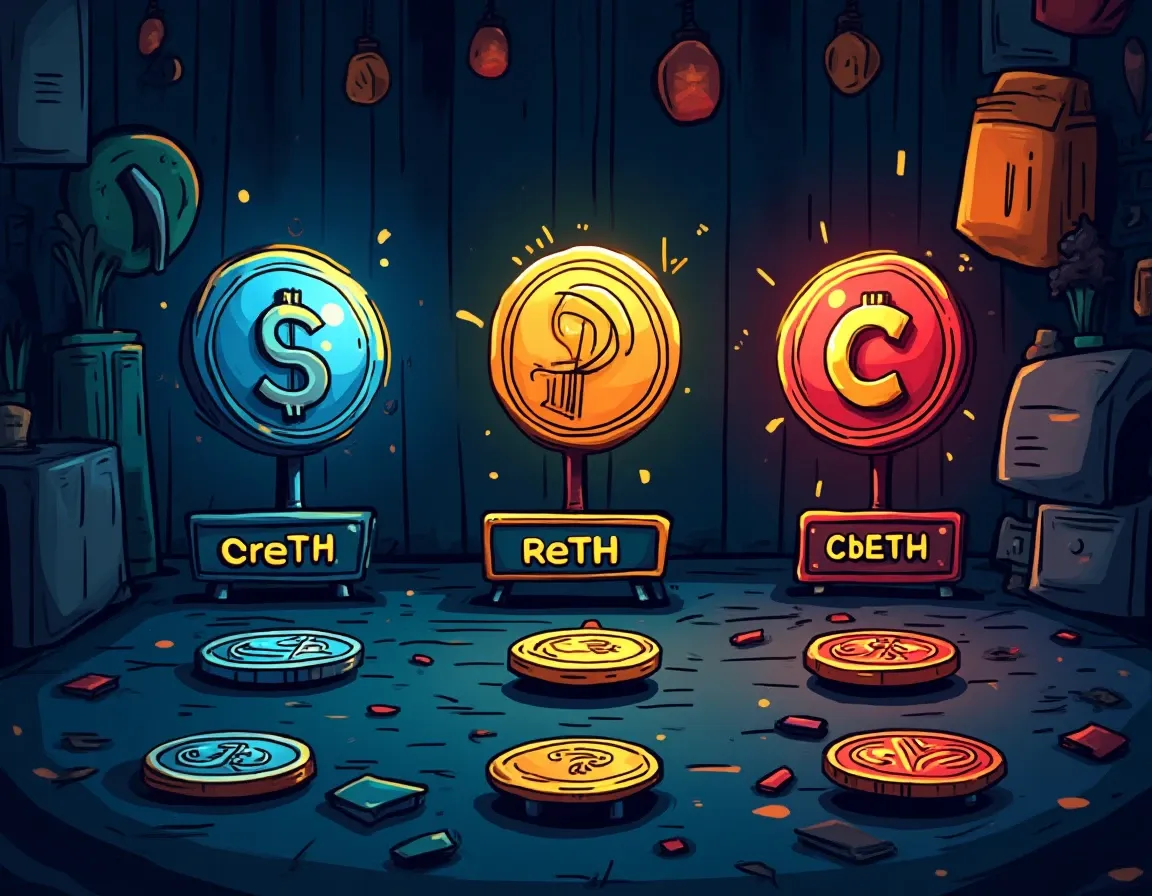
Liquid staking tokens use two distinct mechanisms to track your rewards. The difference matters for tax reporting, smart contract integration, and day-to-day balance tracking.
Rebasing Tokens: stETH
Lido's stETH rebases daily. You deposit 1 ETH, you receive 1 stETH. As validators earn rewards, your stETH balance increases. If validators earn 0.008 stETH in rewards overnight, your balance grows from 1.000 to 1.008 stETH by morning. The token count changes to reflect accrued yield.
This creates a continuous stream of token increases, which some tax professionals treat as daily taxable income events. The conservative tax position views each rebase as ordinary income at the moment the balance ticks up. This is unsettled law. The IRS has not ruled on rebasing token mechanics. If you hold stETH, track daily balances and consult a crypto tax professional before filing.
Value-Accruing Tokens: rETH and cbETH
Rocket Pool's rETH and Coinbase's cbETH do not rebase. Your token count stays constant. Instead, the redemption ratio between the LST and ETH increases as rewards accrue. You deposit 1 ETH, you receive roughly 0.95 rETH or cbETH at current exchange rates. Six months later, that 0.95 token redeems for 1.025 ETH because the protocol redemption rate has climbed.
The tax implication differs. No daily income events occur. All reward recognition defers to the moment you sell or redeem the token, at which point you report capital gains on the appreciation. This structure simplifies record-keeping but does not eliminate tax liability. You still owe tax on the gain when you exit.
Wrapped stETH (wstETH)
Lido also offers wstETH, a wrapped version of stETH that converts the rebasing token into a value-accruing token. You lock stETH into a wrapper contract and receive wstETH at the current exchange rate. wstETH behaves like rETH: fixed token count, rising redemption value. Many DeFi protocols prefer wstETH over stETH because rebasing tokens break certain smart contract assumptions about static balances.
Comparing stETH, rETH, and cbETH: Yields, Fees, and Decentralization

The three largest LSTs occupy different points on the decentralization, liquidity, and fee spectrum. Here is the mechanism-level comparison.
Lido (stETH)
Lido launched in December 2020 and dominates liquid staking with approximately 28% of all staked ETH. Its 10% protocol fee leaves depositors with a net APR of 2.16% as of mid-2026. stETH has the deepest DeFi integration, accepted across more than 100 protocols as collateral, liquidity pairs, and yield vault deposits. This liquidity advantage matters during market stress. When you need to exit, stETH offers the tightest spreads and deepest order books.
The decentralization trade-off: Lido delegates to a curated set of 30 to 40 professional node operators. This is more centralized than Rocket Pool's permissionless model but more decentralized than Coinbase's single-entity operation. Lido has passed multiple audits and maintains an active bug bounty program. The smart contract risk is low but nonzero. You are trusting the Lido protocol, the node operator set, and the Ethereum staking contract itself.
For current TVL and historical performance data, reference Lido's DefiLlama page.
Rocket Pool (rETH)
Rocket Pool operates a permissionless node operator model. Anyone who deposits 16 ETH (instead of the standard 32 ETH) and stakes 10% of that value in RPL tokens can run a Rocket Pool minipool. This creates a larger, more decentralized validator set: approximately 3,900 independent node operators as of 2026. The protocol charges a 14% fee on staking rewards, split between node operators and rETH holders, leaving rETH depositors with a net APR slightly lower than Lido's.
Rocket Pool holds $1.32 billion in TVL, a fraction of Lido's scale. This translates to lower liquidity in secondary markets. If you need to swap a large rETH position during a liquidation event, expect wider spreads than stETH. The protocol has been audited multiple times and is considered the most decentralized ETH liquid staking option available in 2026.
Coinbase (cbETH)
Coinbase launched cbETH in August 2022. It is a centralized liquid staking product operated by a publicly traded U.S. exchange. Coinbase charges 25% of staking rewards, the highest fee among the three options, leaving cbETH holders with a net APR of 2.12%. The advantage is regulatory clarity and institutional custody. If you already hold ETH on Coinbase and want one-click liquid staking with custodial guarantees, cbETH offers that.
The decentralization trade-off is total. Coinbase controls the validators. You trust a single entity. If Coinbase faces regulatory enforcement, smart contract bugs, or operational failures, cbETH holders bear that risk. Liquidity for cbETH is moderate, better than smaller LSTs but behind stETH and rETH.
When to Choose Each
Choose stETH if you want maximum liquidity and plan to use your LST as DeFi collateral. Choose rETH if you prioritize decentralization and accept slightly lower liquidity. Choose cbETH if you value custodial guarantees and already operate within the Coinbase ecosystem. For a detailed side-by-side analysis, see Lido vs Rocket Pool: Which Liquid Staking Protocol In 2026?
The Risks: Depeg, Smart Contract Failures, and Tax Uncertainty
Liquid staking tokens carry three categories of risk that differ from holding plain ETH. Each has materialized in recent history. You need to verify that you understand and accept these risks before deploying capital.
Depeg Risk
LSTs trade on secondary markets. During normal conditions, stETH, rETH, and cbETH trade near 1:1 parity with ETH. During market stress, that parity breaks. In June 2022, during the Three Arrows Capital collapse and the Celsius liquidation cascade, stETH depegged approximately 7% below ETH on Curve and Uniswap. Holders who needed liquidity immediately took a 7% loss to exit, even though the underlying staking position remained whole.
The mechanism behind depeg events: forced liquidations create one-sided sell pressure. Leveraged positions holding stETH as collateral get liquidated. Liquidators dump stETH on DEXs. Liquidity dries up. Price dislocates from redemption value. This is not a theoretical scenario. It happened, and it can happen again. During the next major deleveraging event, expect LSTs to trade below par.
Mitigation: hold LSTs without leverage. If you borrow against stETH, you risk liquidation during a depeg event even if the underlying Ethereum staking position is healthy. The protocol does not care that stETH will eventually return to parity. It liquidates based on current market price.
Smart Contract Risk
Every LST depends on audited but unproven smart contracts. Lido, Rocket Pool, and Coinbase have all passed multiple audits. Audits reduce risk but do not eliminate it. Undiscovered vulnerabilities exist in battle-tested code. A critical bug in Lido's staking contract could freeze withdrawals or allow an attacker to drain funds. The same applies to Rocket Pool and Coinbase contracts.
The track record matters. Lido and Rocket Pool have operated without major exploits since 2020 and 2021, respectively. cbETH has operated since 2022. None have suffered a contract-level loss of funds. This history provides some confidence but no guarantee. You are accepting smart contract risk in exchange for liquidity.
Withdrawal Queue Risk
Most LST protocols offer protocol-level unstaking: you return your LST, enter a withdrawal queue, and receive ETH after a waiting period. Queue length varies by protocol and network congestion. During periods of mass exit demand, queues extend to days or weeks. If you need immediate liquidity, you must exit via DEX swap and accept market price, including any depeg discount.
The dual-exit option is important. During stress, DEX exits may offer faster liquidity than protocol queues, but at a cost. During calm markets, protocol redemption usually offers better pricing than DEX swaps. Check both routes before exiting a large position.
Tax Uncertainty
The IRS has never ruled on whether swapping ETH for stETH constitutes a taxable exchange. The conservative position treats it as a crypto-to-crypto trade, triggering a taxable event at the moment of deposit. The alternative position treats it as a same-asset transformation, deferring all tax to final disposal. Nobody knows which interpretation the IRS will adopt.
Similarly, rebasing token rewards (stETH daily balance increases) may constitute daily ordinary income under the conservative view, while value-accruing tokens (rETH, cbETH) defer all gains to disposal as capital gains. This distinction matters. If you hold stETH and it rebases 3% over a year, you may owe ordinary income tax on that 3% even if you never sold. If you hold rETH and it appreciates 3%, you owe capital gains tax only when you exit.
Recommendation: track all LST deposits, daily balances (for rebasing tokens), and exits. Consult a crypto tax professional before filing. Do not rely on general guidance. The law is unsettled.
Restaking and Liquid Restaking Tokens: Adding a Second Layer
Restaking extends the liquid staking model by allowing already-staked ETH to secure additional protocols through EigenLayer. You deposit stETH or native ETH into EigenLayer, opt into one or more actively validated services (AVSs), and receive a liquid restaking token (LRT) representing your restaked position. The yield stack becomes: base staking rewards (2.78%) plus AVS rewards (variable, 1 to 7%) minus protocol fees.
EigenLayer dominates the restaking market with approximately 94% share. Its TVL peaked near $19.7 billion in 2024 but contracted to $4.3 to $8.9 billion through mid-2026 as slashing went live in April 2025 and early users rotated out. Restaking adds yield and adds risk. You accept smart contract risk at two protocol layers (the LST layer and the restaking layer), slashing exposure from AVS failures, depeg risk on both the LST and the LRT, and withdrawal queue risk at both levels.
The extra 4 to 10% APY is real. The risk stacking is also real. If you understand liquid staking risk and want additional yield, restaking is the next step. If you are new to LSTs, master the base layer before adding restaking complexity.
How to Verify Current LST Yields and On-Chain State
Do not trust marketing claims. Verify yields and TVL using on-chain data and protocol dashboards.
For Lido: check the official Lido dashboard at lido.fi. It displays current staking APR, protocol fee, net APR, and total staked ETH. Cross-reference TVL with DefiLlama's Lido page to confirm. Track the stETH:ETH exchange rate on Curve's stETH/ETH pool to monitor depeg risk in real time.
For Rocket Pool: visit the Rocket Pool dashboard at rocketscan.io or the official site at rocketpool.net. Verify current rETH exchange rate, total rETH supply, and net APR after node operator fees. Compare TVL with DefiLlama's listing.
For Coinbase cbETH: check Coinbase's staking page for current APR and fee structure. Verify cbETH:ETH exchange rate on Uniswap or Curve. cbETH liquidity is lower than stETH or rETH, so monitor slippage on larger swaps.
For all LSTs: track the spread between protocol redemption rate and DEX market price. A widening spread signals stress. A tight spread signals normal market conditions.
When to Use LSTs vs Direct Staking
Direct staking makes sense if you hold 32 ETH or more, understand validator operation, and have no need for liquidity. You earn the full base APR (2.78%) plus MEV rewards without paying protocol fees. You accept technical complexity, hardware requirements, and slashing risk in exchange for maximum decentralization and maximum yield.
Liquid staking makes sense if you hold less than 32 ETH, want liquidity, or plan to use your staked ETH as DeFi collateral. You earn 2.0 to 2.5% net APR after protocol fees, retain tradability, and accept smart contract risk plus depeg risk in exchange for flexibility. Most small holders and DeFi users choose liquid staking.
The breakpoint: if your primary goal is passive income and you have no DeFi use case, direct staking via a staking-as-a-service provider offers higher yield. If your goal is liquidity plus yield, LSTs are the correct tool. For foundational context on staking mechanics, see Discover the Best Crypto Staking Platform for Your Investment.
The Takeaway: LSTs Are Yield-Bearing Liquidity With Specific Stress Points
Liquid staking tokens let you earn 2.0 to 3.0% APY on ETH without locking capital. The mechanism is straightforward: deposit ETH, receive an LST, hold it to accrue rewards, exit via DEX swap or protocol redemption when you want liquidity. The three major options are stETH (maximum liquidity, rebasing), rETH (maximum decentralization, value-accruing), and cbETH (custodial, value-accruing).
The risks are depeg events during market stress, smart contract vulnerabilities, withdrawal queue delays, and unresolved tax treatment. All three have materialized in the past three years. Depeg risk is the most frequent. stETH traded 7% below ETH in June 2022. That spread is the cost of forced liquidity during a deleveraging cascade.
If you hold LSTs, do not lever them during periods of elevated volatility. Track the LST:ETH exchange rate on Curve or Uniswap daily. Monitor TVL and validator count on protocol dashboards. Verify that you understand whether your LST rebases or accrues value, because the tax treatment differs. Consult a crypto tax professional before filing.
The income path is clear: deposit ETH, receive stETH or rETH or cbETH, hold for 2 to 3% annual yield, maintain liquidity for DeFi opportunities or exits. The mechanism works. The risks are known. The data is on-chain. Verify before you deploy.
Frequently Asked Questions
What is the difference between staking ETH directly and holding a liquid staking token?
Direct staking locks your ETH in the Ethereum staking contract for the full validator commitment period. You earn base staking rewards (currently 2.78% APR) plus MEV but cannot trade, borrow against, or use your staked ETH as collateral. Liquid staking tokens give you a tradable receipt token representing your staked position. You earn slightly lower yields (2.0-3.0% after protocol fees) but retain liquidity to swap, lend, or use as DeFi collateral. The trade-off is liquidity and composability in exchange for protocol fees and added smart contract risk.
Why did stETH depeg below ETH in 2022 and could it happen again?
In June 2022, stETH traded approximately 7% below ETH during the Three Arrows Capital and Celsius liquidation cascades. Leveraged positions holding stETH as collateral were force-liquidated, creating one-sided sell pressure on Curve and Uniswap. Liquidity dried up and price dislocated from the 1:1 redemption value even though the underlying staking positions remained healthy. This depeg risk is structural, not historical. Any future deleveraging event that forces large LST holders to exit simultaneously can cause a temporary depeg. The mechanism is supply-demand imbalance in secondary markets during stress.
How are liquid staking token rewards taxed in the United States?
The IRS has not issued specific guidance on LST taxation. The conservative position treats ETH-to-stETH swaps as taxable crypto-to-crypto exchanges at deposit. For rebasing tokens like stETH, daily balance increases may constitute ordinary income as they accrue. For value-accruing tokens like rETH and cbETH, all reward recognition defers to disposal, reported as capital gains. The law is unsettled. Track all deposits, daily balances for rebasing tokens, and exits. Consult a crypto tax professional before filing. Do not rely on general guidance or assume non-taxable treatment.
What is the actual current yield on stETH, rETH, and cbETH in 2026?
As of mid-2026, base Ethereum staking APR is 2.78% across 897,000 validators, with MEV adding 0.5-1%. After protocol fees, net APRs are: Lido stETH 2.16% (10% fee), Rocket Pool rETH slightly lower around 2.0-2.3% (14% fee split), and Coinbase cbETH 2.12% (25% fee). These are compressed from prior years due to increased validator count and institutional ETF demand. Verify current rates on protocol dashboards: lido.fi for stETH, rocketpool.net for rETH, and Coinbase staking page for cbETH. Cross-reference TVL with DefiLlama.
What is liquid restaking and should beginners use it?
Liquid restaking takes your liquid staking tokens (or native ETH) and restakes them through EigenLayer to secure additional protocols called actively validated services (AVSs). You earn base staking yield plus AVS rewards, typically adding 4-10% APY on top. The cost is layered risk: smart contract risk at both the LST and restaking protocol levels, slashing exposure from AVS failures, depeg risk on both the LST and the liquid restaking token, and withdrawal queues at multiple layers. Beginners should master base liquid staking risk before adding restaking complexity. Learn the LST failure modes first.





%3A%20A%20Beginner's%20Guide%20For%202026)