Table of Contents
Loopscale paused Solana lending operations on November 5 after absorbing more than 30,000 malicious requests per day for seven consecutive days. The attacks targeted Genesis Vaults for SOL and USDC, forcing the protocol to shut down its lending service while it addresses the infrastructure vulnerabilities.
The team recovered close to $2.8 million after the attacker agreed to return funds in exchange for a bounty. Four wallet addresses have been linked to the campaign. No depositor lost funds, and the vaults have been fully replenished, according to Loopscale.
What Happened to Loopscale
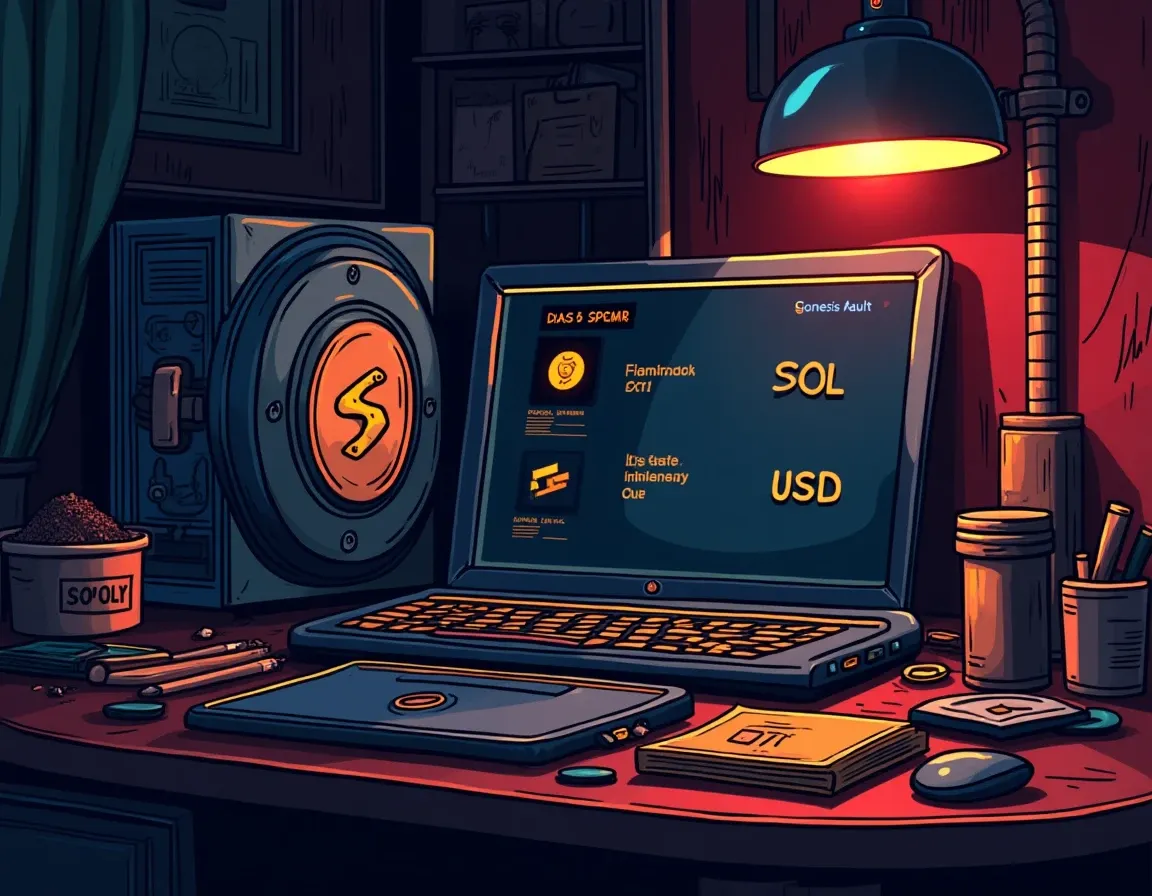
The attack was not a smart contract exploit. It was a coordinated DDoS campaign that targeted Loopscale's API layer with overwhelming request volume. Over the course of a week, the protocol received 30,000-plus malicious requests daily, all aimed at its Genesis Vaults. These vaults handle SOL and USDC deposits and are designed to generate yield through lending activity.
The attack drained liquidity from the vaults, but the protocol's emergency response prevented total loss. Loopscale identified four wallet addresses involved in the operation. After negotiation, the attacker returned $2.8 million in exchange for a bounty payment. The protocol then replenished the vaults and confirmed that all depositor funds were intact.
This pause lands in the middle of one of DeFi's worst weeks in 2026. Just two days earlier, on November 3, Balancer was hit with a $128 million exploit. The timing suggests cluster risk across yield protocols during periods of volatility and heightened attack activity.
Why This Attack Matters

Most DeFi exploits target smart contract code. This one targeted infrastructure. That shift is significant. API-layer attacks exploit the interface between users and protocols, not the logic of the contracts themselves. If your vault code is bulletproof but your API can be flooded into dysfunction, the result is the same: users can't withdraw, attackers can manipulate state, and the protocol goes offline.
The coordination required to sustain 30,000 requests per day for a week indicates planning and resources. This was not a lone actor testing exploits. It was a sustained campaign with specific targets and a clear understanding of where Loopscale's infrastructure was weak.
The fact that Loopscale negotiated a bounty return is also notable. In traditional security incidents, attackers rarely return funds unless they fear attribution or legal consequence. The $2.8 million recovery suggests either strong forensic tracking or negotiation leverage. Either way, it's a rare outcome in DeFi.
What This Means for Solana Lending
Loopscale's pause removes a lending option from the Solana DeFi stack at a time when users are already spooked by broader exploit activity. Solana has seen rapid growth in lending protocols over the past year, but infrastructure resilience has lagged behind adoption. API-layer vulnerabilities are not unique to Loopscale. Most protocols rely on centralized or semi-centralized API gateways to handle user requests, and those gateways are single points of failure.
If you're depositing into any DeFi lending protocol, you need to understand where the attack surface sits. Smart contract audits are necessary but insufficient. The infrastructure that routes your requests, manages state updates, and handles withdrawals is just as critical. Most protocols do not disclose their API architecture or DDoS mitigation strategies, which leaves depositors blind to this class of risk.
The Balancer exploit two days prior adds context. When multiple protocols are hit in close succession, it suggests either opportunistic targeting during high volatility or coordinated campaigns exploiting similar vulnerabilities. Either way, depositors need to reassess concentration risk across protocols and chains.
How Depositors Should Respond
If you have funds in Loopscale's Solana vaults, the protocol has confirmed full replenishment and no loss. But the pause means no yield accrual during downtime, and no timeline has been provided for when lending will resume. That's a dead capital period with no compensation.
More broadly, this incident highlights the risk of deploying into single-chain lending protocols without understanding their infrastructure resilience. Solana's speed and low fees make it attractive for DeFi, but the ecosystem's youth means fewer battle-tested protocols and less mature operational security.
If you're allocating to lending protocols, diversify across chains and protocols. Do not assume that high TVL or audited contracts protect you from infrastructure failure. Ask whether the protocol has published its API architecture, whether it uses decentralized RPC nodes, and whether it has DDoS mitigation in place. Most won't answer. That tells you something.
What Happens Next
Loopscale has not announced a timeline for resuming Solana lending. The protocol will need to rebuild its API layer with rate limiting, redundancy, and monitoring that can withstand sustained attack traffic. That's not a quick fix.
The four wallet addresses linked to the attack are now public. Forensic tracking and potential legal action may follow, but attribution in DeFi remains difficult. The attacker's willingness to return funds suggests they may have been identifiable or concerned about consequences, which is unusual.
For the broader Solana DeFi ecosystem, this incident is a stress test of operational security across lending protocols. Expect other protocols to review their API infrastructure and rate limiting. Expect depositors to demand more transparency about attack surfaces beyond smart contracts.
The Takeaway
Loopscale's week-long DDoS campaign proves that smart contract audits alone do not protect depositors. API infrastructure is an attack surface, and most protocols do not disclose how they defend it. If you're deploying capital into lending protocols, you need to ask where the weak points are beyond the code. Most teams won't have good answers. That should inform your allocation size.
Frequently Asked Questions
What happened to Loopscale's Solana lending?
Loopscale paused Solana lending on November 5 after absorbing over 30,000 malicious API requests per day for a week. The attacks targeted Genesis Vaults for SOL and USDC. The protocol recovered $2.8 million from the attacker via bounty negotiation, replenished all vaults, and confirmed no depositor lost funds. No timeline has been provided for resuming lending operations.
How is a DDoS attack different from a smart contract exploit?
A DDoS attack targets the infrastructure layer, flooding the protocol's API with overwhelming request volume to disrupt service or manipulate state. A smart contract exploit targets vulnerabilities in the code logic itself. Loopscale's incident was an API-layer attack, not a contract flaw, which means audited smart contracts did not protect against this vector. Most protocols do not disclose their API security measures.
Should I withdraw funds from Solana lending protocols after this?
Loopscale has confirmed full vault replenishment and no depositor losses. However, the pause means no yield during downtime. This incident highlights infrastructure risk beyond smart contracts. If you're deposited in Solana lending, assess whether the protocol discloses its API architecture, DDoS mitigation, and RPC redundancy. Diversify across chains and protocols to reduce concentration risk during periods of heightened exploit activity.
Why did the attacker return $2.8 million?
Loopscale negotiated a bounty in exchange for the return of close to $2.8 million. Four wallet addresses were linked to the attack, which suggests forensic tracking identified the attacker or created legal risk. Voluntary fund returns are rare in DeFi unless attribution is strong or consequences are credible. The details of the negotiation have not been disclosed by the protocol.
You just read how a week-long DDoS campaign shut down Solana lending at Loopscale. The next API-layer attack is already being planned somewhere else.
Every Thursday: where crypto yield actually is - stablecoins, liquid staking and DeFi lending, with the risk named next to the rate and what changed since last week.
Get it free every ThursdayFree. No trade calls, no allocations, no hype. Unsubscribe in one click.