Table of Contents
What You Will Accomplish
You will calculate whether to exit Sky USDS immediately or hold through the TVL contraction, factoring in gas cost, alternative stablecoin rates, and the structural difference between market-driven rate drops and governance-controlled yield. This is not about predicting recovery. This is about determining the exact capital threshold where exiting saves more than it costs.
In the week ending 7 November 2026, Sky's total value locked fell roughly 15% to $4.42 billion as USDS supply dropped 13.4%. The Sky Savings Rate remained at 3.80%. This is not a rate collapse. This is a TVL exodus. The math for deciding whether to exit is different from protocols where yield responds to market borrowing demand.
Sky's yield is governance-set, not market-driven. Unlike Aave or Morpho, where rates fluctuate with USDC borrow demand, sUSDS yield depends on protocol-level decisions made by SKY token holders. Rate changes require formal votes. The current 3.80% APY was not changed during the TVL drop. That persistence is the signal.
You need three inputs. First, your capital deployed in sUSDS. Second, current gas cost to withdraw. Third, the best alternative stablecoin rate available to you after migration. With those three numbers, you can calculate the breakeven horizon. If alternatives yield more than 3.80% after gas, you exit. If they yield less, or if the spread is small enough that gas cost burns more than the opportunity gain, you hold.
Step 1: Calculate Annual Opportunity Loss From Holding
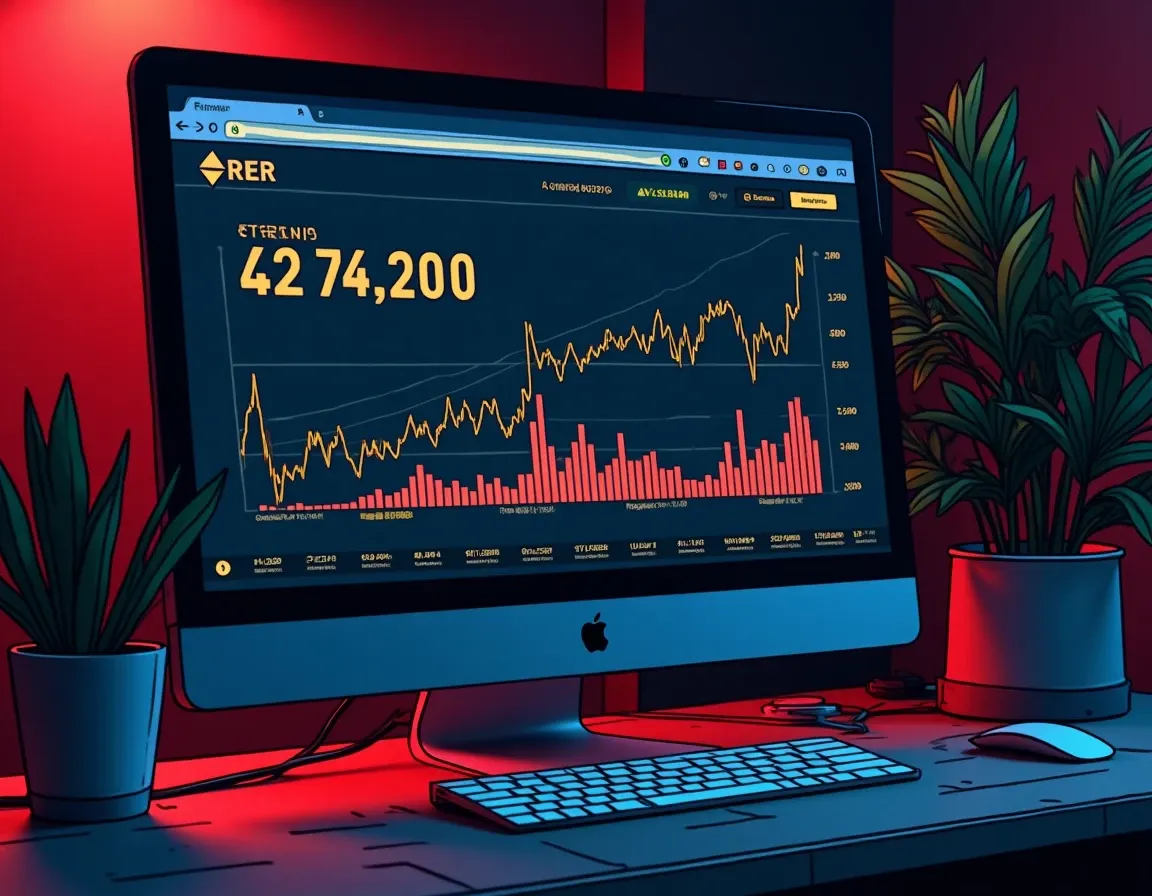
The first calculation is simple. Determine how much income you lose annually by staying at 3.80% instead of moving to the best available alternative.
Example: you have $200,000 in sUSDS earning 3.80%. Aave USDC currently pays 6.47%. The annual opportunity loss is:
($200,000 × 0.0647) - ($200,000 × 0.038) = $12,940 - $7,600 = $5,340 per year
That is $445 per month, or $14.60 per day. The opportunity cost is real. But it is only one side of the ledger. The other side is gas.
On smaller positions, gas dominates. If you hold $20,000 in sUSDS, the same spread yields $534 annually, or $44.50 per month. A $60 gas withdrawal burns 13.5% of your first month's gain. On positions under $50,000, gas cost becomes the deciding variable unless the yield spread exceeds 2 percentage points.
You do not calculate opportunity loss in isolation. You calculate it against the friction cost of moving.
Step 2: Determine Gas Cost For Withdrawal
Sky charges no deposit or withdrawal fee on the savings module. You exit in a single transaction. You pay only Ethereum network gas. The protocol does not take a cut.
Gas cost depends on network congestion and the ETH price at the time you withdraw. At current Ethereum base fees, a standard sUSDS withdrawal costs 80,000 to 120,000 gas. At 20 gwei and ETH at $2,600, that is $41.60 to $62.40. At 50 gwei during network congestion, the same transaction costs $104 to $156.
You need to check gas prices before you decide. If you exit during a weekend when network activity is lower, gas cost drops. If you exit during a DeFi leverage event or NFT mint, gas cost spikes. The timing of your withdrawal can change the breakeven math by $50 to $100.
Calculate the total migration cost. Withdrawal from Sky is one transaction. Deposit into the alternative protocol is a second transaction. Approving the token for deposit is a third transaction. Total gas for the full migration is 200,000 to 300,000 gas, or $104 to $234 at 20 gwei and $2,600 ETH.
Now divide your annual opportunity loss by your migration cost. If you lose $5,340 annually by staying, and migration costs $150 in gas, you break even in 10.2 days. If you plan to hold the alternative position for more than two weeks, migration is profitable. If you plan to reallocate again within the next month, gas burns too much of the gain.
Step 3: Identify The Best Alternative Rate And Verify Persistence
The alternative rate must be higher than 3.80% after gas cost, and it must be persistent enough to justify the move. Market-driven rates fluctuate. Governance-set rates do not change without a vote. You need to know which type of rate you are moving into.
Aave USDC currently pays 6.47%, but that rate depends on borrowing demand. If demand drops, the rate drops with it. Compound V3 USDC follows the same model. These are utilization-based rates. They respond to market conditions within hours. If you migrate to Aave at 6.47% and the rate drops to 4.2% two weeks later, you burned gas for nothing.
Governance-set rates persist until a vote changes them. Sky's 3.80% has remained stable through the TVL contraction because no governance proposal has moved to adjust it. That stability is a feature, not a bug. The protocol's aggregate surplus funds the savings rate, and the surplus remains large enough to sustain 3.80% even as TVL contracts.
Check the alternative protocol's rate history over the past 30 days. If the rate has fluctuated by more than 1 percentage point in that window, you are moving into a volatile environment. If the rate has remained within 0.2 percentage points, you are moving into a stable one. The stability of the alternative matters as much as the headline APY.
On positions above $100,000, a 0.5 percentage point drop in the alternative rate after migration can cost more than the gas you saved by waiting. On positions below $50,000, gas cost dominates and rate stability matters less because you are not exposed long enough for small fluctuations to compound meaningfully.
Step 4: Assess Protocol Risk And Collateralization
Sky's TVL contraction is not a rate event. It is a liquidity event. Users withdrew $660 million in one week. That exodus does not mean the protocol is failing. It means users are repositioning. The question is whether the repositioning reflects systemic risk or market-wide yield reallocation.
On 27 October 2026, Sky's dashboard showed about $12.67 billion of collateral against $10.64 billion of debt, with a $54.66 million surplus buffer. The protocol remains overcollateralized. USDS peg stability has historically maintained in the $0.97 to $1.03 range, with slightly larger fluctuation than USDC and USDT but still within acceptable range.
Over the past 30 days, Sky Lending generated $28.1 million in fees. Based on the trailing year, the annualized rate is $387.8 million in fees and $196.23 million in revenue. The protocol's revenue stream is sufficient to fund the 3.80% savings rate even as TVL contracts. This is not a protocol running out of money. This is a protocol losing market share to higher-yielding alternatives.
The risk you are assessing is not insolvency. The risk is whether the TVL contraction continues to the point where liquidity becomes shallow enough that withdrawal slippage increases. Sky's liquidity depth is still measured in billions. A $200,000 withdrawal does not move the market. A $20 million withdrawal might.
If you hold more than $500,000 in sUSDS, monitor the on-chain liquidity pool depth weekly. If total TVL drops below $3 billion, withdrawal friction may increase for large positions. For positions under $500,000, liquidity risk is not material at current TVL levels.
Step 5: Set The Decision Threshold
You now have four numbers. Annual opportunity loss, gas cost, alternative rate persistence, and protocol collateralization. Combine them into a decision rule.
Exit immediately if:
- Your position is above $100,000 and the alternative rate is 1 percentage point or more higher than 3.80%, and that rate has been stable for 30 days.
- Your position is above $250,000 and the alternative rate is 0.5 percentage points higher, even if volatile, because your capital size absorbs gas cost in under a week.
- You expect to hold the alternative position for at least 60 days, making gas cost negligible relative to total yield gain.
Hold through the contraction if:
- Your position is below $50,000 and the alternative rate is less than 1.5 percentage points higher, because gas cost burns 8-15% of your first month's yield gain.
- The alternative rate has fluctuated by more than 1 percentage point in the past 30 days, indicating high volatility that could reverse your gain within weeks of migration.
- You plan to reallocate again within 30 days, making double gas cost (exit plus re-entry) prohibitive relative to short-term yield gain.
Set a monitoring threshold if:
- The spread between Sky and alternatives is 0.3 to 0.8 percentage points. This is too narrow to justify immediate exit but wide enough to monitor weekly. If the spread widens above 1 percentage point, migrate. If it narrows below 0.3 percentage points, ignore it.
- Sky TVL continues to contract and drops below $3.5 billion. At that point, liquidity risk for positions above $500,000 becomes material, and you exit regardless of yield spread.
Common Failure Mode: Migrating Into Volatile Rates
The most expensive mistake is migrating from a governance-set stable rate into a market-driven volatile rate without checking 30-day history. You see Aave USDC at 6.47%, you migrate, you pay $150 in gas, and two weeks later the rate drops to 4.1% because borrowing demand collapsed. You are now earning 0.3 percentage points more than you earned in Sky, and it will take you six months to recover the gas cost.
This happened in March 2026 when Aave USDC spiked to 8.2% during a leverage event, then dropped to 3.9% within ten days. Users who migrated at the peak burned gas chasing yield that evaporated before they could compound meaningful income. Governance-set rates do not spike and collapse like this. Market-driven rates do.
Before you migrate, pull the alternative protocol's rate history for the past 90 days. If the standard deviation is above 1.2 percentage points, you are moving into a high-volatility environment. If the standard deviation is below 0.5 percentage points, you are moving into a stable one. On positions above $200,000, moving into high volatility is a bet on sustained borrowing demand. On positions below $100,000, it is a gamble that gas cost makes expensive when it fails.
What The TVL Contraction Signals
Sky's 15% TVL drop is not isolated. It reflects market-wide yield reallocation as users move capital toward higher-returning alternatives. In November 2026, multiple DeFi lending protocols saw TVL shifts of 10-20% as rate spreads widened and users optimized for yield after months of compressed rates across the ecosystem.
The contraction does not indicate protocol failure. It indicates that 3.80% is no longer competitive when Aave, Morpho, and Spark are offering 5-7% on similar risk profiles. Users are rational. They move capital toward higher yield when the spread justifies the gas cost and the migration friction.
What matters is whether Sky's governance responds. If the Sky Savings Rate remains at 3.80% for another 60 days while alternatives persist above 5.5%, TVL will continue to contract. If governance raises the rate to 5.0% or higher, TVL stabilizes or recovers. The protocol has the revenue to support a higher rate. The question is whether governance prioritizes retaining TVL or maintaining a conservative surplus buffer.
For income-focused users, the signal is clear. Sky's yield is no longer best-in-class for dollar-denominated stablecoin savings. It remains a reliable, overcollateralized, governance-audited protocol with billions in TVL, but it is not where the highest risk-adjusted yield currently sits. That does not mean you exit automatically. It means you calculate whether the spread justifies the move.
Ongoing Monitoring After You Decide
If you exit, set a price alert to monitor Sky's rate for changes. If governance raises the Sky Savings Rate above your alternative's rate, you may migrate back. The gas cost to return is the same as the gas cost to leave. You only migrate back if the new rate justifies another round of friction cost.
If you hold, monitor two variables weekly. First, Sky's TVL. If it drops below $3.5 billion, liquidity risk increases for large positions. Second, the spread between Sky and alternatives. If the spread widens above 1.5 percentage points and persists for 30 days, the opportunity cost of holding becomes too large to justify, even on small positions.
Set calendar reminders to check these variables every seven days. TVL data updates daily on DefiLlama. Alternative rates update hourly on the same platform. You do not need to check every day. Weekly checks are sufficient to catch meaningful changes before they compound into large opportunity losses.
Gas cost fluctuates with network congestion. If you decide to exit, wait for a weekend or low-activity period when base fees drop below 15 gwei. That timing alone can save $40 to $80 on the migration, reducing your breakeven horizon by several days.
The Takeaway
Sky's TVL contraction reflects yield reallocation, not protocol failure. The decision to exit or hold depends on your capital size, gas cost, and the persistence of alternative rates. On positions above $100,000, a 1 percentage point spread justifies migration if the alternative rate is stable. On positions below $50,000, gas cost dominates unless the spread exceeds 1.5 percentage points. Governance-set rates persist. Market-driven rates fluctuate. Migrating from stability into volatility is the most expensive mistake you can make. Calculate the breakeven horizon before you move.
Frequently Asked Questions
What is the minimum position size where exiting Sky USDS makes sense after the TVL drop?
On positions above $100,000, a 1 percentage point yield spread justifies migration if gas costs $150 and the alternative rate is stable. Below $50,000, you need a spread of 1.5 percentage points or more because gas cost burns 8-15% of your first month's yield gain. Between $50,000 and $100,000, the breakeven threshold sits around 1.2 percentage points depending on current gas prices and how long you plan to hold the alternative position.
How do I know if an alternative stablecoin rate will stay high after I migrate?
Check the protocol's rate history over the past 90 days. If the standard deviation is below 0.5 percentage points, the rate is stable. If it is above 1.2 percentage points, the rate is volatile and may drop soon after you migrate. Governance-set rates like Sky's persist until a vote changes them. Market-driven rates like Aave and Compound fluctuate with borrowing demand and can drop within days of a leverage event ending.
Does Sky's 15% TVL drop mean the protocol is failing?
No. Sky remains overcollateralized with $12.67 billion of collateral against $10.64 billion of debt and a $54.66 million surplus buffer as of 27 October 2026. The protocol generated $28.1 million in fees over the past 30 days, sufficient to fund the 3.80% savings rate. The TVL drop reflects users moving capital to higher-yielding alternatives, not protocol insolvency. Liquidity risk only becomes material for positions above $500,000 if TVL drops below $3 billion.
What is the total gas cost to migrate from Sky to another stablecoin protocol?
Migrating requires three transactions: withdrawing from Sky, approving the token for the new protocol, and depositing. At 20 gwei and ETH at $2,600, total gas cost is $104 to $234. During network congestion at 50 gwei, the same migration costs $260 to $390. Timing your exit for a weekend or low-activity period when base fees drop below 15 gwei can save $40 to $80 on the migration.
Should I exit Sky if I plan to reallocate my capital again in 30 days?
No. If you will move capital again within 30 days, you pay double gas cost for exit plus re-entry. On a $200,000 position, that is $300 to $400 in total friction cost. A 1 percentage point yield advantage only generates $166 per month, meaning you need 1.8 to 2.4 months just to recover gas. Only migrate if you plan to hold the new position for at least 60 days.
You just calculated the exact capital threshold where Sky's 3.80% rate justifies exit versus hold. That threshold changes every time gas prices shift or alternatives move.
Every Thursday: where crypto yield actually is - stablecoins, liquid staking and DeFi lending, with the risk named next to the rate and what changed since last week.
Get it free every ThursdayFree. No trade calls, no allocations, no hype. Unsubscribe in one click.