Table of Contents
Hardware wallets differ on secure element architecture, firmware transparency, coin support, and manufacturer track record. Those differences determine which device matches your holdings and your willingness to verify what you're signing.
This comparison evaluates six current hardware wallets across price tiers, security models, and real-world vulnerabilities disclosed in 2026. The goal is a clear recommendation based on portfolio size, asset type, and technical comfort.
Criteria: What Matters When Comparing Hardware Wallets
Hardware wallet comparison comes down to four verifiable categories:
- Security architecture: Secure element chip certification, open-source vs. proprietary firmware, screen trust model, and dual-chip redundancy.
- Coin and chain support: Bitcoin-only vs. multi-chain, EVM compatibility, DeFi transaction decoding.
- Manufacturer track record: Documented vulnerabilities, patch response time, supply chain incidents, and customer data breaches.
- Price and UX: Device cost, Bluetooth vs. USB-only, air-gap capability, and multisig compatibility.
The best hardware wallet for a $2,000 multi-chain portfolio is not the best hardware wallet for $80,000 in Bitcoin. Match the device to the threat model.
Budget Tier: Trezor Safe 3 at $59
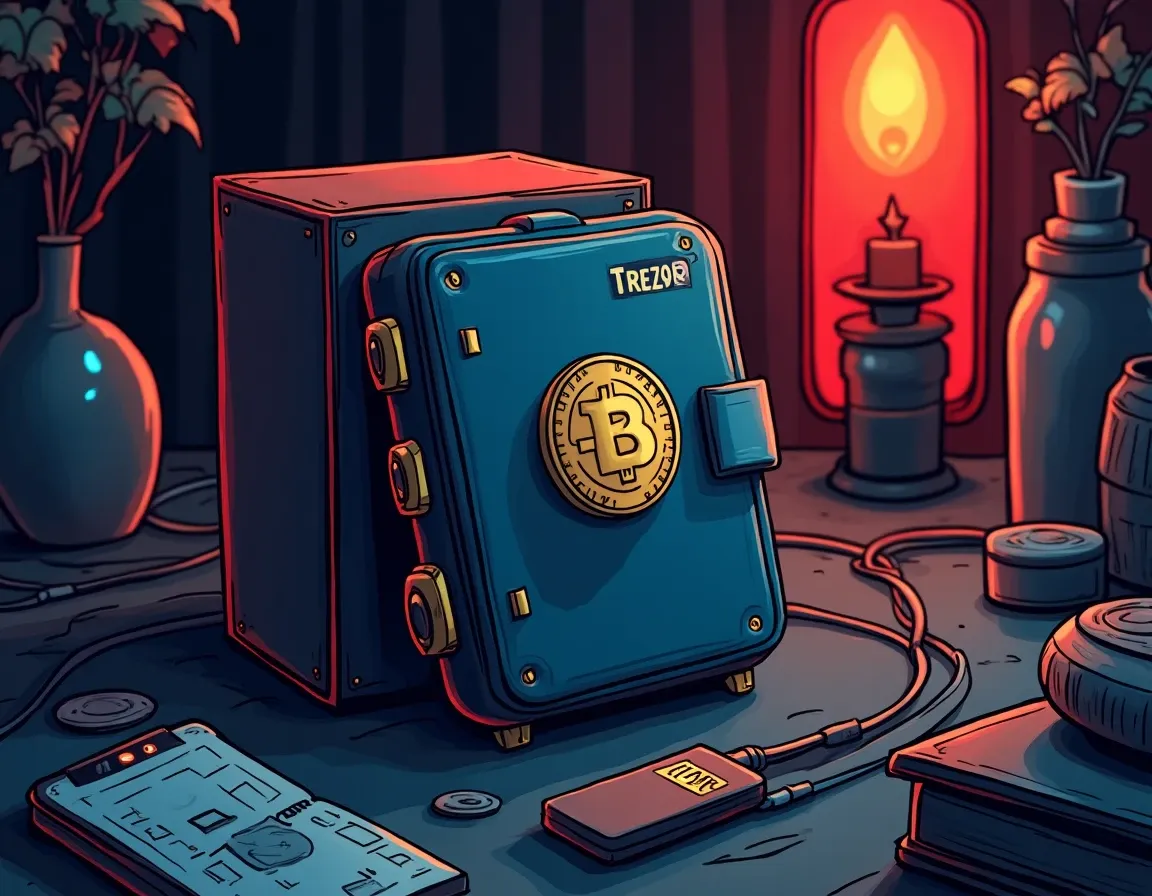
The Trezor Safe 3 is the only sub-$100 hardware wallet that includes a secure element. It costs $59 and uses the Infineon OPTIGA Trust M chip. That chip is notable because Infineon released its documentation publicly without requiring an NDA. Independent researchers can audit it.
Trezor's firmware and hardware design are fully open-source. The Safe 3 supports Shamir Backup, which splits your seed phrase into multiple shares for distributed recovery. That feature matters if you're planning redundancy across physical locations.
Trezor disclosed two supply chain breaches in 2026. On August 14, the company confirmed that 13,689 customers had order data exposed through a breach at ShipMonk, its logistics provider. On September 4, Trezor expanded the disclosure to an additional 67,000 U.S. customers with orders between November 2019 and August 2021. Total affected: approximately 80,689 individuals. The breach exposed names, addresses, and order details. It did not expose seed phrases or wallet contents.
Trezor patched a firmware vulnerability within 72 hours of disclosure in March 2026. Ledger patched the same class of vulnerability in 48 hours.
The Safe 3 is the right choice for holdings under $5,000 across multiple chains. It supports over 5,000 assets, integrates with Trezor Suite, and provides transparent firmware that you can verify independently if you have the skills.
Entry Tier: Ledger Nano X at $149 and Trezor Safe 5 at $169
Ledger Nano X costs $149 and supports 5,500+ assets with Bluetooth connectivity. It uses a CC EAL5+ certified secure element manufactured by STMicroelectronics. The screen is controlled by the secure element chip, which means the display cannot be spoofed by malware on a connected device. Ledger emphasizes this as defense against blind signing: you see the transaction details on-device, rendered by hardware that your infected laptop cannot control.
Ledger's operating system is closed-source. The public cannot independently audit the firmware for hidden vulnerabilities. That model repels users who prioritize transparency over certification. Ledger wallets support over 90 chains and integrate with Ledger Live for portfolio tracking and staking.
In January 2026, Ledger disclosed that Global-e, an e-commerce provider, suffered unauthorized access to customer order data. Like the Trezor breach, this did not compromise seed phrases or wallet contents. It exposed order information.
Trezor Safe 5 costs $169 and combines open-source transparency with modern UX. It uses the same Infineon OPTIGA Trust M secure element as the Safe 3, but adds a larger color touchscreen and improved call data decoding for DeFi transactions. The Safe 5 supports Shamir Backup and integrates with multisig coordinators including Nunchuk and Sparrow.
Both devices in this tier handle multi-chain portfolios well. Choose Ledger if you value certified hardware and polished software. Choose Trezor if you value open-source auditability and distributed seed backup.
Premium Tier: Coldcard Q at $249
Coldcard Q costs $249. The cheaper Mk4 costs $149 to $179. Both are Bitcoin-only devices designed for users who want air-gapped signing and multisig custody. Coldcard uses a dual secure element design: a Microchip ATECC608 paired with a Maxim DS28C36B. Compromising one chip is not sufficient to extract the seed.
Coldcard can remain completely offline. You transfer partially signed Bitcoin transactions (PSBTs) via MicroSD card. No USB connection required. That air-gap model eliminates an entire attack surface.
In July 2026, an attacker exploited a five-year-old firmware flaw in Coldcard's random number generator. The vulnerability caused weakened seed generation. Devices were not hacked remotely. The flaw affected seeds generated on vulnerable firmware between March 2021 and the July 2026 patch. Anyone who created a seed during that window must generate an entirely new seed and migrate funds.
Galaxy Research's running tally stands near 1,816 BTC, approximately $116 million, stolen from over 5,200 addresses across four waves of theft starting July 30, 2026. The devices themselves were not remotely accessed. The weakness was in the entropy used to create the seed at the moment of generation. Fixed firmware corrects future seed generation. Existing affected seeds still require migration.
Coldcard is the right choice for Bitcoin-only users holding $50,000 or more who are willing to learn PSBT workflows and multisig coordination. It integrates with Sparrow, Nunchuk, and Electrum. If you are moving toward 2-of-3 multisig, at least one of your signing devices should be a Coldcard.
Multi-Element Architectures: Keystone and GridPlus
Keystone goes furthest on hardware redundancy with triple secure elements: ATECC608B, DS28S60, and MAX32520. That design provides three independent layers of chip-level protection. Keystone devices are fully air-gapped and use QR codes for transaction signing. The wallet displays the unsigned transaction as a QR code on a companion app. You scan it with the Keystone device, sign on-device, and scan the signed transaction back to broadcast.
Keystone is not affected by the Coldcard RNG vulnerability. The device supports Bitcoin and multi-chain portfolios. Pricing sits in the mid-range tier, comparable to Trezor Safe 5.
GridPlus Lattice Plus is closed-source but received the highest rating in third-party wallet evaluations for call data decoding. It handles nested transactions better than any other tested device, which matters if you are interacting with complex DeFi protocols. The Lattice Plus uses a secure element but does not disclose the specific chip model publicly.
Both devices serve users who prioritize transaction readability and air-gap security over open-source firmware.
What BitBox02 Does Differently
BitBox02 combines a secure element with fully open-source firmware. That is rare. Most manufacturers choose one or the other. BitBox achieves both through a dual-chip architecture that isolates the secure element while keeping the application layer transparent.
BitBox is not affected by the Coldcard RNG vulnerability. The device supports Bitcoin and multi-chain assets. It integrates with BitBoxApp and third-party coordinators. The UX is simpler than Coldcard and more transparent than Ledger.
BitBox02 is the right choice for users who want secure element protection and open-source auditability without choosing between them.
Multisig Compatibility Across Devices
Single-device custody is not the right model for holdings above $50,000. You should be moving toward 2-of-3 multisig with two different brands of hardware wallets.
Nunchuk is the best no-KYC Bitcoin multisig coordinator in 2026. It supports 2-of-3, 3-of-5, or any custom M-of-N configuration with Coldcard, Trezor, Ledger, Jade, Passport, and BitBox02 as signers. Sparrow supports native Bitcoin single-signature and multisig wallets, PSBTs, hardware wallet signers, air-gapped signing, Bitcoin Core, private Electrum servers, Tor, coin control, and detailed UTXO management.
If you are setting up multisig, use at least two different secure element vendors. Pair a Coldcard with a Trezor. Pair a Ledger with a BitBox02. Do not use three of the same device. Shared vulnerabilities compromise the entire setup.
Blind Signing Risk and Screen Trust
One of the most realistic risks in 2026 is blind signing: approving a transaction when you cannot clearly understand the content you are authorizing. Malware on your connected device can modify transaction details displayed in software wallets. The only defense is an on-device screen controlled by hardware you trust.
Ledger's secure screen is driven by the secure element chip. Even if your laptop is infected, the transaction details rendered on the Ledger screen are controlled by certified hardware. Trezor, Coldcard, and BitBox02 use similar architectures.
GridPlus Lattice Plus offers the best call data decoding tested. If you are signing complex DeFi transactions involving nested function calls, the Lattice Plus displays those interactions more clearly than any other device.
Blind signing is a supply chain risk as much as a software risk. The January 2026 Ledger incident and the August and September 2026 Trezor breaches exposed customer order data. That information can enable targeted phishing. An attacker who knows you purchased a Ledger Nano X in January 2026 can send you a convincing firmware update phishing email.
Verify firmware updates through official channels. Check the hash. Do not click links in emails.
Portfolio Size and Device Recommendations
Up to $3,000 in Bitcoin or multi-chain assets: Trezor Safe 3 at $59. Any of the entry-tier devices is overkill in a good way, but the Safe 3 provides secure element protection and open-source firmware at the lowest price.
$3,000 to $20,000 in multi-chain assets: Trezor Safe 5 at $169 or Ledger Nano X at $149. Choose Trezor for open-source transparency and Shamir Backup. Choose Ledger for broader app ecosystem and Bluetooth convenience.
$20,000 to $50,000 in Bitcoin: Coldcard Mk4 at $149 to $179. Begin learning PSBT workflows and multisig coordination. If you are holding altcoins as well, pair a Coldcard for Bitcoin with a Trezor Safe 5 for everything else.
$50,000+ in Bitcoin: 2-of-3 multisig with two different hardware wallet brands. One of those devices should be a Coldcard Q or Mk4. The second should be a Trezor, Ledger, or BitBox02. Use Nunchuk or Sparrow as your multisig coordinator. Do not store all three devices in the same location.
What the 2026 Incidents Tell Us
The July 2026 Coldcard RNG vulnerability, the August and September Trezor supply chain breaches, and the January 2026 Ledger customer data incident confirm three things:
One: no hardware wallet manufacturer has a perfect track record. Firmware vulnerabilities, supply chain compromises, and third-party vendor breaches affect every brand.
Two: patch response time matters. Trezor patched within 72 hours. Ledger patched within 48 hours. Both manufacturers disclosed breaches publicly and expanded disclosures as new information became available. That behavior is what you want from a custody device manufacturer.
Three: single-device custody is a single point of failure. The Coldcard theft wave extracted $116 million because users stored large amounts of Bitcoin on a single device with a flawed seed. A 2-of-3 multisig setup using two different brands would have prevented every one of those thefts.
The Takeaway
If you are holding under $5,000 across multiple chains, buy a Trezor Safe 3. If you are holding $5,000 to $50,000, buy a Trezor Safe 5 or Ledger Nano X depending on whether you value transparency or ecosystem polish. If you are holding over $50,000 in Bitcoin, stop thinking about single devices and start setting up 2-of-3 multisig with two different hardware wallet brands, one of which should be a Coldcard.
The Coldcard theft proves that firmware vulnerabilities exist even in devices designed for paranoid users. The Trezor and Ledger breaches prove that supply chain incidents expose order data even when wallets remain secure. The only defense is redundancy. Use multisig. Use different vendors. Store devices in separate locations.
Hardware wallet selection is not about finding the perfect device. It is about matching security architecture to portfolio size and understanding that every device eventually discloses a vulnerability or a breach. Plan accordingly.
Frequently Asked Questions
What is the main security difference between Ledger and Trezor hardware wallets?
Ledger uses a CC EAL5+ certified secure element chip with closed-source firmware, prioritizing formal certification over public auditability. Trezor uses the Infineon OPTIGA Trust M secure element with fully open-source firmware and hardware design, allowing independent security researchers to audit all code. Ledger offers stronger certification; Trezor offers stronger transparency. Both patched the March 2026 vulnerability within 72 hours.
Which hardware wallet should I use for Bitcoin holdings over $50,000?
For Bitcoin holdings over $50,000, use 2-of-3 multisig with two different hardware wallet brands, not a single device. One signer should be a Coldcard Q or Mk4 for air-gapped signing. The second should be a Trezor, Ledger, or BitBox02. Use Nunchuk or Sparrow as your multisig coordinator. Store the three devices in separate physical locations. Single-device custody is a single point of failure at this portfolio size.
What was the Coldcard vulnerability in July 2026 and who was affected?
In July 2026, attackers exploited a five-year-old firmware flaw in Coldcard's random number generator that weakened seed generation. The vulnerability affected seeds created on vulnerable firmware between March 2021 and the July 2026 patch. Approximately 1,816 BTC worth $116 million was stolen from over 5,200 addresses across four waves starting July 30, 2026. Users who generated seeds during that window must create an entirely new seed and migrate funds.
What is blind signing and which hardware wallets protect against it best?
Blind signing occurs when you approve a transaction without clearly understanding the content you are authorizing. Malware on a connected device can modify transaction details displayed in software. Hardware wallets with secure element-controlled screens defend against this: Ledger's screen is driven by the CC EAL5+ chip; Trezor, Coldcard, and BitBox02 use similar architectures. GridPlus Lattice Plus offers the best call data decoding for complex DeFi transactions, displaying nested function calls more clearly than any other tested device.
Are budget hardware wallets like the Trezor Safe 3 secure enough for serious holdings?
The Trezor Safe 3 at $59 includes a secure element (Infineon OPTIGA Trust M) and fully open-source firmware, making it secure enough for holdings up to approximately $5,000. It supports Shamir Backup for distributed seed recovery and over 5,000 assets. For holdings above $5,000, consider the Trezor Safe 5 or Ledger Nano X. For holdings above $50,000, single-device custody is no longer appropriate regardless of device quality; use 2-of-3 multisig instead.
Ledger devices display the full transaction on their own screen before you approve it, which is what stops an approval exploit at the point it matters.
See Ledger devicesWe may earn a commission if you sign up through this link, at no cost to you. It does not change what gets recommended.
You just compared six hardware wallets across four security architectures and three 2026 vulnerabilities. Next quarter will bring different incidents and different patches.
Every Thursday: where crypto yield actually is - stablecoins, liquid staking and DeFi lending, with the risk named next to the rate and what changed since last week.
Get it free every ThursdayFree. No trade calls, no allocations, no hype. Unsubscribe in one click.