
What Airdrop Farming Actually Costs: Gas, Time, And Opportunity
Airdrop farming costs $150-$3,000 in gas and capital across six months. Many campaigns return less than you spend. Here is the real cost breakdown by chain.
Airdrop farming costs $150-$3,000 in gas and capital across six months. Many campaigns return less than you spend. Here is the real cost breakdown by chain.
Tangem's NFC card model costs $59.90 but removes transaction screens, creating phone-trust dependencies that matter when you're signing across eight positions weekly.

LBPs use declining price curves to discourage front-running and reveal fair value. Understanding the parameters tells you whether the team intends extraction or distribution.

IDO marketing advertises 500x Day-1 returns. The median 12-month return across full 2021-2023 cohorts, survivorship-adjusted, tells a different story.
Real yield comes from protocol fees, spread, and external revenue. Fake yield comes from token emissions, subsidies, and recycled deposits. The question that separates them: where does the money actually come from?
Top-10 holder percentage is meaningless until exchange and treasury wallets are excluded. Here is how to do that exclusion properly on Etherscan and Solscan.
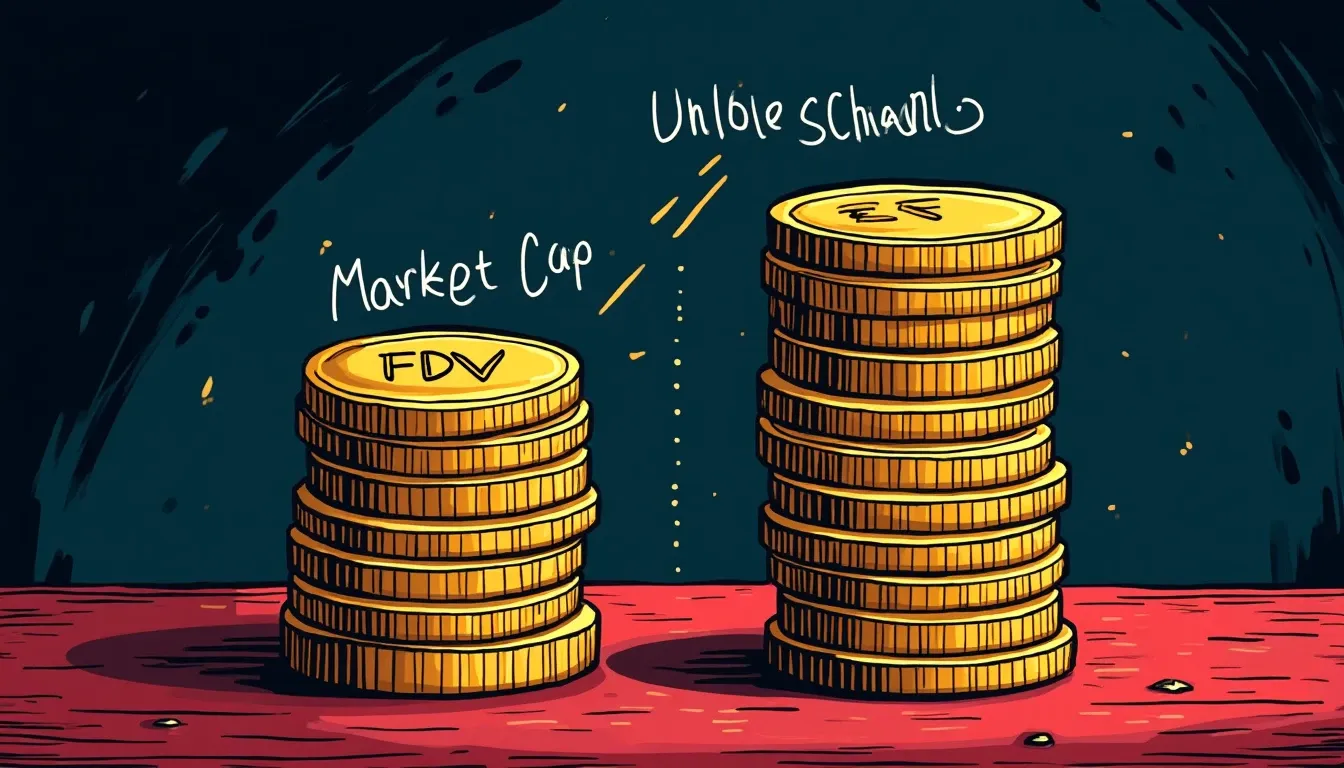
The gap between market cap and fully diluted valuation warns you about dilution ahead. Most low-cap losses are not thesis failure but unlocked supply.
Learn to decode cliff periods, linear unlocks, and allocation tables to predict when insider sell pressure will hit the tokens you stake or LP against.

Launchpads promise early token access. Most deliver 3-28% allocation odds, staking costs that exceed expected returns, and lottery mechanisms where capital locks for weeks with no guarantee.

Spot Bitcoin ETFs charge 0.14-1.5% annually. Ethereum ETFs cost 0.20-2.91% and skip staking yield. Direct ownership plus staking beats ETF wrappers unless you need an IRA.
Analyze vesting contracts, cliff periods, and linear unlock schedules to forecast when large token supplies hit the market and depress staking yields.

iTrustCapital offers Ethereum and Solana staking inside IRAs but retains 22% of rewards. The tax deferral benefit offsets fees only in narrow cases.
CoinLedger wins on pricing, CoinTracker wins on DeFi accuracy. Here is what actually breaks when you hand each platform a multi-protocol yield wallet.
Binance Earn advertises 3-4% on ETH. The question worth answering is where that yield comes from, who controls your capital, and what happens when stress arrives.
Morpho's peer-to-peer matching layer typically delivers 0.5-2% better rates than Aave or Compound by splitting the spread. Here's the real delta and the curator risk you take.
Liquidity pools pay swap fees and token incentives, but impermanent loss often erases the income. Here is the breakeven analysis most dashboards omit.