Table of Contents
Bitcoin’s Looming Crash May Be an Investor’s Big Break
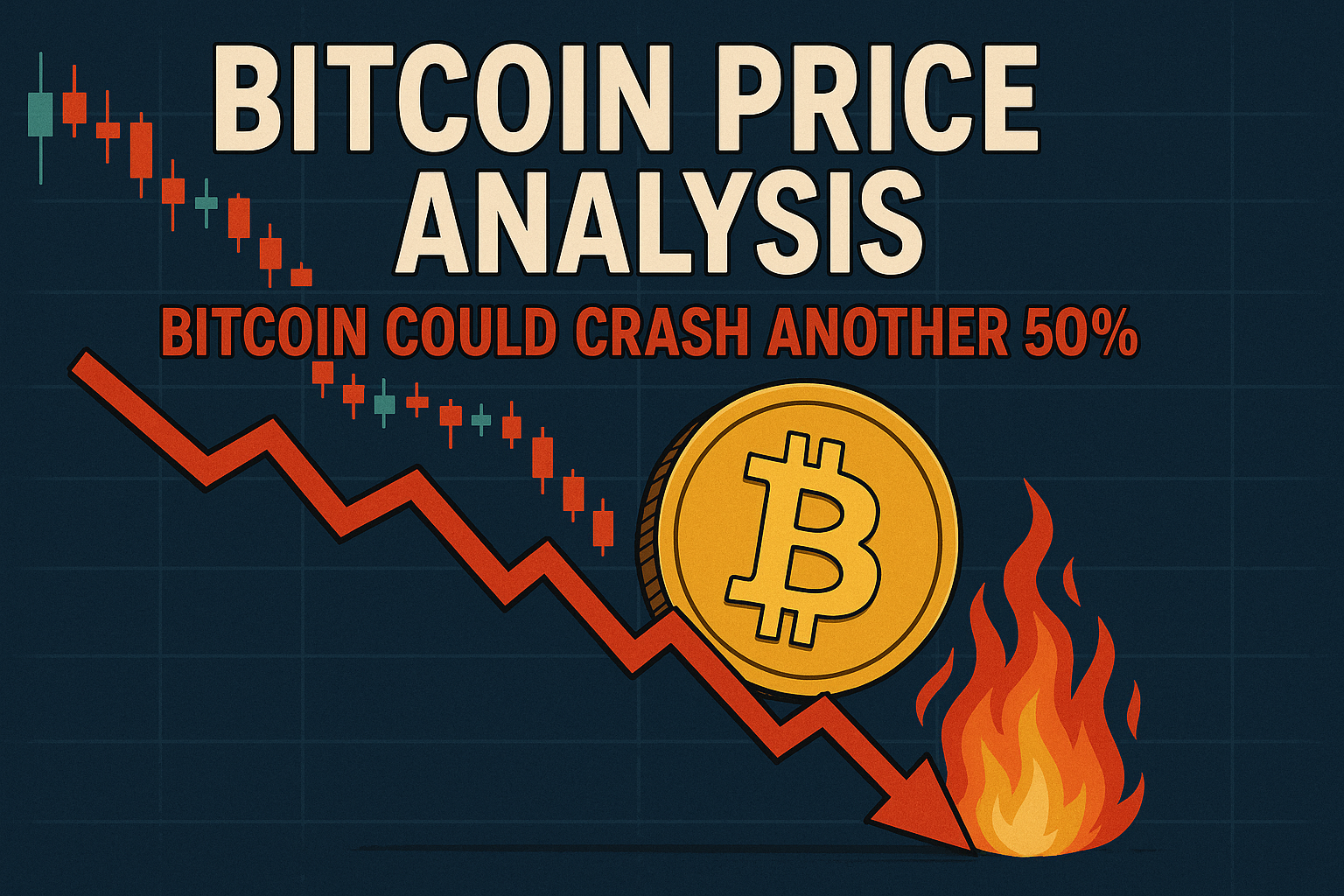
Even as the crypto market enters a pronounced bearish phase, the sharp decline in Bitcoin’s price could open one of the most lucrative entry points for opportunistic investors. Market sentiment remains on edge, with several analysts warning of an impending drop of up to 50% from recent trading levels. While the mainstream view paints this as an ominous scenario, experienced market participants often see such downturns as golden opportunities to accumulate assets while prices are severely discounted.
Understanding the Current Setup
Bitcoin’s price trajectory over the past few months has exemplified the market’s extreme volatility. From its all-time high close to $73,000, BTC has repeatedly tested support levels beneath the pivotal $40,000 mark. These fluctuations have created confusion, even panic, among retail investors. However, historical price action suggests that Bitcoin often experiences significant corrections before major bull runs.
Current fears center around a potential breakdown to the $20,000–$25,000 range — approximately half of Bitcoin’s present valuation. Such a pullback, while harsh, would not be unprecedented. Crypto markets are notoriously cyclical, driven by waves of euphoria and despair. This characteristic volatility makes the market risky but also immensely rewarding for those who play it strategically.
It’s important to note that long-term BTC holders, or “HODLers,” have weathered such storms before. In fact, this type of market behavior aligns with the four-year cycle theory that many in the crypto community subscribe to — notably influenced by Bitcoin’s halving events. The next halving is projected in 2024, which many see as a catalyst for the next bull market.
Buying When Others Are Selling
Legendary investor Warren Buffett famously said, “Be fearful when others are greedy, and greedy when others are fearful.” Nowhere is this more relevant than the volatile world of cryptocurrency. While fear dominates social media channels and headlines scream “Bitcoin crash,” contrarians are quietly positioning themselves for the next major upswing.
Bitcoin has a well-documented history of rebounding spectacularly from massive corrections. Consider the following historical examples:
- 2018 Bear Market: After reaching nearly $20,000 in late 2017, Bitcoin lost over 80% of its value, falling below $4,000. By late 2020, BTC had recaptured and then exceeded prior highs, eventually surpassing $60,000.
- March 2020 Crash: During the onset of the COVID-19 pandemic, market uncertainty led to a rapid plunge to approximately $3,800. Within a year, Bitcoin soared to over $60,000 — marking one of the most aggressive rebounds in its history.
- 2022-2023 Downtrend: A confluence of macroeconomic factors, including rising interest rates and the collapse of major crypto institutions, dragged BTC down to the mid-$15,000 range. Yet, by early 2024, it had rallied significantly once again.
The common thread across these cycles is resilience. Investors who remained patient — or better yet, expanded their positions during downturns — were often generously rewarded during ensuing rallies. These are not isolated instances but repeating patterns within Bitcoin’s lifecycle.
What’s Different About This Cycle?
Unlike previous market cycles, the current environment is marked by rapidly growing institutional adoption. This evolution isn’t minor — it fundamentally transforms how Bitcoin is perceived and how capital flows into the ecosystem. Wall Street has increasingly embraced digital assets: Bitcoin Exchange-Traded Funds (ETFs) have been approved in several jurisdictions, allowing traditional investors exposure through compliant and familiar vehicles.
Major pension funds and hedge funds are no longer sitting on the sidelines. Large corporations—including publicly traded ones like Tesla—have added Bitcoin to their treasuries. Asset managers such as BlackRock and Fidelity have continued to advocate for Bitcoin allocations as part of a diversified portfolio.
Furthermore, regulatory clarity is starting to emerge. Although the landscape is complex and varies by region, governments and regulatory agencies are moving beyond the “wait and see” phase. In fact, some countries are actively courting crypto innovation. For instance, El Salvador became the first country to declare Bitcoin legal tender, setting a global precedent and spurring similar interest among other emerging markets.
This backdrop increases the likelihood that long-term support will materialize near key psychological levels, potentially establishing a long-term floor for Bitcoin prices. The combination of regulatory clarity, institutional interest, and public awareness makes this cycle significantly more mature than previous ones.
Smart Strategies for Adding Exposure
If history is any indicator, then pullbacks in Bitcoin—no matter how dramatic—often present asymmetric investment opportunities. Instead of reacting emotionally, thoughtful positioning can help investors build wealth over time. Here are some smart tactics for adding exposure during a market downturn:
- Staggered Buy Orders: Implement a dollar-cost averaging (DCA) strategy using staggered limit orders between $20,000 and $30,000. This ensures gradual exposure to the asset and reduces the impact of interim volatility.
- Monitor Macro Indicators: Pay close attention to macroeconomic metrics such as inflation, federal interest rate changes, and global liquidity conditions. These variables often influence risk sentiment across all asset classes, including crypto.
- Compound Through Staking and Yield Products: Even during bear markets, many platforms allow you to stake assets like Ethereum or lend stablecoins for competitive returns. These passive income streams can potentially offset unrealized losses and help grow your portfolio.
- Diversify Into Undervalued Altcoins: Bitcoin’s weakness usually spreads to the broader crypto market, offering the chance to accumulate high-potential altcoins like Ether (ETH), Chainlink (LINK), Solana (SOL), and Avalanche (AVAX). These assets often outperform Bitcoin in bull phases. For deeper insights, explore our comprehensive guide to top altcoins.
- Use Market Sentiment Analysis: Tools like the Fear and Greed Index, social media trend trackers, and on-chain metrics such as exchange inflows can provide insight into investor psychology, helping you fine-tune your entries.
This Is When Fortunes Are Made
In every asset class, historic wealth creation often stems from bold decisions made when others choose safety. As fear spreads across the crypto market, opportunity quietly emerges. While no one can predict with certainty if Bitcoin will fall another 50%, the more empowering question is: Are you prepared if it does?
Such corrections can shake out weak hands and amplify short-term uncertainty. But for investors with conviction, discipline, and a long-term horizon, market downturns offer the greatest potential for outsized returns. History has consistently shown that the best gains are realized not by chasing euphoria but by accumulating value when it’s least popular to do so.
Navigating a Bitcoin crash requires a contrarian mindset — one that thrives in the face of fear and overlooks short-term noise to focus on long-term fundamentals. Maintain exposure intelligently. Diversify with purpose. And stay calm when volatility runs high. Because while everyone else panics, the smart few are planting the seeds of their future wealth.