Table of Contents
The Question: Why Did Curve crvUSD-WBTC APY Collapse 9.69 Percentage Points In One Week?
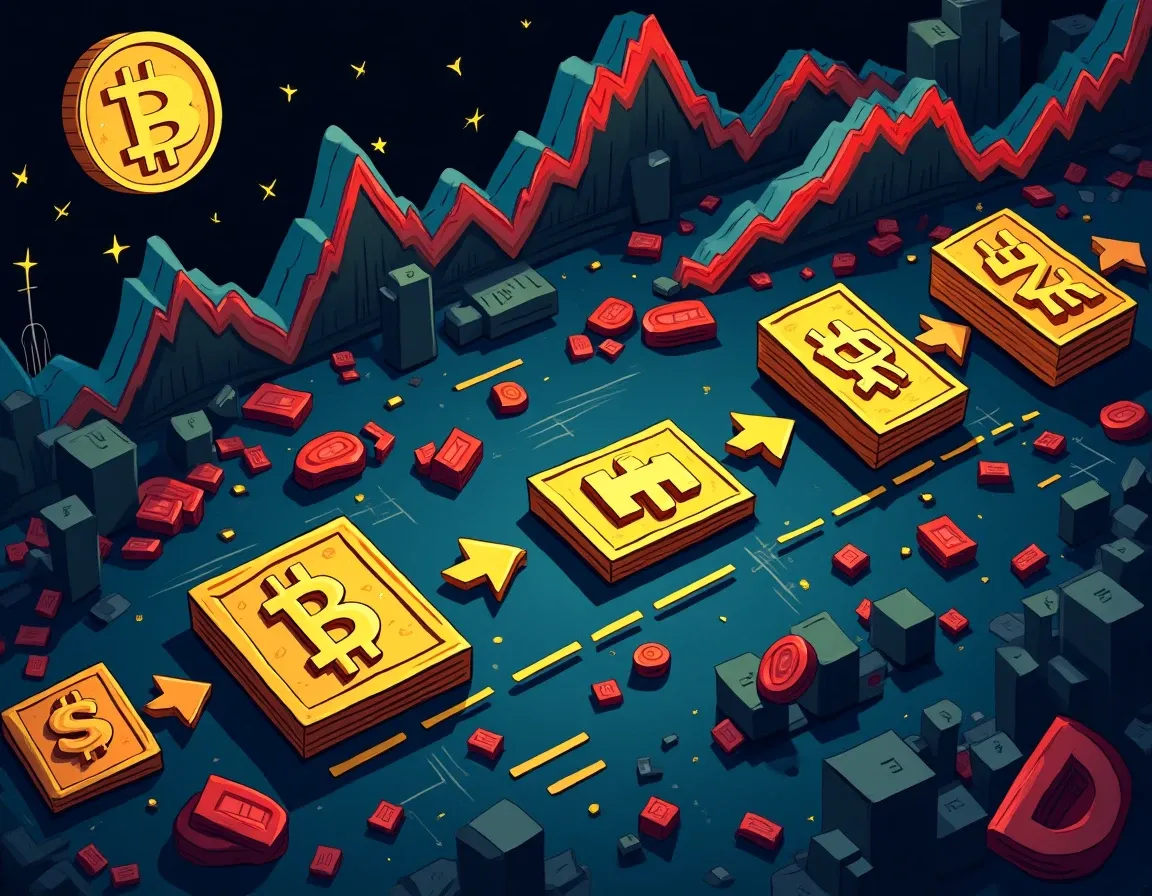
The crvUSD-WBTC pool fell from 10.26% APY to 0.57% APY over seven days in late September 2026. That is a 9.69 percentage point drop on a pool holding approximately $70M in total value locked.
The collapse was not gradual. It was structural.
Three mechanisms converged: veCRV holders reallocated gauge weight away from WBTC pools, $2.45M in WBTC collateral was repaid during Week 32 2026, and third-party liquidity mining incentives expired. The result was an immediate evaporation of reward APY, leaving only base swap fee income around 0.5-0.6%.
If you held a $100,000 position, the collapse cost you $9,690 in annualized yield. Whether you should have exited immediately or waited for recovery depends entirely on which of those three drivers caused the drop.
How Curve APY Actually Works
Curve pools generate two distinct income streams. The first is base APY, derived from swap fees. Stablecoin pairs charge 0.04% per trade, split 50/50 between liquidity providers and veCRV holders. On a pool with moderate volume, base APY typically runs 1-2%.
The second is reward APY, which comes from CRV token emissions and third-party incentives. Curve distributes 260,000-320,000 CRV per day across all pools, allocated weekly by veCRV governance vote. A pool receiving 2% of total gauge weight earns roughly 5,200-6,400 CRV/day. At $0.30 per CRV, that translates to $1,560-1,920 per day, or about 3-5% annualized APY on a $50M pool.
Third-party protocols (Yearn, Convex, liquidity mining programs) can add extra incentives on top. Those incentives are typically time-limited.
When crvUSD-WBTC showed 10.26% APY, roughly 0.5-0.6 percentage points came from swap fees. The other 9.6+ points came from CRV emissions and third-party programs.
When gauge weight shifts or incentives expire, reward APY disappears. Base APY remains.
What Happened During Week 32, 2026
The data shows three concurrent events.
First, WBTC collateral saw $2.45M in repayments across Curve's Llamalend markets during Week 32. That was the only meaningful repayment among Bitcoin-backed pools. cbBTC added $2.17M in borrowing, and tBTC added $1.33M. Collateral was migrating away from WBTC to newer Bitcoin standards.
Second, veCRV holders vote weekly to allocate CRV emissions. When a pool loses liquidity or volume, governance typically reallocates gauge weight to more active markets. The cbBTC-crvUSD and tBTC-crvUSD pools were showing growth. WBTC pools were contracting. Gauge weight followed the flow.
Third, third-party incentive programs often run for fixed durations (30, 60, 90 days). If a liquidity mining program ended in late September without renewal, the associated APY would drop to zero overnight.
The combination of those three factors explains a 9.69 percentage point collapse. Gauge weight reallocation alone can remove 6-8 points. Incentive expiration can remove another 2-4 points. Base swap fee APY (0.5-0.6%) is what remains.
Why WBTC Collateral Is Migrating To cbBTC And tBTC
WBTC has been the dominant tokenized Bitcoin on Ethereum for years. But institutional allocators and compliance-focused protocols prefer cbBTC and tBTC for three reasons.
cbBTC (Coinbase Wrapped Bitcoin) offers institutional custody, transparent reserves, and regulatory clarity. tBTC is decentralized and threshold-signed, removing single-entity custody risk. Both standards are newer, better documented, and more aligned with current institutional compliance requirements.
When $2.45M in WBTC was repaid during Week 32 while cbBTC and tBTC added $3.5M combined, the message was clear: liquidity providers and borrowers are rotating to newer Bitcoin collateral standards.
That rotation reduces WBTC pool volume, which reduces fee generation, which signals to veCRV holders that gauge weight should shift elsewhere. The APY collapse on crvUSD-WBTC reflects that feedback loop.
How To Read Gauge Weight Reallocation In Real Time
Curve governance votes occur weekly on Snapshot. You can track gauge weight proposals by monitoring the Curve DAO official documentation and reviewing vote outcomes every Thursday.
If a pool's gauge weight drops from 2.0% to 0.3% in a single vote, you should expect APY to collapse by 6-8 percentage points within 24 hours. CRV emissions are distributed proportionally. A pool receiving 0.3% of total weight earns roughly 780-960 CRV/day instead of 5,200-6,400.
On a $70M pool, that difference is worth $1,300-1,400 per day, or about 7% annualized APY.
The WBTC-crvUSD collapse likely reflects exactly that scenario. Gauge weight shifted to cbBTC-crvUSD and tBTC-crvUSD, both of which showed borrowing growth and stronger collateral demand.
When High APY Is Sustainable And When It Is Not
APY above 12% on a stablecoin or BTC-stablecoin pair is almost always unsustainable. The income either comes from short-term liquidity mining incentives or temporary CRV emission boosts that governance will reallocate within weeks.
Sustainable yield on Curve stablecoin pairs runs 3-8% for standard depositors, boosted to 7-20% for users with veCRV locks. That range reflects base swap fees plus structural CRV emissions allocated to high-volume pools.
When crvUSD-WBTC showed 10.26% APY without a veCRV boost, the excess above 8% was a red flag. It signaled either a temporary gauge weight spike or an expiring third-party incentive program.
The correct question to ask when you see 10%+ APY on a Curve pool is: what portion of this is base fee income, and what portion is time-limited reward income? If more than 60% of the APY comes from rewards, expect reallocation risk within 30-60 days.
Comparing APY Behavior Across BTC-Stablecoin Pairs
The crvUSD-WBTC collapse was not unique. Similar drops have occurred on Uniswap V3 USDC-WETH pools, which fell from 20.15% to 9.5% in seven days due to liquidity migration and fee tier shifts.
BTC-stablecoin pairs across protocols share a common vulnerability: they depend on external incentives or governance-allocated emissions to maintain double-digit yields. When those incentives shift, APY collapses.
Uniswap V3's concentrated liquidity model allows LPs to earn high fees during volatility, but out-of-range positions earn zero. Curve's gauge weight model allows veCRV holders to redirect emissions weekly, which creates reallocation risk.
Aerodrome on Base and Velodrome on Optimism use similar vote-escrowed governance models. Both have seen 8-10 percentage point APY swings on stablecoin pairs when gauge votes reallocate emissions.
The mechanism differs across protocols, but the pattern is identical: when TVL declines or volume shifts, governance or market forces redirect incentives elsewhere. APY collapses follow within days.
The Withdrawal Decision Framework
You should exit a Curve pool immediately when APY collapses if two conditions are met.
First, the drop reflects permanent gauge weight reallocation, not temporary utilization decline. Check recent governance votes. If the pool lost 50%+ of its gauge weight in a single vote, the drop is structural.
Second, the new APY falls below your minimum acceptable return after accounting for gas costs and opportunity cost. If you can deploy the same capital into cbBTC-crvUSD or tBTC-crvUSD at 6-8% APY, staying in a 0.57% pool makes no sense.
You should wait if the collapse is driven by temporary utilization changes that may reverse. For example, if a large borrower repaid $10M but collateral deposits remained stable, utilization may recover when another borrower enters.
The Week 32 data shows $2.45M in WBTC repayments, but cbBTC and tBTC both added borrowing. That is not a temporary dip. That is collateral migration.
When collateral migrates, gauge weight follows. When gauge weight shifts, APY collapses. Exit.
What To Watch On Other Curve Pools
Three signals predict APY collapse risk on any Curve pool.
First, declining TVL over three consecutive weeks. If a pool loses 10%+ of its TVL while competing pools grow, veCRV holders will reallocate gauge weight within 14-21 days.
Second, collateral migration visible in on-chain repayment data. When one collateral type shows net repayments while alternatives show net borrowing, the migrating asset's pools will lose APY.
Third, expiring third-party incentive programs. Most liquidity mining programs publish end dates. If a program contributing 3%+ APY is set to expire in 7-14 days, you should exit before expiration or accept the lower post-expiry rate.
The crvUSD-WBTC collapse reflects all three signals. TVL was stable around $70M, but WBTC collateral was declining. cbBTC and tBTC were growing. Gauge weight reallocated. APY followed.
The same pattern will repeat on other pools. Track TVL, collateral flows, and governance votes to see it coming.
Why Most Yield Positions Break Silently
The vast majority of DeFi APY collapses receive no public announcement. Curve does not send an email when gauge weight shifts. Third-party incentive programs do not publish press releases when funding runs out.
Your position breaks silently. The APY you saw last week no longer applies this week. If you are not monitoring on-chain data or governance votes, you discover the collapse only when you check your dashboard days or weeks later.
That delay is costly. On a $100,000 position, a 9.69 percentage point drop costs $26.52 per day. Over 30 days, that is $795.60 in lost income.
The income mechanism here is negative: knowing when APY will collapse lets you exit before it does, preserving yield that most LPs lose through inattention.
Set up alerts for three events: weekly governance votes on pools you hold, TVL changes above 5%, and collateral flow reversals. Those alerts give you 3-7 days of advance notice before APY collapses.
The Broader Implications For BTC-Stablecoin Yields
The crvUSD-WBTC collapse reflects a wider shift in DeFi collateral preferences. WBTC dominated for years because it was first. cbBTC and tBTC are replacing it because they are better.
When institutional allocators rotate collateral, liquidity follows. When liquidity moves, governance reallocates incentives. When incentives shift, APY collapses on the old pools and rises on the new ones.
This is not unique to Curve. The same dynamic plays out on Aave, Compound, and every lending protocol with multiple Bitcoin collateral options. Messari's Curve research shows similar patterns across DeFi: fee-generating pools attract gauge weight, stagnant pools lose it.
If you hold positions in WBTC-based pools on any protocol, monitor cbBTC and tBTC growth. When those alternatives surpass WBTC in borrowing volume or TVL, your WBTC pool's APY will decline within weeks.
How On-Chain Data Predicted This Collapse
The Week 32 data was public before the APY collapsed. $2.45M in WBTC repayments, $2.17M in cbBTC borrowing growth, $1.33M in tBTC growth. Those numbers appeared in Curve's weekly metrics dashboard before gauge weight shifted.
Anyone tracking collateral flows could see the migration happening in real time. When WBTC shows net repayments for two consecutive weeks while alternatives show net borrowing, gauge weight reallocation is 7-14 days away.
The APY collapse was predictable. Most LPs did not predict it because they were not watching the right data.
The income opportunity is arbitrage: exit pools with declining collateral flows before APY collapses, enter pools with growing flows before gauge weight increases. That spread can be worth 6-10 percentage points of APY.
The Takeaway
The crvUSD-WBTC APY collapse from 10.26% to 0.57% was not a market anomaly. It was a predictable outcome of three concurrent events: gauge weight reallocation, WBTC collateral migration to cbBTC and tBTC, and expiring third-party incentives.
The structural lesson is that reward APY on Curve is governance-dependent and time-limited. Base swap fee APY (0.5-2% on stablecoin pairs) is sustainable. Anything above that depends on CRV emissions or external incentives, both of which can disappear in a single governance vote or program expiration.
If you hold positions in Curve pools with APY above 8%, verify how much of that rate comes from base fees versus rewards. If rewards account for more than 60% of total APY, set up alerts for gauge weight changes and collateral flow reversals. Exit when either signal turns negative.
The next pool to collapse will show the same three signals: declining TVL, collateral migration, and gauge weight loss. You will see those signals 7-14 days before APY drops, if you are watching the right data.
Frequently Asked Questions
What caused the crvUSD-WBTC APY to collapse from 10.26% to 0.57%?
The collapse resulted from three concurrent events: veCRV holders reallocated gauge weight away from WBTC pools, $2.45M in WBTC collateral was repaid during Week 32 2026, and third-party liquidity mining incentives expired. CRV emissions dropped from an estimated 260,000-320,000 CRV/day to near zero for this pool, leaving only base fee APY around 0.5-0.6%.
How does Curve's gauge weight system affect APY on specific pools?
veCRV holders vote weekly to allocate CRV emissions across pools. A pool receiving 2% of total gauge weight earns roughly 5,200-6,400 CRV/day. When governance shifts that weight to another pool (like cbBTC-crvUSD or tBTC-crvUSD), the original pool's reward APY collapses immediately. Base swap fee APY (typically 1-2% on stablecoin pairs) remains, but total APY can drop 8-10 percentage points.
Should I withdraw from a Curve pool when APY drops this sharply?
Exit immediately if the new APY falls below your minimum acceptable return and the drop reflects permanent gauge weight reallocation or incentive program end. Wait if the drop is driven by temporary utilization decline that may reverse. Check on-chain governance votes and recent collateral flows. If WBTC repayments continue and cbBTC/tBTC borrowing grows, the shift is structural, not cyclical.
What is the difference between base APY and reward APY on Curve?
Base APY comes from swap fees (0.04% per trade on stablecoin pairs), split 50/50 between liquidity providers and veCRV holders. This is sustainable and protocol-native. Reward APY comes from CRV token emissions allocated by governance vote, plus any third-party incentives. Reward APY is variable and can disappear instantly. On crvUSD-WBTC, base APY is 0.5-0.6%; the other 9.6+ points were reward-driven.
Why did WBTC see $2.45M in repayments while cbBTC and tBTC grew?
Newer Bitcoin standards (cbBTC, tBTC) offer institutional compliance features and clearer custody chains. cbBTC added $2.17M in borrowing during Week 32 2026, while tBTC added $1.33M. WBTC's repayment trend signals collateral migration to these alternatives. When collateral shifts, so does gauge weight allocation, because veCRV holders follow liquidity to maximize fee capture.
You just reverse-engineered a 9.69-point APY collapse using gauge weights, collateral flows, and on-chain repayment data. Those drivers will look different on the next pool that breaks.
Every Thursday: where crypto yield actually is - stablecoins, liquid staking and DeFi lending, with the risk named next to the rate and what changed since last week.
Get it free every ThursdayFree. No trade calls, no allocations, no hype. Unsubscribe in one click.