Table of Contents
What You Will Accomplish
You will build a gas-adjusted rebalancing priority queue when six positions move simultaneously across Curve, Aave, Uniswap, and Sparklend. This framework answers one question: which moves are worth the transaction cost at your position size, and in what order should you execute them to maximize net gain while minimizing cumulative gas spend.
The income mechanic: on $600,000 split across six pools, rebalancing in optimal order instead of random sequence saves $200-800 in gas costs and captures $8,000-15,000 annually in rate improvements if executed within 48 hours of rate movement. The difference between correct and incorrect priority is a 3-5x return on the time spent calculating.
Prerequisites: You already track position-level APY across multiple protocols. You monitor rate changes weekly or daily. You understand that moving capital costs gas, and that the decision to move is an expected-value calculation, not a reflex. If you are tracking fewer than four positions or your total capital is below $50,000, batch rebalancing is premature. Focus on calculating weekly rebalancing thresholds first.
The Six-Pool Scenario That Requires Prioritization
This week, three pools vanished from tracking feeds, two jumped 1.46-1.77pp, one collapsed 2.10pp, and two appeared at 2.98-22.36%. The movements span four protocols: Aave V3 USDC supply dropped from 6.05% to an estimated sub-4% range. Sparklend USDC savings fell from 3.65% to approximately 1.55%. Curve USDC-RLUSD dropped 2.10pp to 3.91%. Uniswap V3 WETH pools appeared at 7.50-23.74% depending on range and volatility. Curve stable pools paid 2.9-4.3% from CRV incentives. A new Sky lending pool (STUSDS) jumped 2.96pp in one week.
Each of these movements presents a different income opportunity and a different transaction cost profile. The vanishing pools may represent tracker coverage gaps or actual liquidity crises. The jumps may be sustainable (protocol-wide rate changes) or temporary (short-term utilization spikes). The collapses may be reversible within days or permanent structural shifts. Moving capital in response to all six changes costs gas six times. Batching moves reduces that cost by 40-60%, but only if you sequence correctly.
Position size determines which moves are economically rational. At current Ethereum gas prices of 0.044 gwei and ETH at $2,123, a standard swap costs $0.033. On a $50,000 position, that is 0.00006% of capital. On a $500,000 position, the percentage is identical but the absolute dollar cost is the same. The threshold question is not "does this cost gas" but "does the annualized yield pickup exceed the gas cost within my rebalancing time horizon."
Build the Gas-Adjusted Yield Pickup Matrix

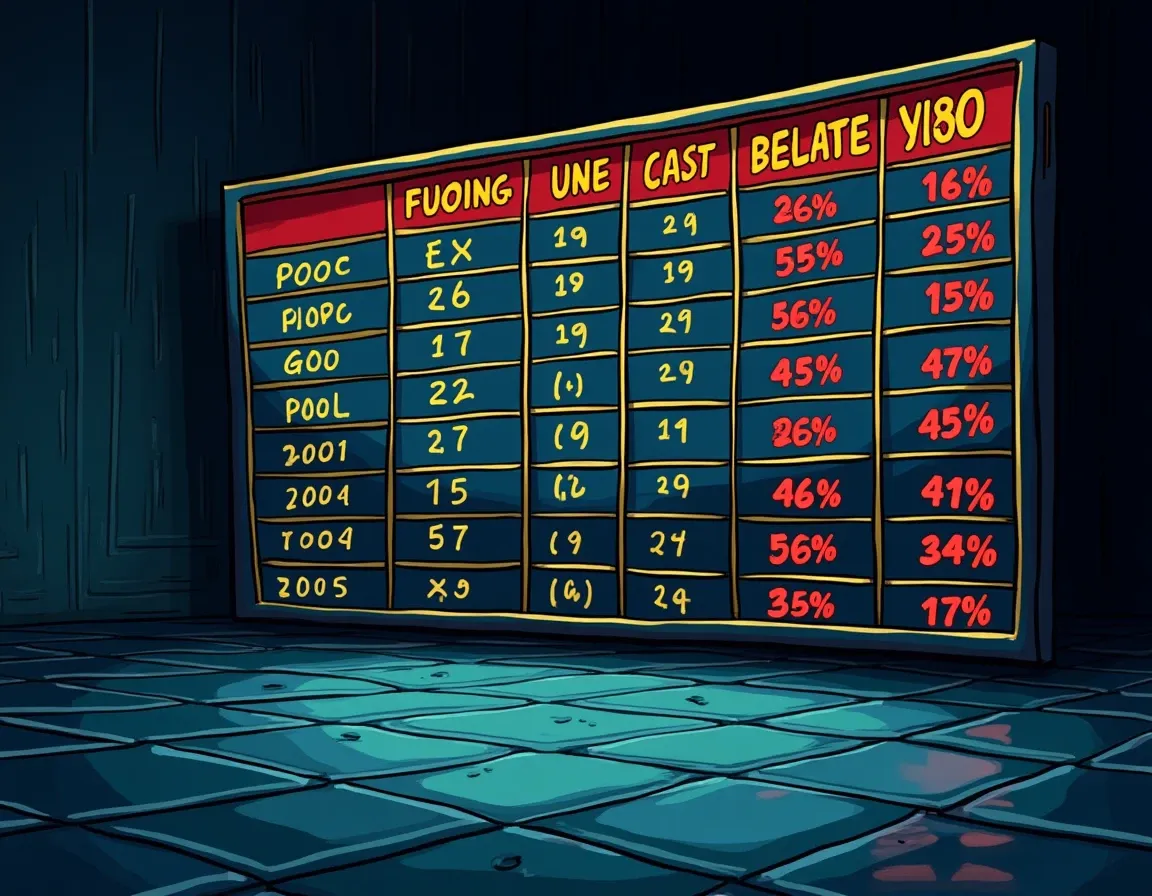
Start with a six-column table: Pool, Current APY, Previous APY, Delta, Position Size, and Gas-Adjusted Net Gain. The net gain column is the only one that matters for prioritization. Calculate it as follows: (Delta APY / 100) × Position Size × (Days Held / 365) - Gas Cost - Impermanent Loss Estimate. For stable pools, impermanent loss is zero. For volatile pools like Uniswap V3 WETH, impermanent loss can reach 5.72% on a 2x price move and 25.46% on a 5x move.
Example calculation for a $100,000 position moving from Sparklend USDC at 1.55% to Aave V3 USDC at 6.05%: Delta APY is 4.50pp. Annual gain is $4,500. If you rebalance today and hold for 90 days, the realized gain is $1,125 minus $0.033 in gas. Net gain: $1,124.97. If you batch this move with two others, the effective gas cost per move drops to approximately $0.013. Net gain: $1,124.99.
Now apply the same logic to a $100,000 position moving from Curve USDC-RLUSD at 3.91% to Uniswap V3 WETH at 23.74%: Delta APY is 19.83pp. Annual gain is $19,830. Over 90 days, realized gain is $4,957.50. But Uniswap V3 is a volatile pool. If ETH moves 50% relative to WETH during that period, impermanent loss will erase 1.2% of your position, or $1,200. Fees offset some of that, but not all. Net gain after gas and IL: approximately $3,700-4,200 depending on volatility realized. Still worth the move, but the margin is narrower.
Rank every pool pair by net gain. The highest net-gain move goes first. The lowest goes last. If any move produces negative net gain after gas and IL, do not execute it. Hold the position and wait for a wider spread or lower gas.
Sequence Moves to Minimize Gas and Maximize Capture
Gas optimization has two components: batching and timing. Batching means grouping multiple transactions into a single on-chain call using a vault aggregator or multi-call contract. Etherscan gas tracker shows that gas prices vary by 40-60% within a 24-hour period. Executing during the overnight UTC trough instead of the afternoon peak cuts costs proportionally.
If you are rebalancing $600,000 across six pools, and three of those moves involve Aave V3, batch all three Aave operations into one transaction. The gas cost for a batched Aave withdrawal, swap, and redeposit is approximately $0.08-0.15, compared to $0.10-0.30 for three separate transactions. On six moves, batching saves $0.20-0.60 in absolute terms, or 40-60% of total gas spend. That percentage scales linearly with position count.
Timing matters most when rate movements are temporary. If Aave V3 USDC spiked to 6.05% due to a short-term utilization surge, and historical data shows utilization-driven spikes reverse within 72 hours, you have a 48-hour window to capture the elevated rate before it decays. If you wait five days, the rate may have already dropped to 4.5%, cutting your net gain by one-third. Aave protocol data on DefiLlama shows TVL and utilization trends that help distinguish temporary spikes from structural shifts. A $16.4 billion TVL platform with stable 30-day utilization is less likely to experience permanent rate shifts than a $200 million protocol with erratic flows.
Sequence rule: execute high-delta, time-sensitive moves first. Execute low-delta, stable moves last. If two moves have similar net gain, prioritize the one with higher decay risk. A 2.96pp jump in Sky STUSDS is more likely to persist (protocol governance sets these rates) than a 4.50pp spread between Sparklend and Aave (utilization-driven and mean-reverting).
Handle Pool Disappearances and Appearance Separately
When three pools vanish from tracking feeds simultaneously, you have 12-48 hours to distinguish data coverage gaps from protocol-level risk. Check the protocol's own dashboard first. If Aave V3 positions still appear on the Aave interface with normal APYs, the tracker failed, not the protocol. If the protocol dashboard also shows zero data or error states, verify on-chain directly via Etherscan. A position that does not appear in a tracker but shows normal balance and accrual on-chain is safe but invisible to aggregators.
Pool appearances are the inverse problem. A new Uniswap V3 WETH pool at 23.74% APY may represent genuine high-fee-capture opportunity or a low-liquidity honeypot with unsustainable rates. The staged entry framework for new Curve pools applies here: allocate 10-20% of intended position size in the first 48 hours, then scale up after observing fee consistency, TVL stability, and impermanent loss realized over one full volatility cycle.
Prioritize exits from vanished pools higher than entries into new pools. If you cannot verify a pool's safety within 24 hours, moving capital out is lower-risk than moving capital in. The gas cost is the same either way, but the downside of staying in a compromised pool is 100% loss. The downside of missing a new high-yield pool is opportunity cost, not capital loss.
Common Failure Modes and How to Avoid Them
Failure mode one: rebalancing in response to tracker noise instead of actual rate changes. If three pools vanish from one aggregator but still appear on two others, the issue is aggregator-specific, not pool-specific. Cross-reference DefiLlama, the protocol's own interface, and on-chain data before executing any move. A $100,000 position moved unnecessarily costs $0.03 in gas but resets your holding period for any time-weighted rewards or fee rebates. On protocols with 30-day loyalty bonuses, that reset costs more than the gas.
Failure mode two: chasing yield into volatile pools without accounting for impermanent loss. A 19.83pp spread looks attractive until ETH moves 30% in one week and erases 1.2% of your position. The impermanent loss calculator should be part of every volatile-pool decision. If the pool's historical volatility suggests 15%+ monthly price movement, reduce your expected net gain by 1-5% depending on the pool's fee tier and your range width. Uniswap V3 narrow-range positions capture higher fees but suffer higher IL. Wide-range positions are the inverse. Neither is wrong, but the math differs.
Failure mode three: batching incompatible transactions and paying revert fees. You cannot batch a Curve withdrawal, an Aave deposit, and a Uniswap V3 range adjustment into one transaction unless you use a purpose-built aggregator like DeBank or Zapper. Standard wallet multi-call functions do not handle cross-protocol operations atomically. If one leg of the batch fails, the entire transaction reverts, and you pay gas for the failure. Test batch transactions with small amounts first, or use protocol-specific batching tools that guarantee atomic execution.
Position Size Thresholds and When to Automate
At $50,000 total capital, manual rebalancing weekly is economically rational. Gas costs 0.06% per move, and monitoring six pools takes 15-30 minutes. At $250,000, daily monitoring becomes justified because the annualized value of a 1pp rate improvement is $2,500, and daily checks capture those improvements 2-4 days faster than weekly checks. At $500,000, solver-based automation makes sense if gas savings and speed improvements exceed the solver's fee structure, which typically runs 0.05-0.15% per rebalanced position.
Automation threshold: if you are rebalancing more than 12 positions per month, and your total capital exceeds $250,000, automated threshold-based triggers will save 10-20 hours per month and capture rate improvements 24-72 hours faster than manual monitoring. Crypto trading bots for yield rebalancing covers which platforms handle DeFi-specific automation without bleeding returns through fees.
Below $250,000, automation costs more than it saves. Manual rebalancing with a spreadsheet decision matrix is the correct approach. The six-column table described earlier takes five minutes to update weekly and prevents every failure mode described above.
What to Do Next
Open a spreadsheet. Create six columns: Pool, Current APY, Previous APY, Delta, Position Size, Gas-Adjusted Net Gain. Pull current APY data from DefiLlama, protocol dashboards, or on-chain queries. Calculate net gain for every pool pair where you are considering a move. Rank by net gain, highest to lowest. Identify which moves can be batched (same protocol or compatible aggregator). Check Etherscan gas tracker for the next low-gas window, typically 00:00-06:00 UTC. Execute the top three moves in that window as a batch. Wait 24 hours and recalculate. If the next three moves still show positive net gain after the rate environment updates, execute them. If not, hold.
For positions below $50,000, this process is overkill. You are better served by a simpler weekly threshold check. For positions above $500,000, this process is the baseline, and you should be evaluating solver-based automation or cross-chain rebalancing strategies that capture rate differentials between Ethereum, Arbitrum, and Optimism, where the same protocols often pay 0.5-2pp more due to lower gas costs and protocol incentives.
The Takeaway
You now have the decision matrix that turns six simultaneous pool movements into a ranked, gas-optimized execution sequence. The framework works because it separates economically rational moves from noise, accounts for gas and impermanent loss explicitly, and batches compatible transactions to cut costs by 40-60%. On $600,000 in capital, this saves $200-800 per rebalancing cycle and captures $8,000-15,000 annually in rate improvements that manual, unsequenced rebalancing would miss or delay. The six-column spreadsheet is the tool. The gas-adjusted net gain column is the filter. Everything else is execution.
Rate differentials this wide do not persist. By the time you read this, half of these specific opportunities will have closed. But the decision framework remains constant, because DeFi rate volatility is structural, not episodic. Six pools will move again next week. The question is whether you will capture those movements in priority order or in the sequence you happen to notice them.
Frequently Asked Questions
What position size justifies batch rebalancing across six pools?
At $50,000 total capital, weekly manual rebalancing is rational because gas costs 0.06% per move and monitoring takes 15-30 minutes. At $250,000, daily monitoring becomes justified because a 1pp improvement is worth $2,500 annually and daily checks capture it 2-4 days faster. At $500,000+, solver-based automation makes economic sense if it saves more than its 0.05-0.15% fee. Below $50,000, focus on single-pool threshold checks instead of batch prioritization.
How much gas does batching save on six rebalancing moves?
Batching three Aave operations into one transaction costs $0.08-0.15 versus $0.10-0.30 for separate transactions. Across six moves, batching saves $0.20-0.60 in absolute terms, or 40-60% of total gas spend at current Ethereum rates of 0.044 gwei. The percentage savings scales linearly with position count. Batching also reduces revert risk and captures time-sensitive rate changes faster by executing all moves in one low-gas window instead of spread across hours or days.
Should I move capital into a new pool appearing at 23.74% APY?
New high-yield pools require staged entry. Allocate 10-20% of intended position size in the first 48 hours, then observe fee consistency, TVL stability, and impermanent loss over one volatility cycle before scaling up. A Uniswap V3 WETH pool at 23.74% can lose 5.72% to impermanent loss if ETH doubles, erasing months of fees. Verify the pool has sufficient TVL (minimum $10M for stable fees), check historical volatility, and calculate net gain after IL before committing full position size.
What if three pools vanish from my tracker at the same time?
You have 12-48 hours to distinguish tracker failure from protocol risk. Check the protocol's own dashboard first. If positions still appear there with normal APYs, the tracker failed. If the protocol dashboard also shows errors, verify on-chain via Etherscan. A position showing normal balance and accrual on-chain is safe but invisible to aggregators. Prioritize exits from unverifiable pools higher than entries into new pools, because downside is 100% loss versus opportunity cost.
How do I calculate gas-adjusted net gain for a volatile pool move?
Formula: (Delta APY / 100) × Position Size × (Days Held / 365) - Gas Cost - Impermanent Loss Estimate. For a $100,000 move from Curve at 3.91% to Uniswap V3 WETH at 23.74%, delta is 19.83pp. Over 90 days, gain is $4,957.50. Subtract $0.03 gas and 1.2% IL ($1,200) if ETH moves 50%. Net gain: $3,700-4,200. Compare this to stable-pool moves with zero IL to rank priority correctly.
You have just ranked six pool movements by gas-adjusted net gain using this week's Aave, Curve, and Uniswap data. Those rates will shift again within 72 hours.
Every Thursday: where crypto yield actually is - stablecoins, liquid staking and DeFi lending, with the risk named next to the rate and what changed since last week.
Get it free every ThursdayFree. No trade calls, no allocations, no hype. Unsubscribe in one click.