Table of Contents
On October 9, 2026, approximately $102 million was stolen from 324 wallets across six networks when a covert hardware implant embedded in Ledger devices transmitted users' 24-word recovery phrases over LTE using an eSIM. The devices were purchased from CryptoBilis, an authorized reseller operating in Malaysia, Indonesia, and the Philippines. This is the second major hardware wallet supply-chain compromise in 2026, following a $116M Coldcard incident just two months prior.
The implant read recovery phrases directly from the device screen and transmitted them over mobile networks. Mark Karpelès, former Mt. Gox CEO and now security researcher, noted the implant represented "quite an evolution" from previous versions featuring manually soldered wires. Ledger described the thefts as a physical supply-chain attack, not a breach of its software or internal systems. The incident occurred as Ledger unveiled a new $899 smartphone-like device called Atom.
For anyone who earns in crypto through gambling affiliate income, casino VIP programs, or platform treasury yield, this incident is not just a security headline. It is a direct threat to the capital accumulation you depend on. Most crypto casino affiliates and skilled players who treat gambling as a revenue surface hold six-figure balances in hardware wallets. Losing custody of that capital erases months or years of rakeback, VIP rebates, or RevShare earnings in a single transaction. Understanding how this attack worked, and how to verify your own hardware wallet integrity, is part of income-surface protection, not optional.
What Happened in the CryptoBilis Supply Chain

CryptoBilis operated as an authorized Ledger reseller across three Southeast Asian markets. Customers who purchased devices through this channel received hardware that appeared legitimate but contained a covert implant capable of intercepting recovery phrases. The implant used an embedded eSIM to transmit data over LTE networks, bypassing any local network monitoring or airgapped security assumptions users might have relied on.
The attack drained funds from 324 wallets across six blockchain networks. Tether froze $10 million of USDT, representing partial recovery, but the majority of stolen funds moved through Tornado Cash mixers within hours. This illustrates the ongoing tension between asset recovery mechanisms (centralized stablecoin freeze functions) and privacy-mixing services that obscure on-chain trails.
MediaMarkt Saturn, a major European electronics retailer, stopped selling Ledger devices after a customer in Germany reported an implant. This suggests the supply-chain compromise may have extended beyond Southeast Asia, though the primary documented losses occurred in the CryptoBilis distribution region.
Why This Matters for Crypto Gambling Income Earners

If you earn through crypto gambling affiliate programs, VIP rakeback, or platform treasury yields, your income accumulates in wallets that you control. That is the entire value proposition of crypto gambling income compared to traditional gambling affiliate models: you hold the capital, you control the withdrawals, and you are not subject to payment processor delays or geographic restrictions. But that self-custody model depends entirely on the integrity of your storage infrastructure.
A typical affiliate earning $10,000 per month in RevShare or CPA commissions from platforms like Stake, Rollbit, or BC.Game will accumulate six-figure balances within a year if they are reinvesting into platform tokens or holding for tax-timing reasons. VIP players earning 10% to 15% rakeback on $500,000 monthly volume are dealing with similar capital levels. Losing that capital to a supply-chain attack does not just erase your current balance. It erases your compounding base for future earnings.
The CryptoBilis incident also exposes a geographic risk pattern. Southeast Asia is a major growth region for crypto gambling operators, with significant player volume in Malaysia, Indonesia, and the Philippines. Regional distribution channels for hardware wallets often involve authorized resellers who handle logistics, customs, and local customer support. Those same channels are now proven vectors for physical supply-chain attacks.
How the Implant Worked
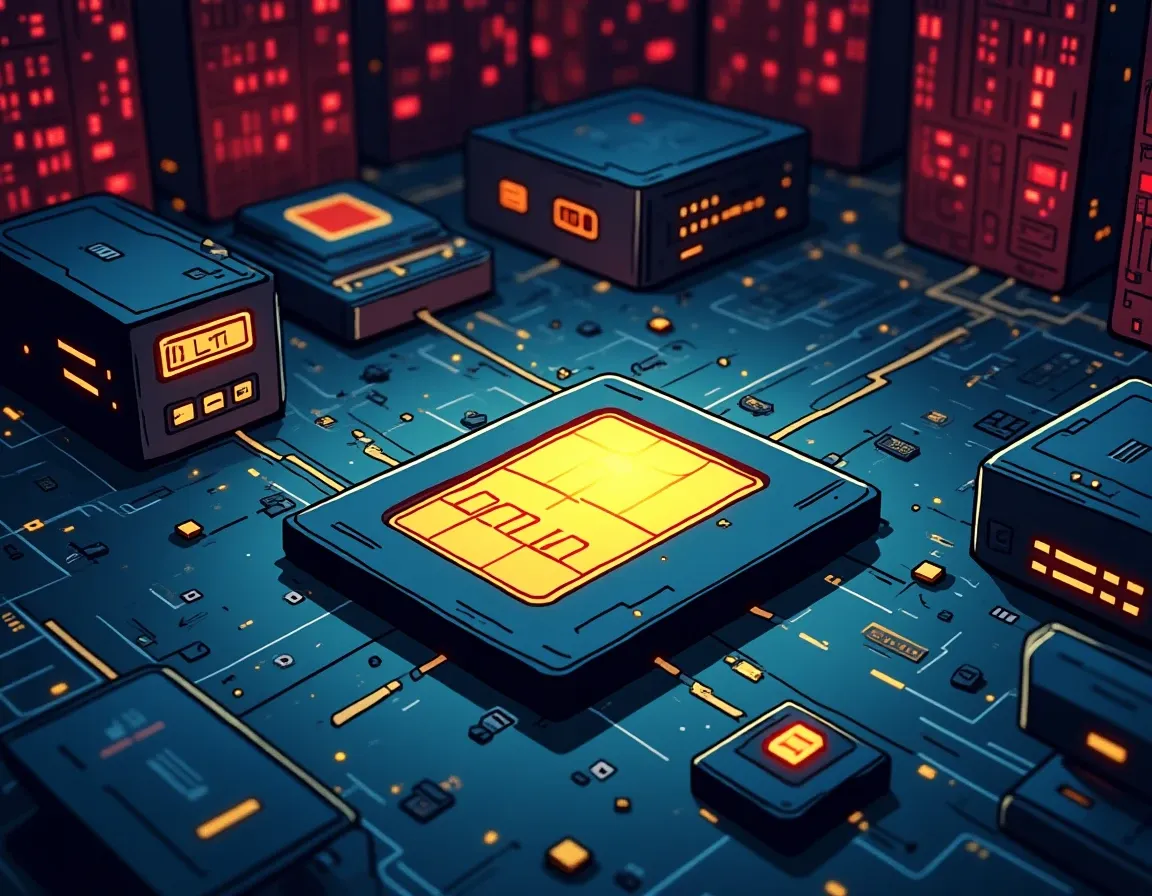
The implant was embedded within the Ledger device hardware and read the 24-word recovery phrase from the screen during the device setup or recovery process. It then transmitted that data over LTE using an eSIM, which does not require any local Wi-Fi or Bluetooth connection. This means the attack worked even if the user believed they were operating in an airgapped environment.
Previous supply-chain attacks on hardware wallets involved manually soldered wires or firmware modifications that could be detected with careful inspection. The evolution to an embedded eSIM-based implant represents a significant escalation in adversary capability. As CoinDesk reported, this level of sophistication indicates state-level or well-funded organized-crime involvement, not opportunistic scammers.
Once the recovery phrase was transmitted, attackers had full control of the wallet. Funds were swept within hours, often moving through mixers before victims realized what had happened. Tether's ability to freeze $10 million of USDT provided partial recovery for some victims, but only for those holding USDT. Funds in BTC, ETH, and other non-freezable assets were gone permanently.
What This Means for Self-Custody Income Storage
Self-custody is the default recommendation for anyone earning significant income through crypto gambling platforms, affiliate programs, or platform treasury participation. But self-custody is only as secure as the hardware and processes you use. This incident exposes two specific vulnerabilities that income earners need to address immediately.
First, purchasing hardware wallets through regional resellers introduces supply-chain risk that cannot be eliminated through software verification alone. Ledger's firmware may be legitimate, and the device may pass all software-based integrity checks, but if the hardware itself has been compromised before you receive it, those checks are irrelevant. This is not a theoretical risk. It has now happened twice in two months, draining a combined $218 million.
Second, the assumption that airgapped environments protect you from remote attacks is no longer valid when the implant itself has network connectivity. Many crypto gambling affiliates and VIP players operate under the assumption that using a hardware wallet in a location without Wi-Fi or Bluetooth creates an impenetrable barrier to remote theft. An eSIM-based implant bypasses that assumption entirely.
For income earners, this creates a practical dilemma. You need secure storage for the capital you are accumulating through affiliate commissions, VIP rakeback, or platform yields, but the storage infrastructure itself is now a proven attack surface. The solution is not to abandon self-custody. It is to verify the integrity of your hardware wallet and to implement multi-signature or time-locked withdrawal structures for large balances.
Verifying Your Hardware Wallet Integrity
If you purchased a Ledger device through any reseller in Southeast Asia, or through any channel other than direct purchase from Ledger's official website, you should treat that device as compromised until proven otherwise. Do not use it for storage of significant balances. Do not enter your recovery phrase into it. Do not assume that because the device appears to function normally, it is secure.
Ledger has not yet published a public verification method for detecting the specific implant used in the CryptoBilis attack. That absence is a problem. In the absence of an official verification tool, the safest approach is to replace the device entirely with one purchased directly from the manufacturer and delivered through a supply chain you can verify. For income earners holding six-figure balances, the cost of a replacement device is negligible compared to the risk of total loss.
For devices purchased directly from Ledger, the risk is lower but not zero. Supply-chain attacks can occur at the manufacturer level, during shipping, or during customs processing. The best practice is to verify the tamper-evident packaging, check the firmware version against Ledger's official release notes, and initialize the device in a controlled environment where you can monitor for unexpected network activity.
If you are holding large balances, consider using a multi-signature wallet structure that requires approval from multiple hardware devices purchased through different supply chains. This limits the risk that a single compromised device can drain your entire balance. It also provides a recovery path if one device is lost or compromised.
The Takeaway
The CryptoBilis supply-chain attack drained $102 million from 324 wallets using a hardware implant that transmitted recovery phrases over LTE. This is the second major hardware wallet compromise in two months, and it exposes a critical vulnerability in the self-custody infrastructure that crypto gambling income earners depend on. If you purchased a Ledger device through any reseller in Malaysia, Indonesia, the Philippines, or any other regional distribution channel, treat that device as compromised until you can verify its integrity or replace it. For anyone holding six-figure balances from affiliate income, VIP rakeback, or platform yields, the cost of replacing your hardware wallet is negligible compared to the risk of total loss. Self-custody remains the correct model for income storage, but the hardware you use to implement it must be verified through supply chains you control.
Frequently Asked Questions
How did the Ledger supply-chain attack work?
A covert hardware implant was embedded in Ledger devices sold through CryptoBilis, an authorized reseller in Malaysia, Indonesia, and the Philippines. The implant read users' 24-word recovery phrases from the device screen and transmitted them over LTE using an embedded eSIM. Attackers then used the recovery phrases to drain funds from 324 wallets across six blockchain networks, stealing approximately $102 million total. The attack bypassed airgapped security assumptions because the implant had its own network connectivity.
How can I verify if my Ledger device is compromised?
Ledger has not yet published an official verification method for detecting the specific implant used in this attack. If you purchased your device through any reseller in Southeast Asia or any channel other than direct purchase from Ledger's official website, treat it as potentially compromised. Do not use it for significant balances and do not enter your recovery phrase. The safest approach is to replace the device with one purchased directly from Ledger and delivered through a verified supply chain. Check tamper-evident packaging and firmware version against official release notes.
Should I stop using hardware wallets for crypto gambling income?
No. Self-custody remains the correct model for storing crypto gambling affiliate income, VIP rakeback, and platform yields. The issue is not hardware wallets themselves but supply-chain integrity. Purchase devices directly from manufacturers, verify packaging and firmware, and consider multi-signature wallet structures that require approval from multiple devices purchased through different supply chains. This limits the risk that a single compromised device can drain your entire balance while maintaining the self-custody benefits that crypto gambling income depends on.
What happened to the stolen funds from the CryptoBilis attack?
Approximately $102 million was stolen from 324 wallets. Tether froze $10 million of USDT, providing partial recovery for some victims, but the majority of stolen funds moved through Tornado Cash mixers within hours of the attack. Funds held in Bitcoin, Ethereum, and other non-freezable assets were permanently lost. This illustrates the ongoing tension between centralized asset recovery mechanisms like stablecoin freeze functions and privacy-mixing services that obscure on-chain transaction trails and prevent recovery.
Is this the first hardware wallet supply-chain attack?
No. This is the second major hardware wallet supply-chain compromise in 2026. A Coldcard incident two months prior drained $116 million. Combined, these two attacks have stolen $218 million through physical supply-chain compromises. Previous attacks involved manually soldered wires or firmware modifications. The CryptoBilis attack represents an evolution to embedded eSIM-based implants that require significantly more sophisticated adversary capabilities, suggesting state-level or well-funded organized-crime involvement rather than opportunistic scammers.
Ledger devices display the full transaction on their own screen before you approve it, which is what stops an approval exploit at the point it matters.
See Ledger devicesWe may earn a commission if you sign up through this link, at no cost to you. It does not change what gets recommended.
You have just read how $102 million was drained from 324 wallets through a supply-chain implant in authorized reseller channels. The next attack vector is already being developed.
Every Thursday: where crypto yield actually is - stablecoins, liquid staking and DeFi lending, with the risk named next to the rate and what changed since last week.
Get it free every ThursdayFree. No trade calls, no allocations, no hype. Unsubscribe in one click.