Table of Contents
Sky TVL fell 15% to $4.42 billion as USDS supply dropped 13.4% in one week. Jupiter Lend grew 28.1% in thirty days to $1.41 billion. Uniswap V3 holds $1.407 billion in total value locked. When stablecoin yields collapse across multiple protocols simultaneously, you have 48-72 hours to separate coordinated market movements from protocol-specific failures. Wrong exit sequencing costs $200-800 in gas fees and loses 12-48 hours of better rates elsewhere.
The decision matrix is gas cost versus opportunity loss. On $500,000 split across four venues, a 3-point yield collapse costs $15,000 annually. Gas to exit Ethereum mainnet positions runs $5-50 per transaction depending on congestion. Gas on Arbitrum or Optimism runs $0.10-$0.50 per swap. If you exit everything immediately, you burn gas moving capital that might stabilize within 72 hours. If you wait on every position, you lose yield on capital that should have moved to better venues 48 hours earlier.
Why Multiple Venues Collapse Simultaneously

Three structural causes drive synchronized yield drops: Fed rate policy shifts, shared protocol dependencies, and incentive program phase-downs. The first is external. The second and third are internal to DeFi architecture.
Fed rate changes move Treasury bill yields, which set the opportunity cost floor for stablecoin capital. When the risk-free rate drops, stablecoin yields compress across every venue. That is a market-wide event. Your decision is whether to accept lower rates everywhere or exit stablecoin strategies entirely.
Shared dependencies are more dangerous. Yield generation is increasingly concentrated inside a small number of lending, routing, and collateral systems. Under high utilization, exposure overlaps automatically. If Aave utilization spikes, every protocol borrowing from Aave feels the rate change. If a major stablecoin depegs, every liquidity pool holding that asset reprices risk simultaneously. Multi-protocol collapses often stem from this mechanical linkage, not coordinated failure.
Incentive program phase-downs are the third cause. A meaningful share of TVL across Kamino, Jupiter Lend, and other Solana protocols is supported by KMNO, JUP, and MNDE emissions schedules continuing through 2026 and into 2027. When multiple protocols' yields collapse simultaneously, it may signal emissions reductions or coordinated capital rotation out of incentivized positions. That is a red flag for permanent rate compression.
The Gas-Adjusted Exit Priority Matrix
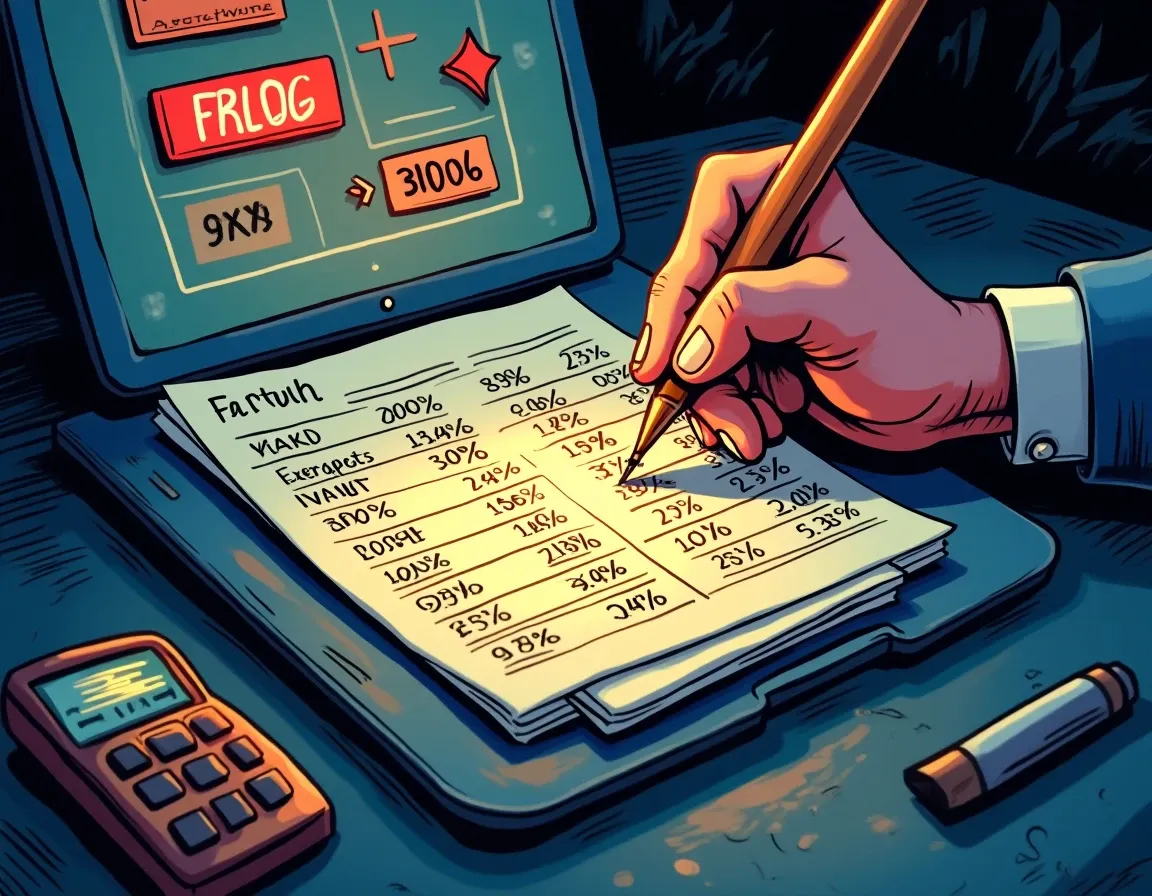
Exit priority depends on five variables: capital allocation size, gas cost to exit, current yield loss, availability of better alternatives, and withdrawal queue or lock-up constraints. Build a spreadsheet. Put each position in a row. Calculate annualized yield loss and gas cost as a percentage of position size.
Start with positions where annualized yield loss exceeds 2% of capital and gas cost is under 0.1% of position size. On a $100,000 allocation, a 3-point yield drop costs $3,000 annually. If gas to exit is $50, that is 0.05% of capital. Exit immediately. The math is clear.
Next, address positions on low-gas chains. Arbitrum, Optimism, and Solana swaps cost $0.10-$2.00 depending on complexity. On these chains, gas is never the binding constraint. The decision is purely yield-based. If a better venue exists and the rate gap is over 100 basis points, move. If no better venue exists, hold and monitor for 72 hours to see if rates stabilize.
Ethereum mainnet positions require different logic. A simple Uniswap swap can cost $5 to $20 depending on network congestion. A study of 121,000 Uniswap V3 liquidity positions from mid-2025 to mid-2026 shows that only 18% of small positions under $1,000 outperformed simply holding tokens after accounting for Ethereum gas fees, with median gas costs of 67 cents for small positions. On allocations under $10,000, gas can consume 0.2-1% of capital. Exit only when annualized yield loss exceeds 5% of position size, or when protocol risk signals justify the cost.
For positions with withdrawal queues or lock-ups, initiate the exit immediately even if you plan to wait on gas-expensive moves. Withdrawal queues on liquid staking derivatives and some lending protocols can run 24-72 hours. Starting the clock early preserves optionality. If rates stabilize before the queue clears, you can cancel. If they continue falling, you are already in line.
When To Wait For Rate Stabilization Versus Immediate Exit

Rate stabilization depends on whether the yield is governance-set or variable. Governance-set rates, like Sky's USDS Savings Rate at 3.75%, do not respond to supply and demand in real time. They change when governance votes to change them. Variable rates, like Aave or Compound borrow rates, adjust every block based on utilization.
Sky's TVL fell 15% and USDS supply dropped 13.4% in one week. The sUSDS rate held steady at 3.80%. That tells you governance did not panic. The rate is a policy decision, not a market reaction. If you hold Sky USDS and the rate has not changed despite TVL collapse, wait 72 hours. Governance may vote to raise rates to attract capital back. Exiting early costs you the option value of that potential increase.
Variable-rate protocols behave differently. If Aave USDT utilization drops and borrow demand falls, the supply APY will fall mechanically. There is no governance vote. The rate will stabilize only when utilization stabilizes. On variable-rate protocols, check the utilization curve. If utilization is trending down and has not found a floor, rates will continue falling. Exit immediately. If utilization has flattened, wait 24-48 hours to confirm stabilization before moving capital.
Incentive-dependent yields are the highest risk. Jupiter Lend utilizes a loan-to-value ratio of up to 95%, and recursive borrowing strategies capture the spread between lending and borrowing rates multiple times over, with reported annual percentage yields on automated strategies reaching as high as 31%. If borrowing costs spike above supply yields, the loops begin bleeding money rather than generating it, potentially triggering the liquidation engine. When incentive-supported protocols show yield collapse, assume the incentives are ending or the strategy has become crowded. Exit within 48 hours unless you have confirmation from governance or team announcements that emissions continue.
Capital Allocation Across Surviving Venues
After exiting collapsing venues, you need a framework to allocate capital across surviving options. The default mistake is chasing the highest headline APY. That maximizes short-term yield and long-term risk.
Sustainable stablecoin yields in 2026 range from 3.5% to 9%, sourced from borrower interest, protocol fees, and funding rate arbitrage. Anything meaningfully above that range is compensation for counterparty risk, leverage risk, or the probability that the yield will disappear before you withdraw. If a venue offers 15%, ask what changed. If the answer is a new incentive program, assume the rate will compress when incentives end. Size accordingly.
Diversify by yield source, not just by protocol. If you hold positions in three protocols that all earn yield by lending to the same borrower base, you have protocol diversification but not risk diversification. When that borrower base deleverages, all three positions will compress simultaneously. Better: split capital between a governance-set rate like Sky USDS, a variable-rate lending protocol like Aave, and a liquidity provision strategy like Uniswap V3 or Curve. Those three earn yield from different sources and respond to different market conditions.
Monitor the TVL trajectory. If a protocol's TVL is growing while its yield is stable or rising, that signals strong demand and sustainable economics. If TVL is falling while yield rises, that is a red flag. Rising yield with falling TVL usually means the protocol is paying more to retain the capital it still has. That is not sustainable. Most failures in 2026 happen because multiple systems stop adjusting at the same speed.
Use tiered allocation. Put the largest allocation into the lowest-risk, most liquid venue with acceptable yield. Put mid-sized allocations into variable-rate protocols where you can exit in one block. Put the smallest allocation into higher-yield, higher-risk strategies where you are compensated for illiquidity or complexity. On $500,000, that might be $300k in Sky USDS at 3.75%, $150k in Aave USDC at 5-6%, and $50k in a Curve or Uniswap V3 stablecoin pair at 6-9%. If any position collapses, the damage is contained.
Common Failure Modes With Real Examples
The most common failure mode is exiting Ethereum positions during gas spikes. On November 7, 2026, the average Ethereum transaction fee hit $18. If you exited four positions that day, you paid $72 in gas. If you had waited 48 hours for gas to normalize to $6, you would have paid $24. The difference is $48. On a $100,000 portfolio, that is 0.048% of capital. Small but unnecessary.
Track gas prices before executing exits. If gas is above $15, wait unless the yield loss exceeds $200 per day. Use tools that show historical gas trends. If gas has been elevated for 24 hours, it will likely normalize within the next 48 hours. If gas spiked in the last two hours, it may stay elevated for days. Adjust timing accordingly.
The second failure mode is moving capital to a venue that collapses within 72 hours. This happens when you chase yield without checking the source. Resolv USR, an overcollateralized stablecoin backed by Ethereum, experienced a severe depegging event on March 22, 2026, dropping 73% to $0.27. If you had moved capital into Resolv USR after exiting a collapsing venue, you would have compounded losses instead of preserving capital.
Before moving capital to a new venue, verify the yield source. If the protocol documentation does not explain where the yield comes from, do not deposit. If the yield is sourced from reward tokens with unclear emissions schedules, size the position at 10% or less of total capital. If the protocol has been live for less than three months, assume the rate will compress as TVL grows and competition for yield increases.
The third failure mode is ignoring withdrawal queues and missing the exit window. Liquid staking derivatives, certain lending protocols, and some liquidity pools have withdrawal delays. If you initiate a withdrawal and rates continue falling during the queue period, you lose yield you could have preserved by starting earlier. Always check withdrawal mechanics before entering a position. If a protocol has a 72-hour withdrawal queue, subtract three days of yield from your expected return when comparing venues.
What To Do Next
Build the exit priority spreadsheet now, before the next collapse. Put every stablecoin position into a row. Record capital allocated, current APY, gas cost to exit, and chain. Update it weekly. When yields collapse, you will have the data ready to make decisions in the first 12 hours instead of scrambling to gather information while rates continue falling.
Set rate-change alerts on your positions. DefiLlama's stablecoin yield page tracks real-time rates across protocols. If you are running $100k or more in stablecoin positions, check rates daily. If you are running $500k or more, set up a script or alert system that notifies you when any position moves more than 100 basis points in 24 hours. Speed matters. The first 48 hours after a collapse determine whether you capture better rates elsewhere or sit in a declining position.
Know the gas-cost breakeven for every position. On Ethereum, calculate how many days of yield it takes to recover one exit transaction. If a position earns 5% APY, one day of yield on $10,000 is $1.37. If gas costs $15, it takes eleven days to recover the exit cost. That means you should only exit if you expect the yield gap to persist for more than eleven days. Run that calculation for every position and record it in your spreadsheet.
Diversify by chain as well as protocol. Ethereum gas risk is real. On $200,000 in stablecoin positions, moving 50% to Arbitrum, Optimism, or Solana gives you two benefits: lower gas costs when you need to rebalance, and insulation from Ethereum-specific congestion events. You still have Ethereum exposure, but you are not locked into paying $20-50 every time you need to adjust a position.
For more on stablecoin yield mechanics and venue selection, see How To Earn Passive Income From Stablecoins In 2026. For simultaneous multi-protocol rate drops, How To Reposition When Four Stablecoin Venues Collapse 1.2-3.12pp In One Week covers capital allocation decision matrices. For gas-cost versus opportunity-loss frameworks, see How To Batch Exit Priority When Five Pools Collapse 3-13pp In One Week.
The Takeaway
On $500,000 across four venues, optimal exit sequencing is the difference between losing $800 in unnecessary gas and capturing 12-48 hours of better rates elsewhere. The framework is simple: exit low-gas chains immediately when better alternatives exist, exit Ethereum positions only when annualized yield loss exceeds gas cost by 10x or more, and initiate withdrawal queues on all positions within the first 24 hours even if you plan to wait on final execution. Governance-set rates may stabilize or increase after TVL drops. Variable rates will fall until utilization stabilizes. Incentive-dependent yields should be treated as temporary regardless of headline APY. Build the spreadsheet now. The next multi-protocol collapse will not give you time to build it then.
Frequently Asked Questions
What causes multiple stablecoin yields to collapse simultaneously?
Three structural causes drive synchronized yield drops: Fed rate policy shifts that move Treasury bill yields and compress stablecoin rates market-wide, shared protocol dependencies where exposure overlaps automatically under high utilization, and incentive program phase-downs across multiple protocols. When Aave utilization spikes, every protocol borrowing from Aave feels the rate change. When emissions schedules end, yields supported by KMNO, JUP, or MNDE rewards collapse together regardless of underlying protocol health.
Should I exit Ethereum positions immediately when yields drop?
Exit Ethereum mainnet positions only when annualized yield loss exceeds gas cost by 10x or more. On a $100,000 allocation, a 3-point yield drop costs $3,000 annually. If gas is $50, that is a 60x ratio, exit immediately. If gas is $20 and yield loss is $500 annually, that is a 25x ratio, still exit. But on positions under $10,000 where gas can consume 0.2-1% of capital, exit only when annualized yield loss exceeds 5% of position size or protocol risk signals justify the cost.
How do I know if a yield collapse is temporary or permanent?
Check whether the rate is governance-set or variable. Governance-set rates like Sky USDS at 3.75% do not respond to supply and demand in real time. If TVL drops but the rate holds steady, governance may vote to raise rates within 72 hours. Variable rates like Aave adjust every block based on utilization. Check the utilization curve: if utilization is trending down without a floor, rates will continue falling. Incentive-dependent yields above 9% should be treated as temporary regardless of protocol announcements.
What is the optimal capital allocation after exiting collapsing venues?
Use tiered allocation diversified by yield source, not just protocol. Put the largest allocation into the lowest-risk, most liquid venue like Sky USDS at 3.75%. Put mid-sized allocations into variable-rate protocols like Aave where you can exit in one block. Put the smallest allocation into higher-yield strategies like Curve or Uniswap V3 pairs at 6-9%. On $500,000, that might be $300k governance-set, $150k variable-rate, and $50k liquidity provision. Monitor TVL trajectory: growing TVL with stable yield signals sustainability, falling TVL with rising yield signals unsustainable retention pricing.
How much can optimal exit sequencing save on a $500k portfolio?
Optimal sequencing saves $200-800 in gas and captures better rates 12-48 hours faster. On $500,000 split across four venues, a 3-point yield collapse costs $15,000 annually. Exiting during gas spikes costs $72 versus $24 during normal periods, a $48 difference per round. Waiting 72 hours on governance-set rates preserves option value if rates increase. Exiting low-gas chains immediately when better alternatives exist captures 100-200 basis points faster, worth $500-1,000 annually on $100k positions. The framework is gas cost versus opportunity loss, calculated position by position.
You just built a gas-adjusted exit matrix for four collapsing venues earning 2.15-10.55pp less than last week. Those rates will shift again within 72 hours.
Every Thursday: where crypto yield actually is - stablecoins, liquid staking and DeFi lending, with the risk named next to the rate and what changed since last week.
Get it free every ThursdayFree. No trade calls, no allocations, no hype. Unsubscribe in one click.