Table of Contents
The Income Question Most NFT Marketplaces Won't Answer
In January 2026, OpenSea processed $5.67 million in platform fees, more than double what Blur made. But neither platform shared that revenue with creators or traders. The income model that dominated NFT marketplaces in 2021 collapsed between 2022 and 2024, and what replaced it only works for a narrow set of participants.
Here's what changed: creator royalties shifted from automatic payments to marketplace-optional donations. Platform fees dropped to zero on most venues. Token staking yields became the primary income mechanism, but only for users holding governance tokens that most platforms never issued.
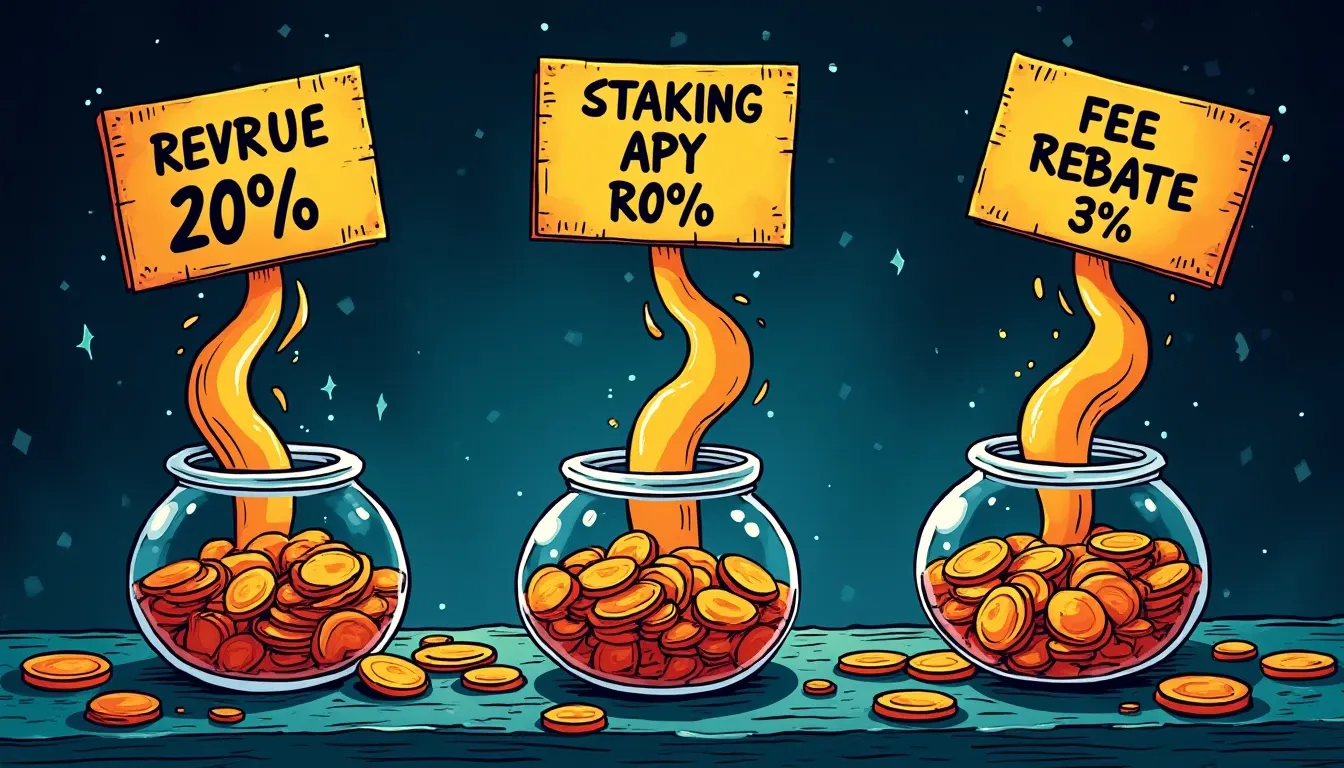
The decision you're making is not which marketplace has the best UI or the deepest liquidity. It's which one offers a realistic path to ongoing income beyond selling NFTs. That requires comparing three distinct mechanisms: creator royalty enforcement, marketplace token staking yield, and aggregator fee rebates.
This article evaluates OpenSea, Blur, LooksRare, and X2Y2 on the numbers. One platform shut down in April 2025. Another is shutting its website November 12, 2026. The two that remain have fundamentally different revenue-sharing models, and only one currently pays ongoing yield to token holders.
Platform Status and Market Position as of November 2026
X2Y2 shut down operations in April 2025. Blur is closing its website on November 12, 2026, eleven days from now, though the smart contracts will remain live. LooksRare shows little to no trading activity as of November 2026. OpenSea remains the only fully operational marketplace with measurable volume, processing approximately $280 million in monthly volume as of May 2026.
The market consolidated. Of the platforms that survived, two have already exited or announced shutdowns. The question is not whether consolidation happened, but whether the remaining platforms offer income opportunities that justify their use.
OpenSea: Volume Leader, Zero Revenue Share
OpenSea reduced its marketplace fee from 2.5% to 0% in early 2024. The platform operates across 20+ chains including Ethereum, Solana, and Base. Monthly volume averaged $280 million in May 2026, representing roughly 30-40% of Ethereum NFT trading volume.
OpenSea does not issue a platform token. There is no staking mechanism. There is no revenue share with users. The only income opportunity for creators is royalty enforcement, which OpenSea made optional in 2023. Collections that implement on-chain enforcement mechanisms like ERC-721C receive royalties. Collections using the ERC-2981 declaration standard do not, because OpenSea's interface does not enforce it.
For traders and collectors, OpenSea offers zero ongoing yield. For creators without on-chain enforcement, secondary royalty income is effectively zero. NFT Creator Royalties: What Actually Pays In 2026 covers the enforcement gap in detail, but the summary is this: marketplace-level enforcement is gone.
Blur: Closing November 12, Smart Contracts Live
Blur charges 0% marketplace fees on Ethereum NFTs and enforces a minimum creator royalty of 0.5%. As of May 2026, Blur processed approximately $320 million in monthly volume, representing 50-60% of Ethereum NFT trading volume. That volume will shift when the website shuts down November 12.
Blur issued a governance token, BLUR, which can be staked on centralized exchanges for yields ranging from 0.5% to 2.22% APY as of November 2026. Some exchange-based staking programs advertise yields as high as 35% APY, but those rates are promotional and unsustainable.
The platform earns revenue from Blend, its NFT lending protocol, not from marketplace fees. When the website closes, users will theoretically be able to interact with the smart contracts directly, but without a UI, most trading activity will migrate. The BLUR token will retain value only if the governance model and Blend protocol continue to generate revenue.
For creators, Blur's 0.5% minimum royalty enforcement is the most reliable among active platforms. For traders, the income opportunity is limited to BLUR token staking at sub-3% yields on centralized platforms. For anyone evaluating this on November 1, 2026, the shutdown timeline makes Blur a non-option for new positions.
LooksRare: Revenue Share Model, Declining Activity
LooksRare reduced its marketplace fee from 2% to 0.5% in April 2023. The platform operates on Ethereum only and shows minimal trading activity as of November 2026. Creator royalties are optional, meaning enforcement depends on seller compliance, not platform policy.
LooksRare issues a governance token, LOOKS, which can be staked to earn protocol revenue. The platform returns 100% of marketplace fees to stakers. Rewards are distributed in two components: LOOKS tokens (from emissions) and WETH (from protocol fees). Current staking yields range from 5% to 20% APY, fluctuating daily based on trading volume and total staked supply.
According to LooksRare's documentation, all WETH collected from fees is consolidated at the end of each 6,500 Ethereum block period, roughly 24 hours, and distributed to LOOKS stakers over the next period. The platform has announced that eventually all staking rewards will transition to ETH-only payments, eliminating the LOOKS token component.
The revenue share model is the most direct among NFT marketplaces. The problem is that LooksRare's trading volume has declined to the point where WETH rewards are marginal. A 20% APY staking yield means nothing if the token price declines 50% while you hold it, and LOOKS has followed that pattern since late 2023.
X2Y2: Shut Down April 2025
X2Y2 charged a 0.5% marketplace fee and returned 100% of revenue to X2Y2 token stakers. The platform shut down operations in April 2025. All data is historical. Do not stake X2Y2 tokens. Do not use the platform. It is defunct.
Creator Royalty Enforcement: What Actually Pays
For the first time in NFT market history, more trades paid creators 0% royalties than trades that paid any royalty at all. That shift occurred between 2022 and 2024 as marketplaces made royalties optional to compete on fees.
The only enforcement mechanism that works in 2026 is on-chain enforcement via ERC-721C or ERC-1155C standards. These standards use operator filters to block trades on marketplaces that do not honor royalties. ERC-2981 is a declaration standard only. Marketplaces can read it, but they are not required to enforce it, and most do not.
Royalty Enforcement by Platform
OpenSea: Enforces royalties only for collections that use on-chain enforcement mechanisms like ERC-721C. Collections using ERC-2981 receive zero royalties unless buyers manually opt in. Seller compliance on optional royalties ranges from 30-50%, according to DappRadar's royalty-free NFT trades report.
Blur: Enforces a minimum 0.5% creator royalty across all trades. Seller compliance on optional royalties above that minimum ranges from 10-20%. Blur is the only platform with mandatory royalty enforcement as of November 2026, but the website shuts down in eleven days.
LooksRare: Royalties are optional. Enforcement depends entirely on seller compliance, which is low. Creators without on-chain enforcement should expect zero royalty income from LooksRare trades.
The income reality for creators is this: if your collection does not implement ERC-721C or ERC-1155C, you are earning zero royalties on secondary sales. If your collection does implement on-chain enforcement, OpenSea will honor it. If your collection relies on Blur's 0.5% minimum, that income stream has eleven days left before the UI disappears.
How NFT Creator Royalty Income Actually Gets Paid (Or Doesn't) covers the technical mechanism in full, but the short version is that marketplace-optional royalties are not income. They are donations.
Marketplace Token Staking Yield: Real Returns and Risk
Staking yields are the only ongoing income mechanism available to traders and collectors who do not create NFTs. The yields are real, but the risks are higher than the APY percentages suggest.
LooksRare (LOOKS): 5-20% APY in WETH and LOOKS
LooksRare's staking yield fluctuates daily based on trading volume and total staked supply. As of November 2026, yields range from 5% to 20% APY. One source reported 20% on a given day, while another reported 13% the day prior. Expect volatility.
Rewards are paid in two components: WETH (from the 0.5% marketplace fee) and LOOKS tokens (from emissions). The WETH component is real income. The LOOKS component is inflationary and declines over time as emissions taper. LooksRare has stated that all staking rewards will eventually transition to ETH-only payments, but no timeline has been provided.
The protocol collects fees at the end of each 6,500 block period, approximately 24 hours, and distributes them to stakers over the next period. This is a direct revenue-sharing model. The problem is that LooksRare's trading volume has declined to the point where WETH rewards are marginal. A 20% APY yield sounds attractive, but if LOOKS token price declines 40% over the same period, real returns are negative.
LooksRare staking is only viable if you believe trading volume will recover. As of November 2026, that belief is not supported by the data.
Blur (BLUR): 0.5-2.22% APY on Centralized Exchanges
Blur does not offer native staking through the marketplace. BLUR token staking is available on centralized exchanges at yields ranging from 0.5% to 2.22% APY as of November 2026. Some sources report an average APY of 35.26% across seven platforms, but those figures are promotional rates tied to liquidity mining programs, not sustainable staking yields.
Blur's income model does not come from marketplace fees. The platform charges 0% and earns revenue from Blend, its NFT lending protocol. BLUR token holders participate in governance and benefit indirectly from Blend's success, but there is no direct revenue share from marketplace activity.
The website shuts down November 12, 2026. The smart contracts remain live, but the UI will be gone. BLUR token value depends entirely on whether Blend continues to generate revenue and whether governance participation remains active. For staking yield, the realistic expectation is 0.5-2% APY on centralized platforms, not 35%.
Platform Risk: X2Y2 and Blur Prove It's Real
X2Y2 offered 100% revenue share to token stakers. The platform shut down in April 2025. Token holders lost everything. Blur is shutting down its website in eleven days. Token staking will continue on centralized exchanges, but the marketplace UI and trading volume will disappear.
Platform risk is not theoretical. It is the single largest risk to marketplace token staking income. APY percentages do not account for the possibility that the platform will cease operations. Token price depreciation and emissions decay are secondary risks. The primary risk is that the platform shuts down.
Aggregator Fee Rebates: The Missing Income Layer
Aggregator fee rebates are the least-documented income mechanism in the NFT marketplace comparison. OpenSea Pro (formerly Gem) and Blur's aggregator interface route trades across multiple marketplaces to find the best price. In theory, pro traders receive rebates or fee reductions for routing volume through the aggregator.
The research data does not include current rebate percentages for OpenSea Pro or Blur's aggregator. This is a gap. Without specific numbers, the comparison defaults to this: if you trade enough volume to qualify for pro-tier rebates, you already know the terms. If you do not trade that volume, the rebates are not material to your income calculation.
Aggregator rebates are not a primary income mechanism. They are a fee reduction for high-volume traders. For the purpose of this comparison, assume rebates offset trading costs but do not generate net income.
Who Each Platform Is Right For
OpenSea: Use this if you are a creator with on-chain royalty enforcement (ERC-721C or ERC-1155C) or a trader who prioritizes volume and multi-chain access over income. OpenSea offers zero staking yield and zero revenue share. The only income opportunity is enforced royalties. If your collection does not use on-chain enforcement, you are earning nothing from secondary sales.
Blur: Do not use this. The website shuts down November 12, 2026. If you hold BLUR tokens, staking yields of 0.5-2% APY are available on centralized exchanges, but the marketplace itself is no longer a viable platform for new positions.
LooksRare: Use this only if you are willing to stake LOOKS tokens and accept token price risk in exchange for 5-20% APY in WETH and LOOKS. The revenue-sharing model is the most direct among active platforms, but trading volume has declined to the point where WETH rewards are marginal. This is a high-risk, moderate-yield option for users who believe LooksRare volume will recover.
X2Y2: Do not use this. The platform is defunct.
Recommendation: OpenSea for Enforcement, LooksRare for Staking
If you are a creator, use OpenSea and implement on-chain royalty enforcement via ERC-721C or ERC-1155C. Marketplace-optional royalties are not income. They are donations, and the data shows that fewer than half of sellers opt in. On-chain enforcement is the only mechanism that works in 2026.
If you are a trader or collector seeking ongoing yield, LooksRare is the only option with a direct revenue-sharing model. Staking LOOKS tokens earns 5-20% APY in WETH and LOOKS, but the yield is volatile and trading volume is low. The risk is that LOOKS token price declines faster than you earn WETH rewards. This is not a passive income strategy. It is an active bet on LooksRare volume recovery.
Blur is shutting down. X2Y2 is defunct. OpenSea offers no staking yield. LooksRare is the last marketplace standing with a revenue-share model, and even that is marginal.
For most users, the realistic income opportunity from NFT marketplaces in 2026 is near zero. How To Flip NFTs For Profit In 2026 covers alternative income strategies, including mint arbitrage and blue-chip cycling, which generate more reliable returns than marketplace staking or royalty enforcement.
The Takeaway
The decision rule is this: if you create NFTs, implement on-chain royalty enforcement and use OpenSea. If you trade NFTs and want staking yield, stake LOOKS tokens on LooksRare and accept that token price risk will likely erase most of your APY gains. If you do neither, NFT marketplace income is not a viable strategy in 2026. The infrastructure that supported creator royalties and trader rebates between 2021 and 2023 no longer exists. What remains is a narrow set of income opportunities that require either on-chain enforcement or active token price management, and both carry execution risk that the headline percentages do not capture.
Frequently Asked Questions
Do NFT marketplaces still pay creator royalties in 2026?
Most marketplaces made royalties optional between 2022 and 2024. OpenSea only enforces royalties for collections using on-chain standards like ERC-721C. Blur enforces a minimum 0.5% royalty but is shutting down November 12, 2026. LooksRare makes royalties optional. For creators without on-chain enforcement, secondary royalty income is effectively zero across all platforms.
Which NFT marketplace offers the best staking yield?
LooksRare offers 5-20% APY staking yield paid in WETH and LOOKS tokens. The platform returns 100% of marketplace fees to stakers. Blur offers 0.5-2.22% APY on centralized exchanges but is closing its website November 12, 2026. OpenSea does not issue a platform token and offers no staking mechanism. LooksRare has the highest yield but minimal trading volume.
What happened to X2Y2 and Blur NFT marketplaces?
X2Y2 shut down operations in April 2025. Blur is closing its website on November 12, 2026, though smart contracts will remain live. Both platforms struggled with declining trading volume after the 2022 NFT market correction. X2Y2 token holders lost all value when the platform shut down. Blur token staking continues on centralized exchanges at 0.5-2% APY.
How do on-chain royalty enforcement standards work?
ERC-721C and ERC-1155C use operator filters to block trades on marketplaces that do not honor creator royalties. These standards enforce payment at the contract level, not the marketplace level. ERC-2981 is a declaration standard only and does not enforce payment. Marketplaces can ignore ERC-2981 royalty declarations. On-chain enforcement is the only mechanism that guarantees secondary royalty income in 2026.
Is NFT marketplace staking yield worth the platform risk?
Platform risk is material. X2Y2 shut down in April 2025, and token holders lost everything. Blur is closing November 12, 2026. LooksRare has minimal trading volume. Token price depreciation often erases APY gains. A 20% staking yield means nothing if the token drops 40% while staked. NFT marketplace staking is a high-risk bet on platform survival and volume recovery, not passive income.
You just compared four marketplaces with yields from 0% to 20% and enforcement models that broke between 2022 and 2026. Those numbers and platforms will continue to change.
Every Thursday: where crypto yield actually is - stablecoins, liquid staking and DeFi lending, with the risk named next to the rate and what changed since last week.
Get it free every ThursdayFree. No trade calls, no allocations, no hype. Unsubscribe in one click.