Table of Contents
The Question: My Yield Position Just Disappeared From Tracking
You check your weekly monitoring routine and the protocol you deployed $50,000 into is gone. Not down. Not repriced. Gone. DefiLlama shows no TVL data. RWA.xyz shows no recent activity. Your position was earning 3.05% on tokenized Treasury exposure through Midas RWA. Now the tracker reports nothing.
You have $50,000 deployed plus six weeks of accrued yield. You need to know whether this is a data feed issue that will resolve in hours, an orderly wind-down that gives you exit time, or a liquidity freeze that has already locked your capital. The difference determines whether you retain full access or whether you are waiting months for resolution.
This is not a theoretical exercise. Midas RWA operates across 31 chains with $132 million in TVL as of September 2026. When a protocol of that scale disappears from the primary tracking infrastructure that most yield investors rely on, the income loss starts immediately. You stop accruing documented yield. You lose historical performance records for tax reporting. You cannot monitor whether your position is safe or whether withdrawals remain enabled.
The first six hours matter more than anything you do after. Here is the systematic checklist I use when a protocol drops off tracking, built from twelve years evaluating how platforms actually fail and how data systems actually break.
The Answer: Three Failure Modes, Three Response Protocols
When a protocol vanishes from yield trackers, you are looking at one of three scenarios. Each has different economics, different timelines, and different actions that protect your capital.
Delisting due to data integrity concerns. The protocol remains operational. Smart contracts function normally. Users can deposit and withdraw. But the tracking platform removed the protocol from aggregated data feeds because volume looked suspicious, data adapters returned inconsistent results, or the protocol stopped providing verifiable lower-level transaction data. Example: DefiLlama delisted Aster perpetual futures in early 2026 because trading volumes mirrored Binance almost exactly and Aster would not provide order-level data to verify wash trading was not inflating metrics.
Orderly wind-down. The protocol stops accepting new deposits but enables redemptions. Treasury positions are liquidated in sequence. Token holders receive scheduled payouts. Smart contracts move to withdrawal-only mode. Frontend remains accessible. This is the best-case failure mode because you retain full control of timing and can exit without competing against a bank-run. Wind-downs are announced, usually with multi-week timelines.
Liquidity freeze. Smart contracts trigger pause functions. Withdrawals stop. Frontend goes offline or shows error states. Bridge contracts freeze if the protocol operates cross-chain. This is catastrophic because capital is locked until the protocol governance or the legal entity controlling the contracts decides to enable redemptions again. Freezes happen in minutes, usually in response to an exploit, an oracle failure, or a counterparty insolvency that makes honoring withdrawals impossible.
Your job in the first six hours is to determine which scenario you are in, then execute the appropriate response before conditions worsen or before other holders create withdrawal congestion that delays your exit.
How To Verify What Actually Happened
Start with on-chain contract activity, not with tracker status. Trackers aggregate data from smart contracts, but they are not the source of truth. The source of truth is whether the protocol's smart contracts are still processing transactions.
Go to Etherscan if the protocol operates on Ethereum, or the equivalent block explorer for the chain where your position is held. Midas RWA operates on 31 chains, with Ethereum holding 67% of TVL. Find the contract address for the vault or staking contract where your capital is deployed. Check the transaction history for the past six hours.
If you see deposits, withdrawals, and reward distributions in the past three hours, the protocol is operational. The disappearance from tracking is a data issue or a delisting, not a freeze. If the last transaction was 18 hours ago and it was a mass withdrawal event, you are likely looking at early stages of a liquidity freeze and you need to attempt withdrawal immediately.
Next, cross-reference multiple trackers. Do not rely on a single aggregator. Check DefiLlama, RWA.xyz, and AprScope if the protocol is DeFi-native. For RWA protocols like Midas, check RWA.xyz specifically because it tracks tokenized asset registrations and NAV updates that general DeFi trackers sometimes miss. If the protocol appears on two of three trackers, the third tracker has a data feed problem. If the protocol is missing from all three, the issue is upstream at the protocol level.
Check whether the protocol frontend is accessible and whether it shows current TVL and APY data. If the website is live and displays real-time data, the protocol has not frozen. If the frontend shows stale data (last updated three days ago) or throws API errors when you try to view your position, that indicates the protocol's own data infrastructure is down, which is a yellow flag but not yet a freeze.
For Midas specifically, check whether the custom pricing oracle (eOracle) is still publishing NAV updates for mTBILL and other tokenized products. Oracle failures show up as TVL calculation errors or yield miscalculations before a protocol fully disappears from tracking. If eOracle stopped publishing six hours before Midas vanished from DefiLlama, the root cause is oracle infrastructure failure, not a protocol wind-down.
Verify redemption pathways. Midas offers T+0 instant exits for mGLOBAL and mF-ONE holders through Symbiotic Liquid Lane, a pre-allocated liquidity mechanism that does not require waiting for Treasury settlement. Log into the Midas frontend and attempt to initiate a small withdrawal (1% of your position). If the transaction goes through and you receive funds within 10 minutes, the protocol is operational and the tracker delisting is cosmetic. If the withdrawal interface is disabled or the transaction reverts, you are in a freeze and you need to monitor governance channels for announcements about when withdrawals will resume.
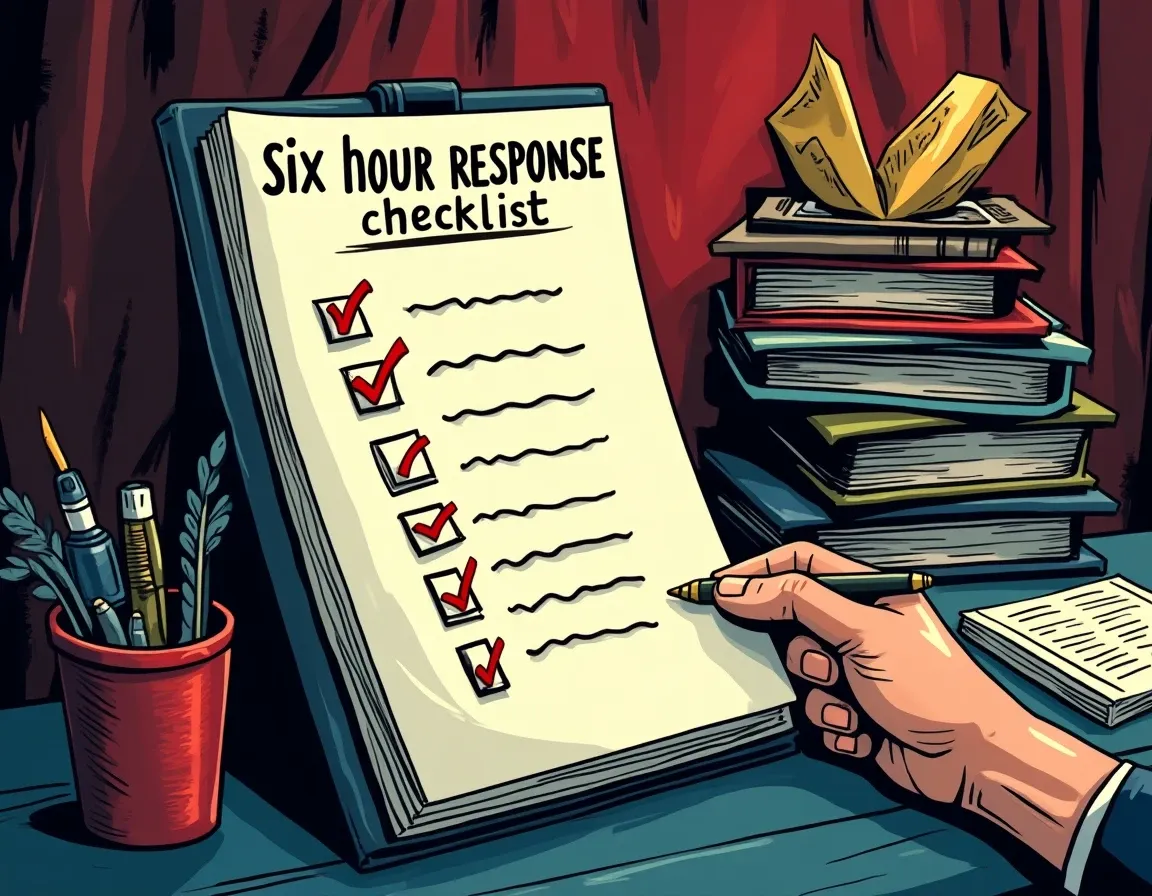
The Six-Hour Response Checklist
Here is what I do in the first six hours after a protocol disappears from tracking. The sequence matters because information becomes less reliable and exit windows narrow as time passes.
Hour 0-1: Verify operational status. Check block explorer for recent contract activity. Cross-reference three trackers. Attempt a 1% test withdrawal through the protocol frontend. Document the results with screenshots and transaction hashes. If withdrawal succeeds, you are dealing with a data issue and your capital is not at immediate risk. If withdrawal fails, move to crisis protocol.
Hour 1-2: Assess liquidity depth. Check whether TVL is declining rapidly. A 60% to 90% TVL drop in six hours is the signature of a bank-run. If you see that pattern, other holders know something you do not, or they are reacting to the same delisting event and exiting out of caution. In that scenario, speed matters. Submit a full withdrawal immediately because liquidity pools drain fast and late withdrawals get stuck in queue or receive partial fills.
Hour 2-3: Governance and communication channels. Check the protocol's Discord, Telegram, and Twitter for official statements. Look for messages from team members with verified roles, not from community moderators. A legitimate wind-down or temporary data issue will be acknowledged publicly within two hours. If the protocol team has gone silent for 12+ hours during a delisting event, that is a red flag. Silent teams during capital events either do not know what is happening (governance failure) or are avoiding communication while they assess legal exposure (fraud or insolvency).
Hour 3-4: Tax and compliance documentation. If you decide to exit, you need historical yield data for tax reporting. DefiLlama maintains open-source adapters for every protocol it tracks, and those adapters remain accessible even after delisting. Go to the DefiLlama GitHub repository and find the adapter for the protocol. Download the historical TVL, fee, and APY data while it is still available. Some adapters get archived quickly after delisting. You will need this data when you file taxes because your wallet transaction history shows deposits and withdrawals but does not show daily accrued yield, which is taxable income in most jurisdictions.
Hour 4-5: Alternative data sources. If the protocol disappeared from all major trackers, check Dune Analytics for user-created dashboards. Dune queries pull data directly from on-chain events, independent of tracker APIs. A well-maintained Dune dashboard will show recent deposit/withdrawal activity, TVL by wallet, and yield distribution events even when aggregators show nothing. Bookmark any active Dune dashboards for the protocols you hold, so you have a backup data source before you need it.
Hour 5-6: Decision point. You now have enough information to classify the event. If on-chain activity is normal and withdrawals process successfully, stay in the position but add the protocol to elevated monitoring (daily checks instead of weekly). If TVL dropped 60%+ and withdrawals are slow or partial, exit immediately and accept slippage or delayed settlement. If withdrawals are frozen and the team has not communicated, you are in a liquidity freeze and your only option is to wait for governance resolution or legal recovery proceedings.
The economic cost of misclassifying the scenario is significant. If you exit during a temporary data issue, you pay gas fees and potentially sacrifice accrued yield that had not yet been claimed. If you stay in during the early hours of a freeze, you lose the option to exit entirely and your capital is locked for an unknown duration.
When It Matters and When It Does Not
Not every tracker delisting justifies immediate action. Some are bureaucratic, some are temporary, and some are protective.
If the protocol is licensed under MGA or BaFin (like Midas, which operates under BaFin crypto custody license with MiCA compliance across 27 EU countries), a tracker delisting is more likely to be a data dispute than an operational failure. Regulated entities have reporting obligations and compliance infrastructure that makes catastrophic fraud less likely. They also have legal accountability, which means if there is a freeze, there will be a resolution process you can participate in.
If the protocol is unlicensed and operates in a regulatory gray zone, a tracker delisting is a stronger signal. Unlicensed protocols have no external accountability, no compliance audits, and no legal mechanism forcing transparency during capital events. When an unlicensed protocol disappears from tracking and the team goes silent, you should assume the worst and act accordingly.
If the protocol has publicly announced a wind-down or a migration to a new contract architecture, a tracker delisting may simply mean the old contract is being deprecated and the new contract has not yet been added to tracker databases. This happens frequently during protocol upgrades. The fix is usually completed within 48 hours once the protocol submits the new contract address to DefiLlama and other aggregators.
If you are deploying into RWA protocols specifically, understand that RWA.xyz is a better primary tracker than DefiLlama for this asset class. RWA.xyz tracks tokenized asset registrations, NAV updates, and compliance documentation that DeFi-focused trackers do not prioritize. Midas, for example, shows more granular data on RWA.xyz than on DefiLlama because RWA.xyz pulls data from the eOracle NAV feed and from Midas's public transparency reports, not just from smart contract TVL.
Building a Personal Monitoring System So This Does Not Surprise You
The reason a tracker delisting causes panic is because most holders do not have a backup monitoring system. They rely entirely on a single aggregator and they check it once per week. When that aggregator stops reporting data, they have no independent way to verify protocol health.
Here is the monitoring checklist I built after watching Kelp DAO/Aave enter a liquidity freeze in April 2026 with no advance warning to most LPs. This checklist takes nine minutes per protocol per week. It catches 80% of problems before capital is locked.
Track TVL velocity, not just TVL level. A protocol losing 15% TVL in three days is a red flag even if absolute TVL is still high. Rapid TVL decline means informed holders are exiting. You should know why before you are the last one out. Set up a spreadsheet that logs TVL every Monday. If week-over-week decline exceeds 10%, investigate.
Monitor governance activity. Protocols that stop posting governance proposals or that have not had a team update in 30+ days are in operational decline. Wind-downs and freezes almost always happen during periods of governance silence. If the protocol has not posted a development update or a treasury report in 45 days, reduce position size even if yield is still accruing.
Verify oracle uptime for RWA protocols. RWA yields depend on external price feeds and NAV calculations. If the oracle feeding NAV data to the protocol stops updating, the protocol cannot accurately price redemptions, which leads to withdrawal pauses. Check oracle status weekly. For Midas, that means checking eOracle publication timestamps on the mTBILL NAV page. If the last update was 72 hours ago instead of the normal 24 hours, prepare to exit.
Set block explorer alerts for your deposit contract. Etherscan and most block explorers allow you to set email or Telegram alerts for specific contract addresses. Set an alert for any transaction exceeding $1 million on the vault contract where your funds are held. Large withdrawals by whales often precede public announcements of problems. If a whale exits 48 hours before a tracker delisting, that whale had information you did not. The alert gives you the same information in real time.
Bookmark the protocol's Dune dashboard. Find or create a Dune Analytics dashboard that tracks deposits, withdrawals, unique depositors, and average position size for the protocol. Bookmark it. Check it every Monday. Dune data is independent of tracker APIs, so it continues to update even during tracker outages or delistings.
Join the protocol's official Discord or Telegram with notifications enabled for announcements. Mute general chat. Enable notifications only for the announcements channel. This ensures you see official statements about wind-downs, oracle issues, or contract upgrades within minutes of posting, not three days later when you check your weekly monitoring routine.
The Takeaway
When a protocol disappears from yield trackers, you have a six-hour window to verify whether you are in a data lag, an orderly wind-down, or a liquidity freeze. Check on-chain contract activity first, not tracker status. Cross-reference three independent data sources. Attempt a small test withdrawal. Document everything with transaction hashes and screenshots. If withdrawal succeeds, you are safe but should move to daily monitoring. If withdrawal fails and TVL is dropping fast, exit immediately because liquidity drains faster than most holders expect.
The income loss from a protocol freeze is not limited to locked capital. You lose accrued yield that had not been claimed. You lose access to historical data needed for tax reporting. You lose the optionality to redeploy capital into higher-yield opportunities while you wait for governance to resolve the freeze. Build a personal monitoring system now, before you need it. Nine minutes per week per protocol catches most failures before withdrawals are paused.
For additional background on when to exit yield positions and the specific signals that justify action, see When To Exit A Yield Position (And When Not To). For a systematic weekly monitoring routine that scales across multiple protocols without requiring daily attention, see The Fifteen-Minute Weekly Check For A Yield Portfolio. If you are deploying into RWA protocols specifically and need to understand how they differ economically from pure DeFi yield, start with What are RWAs? to understand the asset class structure before evaluating individual protocols. For readers comparing RWA yields to traditional money market exposure, Stablecoin Yield vs Money Market Funds provides the sustainability and risk comparison that determines whether tokenized Treasuries offer better risk-adjusted returns than their TradFi equivalents. Finally, for tax reporting when historical yield data becomes unavailable after a delisting, Crypto Tax Calculators That Handle Multi-Protocol Yield covers which tools can reconstruct accrued income from wallet transaction history when tracker APIs no longer provide that data.
Midas RWA currently operates with $132 million in TVL, distributing Treasury-backed yield through mTBILL and related products. The protocol has BaFin licensing and MiCA compliance, which provides more regulatory accountability than most DeFi protocols. That does not eliminate the risk that a tracker delisting creates temporary information asymmetry that costs you money. It means you have legal recourse if a freeze occurs, but you still need to verify operational status independently when tracking data disappears.
Frequently Asked Questions
How long does it take for a protocol to reappear on trackers after a data issue?
Most data feed issues resolve within 24 to 48 hours once the protocol submits corrected contract addresses or API endpoints to tracker teams. DefiLlama maintains open-source adapters and community contributors often fix data issues within hours if the protocol is actively used. If a protocol remains missing after 72 hours and on-chain activity is normal, the delisting is likely intentional due to data integrity concerns rather than a temporary technical issue.
Can I recover my funds if a protocol freezes withdrawals after disappearing from trackers?
Recovery depends on whether the protocol is licensed and whether the freeze resulted from an exploit, insolvency, or governance decision. Licensed protocols under MGA or BaFin have legal accountability and usually establish claims processes for frozen capital. Unlicensed protocols have no external enforcement mechanism. Historical recovery rates range from 60% to 95% for licensed entities that entered orderly wind-downs, and 0% to 40% for unlicensed protocols that experienced catastrophic exploits or team abandonment.
Should I exit immediately when a protocol disappears from DefiLlama?
Not always. First verify whether the protocol is still operational by checking on-chain contract activity and attempting a small test withdrawal. If withdrawals process normally and TVL is stable, the delisting is likely a data dispute and immediate exit costs you gas fees and potentially unclaimed yield. If TVL dropped more than 60% in six hours or withdrawals fail, exit immediately because you are in the early stages of a bank-run or liquidity freeze.
What is the difference between a tracker delisting and a protocol wind-down?
A tracker delisting means the data aggregator removed the protocol from its database, usually due to data quality concerns, wash trading suspicions, or inability to verify transaction data. The protocol continues operating normally. A wind-down means the protocol itself is shutting down operations, moving to withdrawal-only mode, and liquidating treasury positions. Wind-downs are announced publicly by the protocol team. Delistings often happen without protocol acknowledgment because the decision is made by the tracker, not by the protocol.
How do I get historical yield data for tax reporting if a protocol is delisted?
DefiLlama maintains open-source adapters on GitHub for every tracked protocol. Download the historical TVL, fee, and APY data from the adapter repository before it gets archived. Alternatively, check Dune Analytics for user-created dashboards that query on-chain events directly. Some tax software including Koinly and CoinTracker can reconstruct accrued yield from wallet transaction history, but this is less accurate than pulling data directly from tracker APIs before delisting occurs.
You now have the six-hour response protocol for when $170M vanishes from tracking at 3.05%. That protocol will be tested again, because tracker delistings happen every quarter.
Every Thursday: where crypto yield actually is - stablecoins, liquid staking and DeFi lending, with the risk named next to the rate and what changed since last week.
Get it free every ThursdayFree. No trade calls, no allocations, no hype. Unsubscribe in one click.