Table of Contents
Aave V4 deposits crossed $900 million on September 9, less than six months after the protocol's fourth-generation architecture launched on Ethereum mainnet in March 2026. Independent on-chain data showed $806 million in deposits that day, with peaks touching $900 million. That represents a 30% week-over-week increase and a doubling from August levels, when deposits first surpassed $800 million.
The milestone matters less for the absolute number than for the rate of capital movement into a hub-and-spoke architecture designed for modular risk isolation. Aave V3 still holds $19.4 billion in deposits, roughly 21 times V4's total. The migration is early-stage. But the structural shift underway signals that the largest DeFi lending protocol is repositioning itself as infrastructure rather than a standalone application.
Revenue and Loan Activity
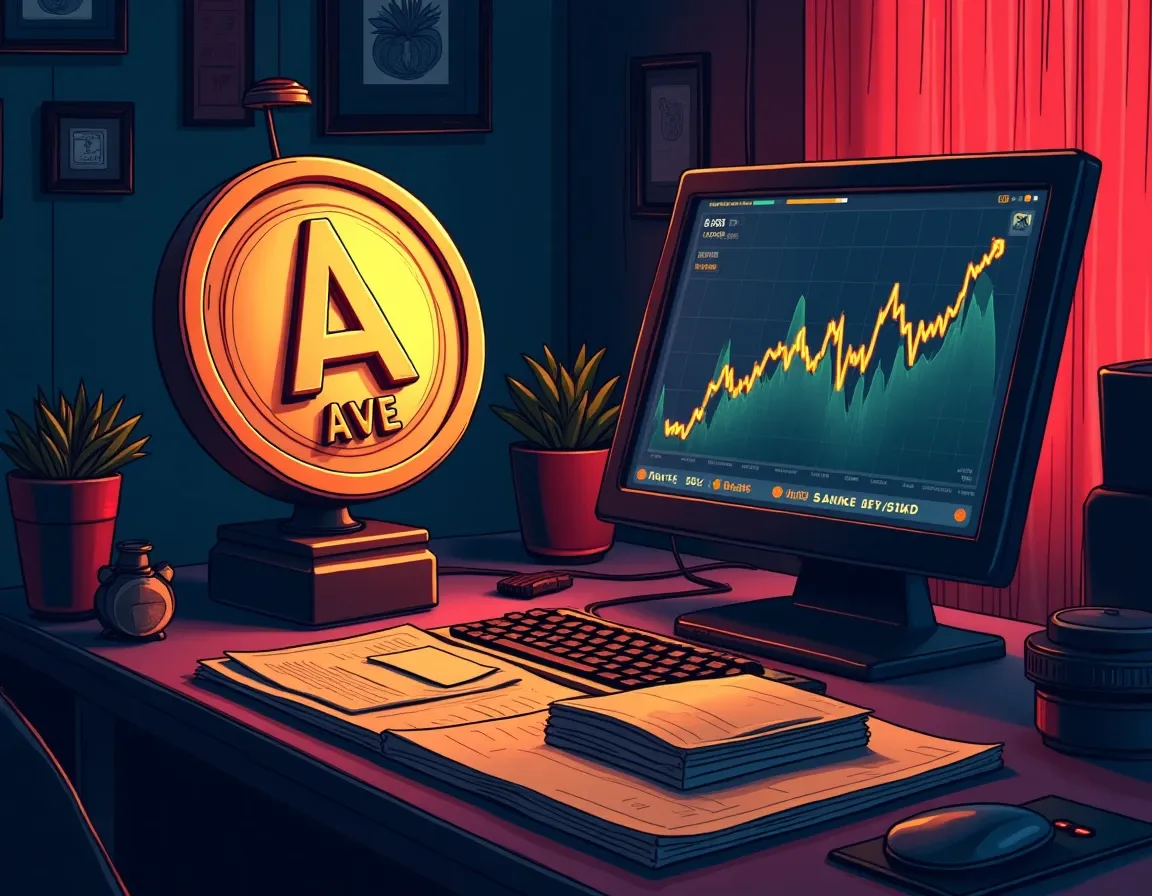
Active borrowing on Aave V4 exceeded $250 million by early September, with some market commentary citing $280 million in outstanding loans. The protocol generated $402 million in annualized revenue across all versions as of September, feeding an automated buyback engine that consumes 292 AAVE tokens daily. That's roughly $107 million per year in buybacks at current prices, assuming the token trades around $1,000.
If you strip out the marketing, the revenue and fee mechanics here are what matter. Aave's model generates fees from the spread between what borrowers pay and what lenders earn. The protocol distributes a portion of that spread to token holders via buybacks rather than direct distributions. That approach resembles equity repurchase programs in traditional markets, where companies retire shares to increase per-share value for remaining holders.
The revenue number is verifiable. The loan figures are independently tracked. The buyback mechanism is on-chain. These are not TVL projections or narrative-driven valuations. This is cash-flow-equivalent activity that you can audit.
V4 Architecture and Institutional Positioning

Aave V4 introduced a hub-and-spoke model designed to isolate risk across different asset pools. The hub manages core protocol logic, while individual spokes handle specific markets with their own risk parameters. That structure allows institutional allocators to participate in one market without exposure to another market's bad debt events or liquidation cascades.
The architecture also enables Aave Horizon, a permissioned layer for real-world asset markets. RWA integration is where traditional finance meets DeFi infrastructure. Institutional capital wants regulated exposure, not anonymous lending pools. Horizon provides that separation.
Kraken submitted a $385 million bid to acquire a stake in Aave earlier this year. The DAO rejected the offer. That bid price, combined with the protocol's $402 million in annualized revenue, gives you a valuation framework. If Kraken valued the protocol at roughly $385 million for a partial stake, the implied enterprise value is higher. The revenue multiple depends on assumptions about fee sustainability and competitive moat, but the baseline numbers are public.
DAO Contraction and Service Provider Exits
While V4 grows, the Aave DAO is winding down six underperforming chain deployments. The protocol launched on multiple chains during the 2021 expansion phase. Some of those deployments never gained traction. Capital stayed on Ethereum and a handful of high-liquidity chains. The DAO voted to exit the low-activity deployments rather than subsidize them indefinitely.
Two core service providers also exited in recent months. Service providers handle development, risk management, and governance operations for the DAO. Exits signal either strategic disagreement or funding constraints. The DAO has not disclosed which.
This is normal corporate rationalization. Companies shut down underperforming divisions. DAOs shut down underperforming chain deployments. The difference is that DAO votes are public, and the decision process is slower. But the economic logic is identical: if a deployment costs more to maintain than it generates in fees, you close it.
Migration Pace and Capital Allocation
The slow migration from V3 to V4 reflects risk assessment by large allocators. V3 is battle-tested. V4 is new. Even with audits and bug bounties, moving $19 billion across a protocol upgrade carries risk. Smart money waits for small money to test the rails.
The $900 million in V4 deposits represents roughly 4.6% of total Aave capital. That's a trickle, not a flood. But the pace is accelerating. Deposits doubled from August to September. If that rate holds, V4 could cross $2 billion by year-end. That would still be less than 10% of total capital, assuming V3 deposits remain stable.
Capital inflows into V4 come from two sources: new deposits and V3 migrations. New deposits signal that allocators see value in the hub-and-spoke model. Migrations signal confidence in the new architecture. The split between the two matters for forecasting long-term adoption, but the data to separate them is not public.
Competitive Positioning and Fee Revenue
Aave competes with Compound, Morpho, and a dozen smaller lending protocols. Compound pioneered DeFi lending. Morpho introduced optimized matching to improve capital efficiency. Aave's edge is scale and liquidity depth. Larger pools mean tighter spreads and lower slippage for institutional-size positions.
The $402 million in annualized revenue puts Aave in the top tier of DeFi protocols by fee generation. The Block tracks fee data across protocols. Aave consistently ranks in the top five. That revenue comes from real economic activity, not token emissions or liquidity mining incentives. Borrowers pay interest. Lenders earn interest. The protocol takes a cut.
Revenue sustainability depends on demand for leverage and the spread between borrowing and lending rates. In low-volatility periods, leverage demand drops. In high-volatility periods, liquidation risk rises. The protocol has navigated both environments since 2020. The revenue has fluctuated, but the model has held.
The Takeaway
Aave V4's $900 million deposit milestone is less important than the 30% week-over-week growth rate and the doubling from August. Those numbers indicate accelerating adoption of the hub-and-spoke model, likely driven by institutional allocators seeking isolated exposure to specific asset pools. The slow migration from V3 signals caution, not rejection. The $402 million in annualized revenue and the 292-token daily buyback provide a valuation floor that most DeFi protocols lack. Watch the migration rate over the next quarter. If V4 crosses $2 billion by year-end while V3 deposits decline, the hub-and-spoke model is working. If V4 stalls below $1.5 billion, the complexity of the new architecture may be limiting adoption.
Frequently Asked Questions
What is Aave V4 and how does it differ from V3?
Aave V4 is a hub-and-spoke lending architecture that isolates risk across different asset pools. Unlike V3, which uses a unified liquidity model, V4 allows institutional allocators to participate in specific markets without exposure to other markets' liquidation events or bad debt. The hub manages core protocol logic while spokes handle individual markets with separate risk parameters. V4 also enables Aave Horizon, a permissioned layer for real-world asset integration.
How does Aave generate revenue for token holders?
Aave generates revenue from the spread between borrowing and lending rates. When users borrow assets, they pay interest. A portion of that interest goes to lenders, and the protocol takes a cut. Aave uses $402 million in annualized revenue to fund an automated buyback engine that purchases and retires 292 AAVE tokens daily. This mechanism resembles equity buyback programs in traditional markets, increasing per-share value for remaining token holders rather than distributing dividends directly.
Why is capital migrating slowly from Aave V3 to V4?
Large allocators prioritize battle-tested infrastructure over new features. V3 holds $19.4 billion in deposits and has operated without major failures since launch. V4 is six months old. Even with audits and bug bounties, moving billions across a protocol upgrade carries smart contract risk. Institutional capital typically waits for smaller allocators to test new architectures before committing significant positions. The 30% week-over-week growth in V4 deposits suggests confidence is building as the architecture proves stable.
What does the Kraken bid tell us about Aave's valuation?
Kraken's $385 million bid for a partial stake in Aave provides a valuation benchmark from a regulated institutional buyer. Combined with $402 million in annualized protocol revenue, that implies a revenue multiple under 1x for the partial stake value, though the full enterprise valuation would be higher depending on the stake percentage. The DAO rejected the offer, suggesting members valued the protocol above Kraken's bid. This gives investors a floor valuation based on real fee generation, not speculative TVL multiples.
How does Aave's hub-and-spoke model benefit institutional allocators?
The hub-and-spoke model allows institutions to isolate exposure to specific asset classes without inheriting risk from unrelated markets. In V3, a liquidation cascade or bad debt event in one pool could affect the entire protocol. V4's spoke structure compartmentalizes risk, so an institution lending to a real-world asset market via Aave Horizon does not carry exposure to volatile crypto-native pools. This separation is critical for regulated allocators with compliance requirements and risk management mandates.
You just analyzed $900 million in deposits, $402 million in annual revenue, and a 30% weekly growth rate. Those numbers will look different in a month.
Every Thursday: where crypto yield actually is - stablecoins, liquid staking and DeFi lending, with the risk named next to the rate and what changed since last week.
Get it free every ThursdayFree. No trade calls, no allocations, no hype. Unsubscribe in one click.