Table of Contents
What Wallet Separation Actually Accomplishes

Running multiple wallets for airdrop farming multiplies eligibility in theory. One wallet equals one allocation. Ten wallets equals ten allocations. The math is simple until you account for detection.
Projects run post-snapshot sybil analysis to identify coordinated wallet clusters. LayerZero disqualified 803,000 addresses in 2024 through funding graph analysis, transaction timing correlation, and off-chain data including Infura RPC logs and centralized exchange deposit IPs. Arbitrum filtered 427,923 addresses in 2023. ZkSync flagged wallets funded from the same source that executed identical transaction sequences within the same time window.
The operational question is not whether to use multiple wallets. The question is how to structure wallet sets so that legitimate parallel activity does not produce the same detection signatures as industrial sybil farms.
Wallet separation works when it achieves two specific outcomes. First, it distributes activity across addresses that look independent to clustering algorithms. Second, it does so at a gas cost low enough that the expected airdrop value exceeds the overhead. Both conditions must hold. If detection algorithms flag your wallets as a cluster, the separation accomplished nothing. If gas costs consume 80% of your expected allocation, the operation was unprofitable.
The Detection Vectors You Are Actually Preventing

Clustering algorithms flag wallets using five primary signals. Each signal has a specific mitigation requirement.
1. Common funding source. If twenty wallets receive their first deposit from the same centralized exchange address within a 10-minute window, the algorithm treats this as a single entity. Matter Labs' zkSync filtering criteria explicitly flagged wallets that received initial ETH from a common source. The pattern is distinctive even when the amounts vary.
2. Transaction sequence matching. If ten wallets interact with contract A, then contract B, then bridge to chain X, then contract D, in that order, within the same week, the probability that this is coincidental is near zero. This functions like browser fingerprinting. Each individual action is common. The sequence is unique. Projects track these interaction fingerprints and cluster wallets that share them.
3. Temporal correlation. Arbitrum flagged wallets that executed transactions at fixed intervals. Every Tuesday and Thursday between 09:00 and 10:00 UTC. The timing signature is machine-readable. Automation that produces perfect patterns is more detectable than human-like randomness.
4. Identical volume patterns. Depositing exactly $500.00 USDC into every address is a sybil signal. Round numbers repeated across wallets indicate programmatic funding rather than organic behavior. Variation is harder to script and less efficient, which is why it works as a differentiation signal.
5. Off-chain correlation. Projects including LayerZero tracked IP addresses, browser fingerprints (Canvas hash, WebGL renderer, AudioContext signature), and timezone settings. A VPN changes your IP but does not touch your browser fingerprint. Multiple tabs share the same fingerprint environment. Running fifty wallets from the same browser session exposes all fifty to the same off-chain signature.
The goal of wallet separation is to break these correlations. Not all of them. Breaking three of five is usually sufficient. The aPriori airdrop saw one entity control 14,000 wallets claiming more than 60% of the distribution. That operation was industrial. Your operation needs to look less coordinated than that threshold.
Step 1: Determine Wallet Count Based On Gas Economics
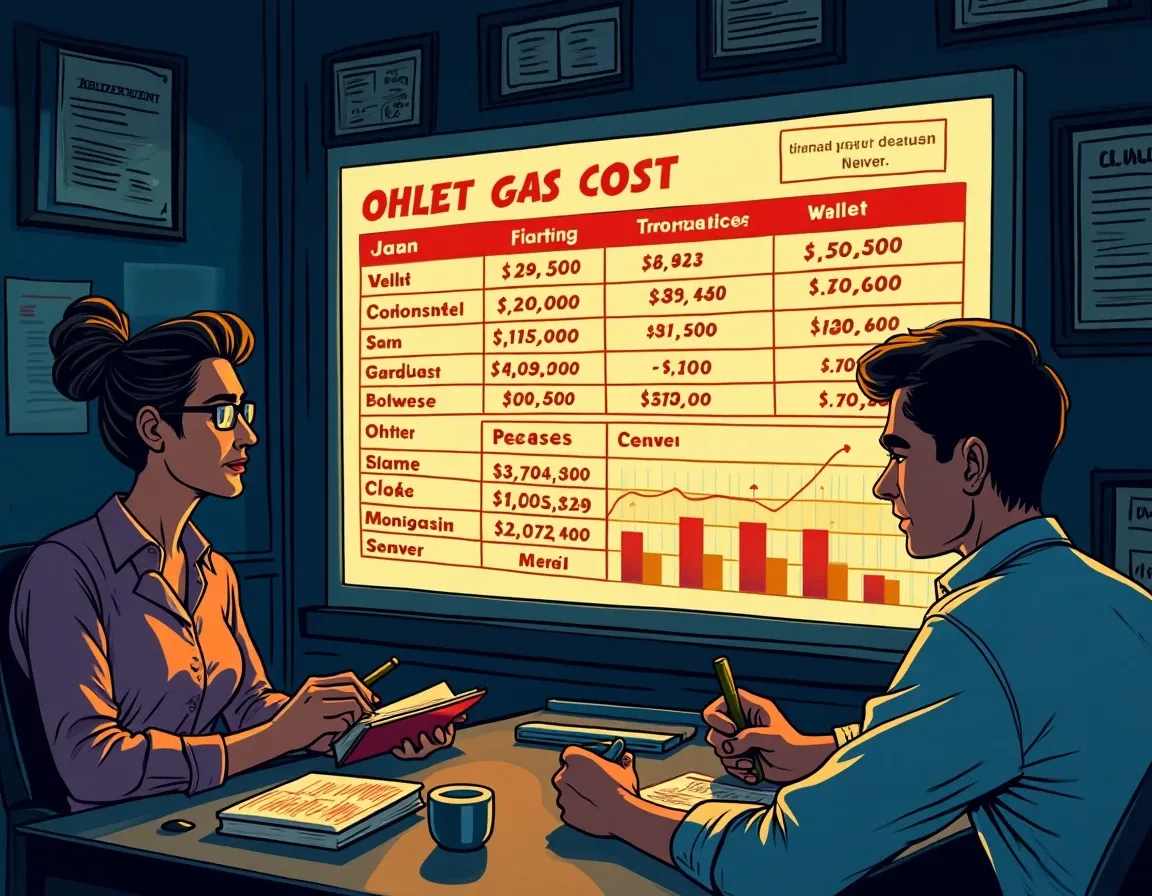
The breakeven calculation is straightforward. Expected airdrop value per wallet minus gas cost per wallet equals net return per wallet. Multiply by wallet count. If the result is negative, reduce wallet count or switch chains.
Gas costs by chain as of late 2024:
- Polygon PoS: $0.002 per transaction
- Solana: $0.001 per transaction
- Base: $0.01 to $0.05 per transaction
- Arbitrum: $0.05 to $0.30 per transaction
- Ethereum mainnet: $8 to $40 per transaction
For a 50-wallet operation farming an Arbitrum-based protocol, assume 10 transactions per wallet over the farming period. At $0.15 average gas per transaction, total gas cost is $75. If the expected airdrop allocation is $200 per wallet, gross return is $10,000. Net return after gas is $9,925. The operation is viable.
For the same operation on Ethereum mainnet, at $15 average gas per transaction, total gas cost is $7,500. Net return after gas is $2,500. The operation is marginally viable. A 20% drop in expected allocation value or a gas spike makes it unprofitable.
Most airdrop farming operations use Layer 2 networks or Polygon for this reason. Ethereum mainnet farming is economically constrained to high-conviction opportunities where expected allocations exceed $1,000 per wallet.
The second constraint is operational overhead. Managing 10 wallets requires tracking 10 seed phrases, 10 transaction histories, and 10 eligibility statuses. Managing 100 wallets requires tooling. Most individual farmers operate between 5 and 25 wallets. Industrial operations run 500 to 5,000. If you cannot automate wallet management without producing detectable timing patterns, cap your wallet count at the number you can manage manually.
When Single Wallet Makes More Sense
Some protocols weight allocations by depth of activity rather than wallet count. Optimism's airdrop in 2022 allocated tokens based on transaction count, contract interaction diversity, and liquidity provision. A single wallet with 200 transactions received more than five wallets with 40 transactions each.
Projects use this structure to reduce sybil farming profitability. It rewards genuine usage over mechanical replication. If the protocol you are farming has announced allocation criteria weighted by depth, consolidate activity into fewer wallets. Three wallets with strong interaction history outperform fifteen wallets with shallow history in this model.
Step 2: Isolate Funding Sources Across Wallet Groups
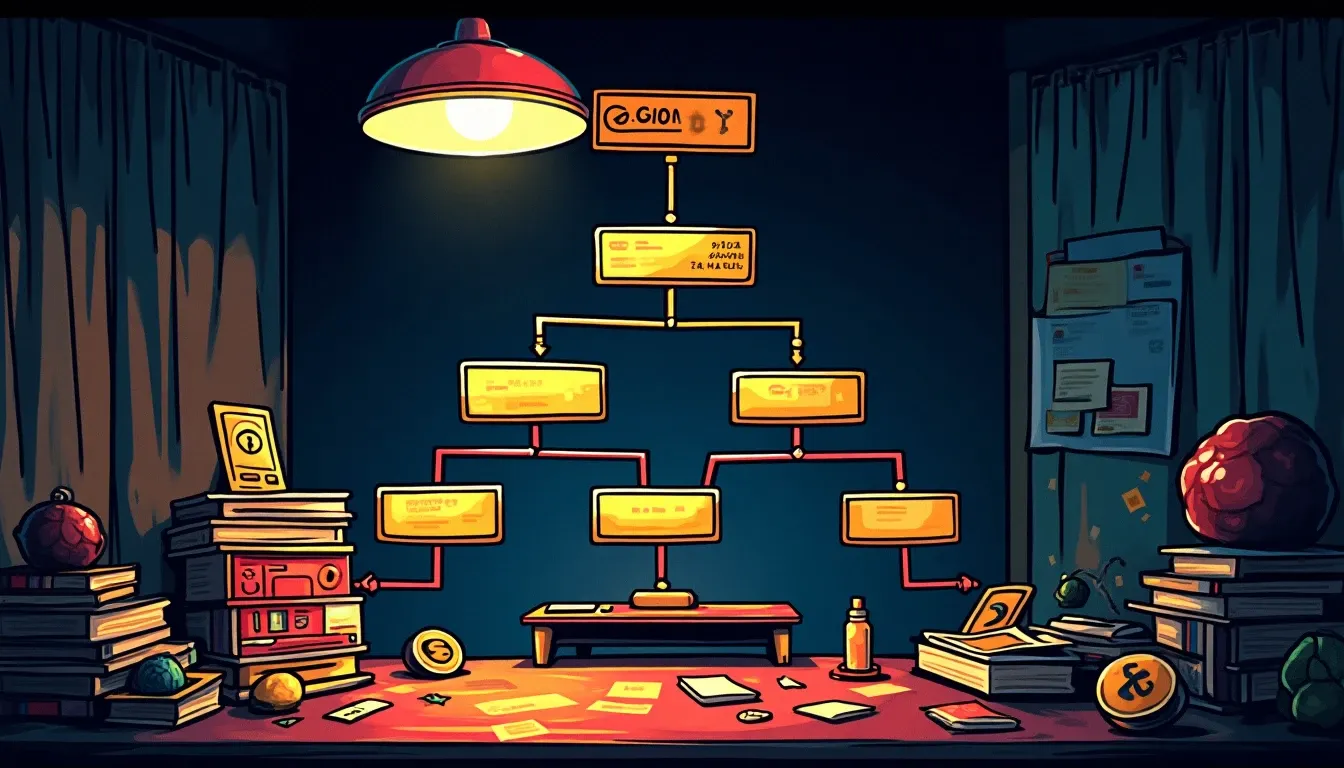
The funding tree structure is the most common detection failure. Do not fund all wallets from a single exchange address. Do not fund wallets in a pyramid structure where wallet A funds wallets B, C, and D, which each fund three more wallets. The shape of that tree is distinctive and matchable.
Structure funding in three tiers.
Tier 1: Primary funding wallets. These are wallets that receive deposits from centralized exchanges. Use different exchanges for different primary wallets. If you are funding 20 farming wallets, create 4 primary funding wallets and use Coinbase for one, Kraken for another, Binance for a third, and a DEX on-ramp for the fourth. Spread deposits over multiple days.
Tier 2: Intermediate wallets. Each primary wallet funds 2-3 intermediate wallets. These wallets hold funds for 48 to 72 hours and perform 1-3 unrelated transactions (a DEX swap, an NFT mint, a token transfer to a different address). This breaks the direct funding link between the exchange and the farming wallet.
Tier 3: Farming wallets. Each intermediate wallet funds 2-4 farming wallets. Use variable amounts. Do not send exactly $500 USDC. Send $487, $523, $461, $508. Spread funding over multiple days. Do not fund all twenty wallets on the same day.
Farmers who properly isolated wallets during the LayerZero airdrop received full allocations. Farmers running 50 to 500 wallets from the same IP or funded from the same centralized exchange were fully disqualified. The difference was not wallet count. The difference was isolation discipline.
Step 3: Randomize Transaction Timing and Sequences
Automation that produces perfect timing patterns is detectable. Wallets that all execute swaps every Tuesday and Thursday between 09:00 and 10:00 UTC share a timing signature. The solution is to introduce randomness at both the timing level and the sequence level.
Timing randomization. If you are scripting transactions, add a random delay between 1 and 72 hours between each wallet's action. Do not execute all twenty wallets in sequence. Execute wallet 1, wait 18 hours, execute wallet 7, wait 6 hours, execute wallet 3. The order should be non-sequential. The intervals should be variable.
Sequence randomization. If the farming strategy requires interacting with contracts A, B, C, and D, do not execute them in the same order across all wallets. Wallet 1 does A-B-C-D. Wallet 2 does A-C-B-D. Wallet 3 does B-A-C-D. The interaction set is the same. The sequence is different. This reduces the likelihood that clustering algorithms identify the wallets as a coordinated set.
Volume randomization. Do not swap exactly 1.0 ETH in every wallet. Swap 0.87 ETH in wallet 1, 1.12 ETH in wallet 2, 0.94 ETH in wallet 3. The variance signals human behavior rather than scripted replication.
These mitigations have an operational cost. Randomization requires more complex scripting or manual execution. Manual execution limits wallet count. The tradeoff is between scale and detection risk. Most individual farmers choose fewer wallets with better isolation over more wallets with higher detection probability.
Step 4: Isolate Browser Fingerprints and IP Addresses
On-chain isolation is necessary but not sufficient. Projects track off-chain signals. IP address correlation and browser fingerprint matching are both in production use.
IP isolation. Do not access all farming wallets from the same IP address. Use a different VPN endpoint for each wallet. If you are managing 20 wallets, rotate through at least 5 VPN endpoints. Access each wallet from the same endpoint consistently. Do not access wallet 1 from endpoint A one day and endpoint B the next. Consistency within each wallet reduces the likelihood that the wallet is flagged for suspicious access patterns.
Browser fingerprint isolation. Use separate browser profiles for each wallet. Chrome and Firefox both support profile isolation. Each profile generates a separate Canvas hash, WebGL renderer signature, and AudioContext signature. Do not open multiple wallets in different tabs of the same browser session. Open each wallet in a separate profile.
For operations managing more than 10 wallets, consider virtual machines or separate physical devices. Each device produces a distinct hardware fingerprint. This level of isolation is operationally expensive but maximally effective. Hardware wallets can assist with key management but do not solve the browser fingerprint problem. The fingerprint is generated by the browser environment, not the wallet software.
Step 5: Monitor For Cluster Detection Before Snapshot
Detection happens post-snapshot in most cases, but some monitoring tools are public. Nansen tracks wallet clusters in real time. Bubblemaps visualizes funding trees. If your wallet set is visible in a public clustering tool before the snapshot, the project's internal analysis will also flag it.
Check your funding wallet addresses in Nansen or Bubblemaps monthly during the farming period. If the tool identifies your wallets as a cluster, the isolation failed. You have two options. First, abandon the flagged wallets and start new ones with better isolation. Second, reduce activity in the flagged wallets to a level where they appear dormant, then shift activity to a new set. Neither option is ideal. The better approach is to verify isolation early and adjust before months of activity are lost.
Some projects announce pre-snapshot sybil reports with amnesty windows. LayerZero did this. The project published a list of flagged addresses and allowed farmers to self-report and consolidate claims to a single wallet. Farmers who did so received reduced allocations but were not fully disqualified. Farmers who did not self-report and were later detected received zero. If the project offers an amnesty window, use it. The reduced allocation is better than disqualification.
Common Failure Modes and How To Avoid Them
Failure mode 1: All wallets funded from the same exchange address on the same day. This is the most common mistake. The fix is to use multiple exchanges and spread funding over multiple days. If you have already made this mistake, the wallets are likely clustered. Starting over with better isolation is more productive than continuing to farm with compromised wallets.
Failure mode 2: Identical transaction sequences executed within the same 24-hour window. This produces a detectable interaction fingerprint. The fix is to randomize both the sequence and the timing. If you are automating, add random delays and random sequence variation to the script.
Failure mode 3: Accessing all wallets from the same IP or browser session. Projects track off-chain signals. The fix is separate browser profiles and separate VPN endpoints for each wallet. This is operationally expensive but necessary for operations managing more than 5 wallets.
Failure mode 4: Funding wallets in a hierarchical tree structure. Wallet A funds wallets B, C, D. Wallet B funds wallets E, F, G. The tree shape is distinctive. The fix is to use intermediate wallets with unrelated transactions between funding tiers. This flattens the tree and makes it harder to reconstruct.
Failure mode 5: Running more wallets than you can manage manually. Automation introduces timing patterns. Manual management introduces operational errors. The optimal wallet count is the number you can manage with randomization discipline. For most individual farmers, this is between 5 and 15 wallets.
What To Do After Wallet Setup
Once wallet structure is in place, the farming strategy begins. Each wallet needs to demonstrate genuine usage. Projects do not allocate tokens to wallets that merely exist. They allocate to wallets that interact with the protocol in ways that demonstrate real usage.
The specifics vary by protocol. Some projects weight transaction count. Others weight transaction volume. Others weight diversity of contract interactions. Read the protocol's documentation and monitor community discussion for signals about allocation criteria. If no criteria are public, assume the standard model: transaction count, volume, and interaction diversity are all weighted.
Maintain a tracking sheet. Record each wallet's transaction count, volume, and interaction history. If the protocol announces allocation criteria mid-farming period, you can quickly assess which wallets meet the threshold and which need more activity. Do not assume all wallets will qualify. Some wallets will underperform. The goal is to maximize the number of wallets that meet the threshold, not to achieve perfect parity across all wallets.
Gas cost tracking is also necessary. Record gas spent per wallet. If gas costs exceed 50% of expected allocation value for a given wallet, deprioritize that wallet and shift activity to lower-cost wallets. Gas cost overruns are the second most common reason airdrop farming operations become unprofitable. The first is disqualification.
The Tradeoff Between Scale and Detection Risk
Wallet separation is a cost-benefit calculation. More wallets equals more eligibility. More wallets also equals higher gas costs, higher operational overhead, and higher detection risk. The optimal wallet count is the point where marginal return per additional wallet drops below marginal cost plus marginal detection risk.
For most individual farmers, this equilibrium is between 5 and 15 wallets. For semi-automated operations with strong isolation discipline, the equilibrium is between 20 and 50 wallets. For industrial operations with custom tooling and dedicated infrastructure, the equilibrium can be 500 or more. But industrial operations face the highest detection risk. The aPriori case demonstrated that 14,000-wallet operations are detectable even when allocation mechanisms do not explicitly filter for sybils.
The structural advantage of smaller operations is that they can achieve better per-wallet isolation. Managing 10 wallets with separate browser profiles, separate VPN endpoints, separate funding sources, and randomized timing is feasible. Managing 500 wallets with the same level of isolation requires infrastructure that most farmers do not have. Detection algorithms exploit this tradeoff. They are optimized to catch large-scale farms. Small-scale operations with strong isolation often pass through.
When Detection Happens Despite Isolation
No isolation strategy is perfect. Projects improve detection methods every cycle. Wallets that would have passed in 2022 are flagged in 2024. If your wallets are disqualified despite isolation efforts, the operational question is whether the strategy is still viable.
Some farmers respond by increasing isolation discipline. More VPN endpoints. More intermediate wallets. Longer delays between transactions. This improves detection resistance but increases operational cost. The alternative is to accept higher detection risk in exchange for lower operational cost and focus on farming protocols with weaker detection infrastructure. Both approaches are rational. The choice depends on your detection tolerance and operational capacity.
The third option is to abandon multi-wallet farming and consolidate activity into a single wallet with strong interaction depth. This eliminates detection risk entirely but also eliminates the eligibility multiplier. For protocols that weight depth over breadth, this is often the better strategy. For protocols that weight wallet count, it is not.
The Takeaway
Wallet separation for airdrop farming works when isolation discipline exceeds detection thresholds and gas economics remain positive. The isolation requirement is not binary. It is a spectrum. Breaking three of five detection vectors is usually sufficient. The optimal wallet count is between 5 and 25 for most individual farmers. Gas costs on Layer 2 networks average $0.05 to $0.30 per transaction, making multi-wallet operations economically viable. Ethereum mainnet farming is economically constrained to high-conviction opportunities. Funding isolation, timing randomization, and browser fingerprint separation are all necessary. On-chain isolation without off-chain isolation is insufficient. Monitor your wallet cluster visibility in Nansen or Bubblemaps before snapshot. If your wallets are clustered in public tools, they are clustered in project analytics.
The detection thresholds will tighten. Projects that disqualified 400,000 addresses in 2023 will disqualify 600,000 in 2025. The isolation discipline that worked last cycle will not work next cycle. Adjust before snapshot.
Frequently Asked Questions
How many wallets should I use for airdrop farming?
Most individual farmers operate between 5 and 15 wallets. This range balances eligibility multiplication against gas costs and operational overhead. More wallets increase detection risk unless you can maintain strict isolation discipline across funding sources, timing patterns, and browser fingerprints. Operations managing more than 25 wallets typically require automation, which introduces detectable timing signatures. The optimal count depends on the gas economics of your target chain and your capacity to randomize transaction sequences and timing manually.
What gets wallets flagged as sybil attacks in airdrops?
Projects flag wallets using five primary signals: common funding source, identical transaction sequences, temporal correlation in execution timing, identical volume patterns, and off-chain correlation through IP addresses and browser fingerprints. LayerZero disqualified 803,000 addresses in 2024 by tracking wallets funded from the same exchange address, wallets executing the same contract interactions in the same order, and wallets accessed from the same IP. Breaking three of these five detection vectors is usually sufficient to avoid clustering algorithms.
How much does gas cost for multi-wallet airdrop farming?
Gas costs vary significantly by chain. Polygon PoS averages $0.002 per transaction, while Arbitrum costs $0.05 to $0.30 per transaction. For a 50-wallet operation with 10 transactions per wallet on Arbitrum, total gas cost is approximately $75 at $0.15 average per transaction. Ethereum mainnet farming costs $8 to $40 per transaction, making it economically constrained to high-conviction opportunities where expected allocations exceed $1,000 per wallet. Layer 2 networks and Polygon are the economically viable options for most farmers.
Should I fund all airdrop wallets from the same exchange?
No. Funding all wallets from the same exchange address is the most common detection failure. Projects including zkSync explicitly flagged wallets that received initial deposits from a common source. Use multiple exchanges for primary funding wallets and introduce intermediate wallets that hold funds for 48 to 72 hours and perform unrelated transactions before funding your farming wallets. Spread funding over multiple days with variable amounts. This breaks the direct funding link that clustering algorithms use to identify coordinated wallet sets.
Can I use a VPN to hide my airdrop farming wallets?
A VPN changes your IP address but does not prevent browser fingerprint detection. Projects track Canvas hash, WebGL renderer signature, and AudioContext signature. Multiple tabs in the same browser session share the same fingerprint environment. Use separate browser profiles for each wallet and rotate through at least 5 VPN endpoints for a 20-wallet operation. Access each wallet from the same endpoint consistently. For operations managing more than 10 wallets, consider separate virtual machines or physical devices to achieve complete fingerprint isolation.
Ledger devices display the full transaction on their own screen before you approve it, which is what stops an approval exploit at the point it matters.
See Ledger devicesWe may earn a commission if you sign up through this link, at no cost to you. It does not change what gets recommended.
You have just seen the breakeven math for 5, 15, and 50 wallet operations across three chains. LayerZero will tighten detection next cycle. Monitor your cluster visibility before then.
Every Thursday: where crypto yield actually is - stablecoins, liquid staking and DeFi lending, with the risk named next to the rate and what changed since last week.
Get it free every ThursdayFree. No trade calls, no allocations, no hype. Unsubscribe in one click.