Table of Contents
Let's be honest — crypto stopped being just a "Bitcoin thing" a while ago. Sure, Bitcoin is still the name everyone knows, the one your uncle asks about at dinner. But under the surface there are thousands of other coins now, each one built for something different — powering apps, moving payments around, running governance votes, storing data, you name it.
So if you're building out a crypto portfolio, the question eventually comes up: do altcoins actually deserve a spot in it, or are they just noise? Honestly, the answer depends a lot on how well you understand what you're buying — not just the ticker symbol, but what the thing is actually for.
What Even Is an Altcoin?
Simplest definition: anything that isn't Bitcoin. That's it. Which, admittedly, is a pretty wide net — it covers everything from Ethereum, a genuinely massive network with years of development behind it, all the way down to some tiny project three people are building in their spare time.
And that's kind of the point — these things aren't interchangeable. Some are built around smart contracts, some are payment-focused, some live in the DeFi world, some are gaming tokens, some are basically just infrastructure plumbing for other blockchains. Different teams, different tech, different economics. Treating "altcoins" like one category is a bit like treating "stocks" as one category — technically true, not actually useful.
That messiness is also exactly why altcoins can be worth including in a portfolio, if you go in with your eyes open.
Why Bother Diversifying at All?
Diversification isn't some crypto-specific idea — it's just old-fashioned "don't put all your eggs in one basket" thinking. But it hits differently in crypto, because the swings here are just bigger. A stock might move a few percent on a bad day. A coin can drop 30% because someone posted something on Twitter.
If your whole portfolio is one coin, you're basically betting your entire outcome on that one project's story — its code, its team, its regulatory luck, whatever competitor shows up next month. Spread that across a few different projects and you're not as exposed to any single one blowing up.
But — and this matters — diversification in crypto isn't the safety net people sometimes think it is. When the market tanks, it tends to take almost everything down with it. Ten different coins can still all drop together on a bad week. So think of diversification as damage control, not a guarantee.
Stop Picking Coins Off a Price Chart
Here's a habit worth breaking: buying something because the chart's going up. That's not a strategy, that's just following the crowd.
A better question is — what does this thing actually do? Some tokens are the backbone other apps get built on top of. Others plug into DeFi, or cross-chain bridges, or gaming worlds, or decentralized storage. And it's not just finance anymore either — AI tools are creeping into this space too, things like the Seedance 2.5 text to video generator show how blockchain communities and AI development are starting to overlap in ways that weren't really happening a couple years ago.
If you look at your holdings by what they actually do instead of what they're called, you'll probably notice something: a lot of "diversified" portfolios are secretly five coins that all do the same job. That's not diversification, that's just duplication with extra steps.
The point was never to own a lot of coins. It's being able to say, out loud, why each one is sitting in your portfolio.
Okay, But How Risky Are We Talking?
Pretty risky, if we're being real. Smaller coins can move way harder than the big ones — up fast when everyone's excited, down just as fast the moment sentiment flips. That's just the nature of low market-cap assets.
Liquidity's another sneaky problem. Some of these smaller tokens don't trade much, which means if you try to sell a decent chunk, you can actually move the price against yourself just by trying to get out.
And then there's the boring-but-important stuff — is the team still building? Is anyone actually using this thing? Does the business model even make sense long-term? Add in the fact that regulators can change the rules with basically no warning, and you start to see why "it went up 40% last week" is a terrible reason to buy something.
A Rough Checklist Before You Buy
Nothing fancy, just some questions worth asking yourself before putting money into a coin:
What problem is this actually solving — and is there real demand, or is that demand mostly hypothetical? What does the tech look like under the hood — scalability, security, is development still active or did the GitHub go quiet six months ago?
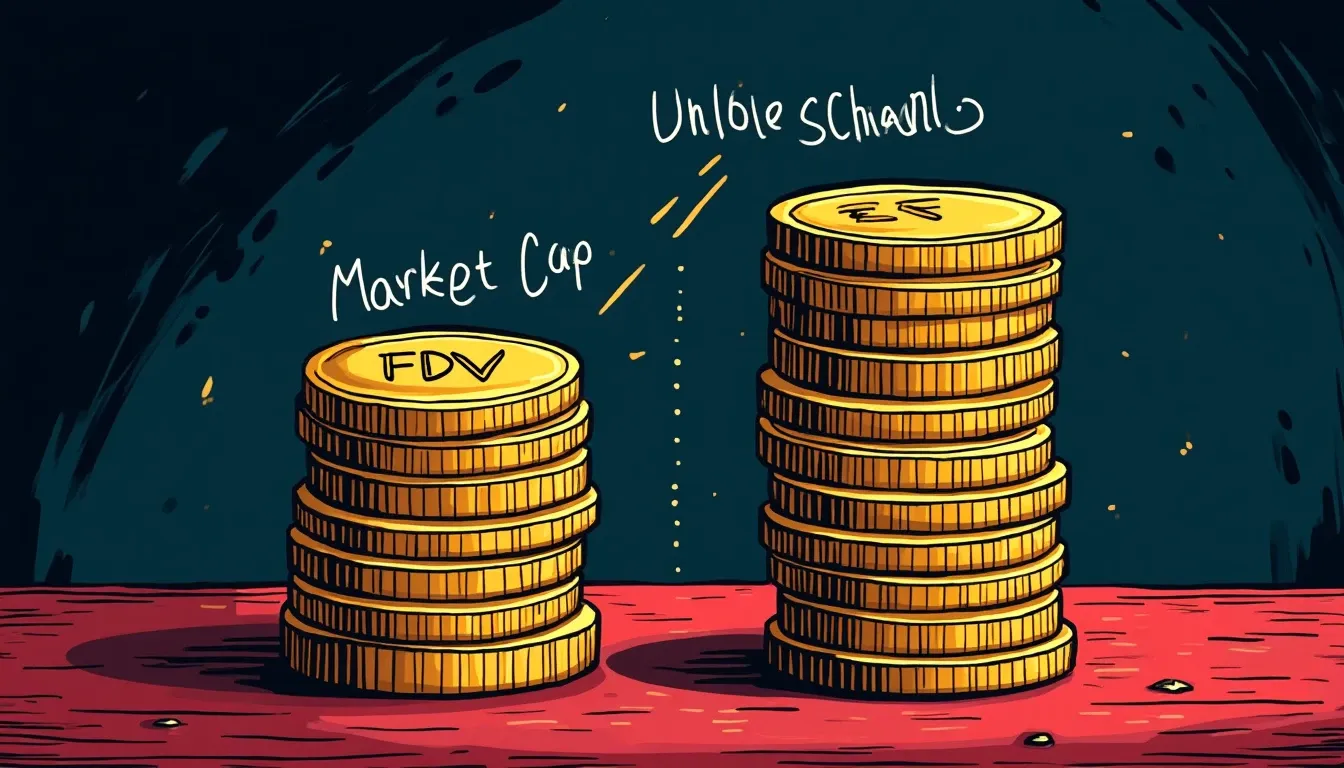
Tokenomics too — how many coins exist now, how many will exist eventually, how are new ones released into the market. A coin that's about to flood the market with new supply is playing a different game than one with a hard, fixed cap.
Worth glancing at developer activity, partnerships, how engaged the community actually is versus just loud. None of this predicts the future — nothing does — but it beats buying blind.
Don't Fool Yourself Into "Fake Diversification"
This one trips people up a lot. You can own ten coins and still not be diversified, if all ten are basically the same bet. A wallet full of small-cap DeFi tokens is still just one bet on DeFi having a good year.
So it's worth thinking on two levels — individual coins, sure, but also the category they belong to. How much do you actually want in established, blue-chip crypto versus bigger altcoins versus the smaller, more speculative stuff?
There's no one right split. It comes down to your own goals, how long you're planning to hold, and honestly, how well you sleep at night when things are down 20%.
The Work Doesn't End at "Buy"
Crypto moves fast — faster than most people account for. A project that looks rock-solid today can get outcompeted, hit a technical wall, or run into regulatory trouble a year from now. Nothing's permanent here.
So checking in on your holdings every so often isn't optional, it's kind of the job. Are the reasons you bought this thing still true? Is development still moving? Has the story changed?
And it's worth staying a little skeptical of hype — a trending hashtag or a loud Discord server doesn't mean much on its own. Communities can be genuinely enthusiastic about a project that still goes nowhere.
Bottom Line
Altcoins can open up a lot more of what crypto actually offers beyond just Bitcoin — but they come with real strings attached. The smart move is understanding what you're buying before you buy it, not chasing whatever's hot this week.
A pretty common setup is keeping the big, established coins as the core of a portfolio, and layering in a few carefully chosen altcoins for exposure to specific niches or emerging tech.
At the end of the day, altcoins aren't a shortcut to getting rich quick. They're a way to get exposure to different corners of this space — as long as you're managing the risk that comes along with them, not ignoring it.
Do the homework, size your positions sensibly, check in regularly, and keep your expectations grounded. That's really the whole game.