
Table of Contents
More than 1,000 bitcoin mining sites were hit by a coordinated hashrate hijacking attack on November 20, with up to 1.9 exahashes per second diverted to imposter pools. The attackers exploited unencrypted Stratum V1 connections, the legacy protocol still used by many mining operations to communicate with pools.
This is not a theoretical vulnerability anymore. It is a confirmed infrastructure attack that redirected live mining revenue from legitimate operators to bad actors, and it spread across continents in waves throughout November.
How the Attack Worked

The hijackers impersonated mining pools by rerouting internet traffic at the network layer. Miners thought they were connected to their chosen pool and contributing hashrate as usual. In reality, their machines were solving blocks for an imposter, and any rewards went to wallets controlled by the attackers.
Stratum V1, the protocol handling miner-to-pool communication, transmits data without encryption. That means anyone with access to upstream network infrastructure can intercept the traffic, spoof pool addresses, and redirect hashrate. No sophisticated exploit was required. The protocol itself is the vulnerability.
Braiins, a mining pool operator and infrastructure provider, identified several attack waves. The first incidents appeared in Latin America before spreading to Europe. Over 1,000 sites were targeted, suggesting the attackers had access to internet service providers or routing infrastructure in multiple regions.
What 1.9 EH/s Represents

To understand the scale, bitcoin's total network hashrate as of late November 2026 sits around 450 EH/s. The 1.9 EH/s diverted represents roughly 0.4% of the network. That is not enough to threaten consensus or rewrite the blockchain, but it is enough to drain millions in mining revenue over a sustained period.
Mining is a low-margin business. Operators already manage thin spreads between electricity costs, hardware depreciation, and block reward income. A multi-day diversion of hashrate is not a nuisance. It is a direct hit to operating cash flow, especially for smaller miners running on tight budgets.
The attackers did not compromise individual mining rigs. They did not need to. By controlling the upstream network traffic, they captured the output of properly functioning hardware. The miners kept mining. The revenue just went somewhere else.
Stratum V1 and the Encryption Gap
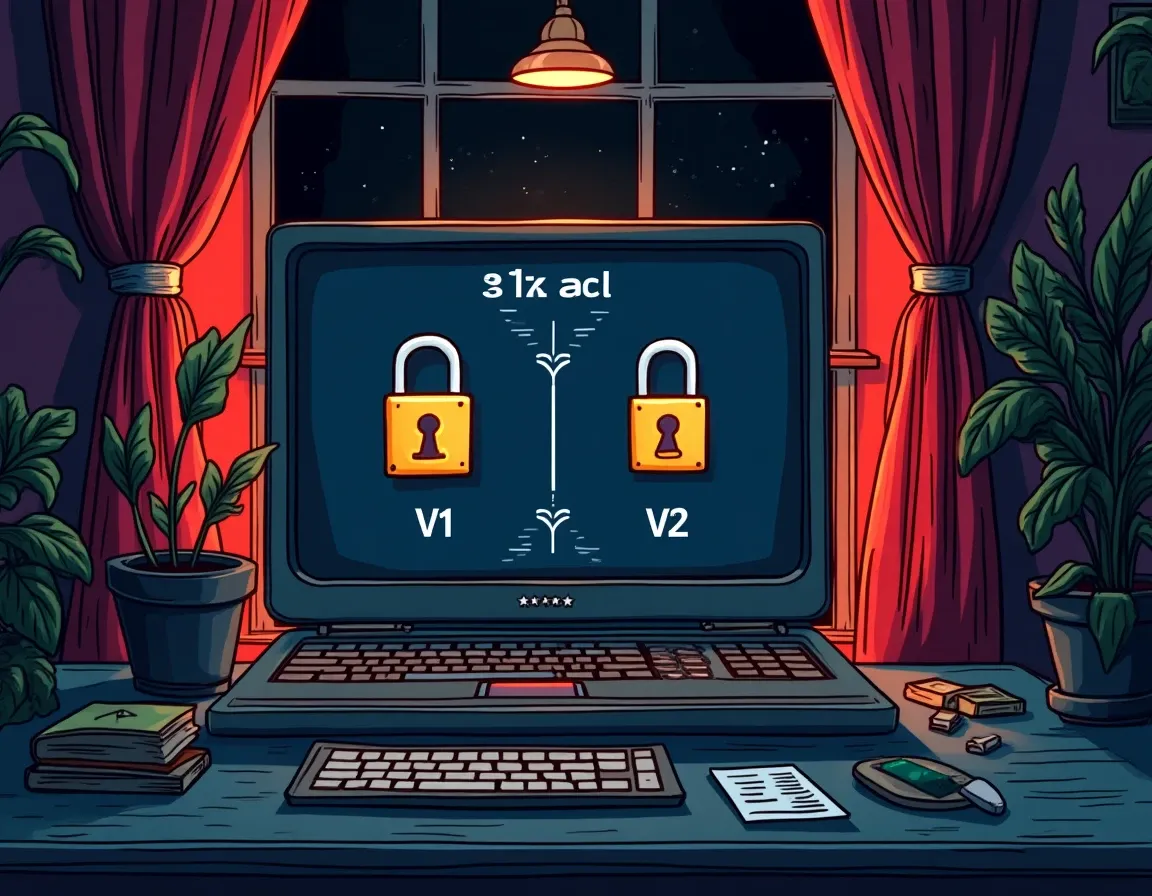
Stratum V1 has been the dominant mining protocol for over a decade. It was built for simplicity and low latency, not security. When it was designed, the assumption was that miners controlled their own network environments and trusted their pool connections.
That assumption no longer holds. Mining has industrialized. Large operations lease space in data centers, connect through third-party ISPs, and rely on infrastructure they do not fully control. The attack surface has expanded far beyond the mining rig itself.
Stratum V2, the successor protocol, addresses this with native encryption. Connections between miners and pools are authenticated and cannot be spoofed by a man-in-the-middle at the network layer. Braiins has been pushing V2 adoption since its release, and this attack will likely accelerate that timeline.
But migration is slow. Upgrading protocol infrastructure requires firmware updates, pool support, and coordination across hardware vendors. Many miners are still running older ASIC models that may not support V2 without flashing new firmware, a process that carries its own risks if done incorrectly.
Implications for Mining Operations
This attack exposes a systemic risk in bitcoin's mining layer. The hashrate itself was never at risk. The network kept validating blocks. But the economic security of individual mining operations is now clearly vulnerable to network-layer attacks, not just hardware failures or pool insolvency.
If you are running a mining operation and still using Stratum V1, you are exposed. The attackers demonstrated they can target sites across continents, which means they either compromised multiple ISPs or exploited vulnerabilities in routing protocols used by those providers. Either scenario suggests this was not a one-off event.
Miners need to treat this as an operational security issue, not a protocol curiosity. Switching to Stratum V2 is the structural fix. In the short term, operators should audit their network configurations, monitor for unusual latency or connection drops, and verify that submitted shares are actually appearing in their chosen pool's dashboards.
Some pools have been slower to implement V2 support than others. If your pool does not offer encrypted connections yet, that is a signal about their infrastructure priorities. You cannot encrypt a connection unilaterally. Both sides need to support the protocol.
The Takeaway
Bitcoin's consensus layer was never threatened by this attack, but its economic layer took a direct hit. When 1,000 mining sites can have their revenue redirected because they are using an unencrypted protocol, that is not a minor bug. That is a structural weakness in how mining infrastructure is built. If you are still on Stratum V1, you are assuming your ISP and every hop between you and your pool is secure. November proved that assumption does not hold.
Frequently Asked Questions
What is Stratum V1 and why is it vulnerable to hijacking?
Stratum V1 is the legacy protocol miners use to communicate with mining pools. It transmits data without encryption, allowing attackers with access to network infrastructure to intercept traffic, spoof pool addresses, and redirect hashrate to imposter pools. The miner continues operating normally but rewards go to the attacker's wallet instead.
How much hashrate was diverted in the November attack?
Up to 1.9 exahashes per second was diverted across more than 1,000 mining sites on November 20. This represents roughly 0.4% of bitcoin's total network hashrate, not enough to threaten consensus but sufficient to drain significant mining revenue from affected operators over multiple days.
Does upgrading to Stratum V2 prevent this type of attack?
Yes. Stratum V2 uses native encryption and authentication, preventing man-in-the-middle attacks at the network layer. Connections between miners and pools cannot be spoofed when both sides support V2. However, adoption requires firmware updates, pool support, and hardware compatibility, which has slowed migration from the legacy protocol.
Can individual miners detect if their hashrate is being hijacked?
Miners should monitor for unusual connection behavior, including latency spikes or unexpected drops, and verify that submitted shares appear in their pool's dashboard. If shares are not registering despite active mining, the connection may be compromised. Switching to a pool that supports Stratum V2 with encrypted connections eliminates this risk.
Were the attackers able to compromise the bitcoin network itself?
No. The attack targeted mining revenue, not network consensus. Bitcoin's blockchain continued validating blocks normally. The hijackers redirected individual miners' hashrate to imposter pools, capturing rewards that should have gone to legitimate operators. This is an economic security issue for miners, not a threat to the network's integrity.
You just read how 1,000 mining sites lost revenue to hijackers exploiting unencrypted connections. That protocol vulnerability still exists wherever Stratum V1 remains deployed.
Every Thursday: where crypto yield actually is - stablecoins, liquid staking and DeFi lending, with the risk named next to the rate and what changed since last week.
Get it free every ThursdayFree. No trade calls, no allocations, no hype. Unsubscribe in one click.