Crypto Mining Machines: Payback Period Ranked by ASICs vs GPUs
Most mining hardware loses to buying the asset directly. Here's when ASICs and GPUs break even at current difficulty, $0.10/kWh power, and why home mining usually fails the ROI test.
Most mining hardware loses to buying the asset directly. Here's when ASICs and GPUs break even at current difficulty, $0.10/kWh power, and why home mining usually fails the ROI test.
Crypto mining earns block rewards plus fees, but electricity and difficulty adjustments determine whether you profit. Here's the real breakeven math at 2026 conditions.
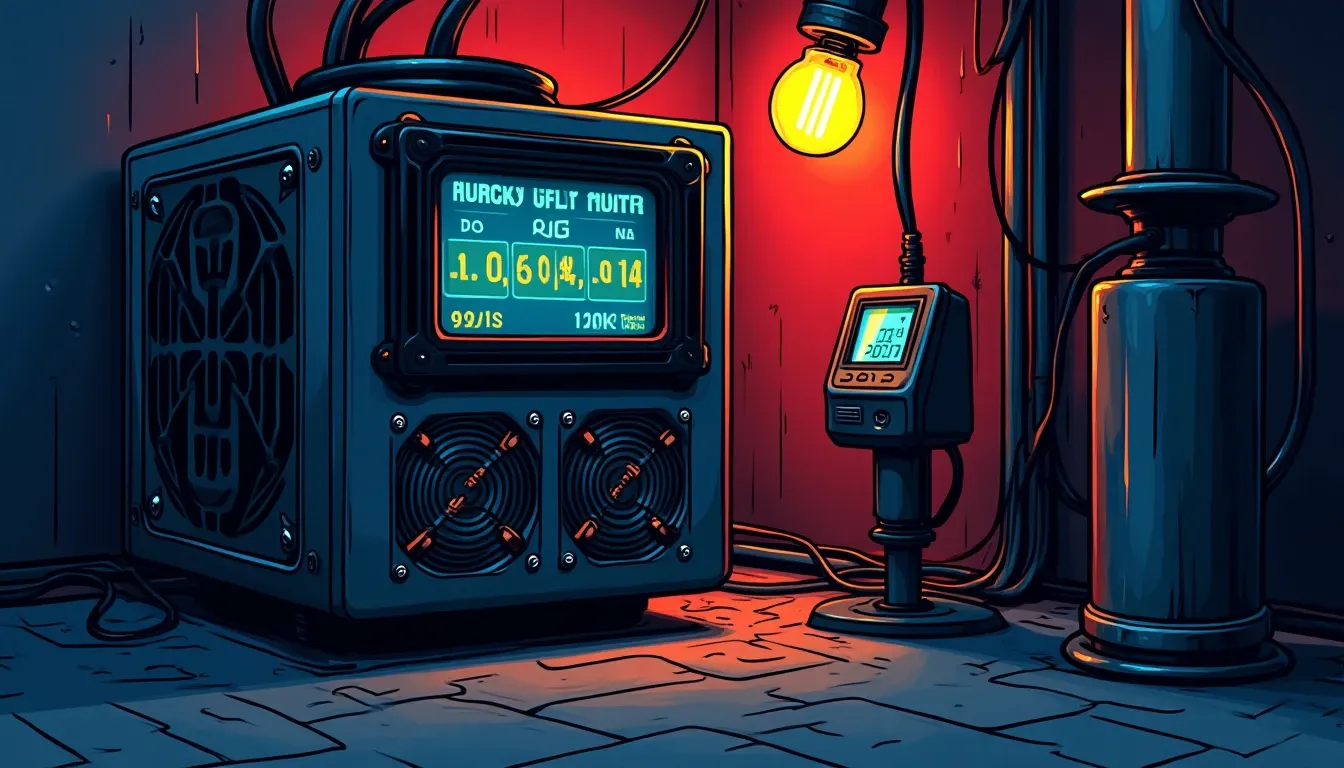
Learn how to profitably mine Bitcoin at home using time-of-use electricity rates. Automation tools, breakeven math, and real ROI examples included.
Variance math proves solo mining is a lottery below 9.5 EH/s. Pool fees run 0-4%. Here's when each makes economic sense for small operators in 2026.
DePIN networks pay users for compute, storage, and bandwidth. But only a handful generate sustainable revenue. Here's the difference between real economics and token emission farming.
Ethereum's shift to PoS killed the biggest GPU mining opportunity. Kaspa, Ethereum Classic, and Ravencoin now dominate, but returns run $0.50-$2/day per GPU.
Most cloud mining is fraud. The sector took $500M in 2024 alone. Here's how to identify the 10% that isn't Ponzi-structured theft disguised as hashrate.

Bitcoin mining in 2026 is profitable only under specific conditions: electricity under $0.10/kWh, efficient ASICs below 16 J/TH, or heat reuse scenarios.
GPU rental nets $1,000-1,500 monthly on A100s versus $10-25 mining the same hardware. We compare uptime, power costs, setup, and break-even on 3080, 4090, and datacenter cards.
FPPS vs PPLNS vs PPS mechanics, hidden fee identification, and the specific variables that shift real mining returns by 5-15% between pools.