Table of Contents
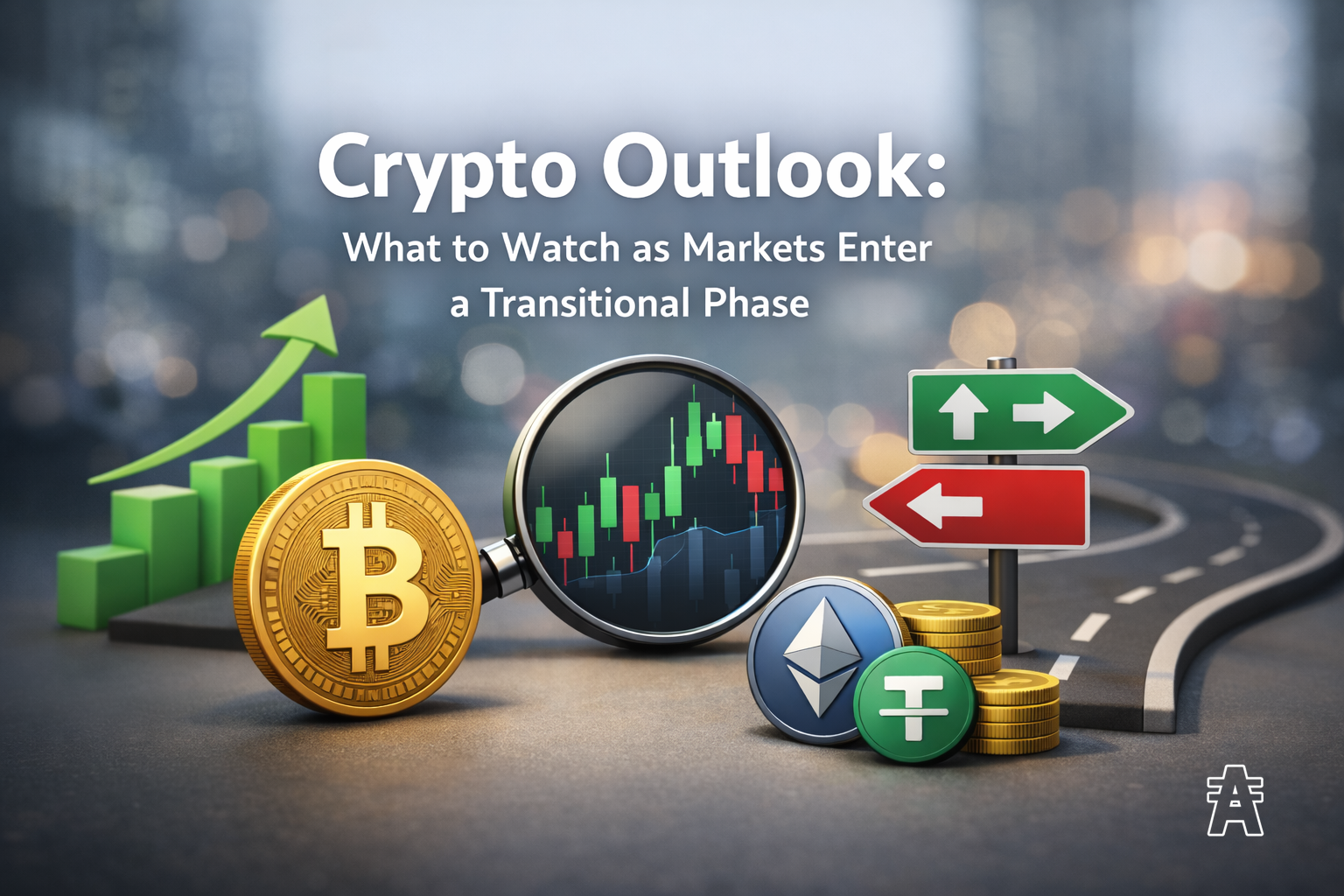
As the cryptocurrency market moves deeper into 2026, investors are navigating a phase defined less by explosive momentum and more by structural change. After the sharp rallies and corrections of the past cycle, digital assets are entering a period where fundamentals, liquidity conditions, and real-world use cases matter more than hype-driven narratives.
This transitional environment presents both challenges and opportunities. Price action may feel slower and less decisive, but under the surface, important shifts are taking place across Bitcoin, altcoins, regulation, and investor behavior. Understanding these dynamics is essential for positioning portfolios intelligently in the months ahead.
Here are the key areas investors should be watching closely.
1. Bitcoin’s Role as a Market Anchor Is Strengthening
Bitcoin remains the gravitational center of the crypto ecosystem, but its role is subtly evolving. Rather than acting solely as a speculative asset, Bitcoin is increasingly functioning as a macro-sensitive store of value within the digital asset space.
Several signals point to this shift. Volatility has compressed compared to previous cycles, long-term holder supply remains historically high, and institutional flows—while uneven—continue to treat Bitcoin as a distinct category separate from high-risk altcoins.
What matters most now is Bitcoin’s ability to hold key support zones during periods of broader market uncertainty. Sustained stability, even without aggressive upside, tends to provide the conditions necessary for selective capital rotation into other parts of the market.
For investors, Bitcoin is less about chasing short-term breakouts and more about watching dominance, liquidity inflows, and on-chain behavior for clues about broader market health.
2. Altcoins Are Entering a Quality-Selective Phase
The days of indiscriminate altcoin rallies appear to be behind us, at least for now. Instead, the market is showing signs of increasing selectivity. Capital is flowing toward projects with clear revenue models, active ecosystems, and tangible utility, while weaker or purely narrative-driven tokens are struggling to attract sustained interest.
Infrastructure-focused sectors—such as layer-2 scaling solutions, interoperability protocols, and real-world asset tokenization—are receiving disproportionate attention. At the same time, speculative segments like meme coins remain active but are behaving more like short-term trading instruments rather than long-term investments.
This environment rewards research and patience. Investors should focus on metrics such as developer activity, protocol usage, governance participation, and token supply dynamics rather than relying solely on price momentum.
In short, not all altcoins will move together anymore—and that’s a sign of market maturation.
3. Liquidity and Macro Conditions Still Matter More Than Narratives
While crypto often feels like its own universe, global liquidity conditions continue to exert a powerful influence. Interest rate expectations, central bank policy signals, and broader risk sentiment across equities and bonds all shape capital availability for digital assets.
Periods of tightening liquidity tend to suppress speculative excess, while even modest signs of easing can reignite appetite for risk. This push-and-pull explains why crypto markets can shift direction quickly even without major industry-specific news.
Investors should keep an eye on macro indicators such as bond yields, inflation trends, and currency movements. Crypto does not operate in isolation, and ignoring the macro backdrop often leads to poor timing decisions.
4. Regulation Is Becoming a Framework, Not Just a Risk
Regulatory developments are no longer purely a source of fear for the market. In many regions, clearer rules—particularly around exchanges, custody, and stablecoins—are providing a foundation for broader participation rather than suppressing innovation.
While uncertainty still exists, especially across jurisdictions, the overall trend points toward normalization. This matters because institutional capital generally requires regulatory clarity before engaging at scale.
For investors, regulatory headlines should be interpreted with nuance. Not every enforcement action is bearish, and not every new framework is immediately bullish. The key is whether regulation reduces ambiguity and supports long-term infrastructure growth.
5. Stablecoins and Yield Models Are Gaining Strategic Importance
Stablecoins are quietly becoming one of the most important components of the crypto economy. Beyond facilitating trading, they are increasingly integrated into payments, cross-border transfers, and decentralized finance strategies.
At the same time, investors are paying closer attention to yield—how it is generated, where it comes from, and whether it is sustainable. Models tied to real economic activity, such as transaction fees or infrastructure services, are gaining credibility compared to purely inflationary incentives.
This shift suggests a broader reevaluation of what “returns” mean in crypto. Passive exposure is being complemented by income-oriented strategies, particularly during periods of sideways price action.
6. Sentiment Cycles Are Shorter—but Still Powerful
Although the market has matured, sentiment remains a powerful force. News-driven spikes, social media narratives, and rapid rotations between sectors still occur, but their lifespan is often shorter than in previous cycles.
This creates an environment where emotional reactions can be costly. Chasing late-stage moves or panic-selling during temporary drawdowns tends to underperform disciplined strategies focused on risk management and long-term positioning.
Successful investors are increasingly those who can separate signal from noise and resist the urge to react to every headline.
Final Thoughts: Patience Is Becoming a Competitive Advantage
The current phase of the crypto market is not defined by constant excitement—but by quiet preparation. Infrastructure is improving, participants are becoming more sophisticated, and capital is moving with greater intention.
For investors, this means shifting focus from quick wins to sustainable strategies. Watching Bitcoin’s stability, evaluating altcoins on fundamentals, monitoring liquidity conditions, and understanding regulatory direction can provide a meaningful edge.
Markets may not move fast every day—but when they do, those who prepared during quieter periods are usually the ones who benefit most.