Table of Contents
The Decision You Are Trying to Make
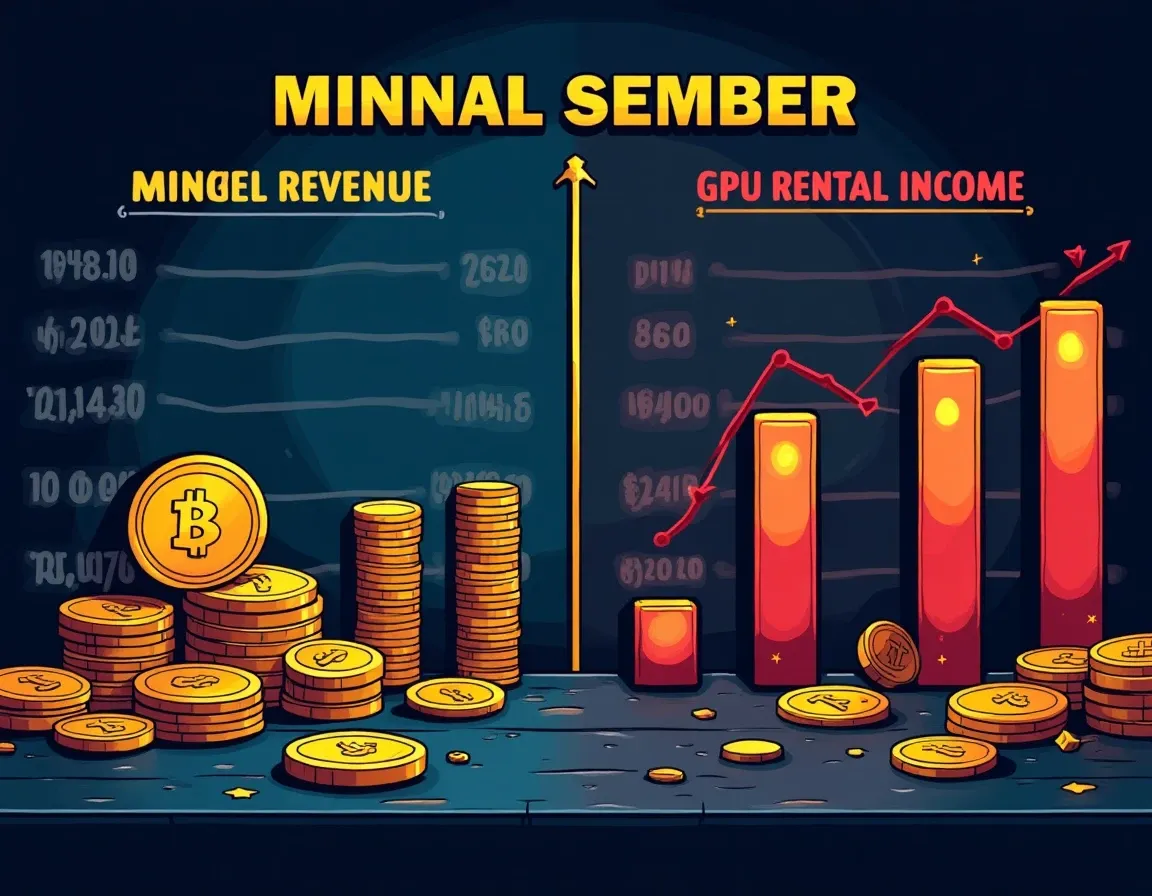
You own GPU hardware or you are considering buying it. You have two paths to income: mine cryptocurrency, or rent compute capacity to AI developers and researchers. The economics diverge sharply in 2026. A mid-tier GPU mining Kaspa at $0.10 per kilowatt-hour electricity earns $0.70 to $1.00 per day after power costs. The same card renting compute on Vast.ai or similar platforms earns $0.30 to $0.60 per hour, which scales to $7.20 to $14.40 per day at full uptime. That is a 10x to 20x difference. On datacenter hardware like the A100 80GB, mining is not viable at all while rental income runs $1,000 to $1,500 per month. The question is not whether rental pays more. It does. The question is whether you can meet the uptime requirements, tolerate the platform risk, and handle the operational complexity that rental demands.
This article walks through the economics head-to-head. I will show monthly revenue scenarios using RTX 3080, RTX 4090, and A100 examples, break down electricity cost thresholds, explain uptime and interruption risk on rental platforms, and provide a decision framework based on your electricity rate and technical comfort. I spent twelve years in operational infrastructure before crypto. I know how to read hold percentages, churn, and ROI math. The numbers here are current and they are specific.
Monthly Revenue: Mining vs Rental on the Same Hardware
Start with the RTX 3080. In 2026, this card mines Kaspa (KAS), the most profitable GPU-mineable coin for many consumer cards. At $0.10 per kilowatt-hour electricity, the 3080 nets $0.70 to $1.00 per day after power costs. That is $21 to $30 per month. At $0.15 per kilowatt-hour, profit drops to $0.30 to $0.50 per day, or $9 to $15 per month. If your electricity cost exceeds $0.20 per kilowatt-hour, mining becomes unprofitable. The card consumes power but generates less revenue than the electricity bill.
The same RTX 3080 renting compute on Vast.ai earns approximately $0.20 to $0.40 per hour depending on demand, reliability score, and instance type. At 50 percent uptime (a conservative baseline for interruptible instances), that is 360 hours per month, generating $72 to $144. At 80 percent uptime, closer to what you achieve with a dedicated machine and stable connectivity, that scales to 576 hours and $115 to $230 per month. Subtract electricity cost: the 3080 draws roughly 320 watts under load, which at $0.10 per kilowatt-hour costs $23 per month at full uptime. Net monthly income from rental is $92 to $207, depending on utilization. That is 3x to 10x more than mining.
The RTX 4090 shows a similar pattern. Mining Kaspa at $0.10 per kilowatt-hour generates $0.80 to $1.20 per day, or $24 to $36 per month. Renting the same card on Vast.ai earns $0.30 to $0.60 per hour, which at 80 percent uptime is $173 to $346 per month before electricity. The 4090 draws approximately 450 watts, costing $32 per month at full uptime and $0.10 per kilowatt-hour. Net rental income is $141 to $314 per month. The mining ROI on a $1,600 card at $30 per month profit is 53 months. The rental ROI at $225 per month net is 7 months. That is the core economic reality.
On datacenter hardware, the comparison is even more lopsided. The A100 80GB does not mine profitably in 2026. Difficulty on GPU-mineable coins is too high, ASICs dominate the profitable networks, and the card's architecture is optimized for parallel compute, not hashing. Mining is not a viable use case. Rental income, by contrast, is strong. The A100 80GB earns $1.47 to $1.85 per hour on platforms like Vast.ai and Clore.ai. At 80 percent uptime, that is $846 to $1,066 per month. High-demand periods push utilization above 80 percent, and monthly income routinely exceeds $1,000 to $1,500 per GPU. Power costs are higher (the A100 draws 300 to 400 watts), but even at $0.15 per kilowatt-hour, electricity adds only $32 to $43 per month. Net income is $800 to $1,450. No mining scenario approaches that.
These numbers assume you already own the hardware. If you are buying new, the rental ROI still beats mining by 5x to 10x, but the payback period extends. A $1,600 RTX 4090 earning $225 per month net takes 7 months to break even. A $10,000 A100 earning $1,200 per month net takes 8 months. Compare that to GPU mining ROI periods of 1,500 to 5,000 days, which span 4 to 13 years. The structural demand gap in AI compute favors rental economics heavily. AI companies are spending over $600 billion on infrastructure in 2026, and centralized cloud providers cannot meet demand at current price points. That gap is where your rental income sits.
Electricity Cost: The Break-Even Threshold for Mining
Mining profitability collapses above $0.10 per kilowatt-hour electricity. At $0.05 to $0.08 per kilowatt-hour, most mid-tier GPUs stay positive, but barely. At $0.10 per kilowatt-hour, you are at the edge. At $0.15 per kilowatt-hour, profit drops to $10 to $25 per month per card. At $0.20 per kilowatt-hour, you lose money. The math is simple: power consumption times hours times rate. A 320-watt card running 24/7 at $0.10 per kilowatt-hour costs $23 per month. If your mining revenue is $30, your profit is $7. If your rate is $0.15 per kilowatt-hour, your power bill is $34.56 and you are in the red.
Rental income is also affected by electricity cost, but the margins are wide enough to absorb it. A $0.20 per kilowatt-hour rate on a 320-watt card costs $46 per month at full uptime. If your rental income is $150 to $200 per month, you still net $100 to $154. That buffer does not exist in mining. The income ceiling is too low. Most home miners require sub-$0.10 per kilowatt-hour electricity to stay meaningfully positive. If you pay retail residential rates in most of the United States, Canada, or Europe, mining is not a viable income strategy in 2026. Rental is.
There are niche exceptions. If you have access to stranded energy, industrial rates, or free power (data center access, university lab, subsidized municipal supply), mining can remain profitable. But those scenarios are rare and they are not scalable. For the typical reader with hardware at home or in a co-location facility paying market rates, the electricity threshold decides the question. If your rate is above $0.10 per kilowatt-hour, do not mine. Rent.
Uptime Requirements and Interruption Risk
Mining requires 24/7 uptime to maximize revenue, but brief interruptions (network drops, rig restarts, pool switches) do not destroy the session. You reconnect, the pool picks up your shares, and you continue earning. Rental platforms are less forgiving. On Vast.ai, interruptible instances pause if another user outbids you or if an on-demand renter takes the machine. When the instance pauses, your workload stops. Storage charges accumulate on stopped instances, and if you delete the instance to clear storage costs, the session state is lost. That is manageable for batch workloads (model training, rendering) but problematic for long-running inference or stateful applications.
Vast.ai offers on-demand, interruptible, and reserved capacity. On-demand instances are more stable but pay less per hour. Interruptible instances pay more but can be paused without notice. Your actual uptime depends on demand, your pricing, and your reliability score. A well-configured machine with high uptime history and competitive pricing can achieve 70 to 90 percent utilization. A poorly configured machine or one with frequent disconnects will sit idle. That idle time is revenue loss. Mining does not have this dynamic. If your rig is online, it mines. If the network drops, you reconnect. There is no queue, no bidding, no displacement by higher-paying users.
Render Network handles interruption differently. Jobs are distributed and verified on-chain using a system called Proof-of-Render. Output quality is checked before payment releases from escrow. If your machine fails mid-job, the network reassigns the task and you do not get paid for incomplete work. But the payment risk is lower than on Vast.ai because jobs are priced in fiat (usually dollars) and paid in the equivalent amount of RENDER token or fiat for real-time services. Token volatility is a separate risk, but job-level interruption is less common because rendering workloads are shorter and more modular than AI training jobs.
The operational requirement is clear: rental demands stable connectivity, 24/7 availability, and responsive hardware. If your internet drops regularly, if your machine overheats, if your power supply is unreliable, rental income will suffer. Mining is more forgiving. That does not mean rental is impractical. It means you need to treat it like infrastructure, not like a side project. If you cannot commit to uptime, stick to mining or reconsider whether hardware income is worth your time.
Setup Complexity and Operational Overhead
Mining setup in 2026 is straightforward if you already know the ecosystem. You source used hardware (eBay, forum sales, decommissioned data center GPUs), install a mining OS (HiveOS, RaveOS, Windows with mining software), configure your pool and wallet address, and overclock for efficiency. Cooling management matters: GPU temps above 75 to 80 degrees Celsius reduce lifespan and increase crash risk. You monitor hashrate, pool payouts, and electricity consumption. Most miners run a simple dashboard (HiveOS, Awesome Miner) that shows per-card performance. When a card goes down, you restart the rig or replace the card. It is operational overhead, but it is predictable.
Rental setup requires installing a software agent (typically a Docker container) on your machine. The agent connects your GPU to a cloud marketplace. When an AI developer, researcher, or company needs compute, the platform matches their workload to your hardware. Your GPU processes the job (training a model, running inference, rendering a scene), and you receive payment based on compute time consumed. The technical bar is higher than mining. You need to configure Docker, open the correct ports, set up SSH access, and ensure your machine meets the platform's security and performance requirements. Vast.ai provides setup scripts, but you are responsible for troubleshooting. If your machine is misconfigured, it will not appear in search results and it will not earn.
The other operational difference is monitoring. Mining dashboards show hashrate and pool shares. Rental dashboards show instance uptime, job duration, and hourly revenue. You need to track utilization. If your machine sits idle for days, check your pricing, your hardware specs, or your reliability score. Low reliability scores (caused by frequent disconnects, slow job startup, or failed verification) push you down in search results. High scores (caused by consistent uptime, fast response, and clean job completion) increase demand and allow you to charge higher rates. That feedback loop does not exist in mining. Either your cards hash or they do not.
If you are comfortable with Linux, Docker, and remote server management, rental setup is not a barrier. If you are not, the learning curve is real. Most mining guides are step-by-step tutorials with screenshots. Rental platform documentation assumes baseline technical literacy. That does not mean rental is only for engineers. It means you need to be willing to read docs, troubleshoot, and iterate. If that sounds frustrating, mining is simpler.
Platform Risk and Payment Stability
Mining pools are centralized but competition is high and switching cost is low. If a pool changes its fee structure, withholds payouts, or goes offline, you point your rigs at a different pool. There is no lock-in. Pool fees range from 0 percent to 2 percent, and most pay out daily or weekly once you hit the minimum threshold. Payment is in the coin you mine (Kaspa, Ergo, Flux), which you then convert to stablecoins or fiat on an exchange. Volatility risk is real but manageable: you control when you sell.
Rental platforms introduce different risks. Vast.ai, Render Network, Akash, and similar marketplaces are intermediaries. They set the rules, hold the funds, and control account access. If the platform changes its fee structure, your margins shrink. If the platform suspends your account (for policy violations, low reliability, or disputed jobs), your revenue stops. If the platform goes offline or pivots away from consumer GPU hosting, your income surface disappears. That platform risk is higher than mining pool risk because switching cost is non-trivial. You need to reconfigure your machine, rebuild your reputation score, and re-learn the platform's operational norms.
Render Network mitigates some of this risk by operating on-chain. Jobs are distributed via smart contracts, payments release from escrow after verification, and the RENDER token is tradable on centralized and decentralized exchanges. The network migrated to Solana in 2024 and introduced the Render Compute Network (RCN) in 2025, expanding from 3D rendering to AI workloads. That diversification increases demand but also introduces token volatility risk. Jobs are priced in dollars, but payment is in RENDER. If the token price drops between job completion and payout, your dollar-denominated income falls. If the token price rises, you gain. Most real customers think in dollars or euros, not in volatile token units. That mismatch is a friction point.
Mining payments are volatile too (Kaspa price fluctuates daily), but at least you control the conversion timing. Rental payments on token-based platforms convert automatically at payout. You can hedge by selling immediately, but that adds operational overhead and exchange fees. If you want stable dollar-denominated income, prioritize platforms that pay in stablecoins or fiat. Vast.ai charges in prepaid credits (USD-denominated), which reduces token volatility risk. Render pays in RENDER, which increases it. Know the difference before you commit hardware.
Who Should Mine and Who Should Rent
Mine if your electricity cost is below $0.08 per kilowatt-hour, you already own the hardware, and you prefer operational simplicity over maximum income. Mining works as a low-touch side income if you have cheap power and you do not mind earning $20 to $40 per GPU per month. It also works if you are mining speculatively (holding the coin for future appreciation) rather than converting to fiat immediately. Some miners treat GPU mining as a hobby, not as a business. If that describes you, the lower income is acceptable.
Rent if your electricity cost is above $0.08 per kilowatt-hour, you are comfortable with Docker and remote server management, and you want to maximize revenue per card. Rental works best if you already own the hardware and you can commit to 24/7 uptime with stable connectivity. It also works if you are buying new hardware and you need faster ROI. A 7-month payback on a $1,600 GPU is viable. A 53-month payback is not. If you are treating this as a business rather than as a hobby, rental is the only path that makes financial sense in 2026.
For datacenter hardware (A100, H100, A6000), rental is the only option. Mining is not viable on these cards. If you have access to enterprise GPUs, configure them for rental immediately. The income gap is too wide to ignore. For consumer GPUs (3080, 4090, 6900 XT), the decision depends on your electricity rate and your technical comfort. If both are favorable, rent. If one is not, consider whether the hardware is worth operating at all.
For readers considering new hardware purchases, the rental ROI calculation is simple. Take the card's market price, divide by your expected monthly net income (after electricity and platform fees), and check whether the payback period is under 12 months. If it is, the purchase is defensible. If it is not, reconsider. GPU prices are elevated in 2026 due to AI demand, and buying at the top of a cycle is risky. If you already own the hardware, the decision is easier: rent, because the opportunity cost of mining (the income you forgo) is 5x to 20x your mining profit.
Break-Even Scenarios and ROI Comparison
The RTX 4090 purchased new at $1,600 mining Kaspa at $0.10 per kilowatt-hour generates $24 to $36 per month profit. ROI is 44 to 66 months. The same card renting compute at $225 per month net generates ROI in 7 months. That is an 8x difference in payback speed. If you are deciding whether to buy hardware for income, that ROI gap decides the question. Seven months is a reasonable payback for hardware. Fifty months is not.
For existing hardware, the opportunity cost comparison is even sharper. If you currently mine on a 3080 and you net $25 per month, switching to rental at $150 per month net means you forgo $125 per month by continuing to mine. Over 12 months, that is $1,500 in lost income. The switching cost (time to configure rental, learn the platform, troubleshoot) is 2 to 8 hours. That is a $187 to $750 per hour return on time invested. Few other activities in crypto offer that ratio.
The only scenario where mining beats rental is when electricity cost is zero or near-zero. If you have access to stranded energy, subsidized municipal power, or industrial rates below $0.03 per kilowatt-hour, mining can generate $50 to $80 per month per GPU. That is still lower than rental income ($150 to $300 per month net), but the operational simplicity of mining may justify the lower revenue. Most readers do not have access to free power. For everyone else, rental is the correct choice.
The Rental Market Demand Signal
Demand for GPU compute massively exceeds supply in 2026. AI companies are spending over $600 billion on infrastructure, and centralized cloud providers (AWS, GCP, Azure) cannot meet demand at current price points. That structural imbalance is why rental platforms exist and why rental income remains elevated. Vast.ai reports 120,000-plus developers actively searching for compute. Render Network expanded from 3D rendering to AI workloads in 2025 specifically to capture this demand. The market is real, the demand is structural, and the income opportunity is unlikely to collapse in the near term.
That does not mean rental income is risk-free. If Render cannot offer enough cost, speed, or reliability advantage relative to centralized providers, usage may fail to scale. Competitive pressure from AWS, GCP, and Azure is constant. Cloud providers are building new GPU clusters, negotiating volume discounts with NVIDIA and AMD, and lowering prices to capture market share. If rental platforms cannot maintain a 50 percent or greater cost advantage, demand will shift back to centralized providers. That risk is real but not imminent. Current rental pricing on Vast.ai is 3x to 5x cheaper than AWS for equivalent hardware. That margin is wide enough to sustain the market for the next 12 to 24 months.
For miners, the demand signal is weaker. Ethereum moved to proof-of-stake in 2022, ASICs dominate Bitcoin and most high-value networks, and the remaining GPU-mineable coins (Kaspa, Ergo, Flux) are volatile, thinly traded, and difficult to model. Mining profitability depends on coin price, network difficulty, and electricity cost. All three variables move against miners over time. Coin prices fluctuate, difficulty rises as more miners join, and electricity costs rarely drop. Rental income depends on AI demand, platform policy, and hardware performance. Demand is rising, platforms are stable, and hardware performance improves with each GPU generation. The trend lines favor rental.
My Recommendation
If you already own GPU hardware and your electricity cost is above $0.08 per kilowatt-hour, switch to rental immediately. The income gap is too large to justify mining. If your electricity cost is below $0.08 per kilowatt-hour and you value operational simplicity, mining remains viable, but rental still pays 3x to 10x more. If you are buying new hardware, do not mine. Configure for rental from day one. The ROI difference is 8x in favor of rental, and that gap will widen as mining difficulty rises and rental demand continues to grow.
For datacenter hardware, rental is the only option. Do not mine on A100s or H100s. For consumer hardware, check your electricity rate and your technical comfort. If both are favorable, rent. If one is not, reconsider whether hardware income is worth your time. For readers treating this as a business rather than as a hobby, rental is the only path that makes financial sense in 2026. The numbers are unambiguous. Mining nets $10 to $40 per GPU per month. Rental nets $100 to $300 per GPU per month for consumer cards and $1,000 to $1,500 per month for datacenter cards. That 10x to 50x difference decides the question.
The decision rule is simple: if you can commit to 24/7 uptime and you can configure Docker, rent your GPUs. If you cannot, mining is simpler but pays far less. If your electricity cost is above $0.10 per kilowatt-hour, do not mine at all. Sell the hardware or configure it for rental. The break-even threshold for mining is narrow and narrowing. The income ceiling for rental is high and rising. That structural difference defines the GPU income landscape in 2026, and it will for the next 12 to 24 months.
Frequently Asked Questions
Can I rent my gaming GPU while I am not using it?
Yes, platforms like Vast.ai and Render Network allow you to rent consumer GPUs (RTX 3080, 4090, etc.) during idle hours. You install a Docker agent, set availability windows, and earn $0.20 to $0.60 per hour depending on the card and demand. If your machine is offline or you want to game, the platform pauses rentals. Earnings scale with uptime: 50 percent availability nets $100 to $150 per month on a 4090, while 80 percent nets $175 to $300.
Is GPU rental income paid in crypto or fiat?
It depends on the platform. Vast.ai uses prepaid USD-denominated credits, so your income is effectively in dollars. Render Network pays in RENDER tokens, which are priced in dollars but paid in token equivalents, exposing you to price volatility between job completion and payout. Akash pays in AKT tokens. If you want stable dollar income, prioritize platforms like Vast.ai. If you accept token volatility, Render and Akash offer higher potential upside but also downside risk.
What happens if my rented GPU goes offline during a job?
On Vast.ai, interruptible instances pause if you disconnect, and storage charges continue until you delete the instance. The renter loses session state and may not pay for incomplete work. On Render Network, incomplete jobs are reassigned to another provider and you do not get paid. Frequent disconnects lower your reliability score, reducing future demand. Stable uptime (24/7 connectivity, no crashes) is essential for maximizing rental income.
Can I mine and rent the same GPU at different times?
Technically yes, but it is operationally impractical. Mining requires 24/7 operation to maximize revenue, while rental platforms penalize unreliable uptime with lower reliability scores and reduced job assignments. Switching between mining and rental also requires reconfiguring software, restarting the system, and monitoring two separate dashboards. Most operators choose one path and commit fully. Rental pays 10x to 20x more per month than mining on the same hardware, so the economic case for splitting time is weak.
Which GPUs are best for rental income in 2026?
Datacenter cards like the A100 80GB and H100 earn $1,000 to $1,500 per month and have the highest demand. Consumer cards like the RTX 4090 and 3080 earn $150 to $300 and $100 to $200 per month respectively at 80 percent uptime. Avoid older cards (GTX 1080, RTX 2070) because they lack the memory and compute performance for current AI workloads, resulting in low utilization and poor income. Prioritize VRAM: 16GB minimum for consumer cards, 24GB or more for serious rental income.
You have just compared monthly returns from mining versus rental on 3080, 4090, and A100 hardware. Those margins will shift as AI demand and mining difficulty evolve.
Every Thursday: where crypto yield actually is - stablecoins, liquid staking and DeFi lending, with the risk named next to the rate and what changed since last week.
Get it free every ThursdayFree. No trade calls, no allocations, no hype. Unsubscribe in one click.