Table of Contents
The Mechanism: Delta-Neutral Basis Trading
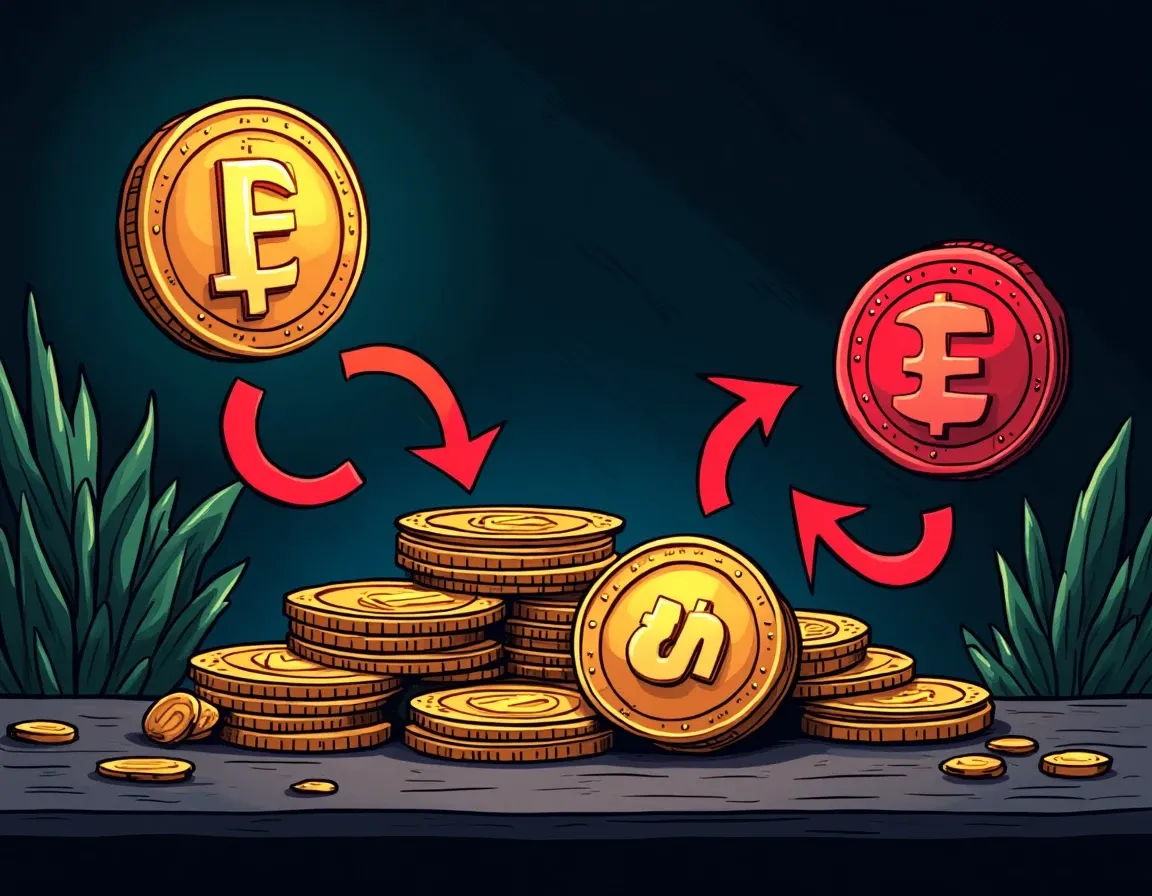
The Ethena protocol advertises approximately 7% APY on sUSDe as of June 2026, down from 9.4% in April and 18% during 2024. The question worth answering is where that yield actually comes from - and what happens when the underlying mechanism inverts.
Ethena's USDe is a synthetic dollar backed by a delta-neutral basis trade. The protocol holds long staked ETH and liquid restaking collateral, then shorts an equivalent notional value of ETH perpetual futures. The hedge cancels directional price exposure: when ETH's price rises, the long position gains while the short position loses by the same amount, keeping the portfolio's USD value constant. When ETH falls, the inverse occurs. The result is a stablecoin whose collateral backing moves with the market but whose net value does not.
To earn yield on this structure, you stake USDe for sUSDe through an ERC-4626 vault. Staking one USDe mints one sUSDe; burning one sUSDe redeems one USDe after a seven-day cooldown period. The cooldown was added in 2024 to manage redemption queues during stress events. Instead of distributing new tokens as interest, each sUSDe gradually accrues more USDe in value as yield compounds. The protocol does not pass negative revenue to stakers; when funding rates flip negative, the insurance fund absorbs losses before stakers see any reduction in value.
Where the European Central Bank has moved cautiously on stablecoin regulation under MiCA, Ethena operates outside those guardrails entirely. The protocol's collateral is held by Off-Exchange Settlement custodians - Copper, Ceffu, and Cobo - who execute perpetual futures positions across Binance, Bybit, OKX, and Deribit. Roughly 48% to 50% of Ethena's short positions are on Binance alone. That concentration carries counterparty risk of the sort European banking union rules were designed to mitigate: a single exchange failure, liquidity freeze, or margin call cascade can compromise half the protocol's hedging capacity.
Where the 7% to 18% APY Actually Comes From

Ethena's yield derives from three sources, with variable contribution depending on market conditions: funding rates from short perpetual futures positions, ETH staking rewards from liquid staking tokens held as collateral, and interest on stablecoins and tokenized Treasury products used to backstop the system during low-funding periods.
The largest component is perpetual funding. During bull markets, when traders queue up to go long on ETH and BTC, demand for long positions drives funding rates high - sometimes above 30% annualized during peak periods. Ethena, holding the short side of those contracts, collects those payments and distributes them as sUSDe yield. Historical data shows ETH perpetual funding returned approximately 16% in 2021, 0.6% in 2022, 9% in 2023, and 13% in 2024 on an open-interest-weighted basis. Across the full dataset, 17.5% of days showed negative cumulative funding for ETH perpetuals, with an average return over the entire period of 9.15%.
ETH staking rewards add a second layer. The protocol's collateral basket includes liquid staking tokens such as stETH, which earn the underlying Ethereum network's staking yield - currently between 3% and 4% annually. This component is relatively stable and independent of funding rate volatility, providing a baseline yield floor in most market environments.
The third source, introduced as a buffer during compressed funding environments, is interest from liquid stablecoins and tokenized Treasury products, including BlackRock's BUIDL fund. In May 2026, Ethena routed additional collateral to BUIDL, lifting the Treasury-bill share of reserves above 15% for the first time. During periods of low or negative perpetual funding, more of USDe's backing assets shift into these liquid stables earning approximately the U.S. Treasury rate. This dynamic allocation reduces exposure to negative funding and lessens the probability that the reserve fund is drawn down.
The interplay of these three sources explains why sUSDe's APY has ranged from 4% to 60% since launch. When funding rates compress, as they did through Q2 2026, the protocol leans more heavily on staking yield and T-bill income, bringing the effective APY down to the mid-single digits. When funding spikes during bull runs, the short perp leg dominates, pushing yields into the teens or higher. Understanding where yield originates is the difference between recognizing a sustainable mechanism and mistaking token emissions for income.
The Specific Conditions That Break the Mechanism

Ethena's yield structure works as long as perpetual funding remains neutral to positive and the delta hedge holds. Two failure modes matter: sustained negative funding rates, and counterparty or liquidity collapse that prevents the protocol from maintaining the hedge.
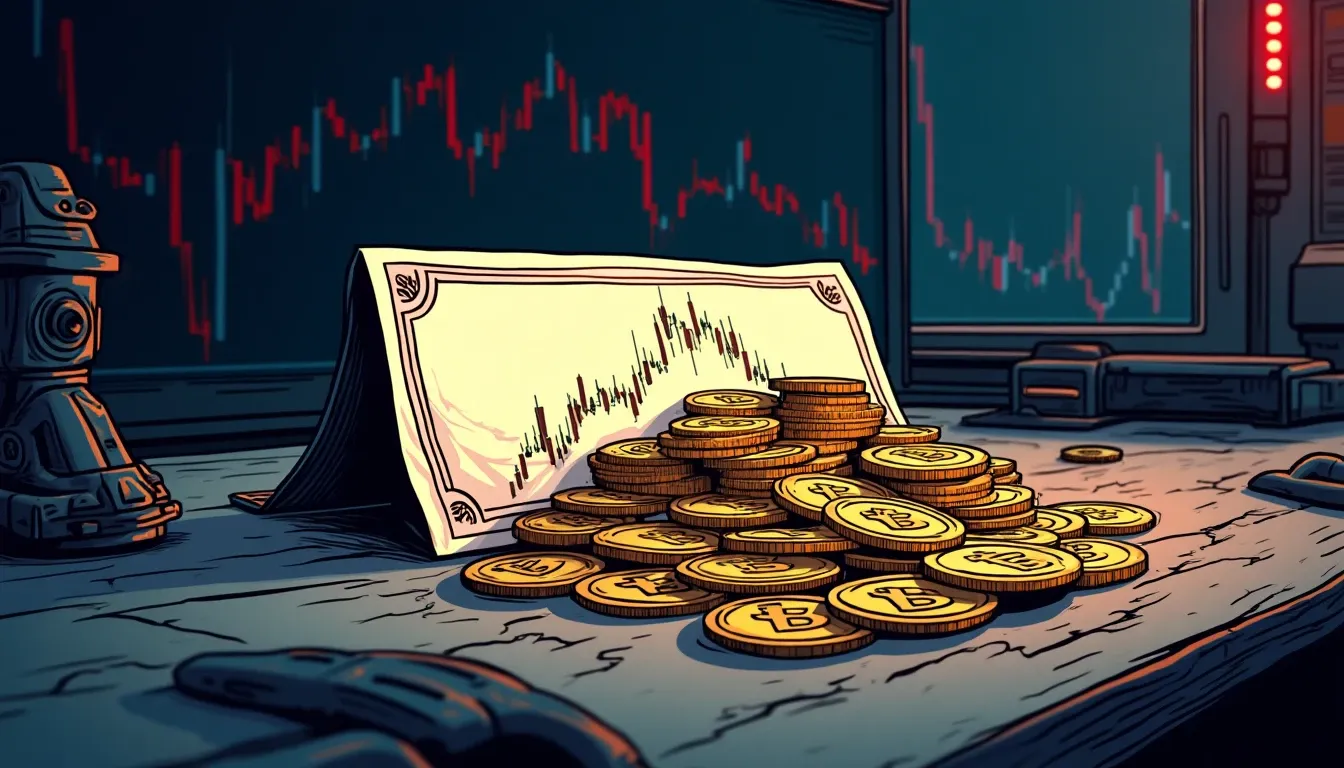
During bear markets, the dynamic reverses. Traders want short exposure, demand for shorts rises, and funding rates turn negative. The protocol's short perp positions then pay funding rather than receive it, draining the insurance fund. Historically, BTC perpetual funding turned deeply negative during the 2022 bear market, particularly around the Terra/UST collapse in May 2022, when market participants rushed to hedge or short. When funding rates stay negative for extended periods - several weeks or longer - the reserve fund begins to deplete. Ethena's own V1 stress test estimated that the fund, which stood at approximately 1.4% of USDe supply during the test, would exhaust in roughly 52 days under moderately bearish conditions.
October 2025 provided a real-world stress case. A $19 billion crypto liquidation cascade triggered $8 billion in USDe outflows and a brief depeg to $0.65 on Binance. USDe supply fell from $14.8 billion to $3.8 billion over the following months - a 74% contraction. The insurance fund, which stood at $73 million in late 2026 (approximately 1.7% of supply), absorbed losses during the initial shock, but the protocol's pro-cyclical supply dynamics amplified the downturn: as yield compressed and negative funding persisted, users redeemed en masse, forcing the protocol to unwind positions into an illiquid and hostile market.
The second failure mode is counterparty risk. USDe's peg is maintained by the delta-neutral hedge; if the short perp positions cannot be maintained - due to exchange insolvency, mass liquidation cascades, or extreme negative funding that exhausts margin - the peg can break. Ethena's concentration on Binance, which holds roughly half the protocol's short positions, means that a liquidity freeze, regulatory action, or technical failure at that single exchange could compromise the entire hedging structure. European banking regulations impose concentration limits and capital adequacy requirements specifically to prevent single points of failure of this kind; Ethena operates without equivalent constraints.
The reserve fund is too small to absorb extended stress. At $73 million against $4.4 billion in USDe supply, it covers 1.7% - enough to buffer short-term volatility or brief funding inversions, but insufficient for a multi-week bear market with sustained negative funding and mass redemptions. The protocol's dynamic allocation to Treasury products mitigates but does not eliminate this risk; if funding turns sharply negative while markets are illiquid, the reallocation itself may be delayed or incomplete.
Historical Basis Rate Data and Realistic Yield Expectations
European monetary history offers a parallel for what Ethena advertises. Greek sovereign bonds in 2010 and 2011 paid yields significantly above German Bunds - not because Greece was more creditworthy, but because the spread reflected default risk. The advertised yield was not a return; it was compensation for the probability that principal would not be returned. When credibility broke in 2012, those yields stopped being yields and became disclosed losses.
Ethena's 18% to 60% APY during 2024 and early 2025 was not a sustainable equilibrium; it was the result of high funding rates during a bull market, compounded by the protocol's early-stage capital inflows and relatively small total supply. As USDe supply scaled and funding rates normalized through 2025 and 2026, yields compressed to a range between 4% and 15%. The June 2026 trailing seven-day APY of 7.1% is closer to the structural yield floor: a blend of mid-single-digit funding carry, 3% to 4% staking yield, and Treasury-rate income on reallocated collateral.
Over the next 12 months, expect sUSDe yields to track perpetual funding volatility. In a sideways or mildly bullish market, mid-single-digit yields (4% to 8%) are plausible. If a fresh bull market drives funding rates higher, yields could return to the low teens temporarily. If markets turn bearish and funding inverts for weeks, yields will compress toward zero or turn negative internally, with the insurance fund absorbing losses until it depletes or users redeem en masse. The October 2025 case study demonstrated that supply can contract by 70% or more when conditions turn hostile, and that brief depegs are possible during extreme liquidation cascades.
Comparing Ethena's yield to traditional savings clarifies the opportunity cost. A holder keeping $1 million in USDC at 0% while sUSDe pays 4% and USDY pays 4.5% on the same chain implicitly surrenders $40,000 to $45,000 in annual yield. That visible gap, not protocol hype, drove $22.7 billion into yield-bearing DeFi structures. But the gap exists because the risk stack differs: USDC carries custodial and regulatory risk but no funding-rate exposure or delta-hedge counterparty risk; sUSDe carries all of those, plus the structural risk that the basis trade inverts and the insurance fund proves inadequate.
Real-time collateral composition and reserve fund data are published on Ethena's transparency dashboard. Monitoring funding rates, collateral allocation shifts, and insurance fund balance is the only way to assess whether current yields remain supported by the underlying mechanism or are being paid down from reserves.
What This Means for Your Yield Position
Ethena tokenized a basis trade that institutional desks have run for decades. The innovation is making it accessible at retail scale and wrapping it in an ERC-4626 vault that auto-compounds. The risk is that the mechanism depends on market conditions - specifically, that perpetual funding remains neutral to positive and that exchanges remain liquid and solvent.
If you hold sUSDe, you are long a delta-neutral strategy with three embedded risks: funding-rate inversion, counterparty failure, and insufficient reserve coverage during extended stress. The 7% APY currently advertised is credible in the present funding environment, but it is not guaranteed. October 2025 demonstrated that yields can vanish, supply can contract by three-quarters, and brief depegs are possible when liquidation cascades overwhelm the hedge.
Position sizing matters. The appropriate allocation to sUSDe is the amount where a total loss would be annoying rather than catastrophic. Position-sizing frameworks by portfolio size and exit condition monitoring are worth reviewing before depositing capital. If you are earning 7% on sUSDe while holding the rest of your stablecoin portfolio in 0% USDC, you are making a choice: you are trading custodial simplicity and zero market-condition risk for a 700-basis-point spread that exists because the underlying mechanism can fail.
The seven-day cooldown on unstaking is worth remembering. If funding rates flip negative and you decide to exit, you will wait a week before your sUSDe converts back to USDe. In a fast-moving market, that delay can matter. During the October 2025 event, users who initiated unstaking during the initial cascade faced a week of price uncertainty before redemption completed.
Tax reporting for sUSDe follows the same rules as other yield-bearing tokens. Each sUSDe accrues more USDe in value rather than distributing new tokens, which may create taxable events on an ongoing basis depending on jurisdiction. DeFi yield tax-reporting requirements vary by country, and the difference between rebasing tokens and value-accruing vaults can change how and when income is recognized.
Security hygiene remains essential. sUSDe is an ERC-20 token; if you have granted unlimited approvals to DeFi protocols in the past, those approvals remain active until explicitly revoked. Revoking token approvals and securing yield positions without making them unusable are baseline practices for anyone holding yield-bearing assets.
The Takeaway
Ethena's sUSDe yield is credible in the current market environment, but it is not structural. The 7% APY reflects neutral-to-positive perpetual funding, stable staking rewards, and a functioning delta hedge across multiple exchanges. The mechanism worked through most of 2024 and 2025, delivering mid-to-high single-digit yields with brief spikes above 15% during bullish periods. It broke in October 2025 when funding inverted, supply contracted by 74%, and the peg briefly failed on Binance.
The question that matters is not whether the current yield is real - it is - but whether the mechanism producing it will remain intact over the holding period you intend. If perpetual funding stays neutral or positive and exchanges remain liquid, the basis trade continues to function and yields persist. If funding inverts for weeks, the insurance fund depletes, and the protocol enters the same stress loop that drove $8 billion in outflows last autumn. European monetary history has tested basis trades, peg-maintenance mechanisms, and reserve-fund adequacy under stress repeatedly. The lesson is always the same: advertised yields reflect risk, and when the underlying credibility breaks, yields become disclosed losses.
Frequently Asked Questions
How does Ethena generate yield on sUSDe?
Ethena runs a delta-neutral basis trade: long staked ETH collateral, short an equivalent notional value of ETH perpetual futures. Yield comes from three sources - funding payments from the short perp positions (largest component), ETH staking rewards from liquid staking tokens in the collateral basket, and interest on stablecoins and tokenized Treasury products such as BlackRock BUIDL. The mix shifts dynamically based on funding-rate conditions.
Why did sUSDe yield drop from 18% to 7% between 2024 and mid-2026?
Perpetual funding rates compressed as the bull market moderated and USDe supply scaled. The 18% to 60% yields in 2024 reflected high funding during a strong bull market and relatively small protocol supply. As markets normalized through 2025 and 2026, funding rates fell, and the protocol's dynamic allocation shifted more collateral into Treasury products earning the risk-free rate, bringing blended yields down to mid-single digits.
What happens if perpetual funding rates turn negative for an extended period?
Ethena's short perp positions pay funding instead of receiving it, draining the $73 million insurance fund. The fund covers roughly 1.7% of USDe supply and, under the protocol's own stress test, would deplete in approximately 52 days during moderately bearish conditions. Once exhausted, users would face losses or the protocol would need to halt or restructure. October 2025 saw supply contract 74% when funding inverted and triggered mass redemptions.
Is the 7% sUSDe APY sustainable over the next 12 months?
It depends on perpetual funding-rate behavior. In a sideways or mildly bullish market, mid-single-digit yields of 4% to 8% are plausible, supported by funding carry, staking rewards, and Treasury income. A fresh bull market could push yields back into the low teens temporarily. A prolonged bear market with negative funding would compress yields toward zero internally, with the insurance fund absorbing losses until depleted or mass redemptions force supply contraction.
What are the main risks of holding sUSDe?
Three risks dominate: funding-rate inversion draining the insurance fund, counterparty failure or liquidity freeze at an exchange (48% to 50% of short positions are on Binance), and insufficient reserve coverage during extended stress. The seven-day unstaking cooldown means you cannot exit instantly if conditions deteriorate. October 2025 demonstrated that brief depegs to $0.65 are possible during extreme liquidation cascades, and supply can contract by three-quarters within months.
You have just examined a 7% yield mechanism that contracted by 74% in a single stress event. Those conditions will return, and the insurance fund has not grown enough to prevent it.
Every Thursday: where crypto yield actually is - stablecoins, liquid staking and DeFi lending, with the risk named next to the rate and what changed since last week.
Get it free every ThursdayFree. No trade calls, no allocations, no hype. Unsubscribe in one click.






)