Table of Contents
What You Will Build
A two-wallet security architecture. One wallet holds the yield position and connects to the protocol. The other stays offline and holds emergency reserves. You will use a hardware wallet for the active position, revoke approvals on a schedule, and verify what you sign before you confirm.
The standard security advice assumes you never touch the funds. A yield position is different. You deposit. You claim. You rebalance. You compound. The position generates income because it stays active, which means the wallet that holds it cannot be fully cold.
That creates a design problem. If you are currently providing liquidity or have funds staked in a protocol, revoking the approval may prevent the protocol from operating correctly. You need approvals active to earn, but active approvals are dangerous if a contract is compromised.
The setup below solves for that tension. It does not eliminate risk. It contains it.
Step 1: Separate The Yield Wallet From The Vault
Use one wallet for long-term storage, another for active DeFi, and another for higher-risk experiments if needed. Revoke approvals on the active wallets regularly and keep the size of exposed balances under control.
The vault wallet holds the bulk of your capital. It never connects to a DeFi protocol. It never approves a token spend. It sits on a hardware wallet in a drawer. The yield wallet holds only the amount you are actively farming or staking, plus gas reserves.
Measured over the last 18 months, many exploits occur through lingering approvals from months-old interactions. A wallet that has approved 40 contracts across six chains is a larger surface area than one that has approved three. Separation limits that surface.
If the yield wallet is compromised, you lose the position. You do not lose everything. That boundary is the first line of containment.
Sizing The Yield Wallet
The yield wallet should hold no more than you can afford to lose in a single exploit. One useful heuristic: if the position disappeared tomorrow, would you be able to continue operating? If the answer is no, the position is too large for a hot wallet architecture.
For substantial holdings, use a hardware wallet as an additional signing layer. A hardware wallet does not make a malicious smart contract safe, but it does prevent a compromised browser extension or phishing site from signing transactions without your physical confirmation.
Step 2: Use A Hardware Wallet For The Yield Position
As of March 2026, Ledger devices support over 5,500 assets. Trezor devices support roughly 1,300 to 1,450 assets depending on the model. For DeFi and DApps, Ledger usually has the stronger ecosystem because its devices work with wallets such as MetaMask, Phantom, and Rabby.
Trezor's new Safe 7 introduces dual secure elements, Bluetooth, wireless charging, and a quantum-ready design. The dual-chip design combines Tropic Square's auditable TROPIC01 chip with an NDA-free EAL6+ secondary element, while the addition of Bluetooth makes the Safe 7 the first Trezor wallet capable of connecting wirelessly to iPhones and other devices. The wallet is priced at 249 euros.
Ledger's Nano Gen5 features the June-released Ledger Recovery Key, Bluetooth connection, and a bigger screen, priced at $179 in the US. The Nano S Plus is $79. The Trezor Safe 3 is also $79.
A solid security setup includes PIN code protection, optional passphrase support, transaction simulation to flag suspicious contracts, and Clear Signing so you can read exactly what you are approving in plain language before you confirm it.
The hardware wallet replaces the browser-based hot wallet as the signing authority. You still connect to DeFi protocols through MetaMask or a similar interface, but the private key never leaves the device. Every transaction requires physical confirmation on the hardware screen.
That confirmation step is the point. It forces a deliberate review. If a screen, app, address, transaction, or support message feels strange, stop. Crypto rarely punishes users for waiting five minutes. It often punishes them for signing in five seconds.
Link the hardware wallet to your DeFi interface. Best Hardware Wallets 2023 covers the current models and integration steps in detail.
Step 3: Revoke Approvals On A Schedule
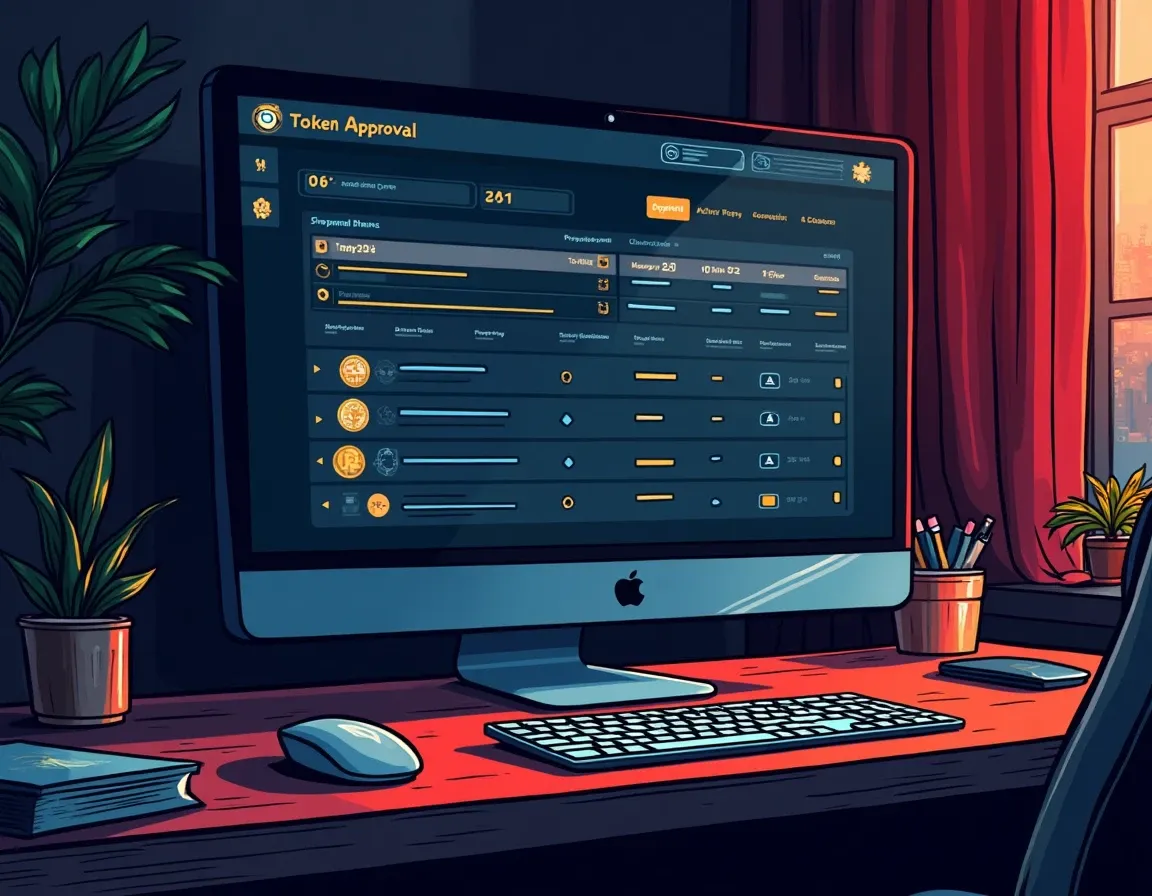
Token approval dashboards such as Revoke.cash or wallet built-in approval managers are the primary tools for managing approvals. Revoke.cash remains the most widely recommended option for managing DeFi wallet safety across multiple chains. It is open-source, free to use, and maintained by a team focused specifically on approval security.
Approving the maximum uint256 value (2^256 - 1) grants the spender unlimited access to your tokens. This means the approved contract or address can transfer any amount of your tokens at any time, without requiring further approvals.
Set a calendar reminder for the first Monday of every month. On that day, connect to Revoke.cash, select your active chain, and review every active approval. Revoke anything that is no longer in use. For approvals tied to your active yield position, leave them active but note the date you reviewed them.
Revoking an approval is an on-chain transaction, so you will usually pay gas. On Ethereum mainnet during periods of moderate congestion, a single revoke transaction costs between $3 and $12. On Polygon or Arbitrum, the cost is typically under $0.50.
What Stays Active, What Gets Revoked
If you are currently providing liquidity in a Uniswap V3 pool, the position manager contract needs an active approval to adjust your position. Revoking it will prevent you from removing liquidity or claiming fees until you re-approve.
If you interacted with a lending protocol three months ago, withdrew your position, and have not touched it since, the approval is dead weight. Revoke it.
One useful rule: if you cannot remember why the approval exists, revoke it. If you need it again later, you can re-approve it when you interact with the protocol.
Multi-Chain Revocation
Only checking one chain is a common failure mode. If your wallet is active on Ethereum, Polygon, BNB Chain, and Arbitrum, you need to audit all four. Stopping after Ethereum mainnet leaves the rest exposed.
Revoke.cash supports more than 90 chains. After you finish Ethereum, switch networks in your wallet and repeat the process for every chain where you have been active.
Step 4: Check The Protocol's Governance Before You Deposit
Upgrade risk matters because a user may enter a farm based on one contract version and later face different logic. Parameters can change. Strategies can change. Fees can change. Oracle configuration can change.
Check whether the protocol uses a multisig, timelock, DAO vote, emergency admin, or single owner. A single wallet controlling a leveraged vault is a serious red flag. A timelocked multisig with public monitoring is generally stronger, though not risk-free.
Multi-Signature Wallets (Multisigs) are the standard for managing privileged functions. Best practices include appropriate thresholds requiring an M-of-N signature threshold such as 3-of-5 or 4-of-7 that balances security with operational availability.
If the protocol documentation does not specify governance structure, that is also a signal. Projects that take governance seriously publish the multisig address, signer identities, and timelock parameters. If you cannot find that information in five minutes of searching, consider it a yellow flag.
Because audits do not eliminate exploit risk, protocols and risk teams should treat security as an ongoing discipline rather than a one-time exercise. An audit from a reputable firm is a baseline requirement, not a guarantee.
For a more detailed governance evaluation framework, see How To Evaluate A Crypto Yield Opportunity Safely.
Step 5: Verify What You Sign
When you approve a token spend, your hardware wallet screen will display the contract address, the token, and the amount. Read it. Match the contract address against the address published on the protocol's official documentation.
Phishing sites copy the entire UI of a legitimate protocol and change only the contract address. If you approve the malicious contract, your tokens are gone the moment you confirm.
Check recent transactions on a block explorer. Look for token approvals, NFT approvals, permit signatures, and transfers. Some malicious activity is not obvious from the wallet's asset list because the token may already be gone or the approval may sit dormant.
Before you confirm a transaction, verify the following:
- The contract address matches the official address published by the protocol.
- The token you are approving is the token you intend to approve.
- The approval amount is either the exact deposit amount or unlimited (and you accept that risk).
- The transaction is not requesting signatures for multiple contracts unless you understand why.
If any of those checks fail, reject the transaction. If you are unsure, open the protocol's Discord or Telegram and ask. A five-minute delay is cheaper than losing the position.
Permit2 and Expiration
Permit2 is an open-source token approval contract built by the Uniswap team that aims to extend the benefits of ERC-2612 to all tokens. Permit2 allows you to use gasless approvals for any token, regardless of whether that token has integrated ERC-2612. In addition, Permit2 has automatic expiration built in, eliminating the security risk that comes with lingering token approvals.
Not all protocols support Permit2. Where it is available, use it. The expiration feature reduces the window of exposure if the protocol is later compromised.
Common Failure Modes
Failure mode one: approving unlimited spend on a contract you do not recognize. This happens when users click through approval prompts without reading the contract address. The fix is simple. Read the address. Compare it to the official documentation. If they do not match, reject.
Failure mode two: reusing the same wallet for high-risk experiments and yield positions. A wallet that has interacted with 15 unaudited farms on obscure L2 chains carries more residual risk than one that has touched only three blue-chip protocols. Separation contains that risk.
Failure mode three: forgetting to revoke approvals after withdrawing a position. You exit a lending protocol in January. The approval sits active until June, when the protocol is exploited. Your wallet no longer holds the deposited asset, but the approval is still live. If you later move funds back into that wallet, the compromised contract can access them.
Failure mode four: trusting a hardware wallet to make a bad contract safe. A hardware wallet protects your private key. It does not protect you from approving a malicious contract. If you approve a rug, the rug executes. The hardware wallet only ensures that you, not a browser exploit, signed the approval.
What To Do Next
Set up the vault wallet. Transfer the majority of your holdings there. Do not connect it to any DeFi protocol.
Set up the yield wallet on a hardware wallet. Transfer only the amount you plan to deploy into active positions, plus enough gas to cover 10 to 15 transactions.
Add a monthly calendar event to review approvals. On the first Monday of each month, open Revoke.cash, connect your yield wallet, and revoke anything no longer in use.
Before you deposit into a new protocol, check its governance structure. Look for a timelocked multisig or DAO vote mechanism. If the protocol is controlled by a single wallet, reconsider.
Before you approve a spend, read the contract address on your hardware wallet screen. Compare it to the address published in the protocol's documentation. If they do not match, reject the transaction.
The income mechanism here is straightforward. You are protecting the principal that generates the yield. No APY compensates for losing the principal. A 12% annual return on a $10,000 position nets $1,200 over a year. Losing the $10,000 to a compromised approval erases 8.3 years of that yield.
For additional context on what realistic yield looks like after costs, see Crypto Yield Calculator: What A Position Actually Nets.
The Takeaway
Security advice that assumes you never touch the funds does not apply to yield positions. You interact with the protocol regularly, which means the wallet cannot be fully cold. The architecture that works is multi-wallet separation, hardware wallet signing, scheduled approval revocation, and contract address verification before every approval.
The vault holds the majority. The yield wallet holds the active position. The hardware wallet ensures that every transaction requires deliberate confirmation. The monthly approval audit removes dead weight. The pre-signing verification prevents phishing.
None of this eliminates smart contract risk. A protocol can be exploited even if your wallet hygiene is perfect. But wallet hygiene determines whether that exploit affects only your active position or everything you hold.
The numbers show the boundary. A $10,000 yield position in a compromised protocol costs $10,000. A $10,000 yield position in a compromised protocol when your entire $100,000 portfolio sits in the same wallet costs $100,000.
Run the monthly approval check. Use the hardware wallet. Separate the vault from the yield wallet. That separation is the containment layer. It does not prevent loss. It limits it to the amount you chose to expose.
For a broader framework on evaluating yield opportunities before you deploy capital, see How To Yield Farm Safely In 2026. For reference security standards and best practices, Ethereum's smart contract security documentation covers the baseline technical considerations.
Frequently Asked Questions
Can I revoke approvals while my funds are still deposited in a yield protocol?
Revoking the approval while your position is active will prevent the protocol from operating correctly. You will not be able to claim rewards, adjust your position, or withdraw until you re-approve the contract. Only revoke approvals for protocols you have fully exited. For active positions, leave the approval in place but review it monthly to confirm you still intend to keep the position open.
Does a hardware wallet protect me from approving a malicious smart contract?
No. A hardware wallet protects your private key from being stolen by malware or phishing sites, but it does not evaluate whether the contract you are approving is safe. If you approve a malicious contract, the exploit will execute as designed. The hardware wallet only ensures that you, not an attacker, signed the approval. You still need to verify the contract address before confirming.
How much does it cost to revoke a token approval?
Revoking an approval is an on-chain transaction, so gas fees apply. On Ethereum mainnet during moderate congestion, a single revoke costs between $3 and $12. On Polygon or Arbitrum, the cost is typically under $0.50. If you have 10 active approvals to revoke on Ethereum, expect to pay $30 to $120 in total gas fees depending on network conditions.
What is the difference between limited and unlimited token approvals?
A limited approval allows the contract to spend only a specific amount of tokens. An unlimited approval, often set to the maximum uint256 value, allows the contract to transfer any amount at any time without requesting further permission. Unlimited approvals reduce the number of transactions required for repeated interactions, but they also increase risk if the protocol is later compromised or the contract contains an exploit.
Should I use a separate wallet for every DeFi protocol I interact with?
That approach maximizes isolation but becomes operationally complex. A more practical model is three wallets: one cold vault for long-term holdings, one active yield wallet for trusted protocols, and one experimental wallet for higher-risk farms. This structure limits exposure without requiring you to manage dozens of wallets. The key is ensuring the vault never connects to any DeFi protocol.