Table of Contents
The Dual Fee Structure Most Platforms Do Not Disclose Upfront
When you purchase cryptocurrency with a credit card, you pay two separate costs. The first is visible: the exchange fee charged by Coinbase, Binance, Crypto.com, or whichever platform you select. That fee typically ranges from 1.8% to 3.99% depending on the processor and your jurisdiction. The second cost is less visible but often larger: your credit card issuer's treatment of the transaction. Most major banks classify cryptocurrency purchases as cash advances, which means a separate cash advance fee of 3% to 5%, no grace period on interest, and an APR that often exceeds 25%. The combined cost before you have held the asset for a single day can reach 9% of your principal.
This is not theoretical. For a $500 crypto purchase, a 3.99% exchange fee costs approximately $20. Add a 3% to 5% cash advance fee and you pay another $15 to $25. The total upfront cost is $35 to $45, which represents 7% to 9% of your initial investment. If your card issuer treats the purchase as a cash advance, interest begins accruing immediately at an APR between 17.99% and 29.99%. There is no grace period. If you carry the balance for 30 days, you pay an additional 2% to 2.5% in interest charges. The all-in cost for that $500 purchase can exceed $50 before you have deployed the capital into any yield-generating position.
The eurozone experienced a similar dynamic during the sovereign debt crisis between 2011 and 2013. Investors purchasing Greek and Portuguese sovereign bonds saw advertised yields of 15% to 22%, which appeared attractive until the underlying credibility of the issuer broke. The yields were not returns. They were compensation for default risk that had been accruing all along, disclosed only when the mechanism failed. Credit card fees operate in reverse: the cost is disclosed immediately, and the question is whether the yield you deploy into can recover that cost within a reasonable holding period. In most cases, it cannot.
Exchange Fees And Processor Spreads By Platform
Coinbase charges approximately 3.99% on credit card purchases. Binance fees range from 1.8% to 3.5% depending on the payment processor and your region. Crypto.com charges around 2.99% for credit card purchases and frequently runs promotions offering zero fees for new users during their first 30 days. Kraken credit card deposits incur around 3.75% plus a fixed fee of approximately €0.25 per transaction. Zengo charges a combined processing fee of 3.75% and a gateway fee of 1.99%, bringing the total to 5.74% before your bank applies any additional treatment.
These are the fees the platforms disclose. What they do not always disclose is the spread embedded in the quoted price. Many exchanges mark up the purchase price by 1% to 2% above the real-time market rate. This spread is not labeled as a fee. It is embedded in the execution price. If Bitcoin trades at $63,000 on the spot market and your exchange quotes $63,800 for a credit card purchase, that $800 difference is a 1.27% markup. Combined with a 3.99% exchange fee, your actual cost is 5.26% before your bank applies any cash advance treatment.
OKX publicly discloses a 1% spread on basic buy and sell orders with no additional trading fees on top. That transparency is useful for calculating your actual cost. If you are deploying capital into a yield position, you need to know the total cost basis including spread. Otherwise your breakeven calculation will be wrong from the start, and you will discover months later that your position has not recovered the initial drag.
The lowest disclosed fee among major platforms is Binance at 1.8%, but that rate applies only to specific processors in specific regions. Most users pay closer to 3% to 3.5%. Best Crypto Exchanges tracks fee structures across platforms, but you should verify the exact rate for your jurisdiction and card type before initiating a purchase. Visa and Mastercard are accepted most often. American Express is inconsistent, and some issuers block crypto purchases entirely or process them as cash advances by default.
Cash Advance Classification And Why Your Bank Treats Crypto Differently
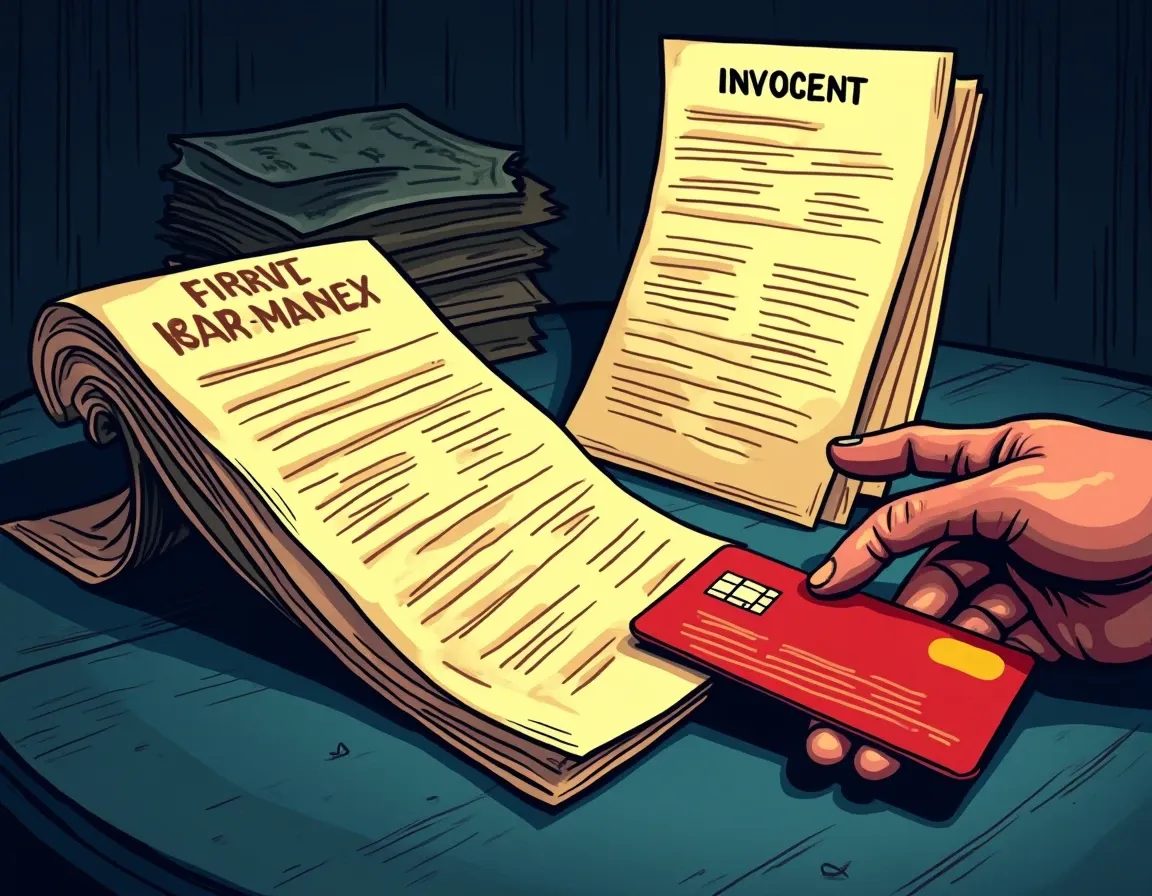
The larger hidden cost is your credit card issuer's treatment of the transaction. Most major U.S. credit card issuers including JPMorgan Chase, Bank of America, Capital One, and Wells Fargo classify cryptocurrency purchases as cash advances or block them outright. When a transaction is coded as a cash advance, three things happen. First, you pay a cash advance fee, typically 3% to 5% of the transaction amount with a minimum of $10. Second, interest begins accruing immediately at the cash advance APR, which ranges from 17.99% to 29.99% depending on your card and creditworthiness. Third, there is no grace period. If you pay your credit card balance in full every month, your purchases normally enjoy a grace period of at least 21 days before interest accrues. Cash advances do not. Interest starts on day one.
This matters because the effective cost of a credit card crypto purchase is not static. It grows every day you carry the balance. If you purchase $1,000 of cryptocurrency with a credit card and your issuer treats it as a cash advance, you pay a 4% cash advance fee ($40) plus a 3.5% exchange fee ($35), bringing your initial cost to $75 or 7.5%. If you carry that balance for 30 days at a 25% APR, you accrue an additional $20.55 in interest. Your total cost after one billing cycle is $95.55, or 9.55% of your principal. If you intended to deploy that $1,000 into a stablecoin yield position paying 6% APY, you are starting from a 9.55% deficit. It will take 19 months of compounding yield just to break even, assuming no withdrawal costs, no gas fees, and no volatility in the underlying asset.
Issuers may also set separate spending caps for cryptocurrency transactions. The merchant category code for cryptocurrency purchases is MCC 6051. Some card issuers apply lower transaction limits to this category than to your overall credit limit. A cardholder with a $15,000 credit limit might find only $1,000 to $2,000 available for crypto-coded transactions in any given month. This is not disclosed prominently. You discover it when your transaction is declined or when your issuer calls to verify the purchase and informs you that crypto purchases are restricted.
The European Banking Authority issued warnings in 2013 and 2014 about the treatment of cryptocurrency purchases, noting that consumers often did not understand whether they were receiving the same protections as traditional card purchases. In the UK, Section 75 of the Consumer Credit Act provides chargeback protection for purchases between £100 and £30,000, but that protection does not extend to cash advances or to assets purchased on unregulated exchanges. The same dynamic applies in the U.S. If your credit card issuer treats the crypto purchase as a cash advance, you forfeit the standard dispute and chargeback protections. If the exchange fails to deliver the asset or if your account is frozen, your recourse through the card issuer is limited.
Calculating The Breakeven Period For Yield Positions
The question that matters is not whether credit card fees are high. They are. The question is whether the yield position you intend to deploy into can recover those fees within a holding period that makes the purchase defensible. That requires a breakeven calculation.
Assume you purchase $1,000 of a stablecoin using a credit card. The exchange charges 3.5%. Your bank treats the purchase as a cash advance and charges 4%. Your total upfront cost is 7.5%, or $75. You deploy the $1,000 into a stablecoin lending position on Aave paying 6% APY. How long does it take to recover the $75 cost?
At 6% APY, your position earns $60 per year, or $5 per month. To recover $75, you need to hold for 15 months. But this calculation assumes you can withdraw your funds and convert them back to fiat without incurring additional costs. In practice, you will pay gas fees to withdraw from Aave to your wallet (typically $3 to $50 depending on network congestion), then a withdrawal fee or spread when converting the stablecoin back to fiat on the exchange (another 0.5% to 1%). Add those costs and your breakeven period extends to 16 or 17 months. If the stablecoin you purchased experiences any depeg event during that holding period, your effective yield drops or turns negative, and the breakeven point moves further out or becomes unattainable.
Now assume the same $1,000 purchase, but you deploy into a higher-yield liquidity pool on Curve Finance offering 12% APY. At 12%, your position earns $120 per year, or $10 per month. To recover $75, you need to hold for 7.5 months. That is still a long holding period, but it is within the range where a credit card purchase might be defensible if you have no other funding option available and you need to deploy capital immediately to capture a time-sensitive opportunity.
The threshold where credit card purchases begin to make financial sense is around 15% APY, assuming your total upfront cost is 7% to 8% and you can hold for at least six months. At 15% APY, your $1,000 position earns $150 per year, or $12.50 per month. Recovering $75 takes six months. Below 15% APY, the breakeven period extends beyond one year, and you are exposed to protocol risk, depeg risk, regulatory changes, and interest rate shifts for an extended duration just to recover the initial fee drag. That is not a yield position. It is a speculative bet that the yield mechanism will remain intact long enough for you to break even.
When Credit Card Purchases Are Defensible
There are scenarios where purchasing crypto with a credit card makes financial sense, but they are narrow. The first is when you have confirmed that your card issuer does not treat cryptocurrency purchases as cash advances. A small number of issuers code crypto transactions as standard purchases, which means you receive the normal grace period, no cash advance fee, and potentially rewards points. If your card offers 2% cash back on all purchases and your issuer does not code crypto as a cash advance, your effective cost is the exchange fee minus the rewards. A 3.5% exchange fee minus 2% cash back is a net 1.5% cost. That is recoverable within one to three months if you deploy into a position yielding 6% to 12% APY.
The second scenario is time-sensitive liquidity events. If a new Aave market launches offering 25% APY for the first 30 days to bootstrap liquidity, and you need to deploy capital within hours to capture that rate, a 7% upfront credit card cost can be recovered in less than four months even after the rate normalizes. But this requires confidence that the yield is real, that the protocol is solvent, and that you can withdraw when the rate drops. Most promotional yields are subsidized by token emissions, not protocol revenue. If the 25% APY comes from governance token rewards, you need to account for the likelihood that those tokens will decline in value by the time you can sell them. In that case, your effective yield is lower than advertised, and the breakeven period extends.
The third scenario is airdrop farming where early participation is weighted heavily in the allocation formula. If a new protocol announces that the first 1,000 users who deposit liquidity will receive 10x weighting in the airdrop, and you expect the airdrop to be worth $200 to $500, a $70 credit card fee to deploy $1,000 immediately is recoverable if the airdrop materializes. But this is speculative. Most airdrops do not materialize at the valuations early participants expect, and many protocols never distribute tokens at all. You are paying a certain 7% cost for an uncertain future payment.
In all other cases, the math does not work. If you are deploying into passive stablecoin yield at 4% to 7% APY, the breakeven period is 12 to 24 months. That is longer than most market cycles. If you are purchasing Bitcoin or Ethereum with the intention of holding for appreciation, a 7% to 9% upfront cost is a permanent drag on returns. A Bitcoin purchase at $63,000 with a 7% fee has an effective cost basis of $67,410. Bitcoin needs to appreciate 7% from the market price just for you to break even, before accounting for any opportunity cost of the interest you paid on the credit card balance.
The Alternative Payment Methods That Preserve Capital
Credit card purchases should be compared to the alternatives. Bank transfers via ACH in the United States or SEPA in Europe typically cost zero. The settlement time is one to three business days, which means you cannot deploy capital immediately, but you preserve 7% to 9% of your principal. Debit card purchases cost 1.5% to 3.99% depending on the platform, which is half the cost of a credit card purchase when cash advance treatment applies. Wire transfers cost $15 to $30 in flat fees, which is cheaper than percentage-based fees for purchases above $1,000.
If you are deploying $500, a $25 wire fee is 5%, which is comparable to a credit card fee. But if you are deploying $5,000, a $25 wire fee is 0.5%. The larger the purchase, the more a flat fee favors wire transfers over percentage-based credit card fees. The tradeoff is time. ACH takes one to three days. Wires take several hours to one business day. Credit cards settle in minutes. The question is whether the time saved is worth 6% to 8% of your capital.
For yield deployers starting with $1,000, the calculus is clear. A $70 credit card fee is seven months of yield at 10% APY. Waiting two days for an ACH transfer preserves that $70, which compounds over time. At 10% APY compounding monthly, $70 grows to $77 after one year. That is an additional $7 of yield you would have lost to fees. Over a three-year holding period, the $70 saved at the start compounds to $94. The time cost of waiting two days is measured in hours of foregone yield. The financial cost of paying 7% upfront is measured in months or years of compounding.
There is one exception. If the asset you are purchasing is experiencing a sharp short-term price movement, and you believe you can capture 10% or more appreciation by purchasing immediately rather than waiting two days for ACH settlement, the credit card fee can be justified as the cost of execution speed. But that is speculation on price volatility, not yield deployment. If your thesis is that Bitcoin will appreciate 15% over the next 48 hours, a 7% fee to enter the position immediately has a positive expected value. But if your thesis is that Bitcoin will appreciate 15% over the next six months, waiting two days to save 7% is the higher expected value trade.
Step-By-Step Process For Credit Card Crypto Purchases
If you have determined that a credit card purchase is defensible for your situation, the process is straightforward, but there are common failure modes that will cost you additional fees or result in a declined transaction.
Step 1: Verify your card issuer's treatment of cryptocurrency purchases. Call the number on the back of your card and ask whether cryptocurrency purchases are coded as standard purchases or cash advances. Ask whether there is a separate transaction limit for cryptocurrency purchases under MCC 6051. If the representative cannot answer, escalate to a supervisor. If your issuer treats crypto as a cash advance, calculate whether the total cost including cash advance fees and daily interest accrual is recoverable within your intended holding period. If it is not, use a different payment method.
Step 2: Select a platform with transparent fee disclosure. Compare fee structures across Coinbase, Binance, Crypto.com, and Kraken. Look for platforms that disclose both the percentage fee and the spread. Request a quote for your intended purchase amount and compare the quoted price to the real-time market price on a neutral source like CoinGecko or CoinMarketCap. If the spread exceeds 1.5%, the platform is embedding additional cost that is not labeled as a fee. Factor that into your breakeven calculation.
Step 3: Confirm your card is accepted and your purchase amount is within limits. Visa and Mastercard are accepted on most platforms. American Express is inconsistent. Some platforms accept Amex but apply higher fees. Confirm that your intended purchase amount is within both your card's overall credit limit and any category-specific limit for cryptocurrency purchases. If you are purchasing $2,000 and your card has a $1,500 crypto purchase limit, the transaction will be declined, and you may incur a failed transaction fee depending on your issuer.
Step 4: Execute the purchase and verify the transaction code on your card statement. After completing the purchase, wait 24 to 48 hours for the transaction to post to your card account. Check whether it is coded as a standard purchase or a cash advance. If it is coded as a cash advance and your issuer told you it would be coded as a standard purchase, call immediately to dispute the coding. Some issuers will reverse the cash advance fee if you can document that you were given incorrect information. If the transaction is coded as a standard purchase, verify that you are within the grace period and that interest will not accrue if you pay the balance in full by the due date.
Step 5: Deploy the purchased crypto into your intended yield position within 24 hours. Every day you hold the asset in your exchange wallet without deploying it into a yield-generating position is a day you are paying credit card interest (if coded as cash advance) without earning offsetting yield. Transfer the asset to your self-custody wallet or directly into the DeFi protocol where you intend to earn yield. Account for gas fees in your breakeven calculation. If you purchased $1,000 of ETH and it costs $15 in gas to transfer it to Aave, your deployed capital is $985, not $1,000, and your effective cost basis is higher.
Step 6: Track your position and calculate actual yield net of fees. Portfolio tracking tools allow you to input your cost basis including fees and monitor whether your yield position is on track to recover the upfront cost within your target holding period. If the advertised yield drops or if gas fees to maintain the position are higher than expected, your breakeven period extends. Reassess monthly whether continuing to hold the position is optimal or whether withdrawing and redeploying through a lower-cost funding method would improve your net return.
Common Failure Modes And How To Avoid Them
The most common failure mode is discovering after the fact that your card issuer treated the purchase as a cash advance. You see the exchange fee of 3.5% and assume that is your total cost. Two weeks later, your card statement shows a 4% cash advance fee and daily interest accrual at 27.99% APR. Your effective cost is now 8.5% plus 30 days of interest, and your breakeven period has extended by six months. This is avoidable by calling your issuer before initiating the purchase and documenting the response. If the representative tells you crypto is coded as a standard purchase and it is later coded as a cash advance, you have grounds to dispute the fees.
The second failure mode is ignoring the spread. You compare exchange fees and select Binance at 1.8% over Coinbase at 3.99%. But Binance quotes you $64,200 for Bitcoin when the market price is $63,000. The 1.9% spread plus the 1.8% fee means your total cost is 3.7%, not 1.8%. You thought you saved 2%, but you saved only 0.29%. Always compare the quoted execution price to the real-time market price and include the spread in your cost calculation.
The third failure mode is deploying into yield positions that pay in governance tokens without accounting for token price decline. A protocol advertises 20% APY, which looks attractive compared to your 7% credit card cost. But the 20% is paid in the protocol's governance token, which declines 40% in value over the six months you hold the position. Your nominal yield is 10% (half a year at 20% APY), but the token you received is worth 40% less, so your realized yield is negative 24%. Your credit card cost of 7% is a realized loss. The token yield was not real yield. It was dilution disguised as return.
The fourth failure mode is underestimating gas fees for withdrawal. You deploy $1,000 into a position on Ethereum mainnet. After six months, you have earned $50 in yield and recovered most of your credit card fee. You attempt to withdraw, and gas costs $35. Your net yield after fees is $15, and your breakeven period just extended from six months to 10 months. If you had known withdrawal would cost $35, you would have deployed through an L2 or waited to accumulate a larger balance before withdrawing. Always confirm withdrawal costs before deploying capital, and factor them into your breakeven calculation.
What To Do After Your Purchase
Once you have purchased crypto with a credit card and deployed it into a yield position, your next priority is paying off the credit card balance before interest compounds. If your issuer coded the purchase as a standard purchase and you are within the grace period, pay the balance in full by the due date. If it was coded as a cash advance, interest is already accruing. Pay off the balance as quickly as possible to minimize the total interest cost. Every dollar of interest you pay is another dollar your yield position needs to recover.
Monitor your yield position weekly for the first month and monthly thereafter. Verify that the advertised yield is being paid, that the protocol remains solvent, and that there are no liquidity issues that would prevent you from withdrawing when your target holding period is reached. If the yield drops below your breakeven threshold, calculate whether continuing to hold is optimal or whether you should withdraw, accept the loss, and redeploy through a lower-cost method.
Document all fees, gas costs, and realized yield for tax reporting. Credit card fees increase your cost basis, which reduces your taxable gain when you eventually sell or withdraw. Gas fees paid to deploy and withdraw are also deductible as transaction costs in most jurisdictions. Crypto tax software can track these costs automatically if you connect your wallet and exchange accounts, but you should verify that all fees are captured correctly.
Reassess your funding method before your next deployment. If you broke even or generated positive net yield after credit card fees, calculate whether waiting two days for an ACH transfer next time would have produced higher net yield. In most cases, it will have. If you deploy monthly or quarterly, the time cost of waiting two days is negligible, and the fee savings compound over multiple deployments.
The Takeaway
Credit card crypto purchases cost 6% to 9% upfront when exchange fees and bank cash advance treatment are combined. That cost is recoverable only if you deploy into positions yielding above 15% APY and hold for at least six months, or if you are capturing a time-sensitive opportunity where speed of execution has measurable value. Below 15% APY, the breakeven period extends beyond one year, and you are exposed to protocol risk, depeg risk, and regulatory changes for a duration that makes the credit card cost indefensible. ACH transfers cost zero and settle in one to three days. Wire transfers cost $15 to $30 flat and settle in hours. For deployers starting with $1,000 or more, waiting two days preserves 7% of principal, which compounds to $94 over three years at 10% APY. The time cost of waiting is hours. The financial cost of paying 7% upfront is years.
Frequently Asked Questions
Do all credit cards treat cryptocurrency purchases as cash advances?
No. Treatment varies by issuer and card type. Most major U.S. banks including JPMorgan Chase, Bank of America, Capital One, and Wells Fargo either block crypto purchases or code them as cash advances, which trigger separate fees and immediate interest accrual. A smaller number of issuers code crypto as standard purchases, which means you receive the normal grace period and potentially earn rewards. Call your card issuer before purchasing to confirm how your specific card will code the transaction.
What is the breakeven holding period for credit card crypto purchases?
Breakeven depends on your total upfront cost and the yield you deploy into. At 7% total fees and 10% APY, you need approximately eight to nine months to recover the cost. At 7% fees and 6% APY, breakeven extends to 14 to 15 months. Below 15% APY, credit card purchases are difficult to justify unless you are capturing a time-sensitive opportunity. Above 15% APY, breakeven drops to six months or less, which may be defensible if you have no lower-cost funding option available.
Which crypto exchange has the lowest credit card fees?
Binance advertises fees starting at 1.8%, but this rate applies only in specific regions and with specific processors. Most users pay 3% to 3.5%. Crypto.com charges 2.99% and offers zero-fee promotions for new users. Coinbase charges 3.99%. Kraken charges 3.75% plus a small flat fee. Always compare the quoted execution price to the real-time market price, because exchanges often embed a 1% to 2% spread that is not labeled as a fee. Your total cost is the disclosed fee plus the spread.
Can I dispute credit card fees if crypto was coded as a cash advance?
Possibly, if your issuer told you the purchase would be coded as a standard purchase and later coded it as a cash advance. Document your conversation with the issuer, including the representative's name and date. If the actual coding contradicts what you were told, call to dispute the cash advance fee. Some issuers will reverse the fee if you can show you received incorrect information. If you did not confirm treatment in advance, the issuer has discretion to code crypto purchases as cash advances, and disputes are less likely to succeed.
Are there scenarios where credit card crypto purchases make financial sense?
Yes, but they are narrow. If your card issuer does not treat crypto as a cash advance and you earn 2% rewards, your net cost is the exchange fee minus rewards, which may be 1.5% to 2%. That is recoverable in one to three months at 6% to 10% APY. If you are capturing a time-sensitive yield opportunity above 20% APY or an airdrop with weighted early participation, a 7% upfront cost can be justified. For passive stablecoin yield at 4% to 7% APY, credit card purchases destroy returns and should be avoided.
You now have the fee breakdowns, breakeven calculations, and platform comparisons for credit card crypto purchases. Those fees and yields will be different next month.
Every Thursday: where crypto yield actually is - stablecoins, liquid staking and DeFi lending, with the risk named next to the rate and what changed since last week.
Get it free every ThursdayFree. No trade calls, no allocations, no hype. Unsubscribe in one click.