Table of Contents
Understanding What Safe Yield Actually Means

Safe DeFi yield is not about finding the highest APY. It is about identifying yield mechanisms you can decompose, verify, and stress-test. A protocol paying 4.8% with a clear income source is safer than one paying 50% with no explanation of where the return comes from. The difference is structural: real yield comes from economic activity that generates revenue. Ponzi yield comes from new deposits.
The test is simple. If the protocol stopped attracting new capital tomorrow, would it still generate returns? Aave generates lending fees from borrowers. Curve generates trading fees from swaps. Pendle generates fees from yield trading. These protocols produce income independent of new user deposits. That is the baseline definition of safe yield.
The red flag is inverse. A protocol paying 300% APY but collecting zero protocol fees is structurally dependent on new deposits. When deposits stop, the yield stops. That is not a yield mechanism. That is a Ponzi scheme with a countdown timer. The SEC defines this explicitly: payment of returns to existing investors from new investor contributions rather than legitimate business activities.
The Risk Stack Framework

Every DeFi position carries four distinct risk layers. Most users evaluate only one. You need to evaluate all four before deploying capital.
Smart contract risk: The protocol's code could contain exploitable vulnerabilities. This risk compounds exponentially with complexity. A simple Aave deposit exposes you to one contract. A vault that deposits into Aave, which supplies to Compound, which stakes in Curve exposes you to four. Each additional layer multiplies the attack surface. Aave V3 has been audited by six firms and holds $11 billion in TVL without a critical exploit. That is not zero risk. That is acceptable risk for conservative yield strategies.
Market risk: The underlying yield source can compress or invert. Aave's 4.8% USDC rate depends on borrowing demand. If demand drops, rates drop. Ethena's sUSDe yield depends on perpetual funding rates staying positive. Historically, 17.5% of days have carried negative summed funding for ether positions, with the longest negative stretch at 13 days. The protocol has a reserve fund to absorb negatives, but the fund is finite. Sustained negative funding for months would drain the reserve and force yield to zero.
Oracle risk: Protocols depend on price feeds to calculate collateralization ratios, liquidation thresholds, and position health. Chainlink oracles support Aave. No critical V3 exploit has occurred via oracle manipulation to date, but protocol contagion demonstrated in April 2026 when KelpDAO's $292 million incident triggered a $10 billion exodus from Aave. The risk is not theoretical.
Governance risk: Protocol teams control upgrade keys, multisigs, and emergency pause functions. Pendle operates a 2-of-4 multisig with undisclosed signers. sPENDLE governance is limited to emission direction. No path to full decentralization has been articulated. This means four people control $1.24 billion in user capital. That is a trust assumption most users do not realize they are making.
Platform Selection: The Protocols That Have Actually Paid Out
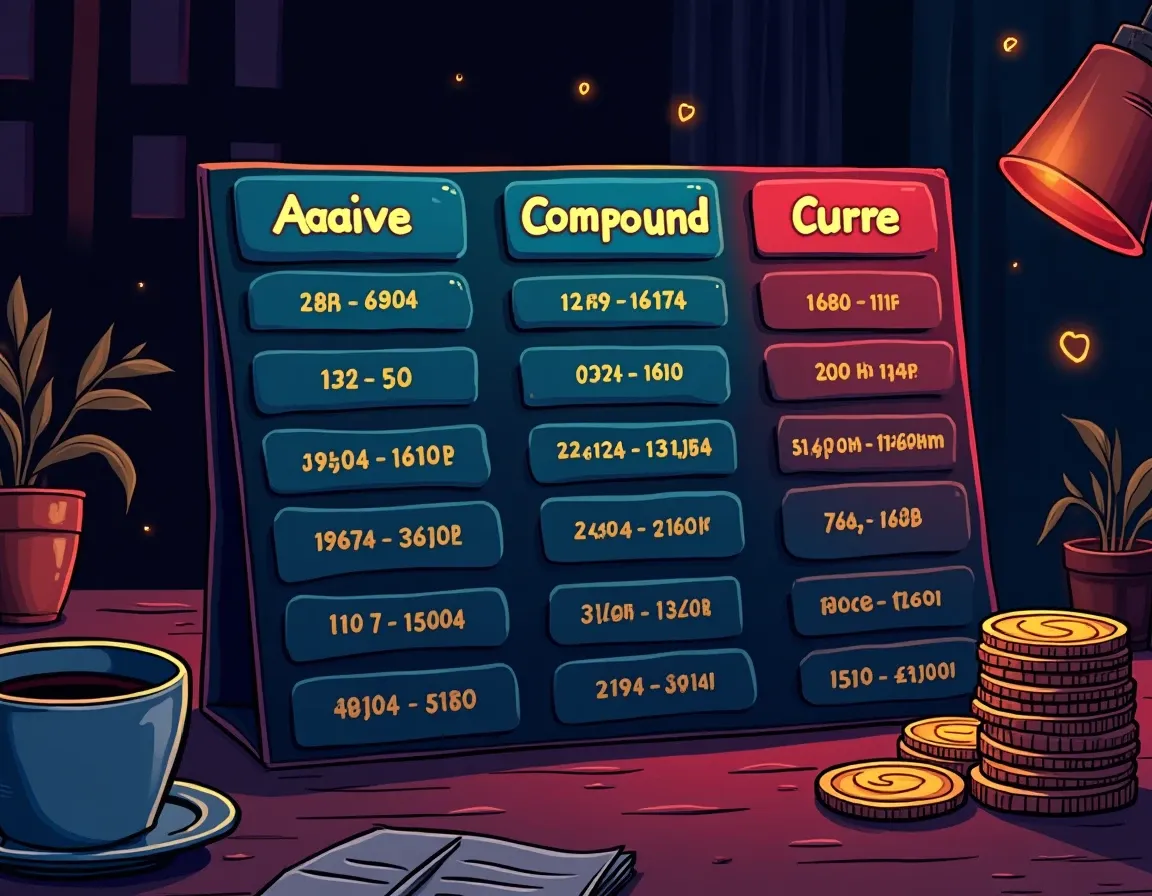
Aave V3: Typical stablecoin lending APY ranges from 3-8% as of 2026. Ethereum mainnet USDC yields approximately 4.8% gross. Polygon and Arbitrum offer 4.7% with gas costs of $0.50 per transaction versus $3.78 on mainnet. The yield comes from borrower interest minus a protocol reserve factor of 10-20%. All borrowing positions are strictly overcollateralized and monitored in real-time by the Health Factor.
Aave has best-in-class DeFi security but zero regulatory protection. The contagion risk demonstrated in April 2026 is structural: protocols built on top of Aave create dependencies that can cascade. The failure mode is not Aave's code. The failure mode is a connected protocol draining liquidity so fast that Aave users panic and withdraw $10 billion in 48 hours.
Curve Finance: $2.39 billion TVL with typical APY ranges of 3-10%. The 3pool (USDC/USDT/DAI) processes $800 million in daily volume and generates approximately $320,000 in daily trading fees split among LPs. That produces 3-6% base yield before any CRV token emissions. LPs deposit into Curve pools and earn a share of trading fees. On stable pairs, fees are low per trade but aggregate to meaningful annual yields on high-volume pools.
The risk is pool depeg. Curve's 3pool lost more than 10% during the March 2023 USDC depeg before recovering. Impermanent loss barely registers on stablecoin pairs since tokens trade near $1, but depeg events can cause temporary principal loss even if the pool eventually recovers. The veCRV locking mechanism rewards long-term holders with boosted yields up to 2.5x and protocol revenue sharing.
Pendle Finance: $1.24 billion TVL as of September 2026, down from $2.08 billion at end of Q1. Pendle splits yield-bearing tokens like sUSDe, stETH, and weETH into Principal Tokens (PT) that redeem 1:1 at maturity, and Yield Tokens (YT) that capture variable yield. Conservative investors can buy PTs or sell YTs to secure fixed yields. Traders can buy YTs to bet on higher yields or capture bonus rewards.
Pendle's primary risk is compositional. Activity concentrates in cyclical yield opportunities like Ethena. TVL dropped approximately 70% from its $13 billion peak due to unwinding of Ethena positions concentrated in Pendle markets. When maturities expire, capital leaves. Fee generation collapses when yields compress. The protocol charges a 5% fee on all yield accrued by YT holders, with 80% of remaining revenue going to PENDLE buybacks.
Ethena / sUSDe: On September 28, 2026, sUSDe paid 4.76% APY with a 30-day average of 4.79% and $1.31 billion in TVL. Yield comes from delta-neutral basis trading: Ethena holds long spot positions in LSTs (primarily stETH) and BTC, shorts equivalent perpetual futures, and harvests funding rate paid by long perp traders. A 10% protocol performance fee is deducted from gross yield before distribution.
The failure mode is structural. The model depends on funding staying positive. Ethena's data shows 17.5% of days carried negative summed funding for ether positions, with the longest negative stretch at 13 days versus the longest positive at 176 days. A reserve fund absorbs negatives so stakers are not charged, but the fund is finite. Prolonged negative funding drains the reserve and forces yield to zero or negative.
Verifying Yield Sources On-Chain
Marketing claims mean nothing. On-chain data is the only verification that matters. Here is what to check before deploying capital.
Protocol fee generation: Visit DefiLlama and navigate to the protocol page. Look for the Fees and Revenue section. Curve generates approximately $120 million in annual fees and emits $80 million in CRV tokens. The ratio is 1.5 to 1. That is healthy. Fees exceed emissions. The protocol is not dependent on inflation to pay yields.
Inverse example: a protocol paying 300% APY but showing zero fees on DefiLlama is structurally unsustainable. The only source of return is new deposits. When deposits stop, the yield stops. Skip.
Utilization ratios: Aave publishes utilization rates for every market. USDC utilization on Ethereum mainnet currently sits around 65%. That means 65% of deposited USDC is being borrowed and generating interest. The supply APY you earn is a function of that utilization. If utilization drops to 20%, your yield drops proportionally. Monitor utilization before entering a lending position.
Contract audits and exploit history: Check whether the protocol has been audited by reputable firms. Aave V3 has been audited by Trail of Bits, OpenZeppelin, ABDK, Peckshield, Certora, and Sigma Prime. That is not a guarantee of safety, but it is a baseline requirement. Then check the exploit history. Has the protocol suffered a critical loss event in the past two years? If yes, read the post-mortem. If the team did not publish a detailed post-mortem naming the specific failure mechanism, that is a red flag for governance competence.
Position Sizing Across Protocols
Diversification reduces single-protocol risk but introduces operational complexity. The baseline rule: never deposit more than you can afford to lose in a single protocol. That is not conservative rhetoric. That is the structural reality of smart contract risk.
Practical framework: split yield capital across 3-5 protocols. Aave 30%, Curve 30%, Pendle 20%, Ethena 20% is a reasonable allocation for someone deploying $50,000 in DeFi yield strategies. That structure ensures that a single protocol exploit does not wipe out the entire position. It also ensures that correlated failures (Pendle and Ethena are highly correlated due to composability) do not exceed 40% of total capital.
Layer 2 networks offer 10x cheaper gas than Ethereum mainnet while maintaining identical APYs. Polygon and Arbitrum Aave deployments pay 4.7% on USDC with gas costs of $0.50 per transaction. Mainnet pays 4.8% with gas costs of $3.78. For positions under $10,000, the gas differential often produces better net returns on L2 than mainnet despite slightly lower gross APY.
Avoid nested exposure. A Yearn vault that deposits into Aave, which supplies to Compound, which stakes in Curve exposes you to four protocol risks compounded. Each layer multiplies the attack surface. Stick to direct protocol exposure unless the additional yield from the aggregator meaningfully compensates for the added risk. In most cases, it does not.
The Specific Mistakes That Turn Low-Risk Yield Into Losses
Chasing APY without decomposing the mechanism: A protocol advertising 50% APY on stablecoins is either lying, paying in inflationary emissions, or exposing you to leveraged market risk. Decompose the yield. What are the constituent parts? If the answer is not clear from the protocol documentation, skip the position. High yield without a clear mechanism is a red flag, not an opportunity.
Ignoring the unstaking delay: Ethena's sUSDe has a 7-day cooldown on unstaking. During high-volatility periods, that locked capital can represent meaningful opportunity cost or worse, forced exposure during a liquidation cascade. Pendle's PT tokens are tradable but illiquid. Exiting a $50,000 PT position in a low-liquidity pool can cost 2-5% in slippage. That erases months of yield. Always check the exit mechanism before entering the position.
Deploying on unaudited forks: Aave has dozens of forks. Most are unaudited. Some are outright scams with backdoor withdrawal functions. Stick to the original protocol or forks with independent audits and meaningful TVL. A fork with $5 million TVL and no audits is not an opportunity. It is a honeypot.
Failing to monitor utilization and funding rates: Aave yields fluctuate with utilization. Ethena yields fluctuate with perpetual funding rates. Both can compress to near-zero in specific market conditions. Set alerts for utilization dropping below 40% or funding rates turning negative for more than three consecutive days. Those are early warning signals that your yield is about to compress.
Ignoring protocol fee extraction: Protocols charge performance fees that reduce gross yield to net yield. Pendle charges 5% on yield. Yearn v3 charges 10%. Convex charges 17% on CRV revenue. Beefy charges 4.05% to 9.5%. Those fees compound annually. A 10% performance fee on an 8% APY position reduces your net yield to 7.2%. Over five years, that 0.8% annual drag costs you 4% of total returns. Factor fees into the position sizing decision before entering.
The Takeaway
Safe DeFi yield starts with decomposition. If you cannot name the yield mechanism's constituent parts, you do not understand the position. Aave's 4.8% comes from borrower interest. Curve's 3-6% comes from trading fees. Pendle's fixed rates come from yield trading fees. Ethena's 4.76% comes from perpetual funding arbitrage with a reserve buffer. Each mechanism has a specific failure mode. Aave fails under contagion. Curve fails under depeg. Pendle fails under cyclical unwinding. Ethena fails under sustained negative funding.
Position sizing across 3-5 protocols with 2+ years of exploit-free operation reduces single-protocol risk. Layer 2 deployments reduce gas drag. Monitoring utilization ratios, funding rates, and protocol fee generation on-chain reveals stress conditions before they turn into losses. The playbook is not complicated. Decompose the mechanism, verify the yield source, name the failure mode, size the position accordingly.
Frequently Asked Questions
What is the safest DeFi protocol for earning yield in 2026?
Aave V3 has the strongest security track record with six independent audits and $11 billion TVL without a critical exploit. Stablecoin lending on Aave yields 4-8% APY with overcollateralized borrowing and real-time Health Factor monitoring. Curve Finance is a close second with $2.39 billion TVL and yield generated from actual trading fees rather than inflationary emissions. Both have been stress-tested through multiple market cycles and produce verifiable on-chain income.
How do I verify that a DeFi yield source is real and not a Ponzi?
Check DefiLlama for protocol fee generation. Real yield comes from economic activity that produces revenue independent of new deposits. Curve generates $120 million annually in fees and emits $80 million in CRV, a 1.5:1 ratio showing fees exceed emissions. A protocol paying 300% APY but showing zero fees on DefiLlama is structurally dependent on new deposits. When deposits stop, yield stops. That is the definition of a Ponzi scheme.
What is the biggest risk when earning DeFi yield?
Smart contract risk compounds exponentially with complexity. A simple Aave deposit exposes you to one contract. A vault depositing into Aave, then Compound, then Curve exposes you to four. Each layer multiplies the attack surface. Even audited protocols carry risk, as demonstrated in April 2026 when the KelpDAO incident triggered a $10 billion exodus from Aave despite Aave's code being secure. Protocol contagion is structural, not theoretical.
How much capital should I allocate to a single DeFi protocol?
Never deposit more than you can afford to lose in a single protocol. A reasonable allocation for $50,000 in DeFi yield is 30% Aave, 30% Curve, 20% Pendle, 20% Ethena. This ensures a single exploit does not wipe out the entire position and limits correlated failures to 40% of capital. Stick to protocols with 2+ years of exploit-free operation and meaningful TVL above $500 million.
Why are Layer 2 yields better than Ethereum mainnet for small positions?
Gas costs determine net returns on positions under $10,000. Polygon and Arbitrum Aave deployments pay 4.7% APY on USDC with $0.50 gas per transaction. Mainnet pays 4.8% with $3.78 gas. For a $5,000 position held six months with two transactions, L2 saves $6.56 in gas. That 0.13% gain may seem small, but compounded over multiple positions and years, L2 meaningfully outperforms mainnet for capital-efficient deployers.
You have just decomposed Aave's 4.8%, Curve's 3-6%, Pendle's fixed rates, and Ethena's 4.76% yield mechanisms. Those numbers will compress, and new protocols will emerge with different failure modes.
Every Thursday: where crypto yield actually is - stablecoins, liquid staking and DeFi lending, with the risk named next to the rate and what changed since last week.
Get it free every ThursdayFree. No trade calls, no allocations, no hype. Unsubscribe in one click.