Table of Contents
What You Will Accomplish

Sky stUSDS jumped 16.95 percentage points. Sparklend USDS rose 10.01pp. Sky USDS moved 8.52pp. Morpho GTUSDCP climbed 4.76pp. Sparklend launched a new 3.73% venue. Fluid introduced a 9.45% option. All six shifts happened in one week.
If you have $700,000 allocated across stablecoin lending venues, the order in which you investigate and rebalance these changes determines whether you capture $18,000 in additional annualized yield or lose the opportunity window while chasing small positions. The standard approach, highest rate first, fails because it ignores position size and gas costs. A 16.95pp jump on a $50,000 position nets less than a 4.76pp jump on a $400,000 position, and moving capital to the wrong venue first wastes 2-4 hours of investigation time plus $200-$400 in gas fees.
This framework replaces rate-chasing with capital-weighted priority. You will rank every rebalancing action by dollar gain per hour of portfolio uncertainty, factor in gas thresholds that make small moves uneconomical, and decide whether to execute serially or in parallel based on liquidity risk and execution windows.
Prerequisites: You already hold positions across multiple stablecoin venues. You understand APY calculations. You have $200,000 or more deployed. For foundational stablecoin yield mechanics, see How To Earn Passive Income From Stablecoins In 2026.
Step 1: Calculate Net Dollar Gain After Gas For Each Potential Move
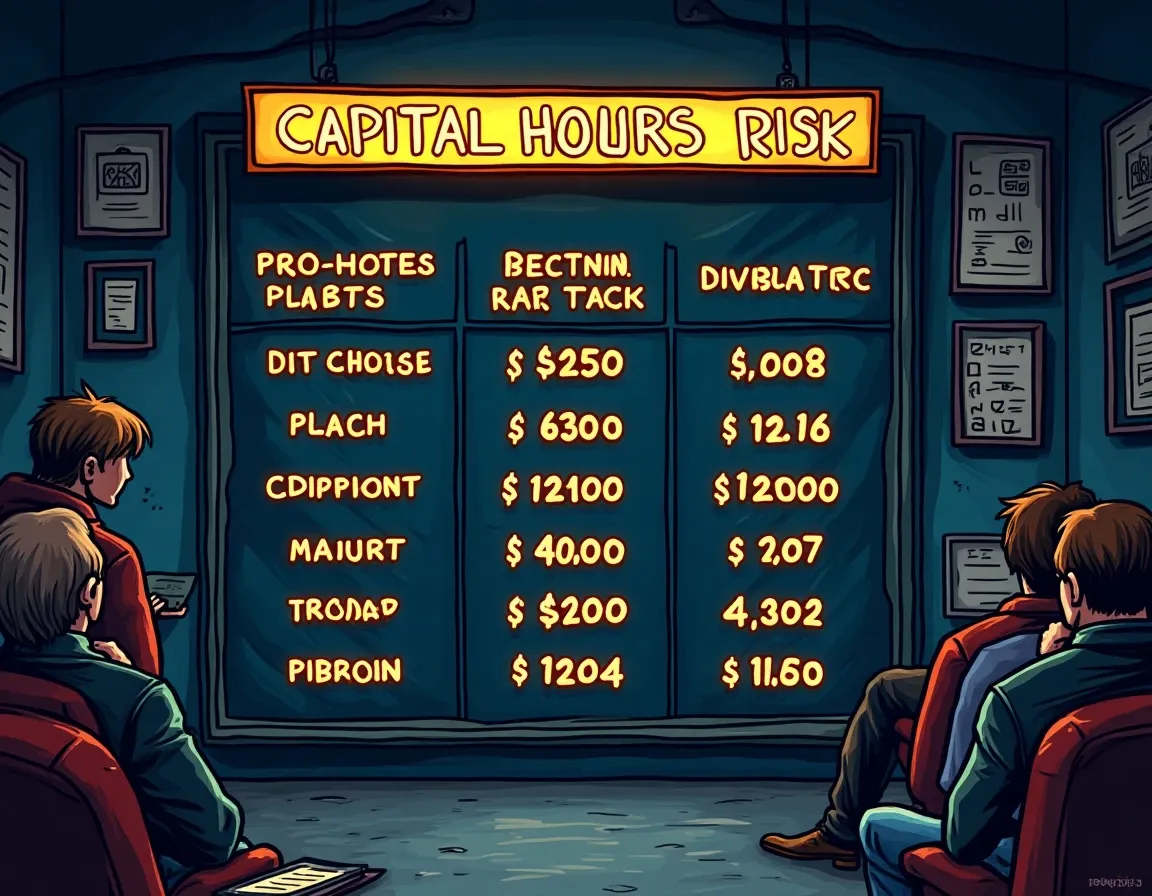
When six venues move simultaneously, your first task is to calculate the annualized dollar gain from rebalancing each position minus the gas cost of executing that rebalance. Rate magnitude alone does not determine priority. A 16.95pp jump looks urgent, but if your Sky stUSDS position is only $50,000 and your Morpho GTUSDCP position is $400,000, the smaller rate move on the larger position generates more income.
The formula is straightforward: (position size × rate delta in percentage points ÷ 100) - estimated gas cost = net annualized gain. For a $400,000 Morpho position that jumped 4.76pp, you gain $19,040 per year. If gas to investigate, approve, and deposit costs $150, your net gain is $18,890. For a $50,000 Sky stUSDS position that jumped 16.95pp, you gain $8,475 per year. Net of $150 gas, that is $8,325.
The larger position, despite the smaller rate move, nets $10,565 more per year. Investigating Sky first wastes 2-4 hours during which the Morpho opportunity might narrow or the deposit cap might fill.
At current Ethereum mainnet gas prices (20-40 gwei during low-congestion periods), a full rebalancing sequence costs approximately $80-$200 depending on contract complexity. Sky stUSDS and Sparklend USDS require ERC-20 approvals and staking transactions. Morpho GTUSDCP on Base costs $2-$8 in gas. Fluid on Ethereum costs $100-$150 for deposit plus withdrawal fee of 0.05%. These costs are fixed per transaction; the return scales with position size.
For positions under $20,000, a 4pp rate move generates $800 per year. After $150 in gas, the net gain is $650, or 3.25% of the position. For positions above $200,000, the same 4pp move generates $8,000 per year. After $150 gas, net is $7,850, or 3.93% of the position. Gas friction punishes small moves disproportionately.
Step 2: Rank Investigation Order By Capital-Hours At Risk

Once you have net dollar gains, the next variable is investigation time. Each venue shift requires verification work. You must confirm the rate is real, check utilization and liquidity, review borrower concentration, ensure withdrawal paths exist, and verify that the rate is not an artifact of a temporary spike.
Investigation time varies by venue complexity and risk profile. For Sky stUSDS, you need to check the SSR governance vote, current utilization (which has hit 100% in recent weeks), and the borrower concentration. As of November 2026, rune.eth accounts for 48% of Sky stUSDS debt. When one borrower dominates, liquidity risk is asymmetric. That investigation takes 90-120 minutes if you are thorough.
Sparklend USDS rates track the Sky Savings Rate, currently set at 3.75%, reduced from 6.5% in early 2025. The rate is governance-determined, not market-discovered. You need to verify whether the SSR moved via governance vote or whether Sparklend's implementation changed. That takes 30-45 minutes because the rate is published and the contracts are audited. Stablecoin venues with governance-set rates require different diligence than pure utilization-curve protocols.
Morpho GTUSDCP is a curated vault on Base managed by Gauntlet. The curator sets leverage limits, oracle sources, and collateral parameters. Rate changes reflect curator adjustments or utilization shifts within defined bands. Investigation takes 45-60 minutes to review the vault's current parameters and collateral health. For detailed Morpho TVL and vault metrics, check DeFiLlama's Morpho page.
Fluid Lite USD pays a fixed minimum 6% APR with historical ranges between 8-10%. A jump to 9.45% is within normal variance and requires minimal investigation, perhaps 15-20 minutes to confirm it is not a UI error and that withdrawal fees remain at 0.05%. Fluid supports cross-chain yield strategies spanning Arbitrum, Plasma, and Ethereum, so you must also confirm which chain the 9.45% rate applies to and calculate bridge costs if your capital is on a different chain.
Rank venues by net dollar gain divided by investigation hours. If Morpho nets $18,890 and takes 1 hour to verify, its priority score is $18,890 per hour. If Sky stUSDS nets $8,325 and takes 2 hours to verify, its score is $4,162.50 per hour. Morpho moves first.
Step 3: Apply Gas-Adjusted Move Thresholds
Not every rate change justifies a rebalancing action. Gas costs create a minimum threshold below which moving capital destroys value. For positions between $200,000 and $1 million, the gas-to-yield ratio determines whether a move makes sense quarterly, monthly, or never.
Calculate the breakeven holding period: gas cost ÷ (position size × rate delta ÷ 100) × 365 = days to recover gas. If Fluid charges 0.05% withdrawal and $100 deposit gas on a $200,000 position gaining 1.42pp over your current venue, total cost is $100 (withdrawal fee) + $100 (gas) = $200. The annual gain is $2,840. Breakeven is 25.7 days. If you expect the rate delta to persist for three months, the move nets $510 after gas.
If the same 1.42pp move applies to a $50,000 position, annual gain is $710. After $200 in costs, breakeven is 103 days. If rate deltas typically last 30-45 days in the current environment, you lose money on the rebalance.
The empirical threshold for $200K-$1M allocators is approximately 1.5pp sustained rate advantage for positions under $100,000, 0.75pp for positions $100K-$500K, and 0.5pp for positions above $500,000. Below these thresholds, gas and fees consume more yield than the move generates unless you plan to hold the new venue for six months or longer.
When multiple venues move simultaneously, some moves fall below threshold and should be deferred. A 3.73pp Sparklend launch on a $30,000 test allocation generates $1,119 per year. After gas, net is $969. If your investigation and execution time is two hours and your hourly opportunity cost (what you could earn optimizing your larger positions) is $1,000+, skip the small position and focus on capital-weighted moves.
Step 4: Decide Serial Vs Parallel Execution Based On Liquidity Windows
Once you have ranked moves by net dollar gain per investigation hour and filtered out sub-threshold rebalances, the final decision is whether to execute serially (one after another) or in parallel (simultaneously across multiple venues).
Serial execution is safer when liquidity is constrained or utilization is high. Sky stUSDS hit 25% APY on November 19, 2026, precisely because utilization reached 100%. At full utilization, there was $0 in available withdrawal liquidity. Yield you cannot withdraw is not income. If you investigate Sky first, confirm the rate, approve the deposit, and then discover you cannot exit your existing position to free capital, you have wasted 90-120 minutes and the Morpho opportunity window may have closed.
Parallel execution works when you have idle capital or when utilization across all target venues is below 85%. If you hold $700,000 deployed and $100,000 in stablecoins sitting idle on-chain, you can deposit into Morpho, Fluid, and Sparklend simultaneously without withdrawing from existing positions. This eliminates withdrawal risk and execution lag.
The hybrid approach is to investigate serially but execute in a single batched transaction. Investigate Morpho first (highest capital-hours score), then Sky, then Fluid, then Sparklend. Once all four are verified, approve and deposit in one transaction block to minimize gas and reduce mempool exposure. On Ethereum mainnet, batching four deposits costs $150-$250 depending on contract calls. Executing four separate transactions costs $320-$800.
Liquidity risk is asymmetric across protocols. Morpho Markets use dynamic borrow rates and curator-managed parameters but have lower withdrawal friction than Sky stUSDS during high-utilization periods. Fluid charges a 0.05% withdrawal fee but does not have utilization-based liquidity lockup. Sparklend tracks governance-set SSR and has predictable, if not market-driven, rate paths.
When three or more venues move simultaneously and at least one shows utilization above 90%, serial execution with liquidity verification at each step is mandatory. When all venues show utilization below 80% and you have idle capital, parallel execution captures the rate advantage faster and reduces gas via batching.
Common Failure Modes
Chasing the highest rate without factoring position size. A 16.95pp jump on a $50,000 allocation nets $8,325 per year after gas. A 4.76pp jump on a $400,000 allocation nets $18,890. The larger position earns more despite the smaller rate move. If you investigate the smaller high-rate position first, you spend two hours on an $8,325 opportunity while missing the execution window on the $18,890 opportunity.
Ignoring withdrawal liquidity before committing investigation time. Sky stUSDS paid 25% when utilization hit 100% and withdrawal liquidity was zero. Investigating Sky first without checking current utilization wastes 90-120 minutes. Always verify liquidity before beginning deep due diligence.
Moving sub-threshold positions out of completionism. A 3.73pp rate on a $30,000 position generates $1,119 per year. After $150 gas and two hours of investigation time, the net hourly return is under $500. If your capital-weighted priority list has three positions above $200,000 each netting $10,000+, defer the small move until the larger rebalances are complete or skip it entirely.
Serial execution when you hold idle capital. If you have $100,000 in stablecoins sitting on-chain undeployed, you do not need to withdraw from existing venues to capture new rate opportunities. Deposit idle capital in parallel across the top two or three ranked venues, then decide later whether to withdraw from lower-yielding positions. Serial execution when parallel is possible wastes 4-6 hours.
Batching moves across incompatible chains without calculating bridge costs. Fluid spans Ethereum, Arbitrum, and Plasma. Morpho GTUSDCP is on Base. If your capital is on Ethereum and the highest-ranked opportunity is on Base, bridge fees ($10-$40 depending on congestion) and bridge time (10-30 minutes) must be added to your gas calculation. For a $200,000 position, a $30 bridge fee is negligible. For a $50,000 position, it raises the breakeven threshold from 1.5pp to 1.65pp.
What To Do Next
After completing your first capital-weighted rebalancing cycle, set monitoring thresholds for each position. For positions above $500,000, a 0.5pp sustained rate delta justifies investigation. For positions $100K-$500K, use 0.75pp. For positions under $100,000, use 1.5pp or defer rebalancing to quarterly reviews.
Track average rate persistence across venues. If Morpho rate jumps typically last 7-14 days before reverting, your holding-period assumption should reflect that. If Sparklend's governance-set SSR changes quarterly, treat Sparklend moves as lower-urgency unless the SSR vote is imminent.
Build a rebalancing decision log. Record the date, venue, rate delta, position size, gas cost, investigation time, and net annualized gain for each move. After six months, you will have empirical data on which venue types generate the highest capital-adjusted returns and which rate changes are worth chasing versus which are noise.
For multi-position triage when yields collapse simultaneously, see Capital-Weighted Exit Priority Matrix For Multi-Pool Collapse. For frameworks on evaluating stablecoin rate jumps across venues, review How To Evaluate Stablecoin Lending Rate Jumps Across Venues.
The Takeaway
When six stablecoin venues move 3-17pp in one week, the allocator who calculates net dollar gain after gas, ranks by capital-hours at risk, applies gas-adjusted thresholds, and chooses serial versus parallel execution based on liquidity windows will capture $18,000+ in additional annualized yield on a $700,000 portfolio. The allocator who chases the highest rate first, ignores position size, and moves every venue out of completionism will spend $600-$1,200 in gas, waste 8-12 hours on sub-threshold positions, and miss the execution window on the capital-weighted opportunities that actually matter.
Rate magnitude is a signal. Position size and gas costs convert that signal into realized income. The decision matrix is arithmetic, not intuition. Run the numbers, rank the moves, verify liquidity, and execute in the order that maximizes dollar gain per hour of portfolio exposure.
Frequently Asked Questions
How do I calculate whether a stablecoin rate jump justifies rebalancing my position?
Multiply your position size by the rate delta in percentage points, divide by 100 to get annualized dollar gain, then subtract gas costs (typically $80-$200 on Ethereum mainnet, $2-$8 on Base). If the net gain divided by investigation time (1-2 hours) exceeds your opportunity cost and the breakeven holding period is under 60 days, the move is justified. For example, a $400,000 position gaining 4.76pp nets $19,040 per year; after $150 gas, breakeven is under 3 days.
What investigation time should I budget for each stablecoin venue when rates move?
Governance-set rates like Sparklend USDS tracking the Sky Savings Rate require 30-45 minutes to verify the SSR vote and implementation. Curated vaults like Morpho GTUSDCP need 45-60 minutes to review curator parameters and collateral health. High-utilization venues like Sky stUSDS demand 90-120 minutes to check borrower concentration (rune.eth held 48% of debt in November 2026) and withdrawal liquidity. Fixed-rate products like Fluid Lite USD need only 15-20 minutes to confirm the rate and withdrawal fee.
Should I rebalance my smallest positions first or my largest positions first when multiple venues move?
Always prioritize by net dollar gain per investigation hour, not by rate magnitude. A 16.95pp jump on a $50,000 position nets $8,325/year after gas; a 4.76pp jump on a $400,000 position nets $18,890/year. The larger position earns $10,565 more annually despite the smaller rate move. Investigating small positions first wastes hours on low-dollar-gain opportunities while execution windows on capital-weighted moves may close due to utilization caps or liquidity constraints.
When should I execute rebalancing moves in parallel versus one at a time?
Use parallel execution when you hold idle capital and all target venues show utilization below 85%. This eliminates withdrawal risk and allows batched transactions that save $170-$550 in gas. Use serial execution when liquidity is constrained (Sky stUSDS hit 100% utilization and $0 withdrawal liquidity in November 2026) or when you must free capital from existing positions. Hybrid approach: investigate serially by capital-hours rank, then batch execute verified moves in one transaction block to minimize gas and mempool exposure.
What is the minimum rate advantage that justifies moving capital between stablecoin venues?
For positions under $100,000, require at least 1.5pp sustained advantage to cover gas and opportunity cost. For $100K-$500K positions, 0.75pp is the threshold. Above $500,000, 0.5pp justifies investigation. These thresholds assume Ethereum mainnet gas ($100-$200 per move) and 60-90 day rate persistence. On Layer 2 networks like Base, gas drops to $2-$8, lowering the threshold to 0.3-0.5pp for positions above $200K. Always calculate breakeven holding period: gas cost divided by annual gain times 365 equals days to recover costs.
You just reviewed the decision matrix for six simultaneous venue shifts worth $18,000 in net annualized gain. Those venues and those rate deltas will be different next week.
Every Thursday: where crypto yield actually is - stablecoins, liquid staking and DeFi lending, with the risk named next to the rate and what changed since last week.
Get it free every ThursdayFree. No trade calls, no allocations, no hype. Unsubscribe in one click.