Table of Contents
The Return of Monetary Restraint
Federal Reserve Chair Kevin Warsh signaled on August 28, 2026 that inflation remained above the Fed's 2% target and that monetary policy could remain restrictive, a message delivered at Jackson Hole that sent Treasury yields higher and Bitcoin into a sharp reversal. The cryptocurrency fell from a three-month high of approximately $81,455 on August 28 to below $78,000 on August 29, settling near $78,231.51 on August 30 after recovering 0.75% over 24 hours. Spot Bitcoin ETFs recorded net outflows of $201.8 million on August 28, ending a nine-day inflow streak that had stripped over $3 billion in supply from the market.
The collision between hawkish Federal Reserve signals and expansionary Treasury liquidity operations created a volatile price clash in late August, forcing a decoupling of Bitcoin from traditional high-beta assets as market participants navigate conflicting sovereign signals. Where the Fed signals continued monetary restraint, the Treasury's operational liquidity injections suggest fiscal expansion continues beneath the surface, a contradiction familiar to anyone who watched European central banks between 2010 and 2015 attempting to maintain price stability while sovereign bond markets required continuous intervention.
The European Precedent for Conflicting Sovereign Signals
The current dynamic between the Federal Reserve's hawkish posture and the Treasury's operational liquidity provision bears structural resemblance to the eurozone's 2011-2012 sovereign debt crisis, when the European Central Bank maintained publicly that its mandate required price stability while simultaneously conducting bond-purchasing operations of a magnitude previously reserved for wartime finance. The contradiction between stated monetary policy and actual balance sheet expansion created persistent volatility in risk assets, particularly those positioned as alternatives to sovereign debt instruments. Greek retail investors bought Bitcoin at prices that seemed absurd to American counterparts precisely because the contradiction between central bank rhetoric and operational reality had already destroyed confidence in official reassurances.
What distinguishes the current American situation from the European precedent is the absence of an immediate sovereign debt crisis forcing the central bank's hand. The Fed retains operational independence from Treasury funding requirements in ways the ECB did not when Greek, Portuguese, and Spanish bond yields threatened systemic contagion. This matters for Bitcoin because the cryptocurrency's adoption pattern in Southern Europe was driven by capital control fears and deposit run memories, whereas American adoption has proceeded primarily through speculative vehicle demand and institutional portfolio allocation. The price volatility triggered by Warsh's Jackson Hole remarks suggests the American market remains primarily sensitive to Fed policy direction rather than Treasury funding stress, a dynamic that could shift rapidly if sovereign debt sustainability concerns emerge.
Monetary Policy Transmission Through Digital Asset Markets
The mechanism through which Federal Reserve policy signals transmit into Bitcoin price action has evolved substantially since the cryptocurrency's early years, when correlation with traditional risk assets remained minimal. Spot Bitcoin ETFs now function as direct transmission channels, converting institutional sensitivity to interest rate expectations into immediate capital flows. The $201.8 million in net outflows on August 28 represented not retail panic but institutional rebalancing in response to higher Treasury yields, a shift in relative expected returns that makes holding zero-yield Bitcoin less attractive when the risk-free rate rises.
This transmission mechanism operates differently than traditional monetary policy channels because Bitcoin lacks the cash flow characteristics that allow conventional asset pricing models to discount future earnings against prevailing interest rates. Instead, the cryptocurrency functions as a pure store-of-value instrument whose attractiveness depends entirely on confidence in alternative monetary systems and opportunity cost relative to interest-bearing sovereign debt. When the Federal Reserve Chair signals that restrictive policy will continue, he raises the opportunity cost of holding Bitcoin while simultaneously affirming the dollar's strength, a double pressure that explains the magnitude of the August 28-29 reversal.
The question European monetary history suggests asking is whether this transmission mechanism remains stable once sovereign debt sustainability concerns emerge. During the eurozone crisis, the ECB's ability to transmit policy through traditional channels deteriorated as bond market participants began pricing sovereign default risk rather than responding to policy rate guidance. Bitcoin adoption in affected jurisdictions accelerated precisely when traditional monetary transmission mechanisms failed, creating a secondary market whose price formation operated independently of central bank signals. American Bitcoin markets have not yet faced this test, remaining responsive to Fed policy in ways that suggest confidence in dollar stability persists beneath the surface volatility.
The Institutional Shift Toward Digital Asset Treasury Management
The scheduled September 30 shareholder vote for the Evernorth XRPN listing on Nasdaq signals the expansion of what research notes describe as "Treasury Companies" whose primary purpose is the management of digital asset reserves. This development represents a structural shift in how institutional capital allocates to cryptocurrency exposure, moving from speculative portfolio positions toward dedicated treasury management vehicles designed to hold digital assets as operational reserves. The parallel to corporate gold holdings in the 1970s is instructive, when multinational corporations began maintaining precious metal reserves as hedges against dollar devaluation following the collapse of Bretton Woods.
What distinguishes the current institutional shift from the 1970s precedent is the speed at which dedicated treasury vehicles can be established and the liquidity with which their holdings can be rebalanced. Gold required physical storage and transfer logistics that created natural friction in institutional allocation decisions. Digital assets eliminate these constraints, allowing treasury management decisions to respond immediately to monetary policy signals, as evidenced by the $201.8 million in ETF outflows within hours of Warsh's Jackson Hole remarks. This operational efficiency creates a more direct but also more volatile transmission channel between central bank policy and digital asset prices.
For investors considering staking strategies to generate yield from digital asset holdings, the institutional shift toward treasury management vehicles introduces a new set of considerations. Where individual staking decisions respond primarily to protocol yields and validator economics, institutional treasury management must account for regulatory capital treatment, custodial security requirements, and fiduciary obligations that constrain which assets can be held and under what conditions. The expansion of dedicated digital asset treasury vehicles suggests institutional demand for yield-generating strategies that satisfy these requirements, creating potential support for staking infrastructure and protocols that can accommodate institutional operational standards.
Sovereign Debt Sustainability and Reserve Currency Transition
The Federal Reserve's return to hawkish policy guidance occurs against a backdrop of expanding sovereign debt loads across developed economies, a structural tension that European monetary authorities confronted during the 2011-2012 crisis when restrictive monetary policy threatened to render sovereign debt burdens unsustainable. The United States retains advantages unavailable to eurozone members, particularly the dollar's reserve currency status and the Treasury's ability to issue debt in its own currency, but these advantages do not eliminate the fundamental constraint that higher interest rates increase debt service costs while slowing economic growth reduces tax revenue.
Bitcoin's price volatility in response to hawkish Fed signals reflects market uncertainty about how this tension resolves over the medium term. If the Federal Reserve maintains restrictive policy long enough to restore inflation to its 2% target, the resulting economic slowdown and increased debt service costs could force a policy reversal similar to what the ECB experienced between 2011 and 2014. If instead the Fed tolerates above-target inflation to avoid triggering sovereign debt sustainability concerns, the dollar's purchasing power erodes in ways that historically support store-of-value asset demand. The August 28-29 price action suggests markets remain uncertain which path the Fed will ultimately choose, creating the volatility characteristic of regime transition periods.
European monetary history suggests that central banks facing this trade-off consistently choose to preserve sovereign debt sustainability over maintaining price stability, a pattern visible in the ECB's policy reversals in 2012 and again in 2014-2015 when sovereign bond yields began rising toward unsustainable levels. American monetary authorities have not yet faced this choice in acute form, but the structural dynamics are converging toward a similar inflection point. Bitcoin's role as a reserve currency alternative gains strategic importance precisely at this juncture, when confidence in traditional monetary authorities' ability to maintain both price stability and sovereign debt sustainability comes under pressure.
The Takeaway
The Federal Reserve's hawkish Jackson Hole message and Bitcoin's subsequent volatility expose the cryptocurrency's continued sensitivity to US monetary policy signals, a responsiveness that reflects institutional capital flows through spot ETF vehicles rather than fundamental adoption driven by monetary system failures. This pattern differs substantially from Bitcoin's adoption trajectory in Southern Europe during the eurozone crisis, when capital controls and deposit run fears drove retail allocation independent of central bank policy guidance. The American market has not yet experienced the monetary confidence breakdown that creates sustained demand for alternative reserve assets, leaving Bitcoin vulnerable to sharp reversals when the Federal Reserve signals continued dollar strength through restrictive policy.
The structural tension between restrictive monetary policy and expanding sovereign debt burdens suggests this dynamic may not persist indefinitely. European monetary authorities faced similar trade-offs during 2011-2012 and consistently chose to preserve sovereign debt sustainability over strict inflation targeting, a pattern that accelerated institutional and retail adoption of alternative monetary instruments in affected jurisdictions. Whether American monetary policy follows a similar path depends on debt service cost trajectories and the Fed's willingness to tolerate economic slowdown to restore price stability, variables that remain uncertain as markets navigate conflicting signals from monetary and fiscal authorities. Bitcoin's medium-term price formation will depend less on short-term Fed policy guidance than on whether sovereign debt sustainability concerns eventually force a fundamental reassessment of dollar reserve status, the transition European monetary history suggests becomes inevitable once debt burdens exceed sustainable thresholds.
Frequently Asked Questions
Why did Bitcoin fall after the Jackson Hole speech?
Federal Reserve Chair Kevin Warsh signaled on August 28, 2026 that inflation remained above the Fed's 2% target and monetary policy could remain restrictive. This caused Treasury yields to rise, increasing the opportunity cost of holding zero-yield Bitcoin while simultaneously affirming dollar strength. Spot Bitcoin ETFs recorded $201.8 million in net outflows as institutional investors rebalanced portfolios in response to higher expected interest rates.
How do Federal Reserve policy signals affect Bitcoin prices?
Fed policy transmits into Bitcoin price action through spot ETF vehicles that function as direct institutional capital flow channels. When the Fed signals restrictive policy, it raises the opportunity cost of holding Bitcoin relative to interest-bearing Treasury securities while affirming dollar strength. This creates dual pressure on Bitcoin prices, distinct from traditional asset channels because Bitcoin lacks cash flow characteristics that can be discounted against prevailing interest rates.
What are Treasury Companies in cryptocurrency context?
Treasury Companies are dedicated corporate vehicles whose primary purpose is managing digital asset reserves rather than holding cryptocurrency as speculative portfolio positions. The September 30, 2026 shareholder vote for Evernorth XRPN's Nasdaq listing represents this structural shift toward institutional treasury management. These vehicles parallel corporate gold holdings in the 1970s, when companies maintained precious metal reserves as hedges against dollar devaluation following Bretton Woods collapse.
How does this compare to European sovereign debt crisis?
The collision between hawkish Fed signals and Treasury liquidity operations resembles the eurozone's 2011-2012 crisis, when the ECB maintained price stability mandates while conducting massive bond-purchasing operations. The key difference is that the Fed retains operational independence from Treasury funding requirements that the ECB lacked when sovereign bond yields threatened systemic contagion. Bitcoin adoption in Southern Europe was driven by capital control fears, whereas American adoption proceeds primarily through institutional allocation.
Will Bitcoin remain sensitive to Fed policy long-term?
Bitcoin's current Fed policy sensitivity reflects institutional capital flows rather than fundamental adoption driven by monetary system failures. European monetary history suggests this could shift if sovereign debt sustainability concerns emerge, forcing the Fed to choose between price stability and manageable debt service costs. During the eurozone crisis, Bitcoin adoption accelerated precisely when traditional monetary transmission mechanisms failed and central banks prioritized sovereign debt sustainability over inflation targeting.
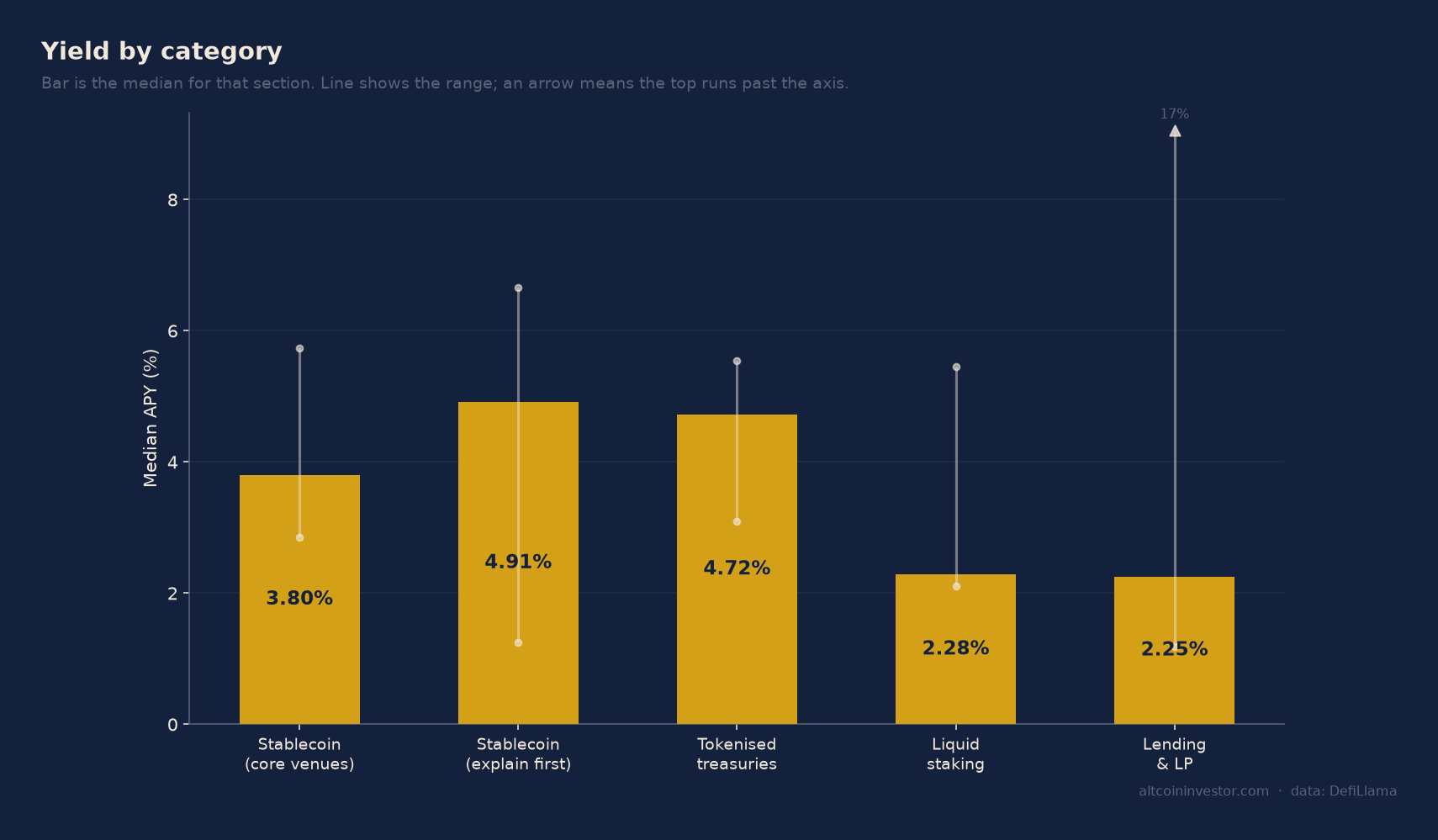
Where crypto yield actually sits changes every week.
Every Thursday: where crypto yield actually is - stablecoins, liquid staking and DeFi lending, with the risk named next to the rate and what changed since last week.
Get it free every ThursdayFree. No trade calls, no allocations, no hype. Unsubscribe in one click.