Table of Contents
The Setup: Coinbase Provides The Interface, Morpho Holds The Collateral

When you borrow through Coinbase's loan service, you are not borrowing from Coinbase. You are entering a permissionless DeFi position on Morpho, a non-custodial lending protocol. Coinbase provides the interface. Morpho manages the loan terms, interest rate adjustments, and liquidation mechanics.
This is not a branding distinction. It is a structural one. If Morpho's smart contracts fail, your recourse is against the protocol and its code, not Coinbase's balance sheet. If a liquidation occurs, it is executed by an automated bot on Morpho's contract, not by a Coinbase support team. The convenience of borrowing through a centralized exchange interface comes with a specific trade: you are using DeFi infrastructure under the hood, and that changes who is responsible when something goes wrong.
Most borrowers taking a Coinbase loan do not know this. That is not necessarily bad, but it is worth understanding before you put collateral on the line.
Collateral Conversion: BTC to cbBTC
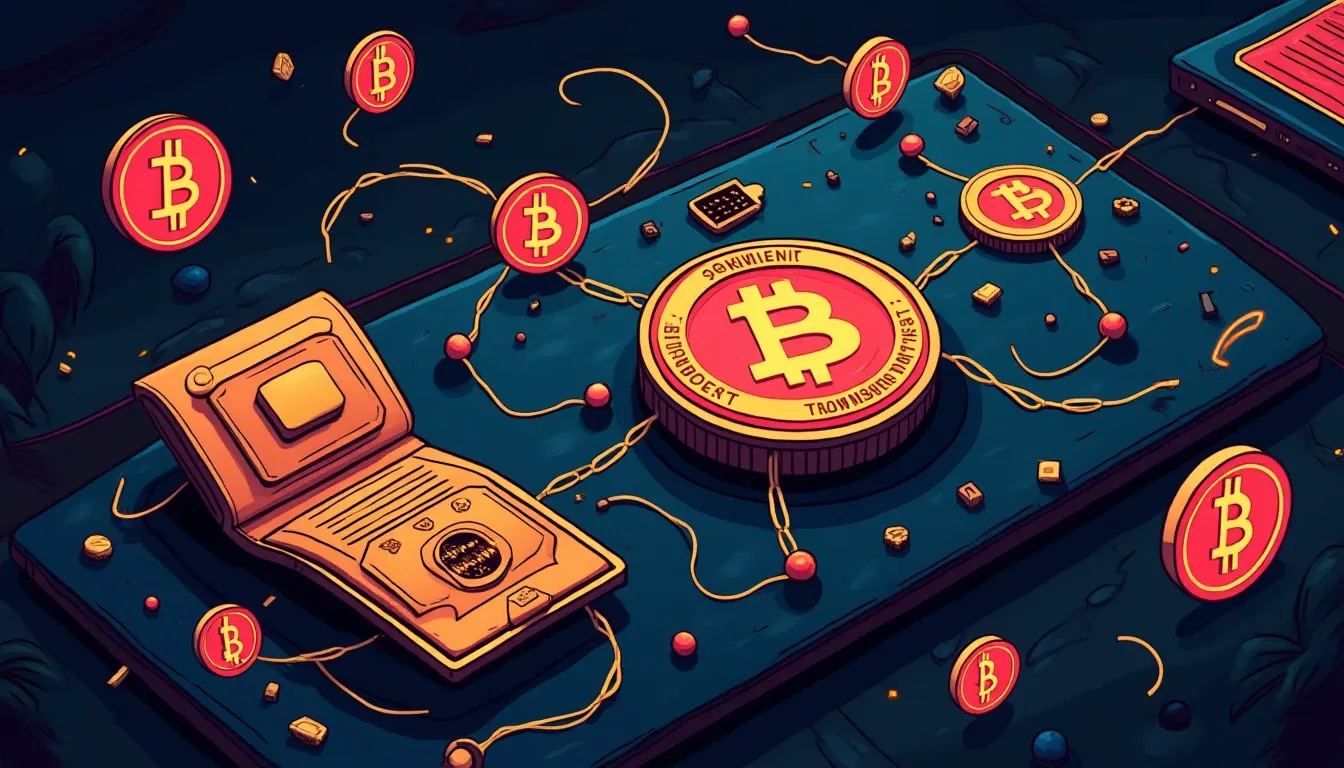
When you pledge Bitcoin as collateral, Coinbase converts it 1:1 into Coinbase Wrapped Bitcoin (cbBTC) at no cost and transfers it to a Morpho smart contract on Base, Coinbase's Ethereum Layer 2 network. cbBTC is a token backed 1:1 by Bitcoin held in Coinbase custody.
This creates a two-layer custody model:
- Layer one: Coinbase wraps your BTC and holds the underlying Bitcoin in custody.
- Layer two: The cbBTC token is deposited into Morpho's smart contract as collateral.
If Coinbase's custody is compromised, all cbBTC-backed loans are affected. This is not the same as a direct on-chain collateral model where BTC is natively locked in a smart contract. The collateral does not leave Coinbase's system. It is wrapped and deposited on-chain into Morpho's protocol.
As of September 2025, Coinbase's crypto-backed loan service has originated over $900 million in loans. Morpho has $3.7 billion in total value locked according to DefiLlama (January 2025 data).
Borrowing Limits By Collateral Type
Borrowers can obtain up to $5,000,000 USDC against Bitcoin, $1,000,000 against Ethereum, and $100,000 against Solana, Cardano, XRP, Litecoin, and Doge. These are the maximum loan sizes per collateral type, not your personal limit, which depends on the amount you pledge and the current LTV ratio.
How Interest Rates Are Set: The AdaptiveCurveIRM

Interest paid by borrowers is determined by Morpho's Interest Rate Model (IRM), specifically the AdaptiveCurveIRM. This is an algorithmic model that adjusts rates autonomously based on utilization, which is the ratio of borrowed assets to supplied assets in the market.
The mechanism works as follows:
- When utilization is below 90%, the borrow rate gradually decreases to incentivize borrowing.
- When utilization exceeds 90%, the borrow rate rapidly increases to encourage repayments and prevent the pool from running dry.
Coinbase advertises rates as low as 5%, described as 2x lower than other crypto-backed loan options. That 5% figure is a marketing floor, not a guarantee. Rates on Morpho fluctuate based on utilization, which changes minute-to-minute. For a current rate, check coinbase.com/borrow or app.morpho.org. Do not assume the 5% rate holds for your loan duration.
Fee Structure: No Origination, But Watch The Vaults
Coinbase advertises no hidden fees. The Morpho protocol itself currently applies no protocol-level fees on borrowing. However, when USDC is lent to borrowers via curator-managed vaults, curators charge a performance fee on yield generated. This means gross APY figures for lenders must be adjusted for the performance fee to get comparable net rates. For borrowers, this does not directly change the cost, but it does mean the rate you pay reflects the vault curator's cut on the lending side.
For comparison, traditional centralized loan platforms (BlockFi-style, before their collapse) typically charged a fixed origination fee plus a variable APY. Morpho's AdaptiveCurveIRM is algorithmic and has no origination fee at the protocol level. Direct Morpho borrowing without the Coinbase interface would expose you to the same rates but require manual market selection, wallet setup, and on-chain transaction approval.
The convenience premium of using Coinbase's interface is not a separate fee line item. It is the fact that you are paying for a UX layer on top of DeFi infrastructure, and you are accepting the custody and liability trade-offs that come with it.
LTV, Liquidation Threshold, And What Happens When You Cross It

The loan-to-value ratio must remain under 86% to avoid triggering automatic liquidation and penalty fees. This is the Liquidation Loan-To-Value (LLTV) setting for Coinbase's market on Morpho. If the value of your collateral drops and your LTV exceeds 86%, you are liquidated.
The Liquidation Mechanism
When your position crosses the 86% LLTV threshold, a liquidator (typically an automated bot) detects that your Health Factor is less than or equal to 1 and calls the liquidate function on the Morpho contract. The liquidator repays a portion or all of your debt using the loan asset (USDC) and seizes a corresponding amount of your collateral (cbBTC) plus a liquidation bonus.
For a market with an LLTV of 86%, the liquidator receives approximately a 5% bonus on the collateral they seize. This entire incentive goes to the liquidator. The Morpho protocol takes no fee from the liquidation. That 5% comes out of your collateral.
Coinbase could theoretically set up a custom pre-liquidation contract and allow users to approve it through the Coinbase app. This is mentioned as a capability in Morpho's documentation, but as of the most recent source data, there is no public confirmation that Coinbase has implemented this feature. If you are relying on a pre-liquidation alert or partial unwind mechanism, confirm it exists before borrowing. Otherwise, the default Morpho liquidation (5% haircut to the liquidator) is the only mechanism.
Edge Case: Bad Debt
In extreme cases where collateral value drops so fast that it becomes less than the debt (LTV exceeds 100%), a liquidation might not cover the full loan. This is bad debt. Bad debt is realized within the affected Morpho market only. If a sharp price move leaves the protocol with collateral worth less than outstanding debt, the loss falls to suppliers in that specific market, not to Coinbase.
For a Coinbase borrower, this means lenders on Morpho's Coinbase market absorb the loss. You still lose your collateral. The lender takes the haircut on the unfilled portion of the loan. Coinbase is not liable for the shortfall.
Repayment Flexibility And Tax Treatment
There are no monthly payments or deadlines. You can settle the loan whenever you want. Interest accrues continuously based on the current borrow rate, and you must monitor your collateral value to avoid liquidation. If BTC price drops, your LTV rises. If it rises enough, you are liquidated.
Coinbase will not treat the borrow transaction as a taxable event. You are not selling BTC. You are pledging it as collateral and receiving USDC in return. When you repay the loan, you get your collateral back (minus any interest paid). The IRS does not currently treat collateralized borrowing as a taxable disposition, but this is an evolving area. Consult a tax advisor if your loan spans multiple tax years or if you use the borrowed funds to generate income.
Protocol Architecture: Morpho V1 vs V2, And What You Are Using
In January 2024, Morpho released Morpho V1, which introduced an immutable protocol including Morpho Markets and Morpho Vaults, featuring a modular and permissionless architecture. In June 2025, Morpho announced Morpho V2, a fixed-rate, fixed-term lending protocol intended for institutional-scale on-chain lending.
Coinbase loans currently run on Morpho V1 infrastructure. This is the permissionless, immutable version. The Morpho Protocol cannot freeze assets in any way. However, the cbBTC collateral itself remains in Coinbase custody as part of Coinbase Wrapped Bitcoin's design. This distinction matters: Morpho's contracts are immutable and non-custodial, but the underlying BTC backing cbBTC is held by Coinbase.
Audit Status And Historical Exploits
Morpho's contracts are immutable, formally verified, and have undergone more than 25 audits. The protocol is described as an open market onchain lending protocol on Base that has undergone substantial third-party auditing over time.
However, a $292 million Lazarus Group exploit in April 2026 involved KelpDAO, which used Morpho infrastructure. This was not a Morpho protocol exploit. It was a vault integration issue. But it underscores counterparty risk in the DeFi ecosystem. Even well-audited DeFi protocols carry systemic contagion risk when integrated with other protocols or vaults.
For borrowers, this means your collateral is subject to smart contract risk on Morpho's contracts and custody risk on Coinbase's cbBTC wrapper. Both layers must hold for your collateral to remain safe.
Regulatory Environment And Geographic Availability
The onchain loans are available to verified users in the U.S. as of the most recent source. The service is available to all U.S. residents except those in New York, and it operates on Base, Coinbase's Ethereum Layer 2 network.
These loans fall outside traditional lending regulation. There are no Truth in Lending Act disclosures, no rate caps, and no traditional loan documents. Morpho's non-custodial design may create regulatory ambiguity about who is liable for disclosure. If you are accustomed to consumer protections in traditional lending, those do not apply here.
Cost Comparison: Coinbase Interface vs Direct Morpho Borrowing
The rate you pay through Coinbase is the same rate you would pay borrowing directly on Morpho's cbBTC/USDC market. The difference is the interface and the UX. Borrowing directly on Morpho requires:
- Setting up a self-custody wallet (MetaMask, Rabby, etc.)
- Bridging BTC to Base and wrapping it to cbBTC yourself
- Manually selecting the cbBTC/USDC market on Morpho
- Approving on-chain transactions for collateral deposit and USDC withdrawal
- Monitoring your position on-chain and repaying via contract interaction
Coinbase abstracts all of that. You click a button, select an amount, and the loan is issued. The trade-off is that you are accepting Coinbase's custody of the underlying BTC, and you are relying on Coinbase's interface to present accurate information about your position.
If you are comfortable with on-chain interaction and prefer to hold your own keys, borrowing directly on Morpho gives you the same rate with more control. If you value convenience and are comfortable with Coinbase's custody model, the interface is worth the implicit trust trade-off. There is no explicit fee difference between the two paths as of the available data.
The Takeaway
Coinbase loans are Morpho loans with a Coinbase interface. The collateral is held in a Morpho smart contract, backed by cbBTC in Coinbase custody. The rate is set algorithmically by Morpho's AdaptiveCurveIRM and fluctuates based on market utilization. Liquidation is automatic at 86% LTV, executed by bots, with a 5% bonus going to the liquidator. There are no origination fees and no repayment deadlines, but you must monitor collateral value continuously.
The convenience premium is not a fee line item. It is the fact that you are using a centralized interface to access decentralized infrastructure, and that means accepting two-layer custody risk (Coinbase wraps BTC, Morpho holds cbBTC) and limited recourse if the protocol fails. If Morpho's contracts are exploited, Coinbase is insulated. If Coinbase's custody is compromised, all cbBTC-backed loans are affected.
For borrowers who value convenience and trust Coinbase's custody, the interface is worth using. For borrowers who want control and are comfortable with on-chain interaction, borrowing directly on Morpho offers the same rate with fewer trust assumptions. Check current rates at coinbase.com/borrow or app.morpho.org before deploying capital. The 5% advertised rate is a floor, not a guarantee, and utilization changes weekly.
Frequently Asked Questions
Does Coinbase hold my collateral when I take a loan?
No. When you borrow through Coinbase, your Bitcoin is converted to cbBTC and deposited into a Morpho smart contract on Base. Coinbase holds the underlying BTC backing cbBTC in custody, but the collateral itself is locked in Morpho's protocol. This creates a two-layer custody model: Coinbase wraps and holds BTC, Morpho holds cbBTC as collateral.
What happens if my collateral value drops below the liquidation threshold?
If your loan-to-value ratio exceeds 86%, an automated liquidator bot will repay your debt and seize your collateral plus a 5% bonus. This happens automatically on-chain. There is no grace period and no manual intervention. The 5% liquidation bonus goes to the liquidator, not to Coinbase or Morpho. You lose that portion of your collateral permanently.
Is the 5% interest rate guaranteed for the life of my loan?
No. The 5% rate is a marketing floor, not a guarantee. Morpho uses an algorithmic interest rate model (AdaptiveCurveIRM) that adjusts rates based on utilization. When utilization is high, rates increase. When utilization is low, rates decrease. Check current rates at coinbase.com/borrow or app.morpho.org before borrowing. Rates change minute-to-minute based on market conditions.
Can I borrow on Morpho directly instead of through Coinbase?
Yes. You can borrow directly on Morpho's cbBTC/USDC market at the same rate. This requires setting up a self-custody wallet, bridging BTC to Base, wrapping it to cbBTC, and manually interacting with Morpho's smart contracts. The rate is identical, but you avoid Coinbase's custody layer and gain more control over your position. The trade-off is technical complexity.
Who is liable if Morpho's smart contracts are exploited?
If Morpho's contracts fail or are exploited, your recourse is against the protocol and its code, not Coinbase. Coinbase provides the interface but does not manage the loan or hold liability for protocol failures. Morpho's contracts are immutable and non-custodial, meaning no entity can reverse transactions or recover funds if an exploit occurs. The April 2026 KelpDAO exploit demonstrated counterparty risk in DeFi integrations, though that was not a Morpho protocol exploit.
You just decomposed Coinbase's Morpho integration, its two-layer custody model, and its 86% liquidation threshold. Those rates and that threshold will change based on utilization next week.
Every Thursday: where crypto yield actually is - stablecoins, liquid staking and DeFi lending, with the risk named next to the rate and what changed since last week.
Get it free every ThursdayFree. No trade calls, no allocations, no hype. Unsubscribe in one click.