Table of Contents
The Choice Between Two Risk Profiles

Ethereum staking yields 3.1% to 3.8% after MEV tips. Aave lending pays 3% to 5% on stablecoins. The difference isn't the yield. It's the risk you take to earn it.
Staking exposes you to protocol-level risk: slashing penalties, validator downtime, network failures. Lending exposes you to counterparty risk: platform insolvency, smart contract exploits, liquidation cascades. The question isn't which earns more. The question is which risk profile matches your position.
In 2026, both strategies are structurally different than they were in 2022. CeFi lending platforms collapsed. Ethereum's Pectra upgrade reduced initial slashing penalties by 128x. Yields compressed across the board as unsustainable token emissions burned out. What remains are yields backed by real economic activity: transaction fees, MEV, and borrower interest payments.
How Staking Works and What You Actually Earn

Staking secures proof-of-stake networks. You lock tokens to validate transactions and earn newly issued tokens plus transaction fees. The yield comes from protocol inflation and network activity, not from lending your assets to someone else.
Ethereum solo staking requires 32 ETH and technical infrastructure to run a validator node. You earn 3.1% to 3.8% APY including MEV tips. If you don't have 32 ETH or don't want to manage a node, liquid staking protocols handle it for you. Lido holds 8.9 million ETH and commands 62% of the liquid staking market. You deposit ETH, receive stETH in return, and earn roughly 2.2% APY after Lido's 10% fee.
Rocket Pool prioritizes decentralization over scale. It distributes stake across 3,900 independent node operators in more than 150 regions. The fee structure is higher at 14% commission, so your net APY is lower, but you're not concentrated in a protocol that holds 23% of all staked ETH. Rocket Pool's rETH token appreciates against ETH over time rather than rebasing, which makes it cleaner for tax accounting.
Solana staking yields 5.6% to 7%. Cardano pays 2.2% to 3.5%. Polkadot advertises 12% to 14%, but inflation runs at 11%, so your real yield is closer to 2%. Cosmos shows 12% to 19%, but inflation is 10% to 14%, putting real returns between 2% and 8%. Nominal rates don't matter if the protocol is printing tokens faster than you're earning them.
Ethereum's yield has compressed from roughly 5.5% in 2022-2023 to under 3% base rate in mid-2026. This is mechanical, not a failure. Issuance scales inversely with the square root of total staked ETH. Each new validator dilutes the reward pool. The network is more secure, but per-validator returns decline.
Liquidity and Exit Timelines
Withdrawals are no longer locked indefinitely. Ethereum's Shanghai upgrade enabled unstaking. Through Lido, small requests under 1,000 stETH are often fulfilled within a day from the protocol buffer. Larger withdrawals take one to five days and process first-in, first-out. Jito offers near-instant exit via the JitoSOL secondary market. Ether.fi requires three to ten days.
Liquidity varies by protocol and by market conditions. During stress events, secondary markets for liquid staking tokens can depeg. stETH traded below ETH parity in mid-2022 when withdrawal queues were long and liquidity dried up. That depeg resolved after Shanghai enabled withdrawals, but it showed the risk: you can't always exit at full value when you want to.
How Lending Works and What You Actually Earn
Lending protocols let you supply assets to a pool and earn interest from borrowers. The yield is demand-driven. When borrowing activity is high, rates rise. When it's low, they fall.
Aave is the largest DeFi lending protocol with over $14.6 billion in TVL as of mid-2026. Current rates sit around 3% to 5% APY on stablecoins (USDC, USDT, DAI), 1% to 2% on ETH, and variable rates on other assets. Version V4, currently being deployed, introduces a unified liquidity layer that improves capital efficiency and raises rates for depositors.
For volatile assets like ETH and SOL, staking generally outperforms lending supply rates. Staking yield comes from protocol issuance, which is predictable. Lending yield comes from borrower demand, which fluctuates. If you're holding ETH long-term, staking earns more. If you're holding stablecoins, staking isn't an option. Stablecoins run on existing networks rather than securing their own. Lending is the only yield strategy for dollar-denominated holdings.
DeFi lending protocols use overcollateralization to mitigate insolvency risk. Borrowers must post collateral worth more than their loan. If the collateral value falls below the liquidation threshold, the position is automatically closed. This protects lenders, but it introduces new risks: smart contract bugs, oracle manipulation, and liquidation cascades during flash crashes.
CeFi Lending and Why Most Platforms Failed
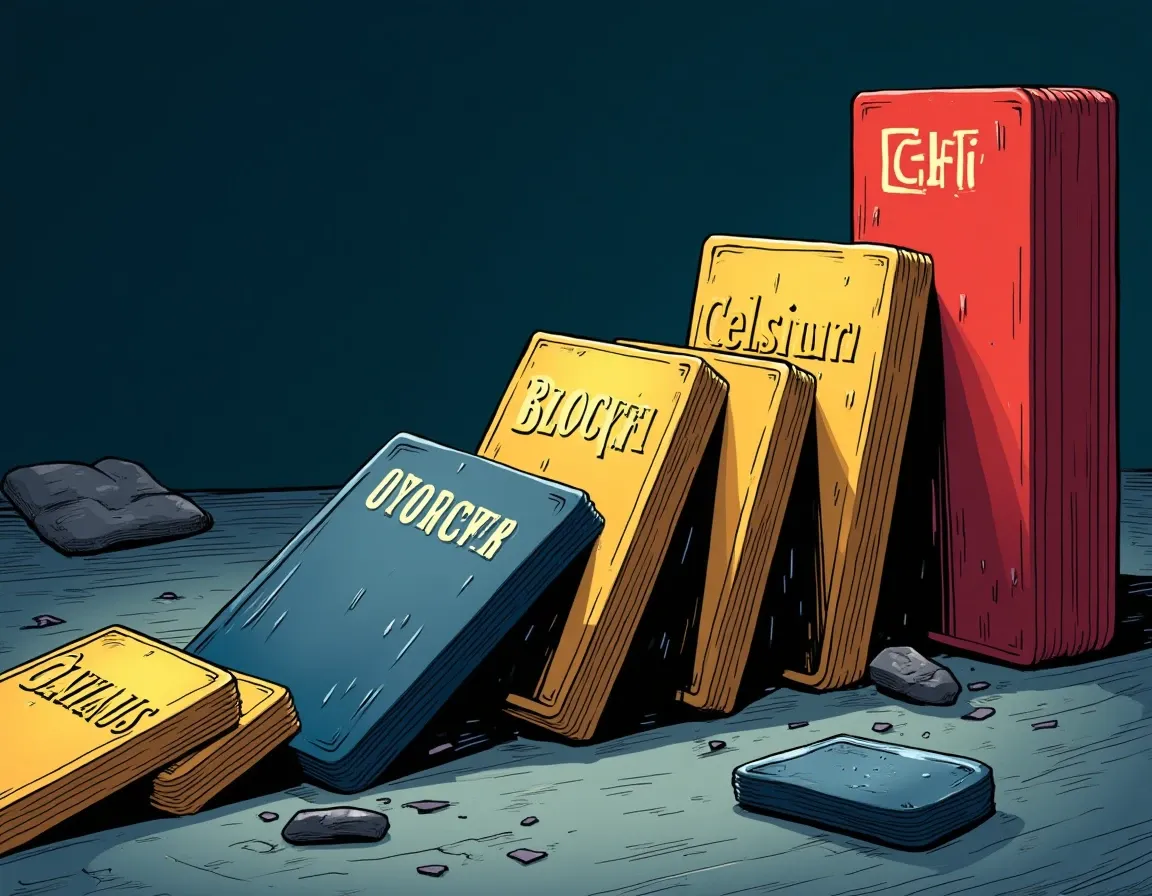
CeFi lending platforms like Celsius, BlockFi, Voyager, and Genesis collapsed in 2022-2023 because they had concentrated exposure to the same counterparty: Three Arrows Capital. When 3AC failed, the domino effect was immediate. The common thread was opaque balance sheets and rehypothecation. Platforms lent out customer deposits without segregated custody. When the loans defaulted, customers lost everything.
In 2026, CeFi yields above 8% APY carry explicit custody risk. You are a creditor, not a depositor. If the platform fails, you're in line with other unsecured creditors in bankruptcy court. Ledn and Unchained are exceptions. Ledn publishes monthly proof-of-reserves data and does not rehypothecate collateral. Unchained uses a 2-of-3 multisig model where no single party can unilaterally move funds.
If you use CeFi lending, demand proof of reserves, segregated custody, and regulatory licensing. If the platform can't provide all three, the yield isn't worth the risk.
Staking Risk: Protocol Failures, Not Counterparty Failures
Staking risk is protocol-level. Slashing occurs when a validator misbehaves: double-voting, attestation violations, or prolonged downtime. Ethereum's Pectra upgrade (May 2025) reduced the initial slashing penalty from 1/32 to 1/4,096 of effective balance. For a 32 ETH validator, that's roughly 0.008 ETH instead of 1 ETH.
Historical data from Ethereum's beacon chain shows that slashing events have affected roughly 0.04% of all validators in aggregate since the Merge. For individual home stakers using standard setups, the probability per validator per year is very close to zero. Correlated failures, where multiple validators operated by the same entity misbehave simultaneously, can still result in severe losses. The penalty scales with the number of validators slashed in the same time window.
If you use a liquid staking protocol, you're also exposed to smart contract risk. Lido's contracts have been audited repeatedly, but audits don't eliminate risk. A bug in the staking contract or a governance attack could result in partial or total loss. Rocket Pool mitigates this by distributing stake across thousands of independent operators, but you're still trusting the protocol's code.
Lending Risk: Counterparty Failures, Not Protocol Failures
Lending risk is counterparty-level. In CeFi, the platform holds your assets and you are a creditor. In DeFi, smart contracts hold your assets and you are exposed to code risk and liquidation dynamics.
DeFi lending protocols mitigate insolvency risk through overcollateralization and automated liquidation, but they introduce smart contract risk. Aave has been audited by multiple firms and has operated for years without a major exploit. That track record matters, but it's not a guarantee. Oracle manipulation, flash loan attacks, and governance exploits remain possible.
Liquidation risk primarily affects borrowers, but it can negatively affect lenders during black swan events of extreme market volatility. If collateral values drop faster than liquidations can execute, the protocol can become undercollateralized. Lenders may not be able to withdraw full balances. Aave's safety module and reserve factor provide a buffer, but the buffer has limits.
When Staking Is the Right Choice
Staking is appropriate when you're holding volatile assets long-term and want to earn protocol-native yield. If you're holding ETH for the next two years, staking at 3% to 4% APY is better than letting it sit idle. If you're holding SOL, staking at 6% to 7% is the default choice.
Staking also makes sense when you want predictable yield that isn't tied to market demand. Lending rates fluctuate with borrowing activity. Staking yields compress slowly over time as more validators join, but they don't swing wildly week to week.
Liquid staking protocols enable DeFi composability. You can stake ETH through Lido, receive stETH, and use that stETH as collateral in Aave or MakerDAO. You earn passive income from staking yield and borrowing capacity. The tradeoff is layered risk: staking slashing risk, smart contract risk in the lending protocol, and potential LST depegging during market stress.
Institutional providers like Figment manage over $15 billion in assets under management and produce roughly 5% of ETH blocks. If you're managing a treasury or operating at scale, delegating to a professional staking service reduces operational risk but adds counterparty risk.
When Lending Is the Right Choice
Lending is the only way to earn yield on stablecoins. USDC, USDT, and DAI can't be staked because they don't secure their own networks. If you're holding dollar-denominated assets and want yield, DeFi lending is the cleanest option in 2026.
Lending also makes sense when you want lower risk and more transparent yield mechanics. Aave's interest rate model is public and deterministic. You can calculate your expected yield based on utilization rates and reserve factors. Staking yields depend on network issuance schedules, validator participation, and MEV dynamics, which are harder to model.
If you're holding ETH or SOL short-term and don't want to lock it in a staking protocol, supplying it to Aave as collateral lets you earn a small yield while maintaining optionality. The supply APY on ETH is lower than staking, but you can withdraw anytime without waiting for an unstaking queue.
Fee Structures and Net Yield After Costs
Fees matter more than gross APY. Lido charges 10% on staking rewards, split evenly between node operators and the DAO treasury. If the gross staking yield is 3.5%, your net yield is 3.15%. Coinbase charges 25% on rewards, so your net yield on cbETH is roughly 2.1%. Rocket Pool charges 14% commission, putting your net yield slightly below Lido but with better decentralization.
DeFi lending protocols typically take a 10% to 25% reserve factor on borrower interest. If borrowers are paying 6% APY, lenders receive 4.5% to 5.4% after the reserve factor. Aave's reserve factor varies by asset. USDC and DAI have lower reserve factors than volatile assets like LINK or UNI.
You need to compare net yields, not gross advertised rates. A 14% staking APY on Polkadot sounds better than 3.5% on Ethereum until you subtract 11% inflation and 10% protocol fees. The real return on Polkadot is closer to 1% to 2%. Ethereum's 3.5% staking yield is entirely real, backed by transaction fees and MEV, with minimal dilution.
The Takeaway
Staking is for long-term holders of volatile assets who want predictable protocol-native yield and are willing to accept slashing risk and exit delays. Lending is for stablecoin holders and anyone prioritizing liquidity and transparency over higher nominal yields. If you're holding ETH or SOL for more than six months, stake it. If you're holding USDC or need same-day liquidity, lend it through Aave or another audited DeFi protocol. Avoid CeFi lending unless the platform provides proof of reserves, segregated custody, and regulatory licensing. The 2022 failures were not anomalies. They were the predictable result of opaque balance sheets and concentrated counterparty risk.
Frequently Asked Questions
What is the main difference between staking and lending crypto?
Staking locks your tokens to secure a proof-of-stake network and earns yield from protocol inflation and transaction fees. You face protocol-level risks like slashing and validator downtime. Lending supplies your assets to borrowers through a platform and earns interest from their payments. You face counterparty risks like platform insolvency in CeFi or smart contract exploits in DeFi. Staking is protocol risk. Lending is counterparty risk.
Which earns higher yields in 2026, staking or lending?
For volatile assets like ETH and SOL, staking generally outperforms lending supply rates. Ethereum staking yields 3.1% to 3.8% while Aave pays 1% to 2% on ETH deposits. Solana staking yields 5.6% to 7%. For stablecoins, lending is the only yield option since stablecoins cannot be staked. Aave pays 3% to 5% on USDC, USDT, and DAI. Net yields depend on protocol fees and inflation rates.
Is staking crypto safer than lending?
Neither is categorically safer. They expose you to different risks. Staking carries slashing risk, though Ethereum's Pectra upgrade reduced initial penalties by 128x and historical slashing affects only 0.04% of validators. Liquid staking adds smart contract risk. Lending carries counterparty risk in CeFi (see Celsius and BlockFi failures) or smart contract and liquidation risk in DeFi. DeFi protocols like Aave use overcollateralization to protect lenders but remain vulnerable to code exploits.
Can I unstake my crypto anytime?
Not instantly, but withdrawals are no longer locked indefinitely. Ethereum staking through Lido takes one to five days for most withdrawals, with small requests often fulfilled within a day. Jito offers near-instant exit via secondary markets. Ether.fi requires three to ten days. Exit speed varies by protocol and market conditions. During stress events, liquid staking tokens can depeg from the underlying asset, forcing you to exit at a discount or wait longer.
Should I use CeFi or DeFi for crypto lending?
Use DeFi unless a CeFi platform provides proof of reserves, segregated custody, and regulatory licensing. Most CeFi lenders that collapsed in 2022 (Celsius, BlockFi, Voyager, Genesis) had opaque balance sheets and rehypothecated customer deposits. DeFi protocols like Aave use transparent smart contracts and overcollateralization, though they introduce code risk. Ledn and Unchained are CeFi exceptions that publish reserves and maintain segregated custody, but DeFi is structurally safer for most users.
Staking rates and operator terms shift quietly, and usually without an announcement.
Every Thursday: where crypto yield actually is - stablecoins, liquid staking and DeFi lending, with the risk named next to the rate and what changed since last week.
Get it free every ThursdayFree. No trade calls, no allocations, no hype. Unsubscribe in one click.