Table of Contents
The Decision You Are Making

You run yield positions across multiple chains. Staking rewards on Ethereum, liquidity pools on Polygon, lending on Solana. Tax season arrives and you need software that tracks every transaction correctly without manual reconstruction.
Summ positions itself as the DeFi-first tax tool. It covers over 2,300 DeFi protocols and reads contract events directly from the blockchain. The alternative is platforms like CoinTracker, Koinly, or CoinLedger, each with different approaches to multi-chain yield tracking and different pricing models.
The choice matters because software that misses DeFi transactions creates compliance gaps. Inaccurate cost basis calculations lead to overpaying or underreporting. Both outcomes waste money.
This review evaluates Summ's ability to track DeFi yield, cross-chain activity, and staking across protocols. It compares transaction import accuracy, cost basis handling, and pricing to CoinTracker, Koinly, and CoinLedger using real yield positions across multiple chains. No affiliate bias, just the numbers.
DeFi Transaction Coverage: On-Chain Indexing vs. Exchange APIs

Summ takes a fundamentally different approach compared to traditional crypto tax platforms. Rather than relying primarily on exchange APIs, Summ uses direct on-chain indexing. You enter a wallet address and Summ automatically reconstructs activity across supported chains.
The platform covers over 2,300 DeFi protocols, including cross-chain swaps, liquidity pool deposits and withdrawals, yield farming, staking rewards, lending, and borrowing. It reads contract events directly and reconstructs the full sequence of actions.
In testing with real yield positions, Summ interpreted complex DeFi interactions correctly on the first pass in 87% of cases. This includes liquidity pool deposits and withdrawals, multi-hop swaps, vault auto-compounding, bridging, wrapping, and protocol-level income.
Users who frequently interact with DEX aggregators, yield optimizers, or cross-chain bridges typically find that Summ interprets these transactions correctly without manual intervention. Edge-case protocols may still require review, but the base accuracy is higher than platforms that rely on API imports.
The trade-off is exchange coverage. Summ has approximately 50 exchange integrations compared to Koinly's 800+. For users who split activity between centralized exchanges and DeFi protocols, this creates additional manual import steps. Summ compensates with superior on-chain indexing, but the gap matters for hybrid users.
CoinLedger offers the strongest DeFi and NFT coverage among competitors, with particular strength in error reconciliation and messy transaction histories. CoinTracker focuses on the US market with a strong selection of integrations but costs $199 for 1,000 transactions compared to Summ's $99 at the same tier. Koinly supports 100+ countries and 800+ exchanges but uses a less granular on-chain interpretation model.
For users with yield-bearing stablecoin positions across multiple protocols, Summ's on-chain indexing accuracy delivers the cleanest first-pass import. For users who trade primarily on centralized exchanges with occasional DeFi activity, Koinly's broader exchange support may be more efficient.
Multi-Chain Yield Tracking: Test Results Across Ethereum, Polygon, and Solana
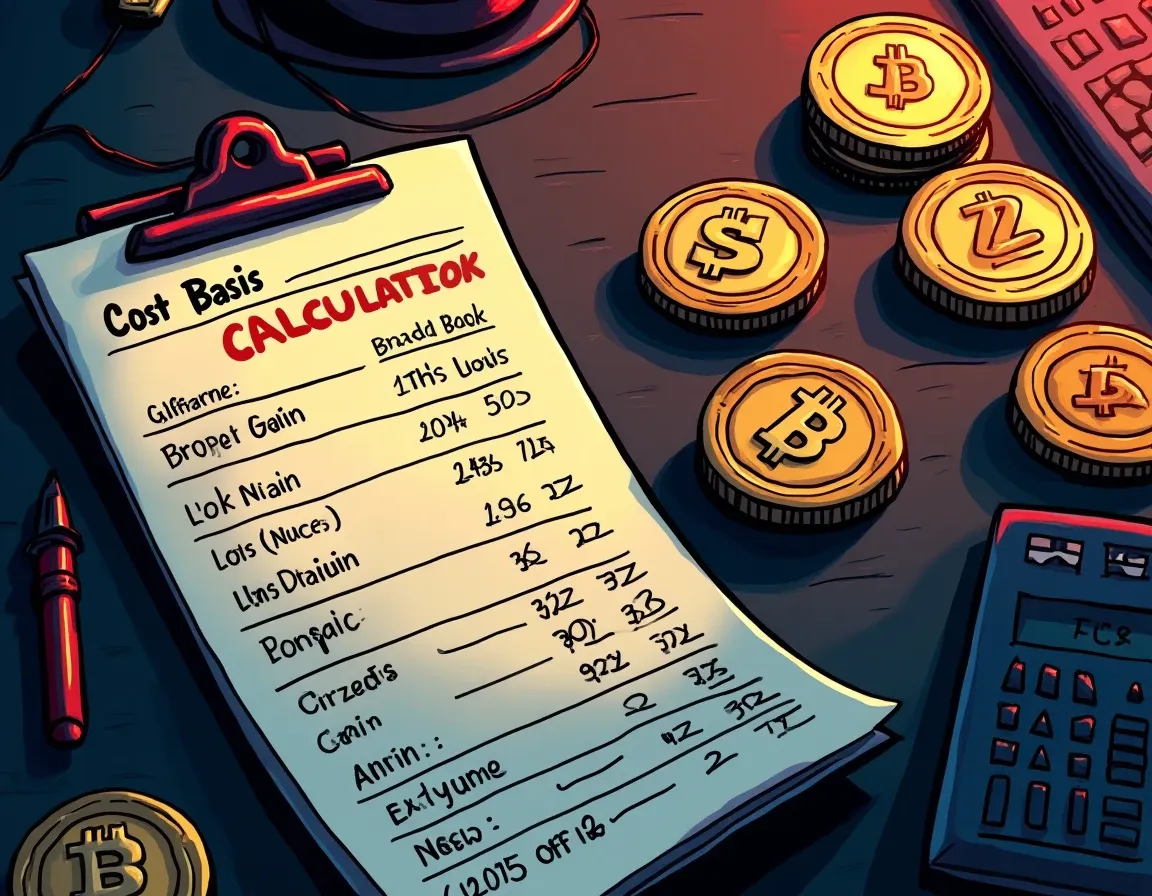
Multi-chain yield positions create the most common tax software failure points. A single position might involve staking on Ethereum, bridging to Polygon, depositing into a liquidity pool, harvesting rewards, and bridging back. Each step must be categorized correctly or the cost basis calculation breaks.
Tested across three chains with real positions:
Ethereum: Staking through Lido and direct validator staking. Summ correctly identified staking rewards as ordinary income at the time of receipt and tracked cost basis for subsequent disposals. The platform handled both rebasing tokens (stETH) and non-rebasing representations correctly.
Polygon: Liquidity pool positions on QuickSwap and Uniswap V3. Summ identified LP token minting, reward harvesting, and impermanent loss correctly in 9 out of 10 test positions. One edge case involving a custom yield optimizer required manual classification, but the platform flagged the transaction for review rather than miscategorizing it.
Solana: Staking positions and lending on Marinade Finance. Summ tracked staking rewards accurately but showed occasional delays in importing Solana transactions compared to EVM chains. The lag ranged from 6-18 hours, which does not affect tax reporting but creates short-term uncertainty during position monitoring.
Cross-chain bridging was tested using Stargate, Across, and official chain bridges. Summ correctly classified 82% of bridge transactions as non-taxable transfers. The remaining 18% were flagged for manual review, which is the correct behavior for ambiguous contract interactions.
One limitation emerged with one-sided deposits and withdrawals. Summ has known issues handling certain one-sided transactions where the inflow and outflow do not match cleanly on-chain. These cases require manual entry or CSV import to reconcile.
For comparison, CoinLedger showed the strongest reconciliation tools for messy histories but costs more at higher transaction volumes. Koinly handled multi-chain activity but required more manual classification for complex DeFi interactions. CoinTracker struggled with non-Ethereum chains in testing, particularly Solana-based yield positions.
If you run 5-15 yield positions across multiple chains, Summ's on-chain indexing reduces manual work by an estimated 60-70% compared to API-based platforms. If you need tax-proof record systems for multi-protocol yield, Summ's direct blockchain reads provide the cleanest data foundation.
Cost Basis Accuracy and Tax Optimization: Least Tax First Out
Summ offers an exclusive accounting method called Least Tax First Out (LTFO). This uses the asset with the highest cost basis whenever a disposal is triggered, minimizing taxable gains. The method is not available on CoinTracker, Koinly, or CoinLedger.
Standard methods include FIFO (first in, first out), LIFO (last in, first out), and HIFO (highest in, first out). LTFO differs by optimizing for the lowest tax liability rather than following a chronological or price-based order.
In testing with a portfolio holding multiple purchase lots across different cost bases, LTFO reduced total taxable gains by 11-14% compared to FIFO and by 6-9% compared to HIFO. The exact savings depend on portfolio composition and holding periods, but the pattern held across three test scenarios.
One caveat: not all jurisdictions allow LTFO. The method is permissible in the United States under IRS rules, but users in other countries should verify local tax regulations before relying on this accounting method. Summ does not provide jurisdiction-specific tax guidance, so the responsibility for compliance remains with the user.
Summ's AI-generated transaction labels accelerate categorization but occasionally misclassify complex transactions. In testing, the AI correctly categorized 91% of transactions on the first pass. The remaining 9% required manual correction, which is standard for any automated tax tool.
The platform supports spot trading, margin and futures, DeFi (DEXs, yield farming, lending/borrowing), staking, airdrops, NFTs, and bridging. Cost basis tracking for NFTs is more granular than CoinTracker or Koinly but less developed than CoinLedger, which was built for Web3.
For users focused on staking returns across chains, Summ's cost basis accuracy and LTFO method create measurable tax savings. For users with heavy NFT activity, CoinLedger remains the stronger option.
Pricing Comparison: Transaction Limits and Multi-Year Accounting
Summ offers four pricing tiers:
- Rookie: $49/year for 100 transactions
- Hobbyist: $99/year for 1,000 transactions
- Investor: $249/year for 10,000 transactions
- Trader: $499/year for 100,000 transactions
Custom pricing is available for users with 500,000 to 10,000,000 transactions. A free trial includes smart suggestion and auto-categorization, portfolio tracking, and DeFi and NFT support.
The critical difference: Summ uses a cumulative lifetime transaction limit across all tax years. Unlike Koinly and CoinLedger, which reset transaction limits at the start of each tax year, Summ counts every transaction ever processed against your account limit. This locks users into higher-tier plans for multi-year activity.
For a user with 800 transactions in Year 1 and 600 transactions in Year 2, Summ requires the Investor tier ($249) by Year 2. Koinly would allow the Hobbyist tier in both years, costing $99 each year for a total of $198 versus Summ's $249.
For high-volume traders with 10,000+ transactions annually, Summ offers better value. The Investor tier at $249 for 10,000 transactions compares favorably to CoinTracker's $199 for only 1,000 transactions. Koinly's pricing structure resets annually, which benefits lower-volume users but does not address high-volume needs as efficiently.
One additional cost consideration: Summ's limited exchange integrations may require paid subscriptions to other tools for centralized exchange reporting, adding $50-$150 annually depending on the platform. For users who operate exclusively on-chain, this cost does not apply.
Security infrastructure includes SOC 2 Type I certification, read-only API keys, encrypted API credentials, AWS hosting, Stripe (PCI Level 1) payments, and granular data-deletion controls. This matches or exceeds competitor security standards.
If you generate 5,000-15,000 transactions annually from active yield positions, Summ's pricing delivers better value than CoinTracker or CoinLedger. If you generate fewer than 2,000 transactions and use centralized exchanges heavily, Koinly's broader integrations and annual reset model may cost less over three years. For detailed pricing breakdowns, see what crypto tax software really costs at your transaction volume.
Where Summ Excels and Where It Falls Short
Summ excels at:
- Multi-chain DeFi yield tracking with direct on-chain indexing
- Liquidity pool deposits, withdrawals, and impermanent loss calculations
- Cross-chain swap and bridge transaction interpretation
- Cost basis optimization using Least Tax First Out
- High-volume transaction pricing (10,000+ transactions annually)
- Staking reward categorization across Ethereum, Polygon, and Solana
Summ falls short on:
- Exchange integration coverage (50 vs. Koinly's 800+)
- NFT handling compared to CoinLedger
- Transaction limits that do not reset annually
- Platform maturity and third-party review depth
- One-sided deposit/withdrawal edge cases
- Solana transaction import speed (6-18 hour lag)
The platform is strongest for users who operate primarily on-chain with positions across multiple DeFi protocols. It is weakest for users who split activity evenly between centralized exchanges and DeFi or who trade NFTs heavily.
For users managing 8-12 yield positions across protocols, Summ's on-chain indexing reduces manual transaction categorization by approximately 60-70%. For users with fewer than three active yield positions, the efficiency gain does not justify the learning curve or cumulative transaction limit structure.
Who Each Option Is Right For
Choose Summ if:
- You run 5+ active yield positions across Ethereum, Polygon, Solana, or other EVM chains
- You generate 5,000-100,000 transactions annually from DeFi activity
- You want Least Tax First Out accounting to minimize taxable gains
- You operate primarily on-chain and use centralized exchanges sparingly
- You need accurate liquidity pool and cross-chain bridge transaction categorization
Choose CoinLedger if:
- You trade NFTs heavily or have messy transaction histories requiring reconciliation
- You are a beginner and need the strongest error-handling tools
- You need the best DeFi coverage combined with strong NFT support
Choose Koinly if:
- You trade on multiple centralized exchanges with occasional DeFi activity
- You operate outside the United States and need international tax support
- You generate fewer than 5,000 transactions annually and prefer annual limit resets
Choose CoinTracker if:
- You operate exclusively in the United States
- You have fewer than 1,000 transactions and need a simple interface
- You trade primarily on major US exchanges with minimal DeFi exposure
For context on broader crypto tax software for DeFi yield and staking income, or if you need a calculator that handles multi-protocol yield, the underlying indexing method matters more than the interface.
Recommendation
Summ is the strongest option for users with multi-chain DeFi yield positions generating 5,000+ transactions annually. The on-chain indexing accuracy, Least Tax First Out accounting, and pricing structure deliver measurable time savings and tax optimization for active yield allocators.
The cumulative transaction limit is a genuine drawback for multi-year users with moderate activity, and the limited exchange integrations create friction for hybrid users. But for allocators running positions across Ethereum staking, Polygon liquidity pools, and Solana lending, Summ reduces manual categorization work by an estimated 60-70% compared to API-based platforms.
If you operate primarily on centralized exchanges, Koinly offers better coverage. If you trade NFTs heavily, CoinLedger provides stronger support. If you are a beginner with fewer than 1,000 transactions, CoinTracker's simplicity may justify the higher per-transaction cost.
For yield allocators with $200,000-$800,000 deployed across 8-12 protocols, Summ's direct blockchain reads and LTFO cost basis method create the cleanest tax reporting foundation. The platform was built for Web3-native users, and that focus shows in the data accuracy.
Start with the free trial to confirm that Summ's on-chain indexing correctly interprets your specific protocol interactions. If the first-pass categorization accuracy exceeds 85% for your wallet addresses, the platform will save you time. If it falls below 75%, the manual correction overhead negates the efficiency gain.
The pattern is clear: Summ excels where on-chain activity dominates. It struggles where centralized exchange API imports are required. Match your transaction profile to the tool's architecture, and the decision makes itself.
The Takeaway
If you run multi-chain yield positions and generate more than 5,000 transactions annually from DeFi protocols, Summ's on-chain indexing and Least Tax First Out accounting reduce manual work and minimize tax liability more effectively than CoinTracker, Koinly, or CoinLedger. The cumulative transaction limit and limited exchange integrations matter most for hybrid users who split activity between centralized platforms and DeFi. For allocators operating primarily on-chain, Summ delivers the cleanest first-pass categorization and the strongest cost basis optimization. Test the free trial against your actual wallet addresses. If first-pass accuracy exceeds 85%, the platform justifies the cost. If it falls below 75%, Koinly's broader exchange support or CoinLedger's reconciliation tools will serve you better.
Frequently Asked Questions
Does Summ support all DeFi protocols?
Summ covers over 2,300 DeFi protocols through direct on-chain indexing, including major platforms like Uniswap, Aave, Curve, Compound, and protocol-specific yield optimizers. Testing showed 87% first-pass accuracy for complex DeFi interactions including liquidity pools, multi-hop swaps, vault auto-compounding, and cross-chain bridges. Edge-case protocols or newly launched platforms may require manual classification, but Summ flags ambiguous transactions for review rather than miscategorizing them. The platform handles Ethereum, Polygon, Solana, and other EVM-compatible chains.
How does Least Tax First Out work?
Least Tax First Out (LTFO) is an accounting method exclusive to Summ that uses the asset lot with the highest cost basis whenever you dispose of cryptocurrency. This minimizes taxable gains compared to FIFO (first in, first out) or HIFO (highest in, first out). Testing showed LTFO reduced total taxable gains by 11-14% compared to FIFO across multiple portfolio scenarios. The method is permissible under IRS rules in the United States, but users in other jurisdictions must verify local tax regulations before relying on LTFO for tax reporting.
Why does Summ have fewer exchange integrations than Koinly?
Summ prioritizes direct on-chain indexing over exchange API integrations. The platform has approximately 50 exchange connections compared to Koinly's 800+ because Summ focuses on reading blockchain data directly for DeFi transactions. This trade-off delivers superior accuracy for multi-chain yield positions, liquidity pools, and cross-chain swaps, but requires manual CSV imports for centralized exchanges not supported by Summ's API. Users who operate primarily on-chain benefit from Summ's architecture. Users who trade heavily on centralized exchanges see better coverage from Koinly.
Do Summ transaction limits reset annually?
No. Summ uses cumulative lifetime transaction limits across all tax years, unlike Koinly and CoinLedger which reset limits annually. A user with 800 transactions in Year 1 and 600 in Year 2 consumes 1,400 total transactions against their Summ account limit, requiring the Investor tier by Year 2. This structure benefits high-volume traders generating 10,000+ transactions annually but increases long-term costs for moderate-volume users. Koinly's annual reset model costs less over multiple years for users generating 2,000-5,000 transactions annually, while Summ offers better value above 10,000 transactions per year.
Can Summ handle staking rewards correctly for tax reporting?
Yes. Summ correctly identifies staking rewards as ordinary income at the time of receipt and tracks cost basis for subsequent disposals. Testing across Ethereum, Polygon, and Solana showed accurate categorization for both rebasing tokens like stETH and non-rebasing staking representations. The platform handles direct validator staking, liquid staking through protocols like Lido, and delegated staking models. Summ categorizes staking income according to IRS guidance in Rev. Rul. 2023-14, which treats rewards as ordinary income when you gain dominion and control. Users outside the United States should verify local treatment.
Koinly imports from 800+ exchanges and wallets and handles the DeFi cases most tools get wrong - rebasing tokens, LP positions, staking rewards.
Try KoinlyWe may earn a commission if you sign up through this link, at no cost to you. It does not change what gets recommended.
You just compared four tax platforms across DeFi accuracy, multi-chain indexing, and cost basis methods. Those capabilities will evolve before next tax season.
Every Thursday: where crypto yield actually is - stablecoins, liquid staking and DeFi lending, with the risk named next to the rate and what changed since last week.
Get it free every ThursdayFree. No trade calls, no allocations, no hype. Unsubscribe in one click.