Table of Contents
Introduction: What is an Altseason?
In the world of cryptocurrency, an altseason—short for "altcoin season"—refers to a specific market phase where alternative cryptocurrencies (altcoins) significantly outperform Bitcoin in terms of price appreciation. While Bitcoin remains the dominant asset in the broader crypto ecosystem, altseason marks a shift in investor focus toward non-Bitcoin assets. This shift is typically driven by increased speculative trading behaviors, advancements in blockchain technology, booming decentralized finance (DeFi) sectors, meteoric rise of NFTs, expanding metaverse applications, and enhanced utility across emerging layer-1 blockchains. Altseason is often characterized by explosive—though highly volatile—rallies in a diverse array of tokens that historically offer traders higher risk but also potentially higher returns.
Altseasons don't occur frequently, but when they do, they can turn little-known tokens into 100x success stories within months. Recognizing the trends, narrative shifts, and macroeconomic backdrops that precede altseasons is crucial for investors. With 2026 on the horizon, many wonder: will the next major altseason follow previous patterns, or will it present entirely new opportunities?
The "Big Five" Candidates for 2026
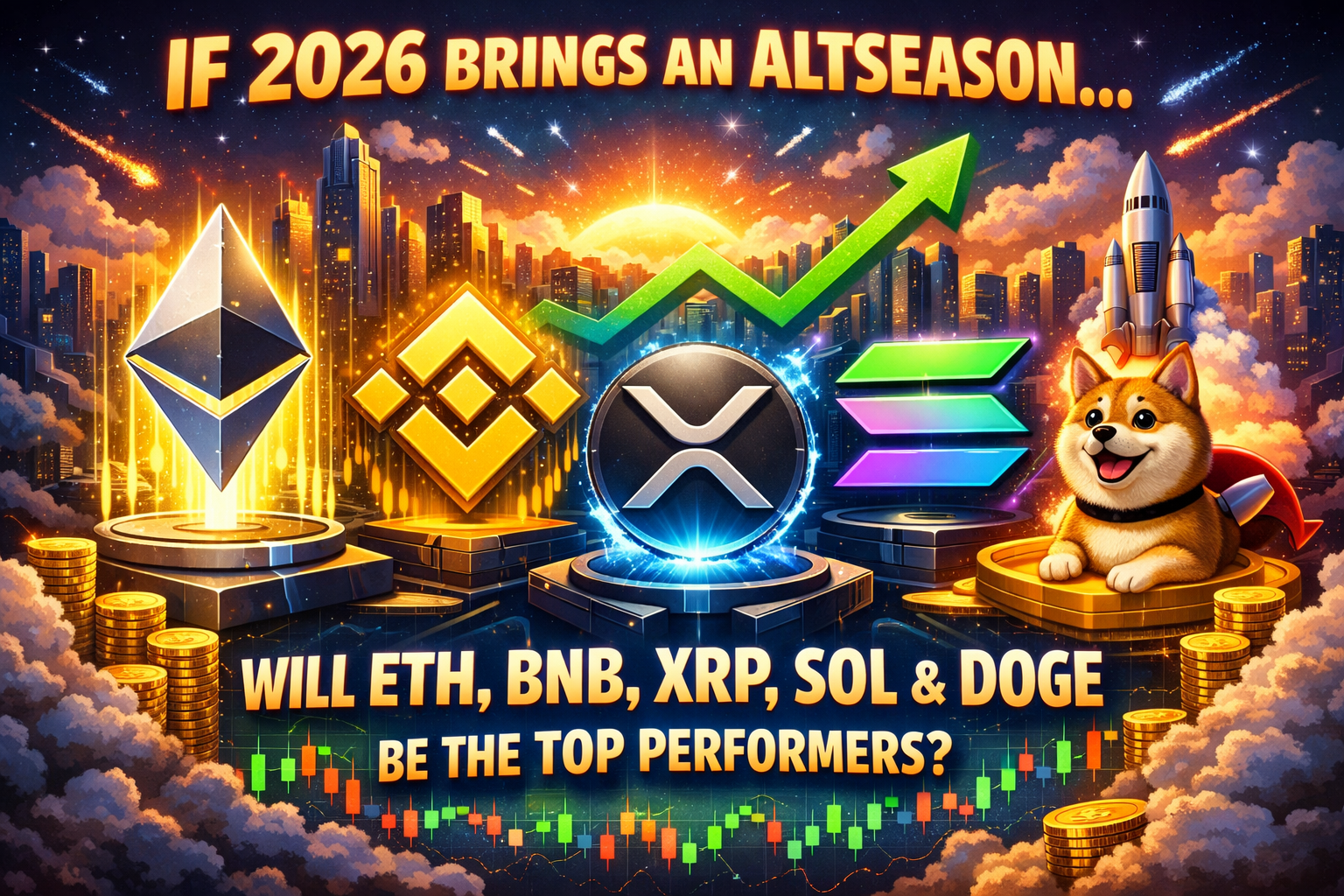
As we examine possible frontrunners for the next altseason, five established names dominate the conversation: Ethereum (ETH), Binance Coin (BNB), Ripple (XRP), Solana (SOL), and Dogecoin (DOGE). These high-cap cryptocurrencies have survived multiple boom-and-bust cycles and have institutional name recognition, but will they lead again in 2026, or be outpaced by the next wave of blockchain innovations and meme-driven projects?
Ethereum (ETH)
As the pioneer of smart contracts and the bedrock of the DeFi and NFT sectors, Ethereum has set the standard for programmable blockchains. Its transition from proof-of-work (PoW) to proof-of-stake (PoS) via “The Merge” was a major milestone completed in 2022, leading to significant reductions in energy consumption and laying the foundation for future scalability improvements. Ethereum's 2026 potential hinges on continued upgrades, like the Dencun (Deneb + Cancun) update, which promises to significantly reduce transaction fees and bolster throughput via proto-danksharding and other technical enhancements.
However, Ethereum faces increasing competition from Layer-2 scaling solutions such as Arbitrum, Optimism, and zkSync—many of which are offloading user activity from the main Ethereum chain. This migration could limit Ethereum’s upside during altseason unless it reclaims more direct user engagement. Institutional support, developer mindshare, and its broad ecosystem still put ETH in a strong position, but triple or quadruple-digit percentage gains may be reserved for less saturated assets.
Binance Coin (BNB)
BNB, the native token of the Binance ecosystem, is deeply integrated into one of the world’s most prominent crypto exchanges. It plays a central role in transaction fees, token burns, DeFi launches, and staking functionality on the BNB Chain. The token's performance is tightly coupled with Binance’s global operations, market volume, and ability to weather regulatory pressure.
Looking to 2026, BNB could enjoy a strong rally if Binance expands its Web3 reach, introduces innovative tokenomics, or further decentralizes the BNB Chain to draw more builders. Conversely, increased scrutiny from regulators and potential legal challenges could dampen institutional interest. In any case, BNB remains relatively lower-risk among alts but may not offer the eye-popping returns of newer and more experimental tokens.
Ripple (XRP)
Ripple's XRP is one of the oldest altcoins in the crypto arena and has held strong due to strategic institutional partnerships and regulatory court wins, particularly its partial victory against the SEC in 2023. Despite this, XRP still lags behind competitors in terms of daily on-chain usage and developer activity.
In 2026, XRP's major catalyst may be the widespread adoption of RippleNet and On-Demand Liquidity (ODL) services. To attract fresh investment and break out in the next altseason, Ripple must demonstrate substantial utility, not just reputation. Without a resurgence in use cases and mainstream interest, XRP risks being sidelined—repeating its underwhelming performance from prior bull markets.
Solana (SOL)
Solana has mounted an impressive recovery since its sharp decline during the 2022 crypto winter. Known for blazing-fast transaction speeds and near-zero fees, Solana has become a preferred platform for building scalable dApps, NFT marketplaces, and blockchain games. Despite early network outage issues, Solana has improved significantly in reliability and now draws a vibrant community of developers and users.
Heading into 2026, Solana is well-positioned to capitalize on growing demand for real-time, high-throughput blockchain applications. Its advantage is both technical and cultural, with strong meme culture support and rising Web3 integrations. If current adoption trends persist and new applications—particularly in mobile and DePIN (Decentralized Physical Infrastructure Networks)—gain momentum, SOL could be a prime altseason standout.
Dogecoin (DOGE)
Dogecoin stands apart from utility-focused tokens with its meme-driven, community-powered dynamic. Initially launched as a joke, DOGE has evolved into one of the most recognizable cryptocurrencies globally, largely thanks to public endorsements from tech figures like Elon Musk. Although it lacks sophisticated smart contract capabilities, Dogecoin’s strength lies in its vibrant culture and grassroots appeal.
If Musk proceeds with plans to integrate DOGE into X (formerly Twitter), enabling tipping or micro-transactions, it could spark another explosive rally. However, given its tenuous fundamentals, DOGE remains a speculative bet—its performance during altseason may depend entirely on meme momentum and social media virality rather than intrinsic value.
Market Trends that Could Shape 2026
A number of macroeconomic and on-chain signals are likely to influence the onset and trajectory of the next altseason. Historical data and current market developments point to several key factors to watch:
- Global liquidity cycles: If central banks around the world pivot toward lower interest rates or quantitative easing in 2025 or 2026, digital assets may benefit from increased capital inflows. Crypto, especially altcoins, thrives in environments of abundant liquidity.
- Bitcoin dominance trend: Altseason typically begins when Bitcoin’s dominance over total crypto market capitalization peaks and gradually declines. This rotation effect directs capital toward riskier, high-growth tokens and historically signals a ripe environment for altcoin rallies.
- Real-world adoption: Projects incorporating blockchain utility into real-world services, including decentralized identity, supply chain logistics, and tokenized assets, have greater staying power. Traders should focus on ecosystems with growing user bases and sticky applications.
- New narratives: Altseason thrives on storytelling. Platforms that build hype around trending concepts like AI integration, modular blockchains, or zero-knowledge technology could experience dramatic short-term interest.
Historical Performance: What Can We Learn?
Looking back to the 2020–2021 bull cycle provides valuable insights into altseason mechanics. While legacy tokens such as Ethereum delivered solid gains (ETH rose approximately 400% from its March 2020 lows), the most explosive growth came from low- and mid-cap tokens capturing emerging narratives. Solana (SOL), for instance, soared over 10,000% as a newer, faster alternative to Ethereum. Meanwhile, tokens linked to decentralized exchanges (DEXs), gaming platforms, and NFTs experienced unprecedented appreciation.
This historical pattern reinforces the logic behind a contrarian investment strategy. Rather than blindly betting on large caps, investors should research emerging ecosystems, newly launched tokens, and underappreciated use cases. The next star of altseason is unlikely to be the same as the last; spotting breakout performers early is the key to outsized returns.
Evaluating Investment Risks and Upside
Understanding the relative risk and return profile of each top-tier altcoin is essential for strategic planning:
- ETH: Widely adopted and relatively stable. Likely to see modest gains—ideal for conservative investors.
- BNB: Strong fundamentals but tied to the fate of Binance. Offers mid-range upside with exchange-related risks.
- XRP: Legal clarity helps, but usage gaps and stagnant innovation may limit significant price movements.
- SOL: High upside and fast innovation cycle, but still early in full decentralization and scaling.
- DOGE: Speculative play with unpredictable catalysts—high risk, high possible reward.
For sophisticated investors, hybrid strategies make sense—balancing large-cap stability with a basket of smaller-cap tokens that hold narrative or technical alpha in new sectors.
Strategies for Navigating Altseason
- Position early: Allocate capital before headlines and