Table of Contents
The Move: 152% in 30 Days, 18% on September 18
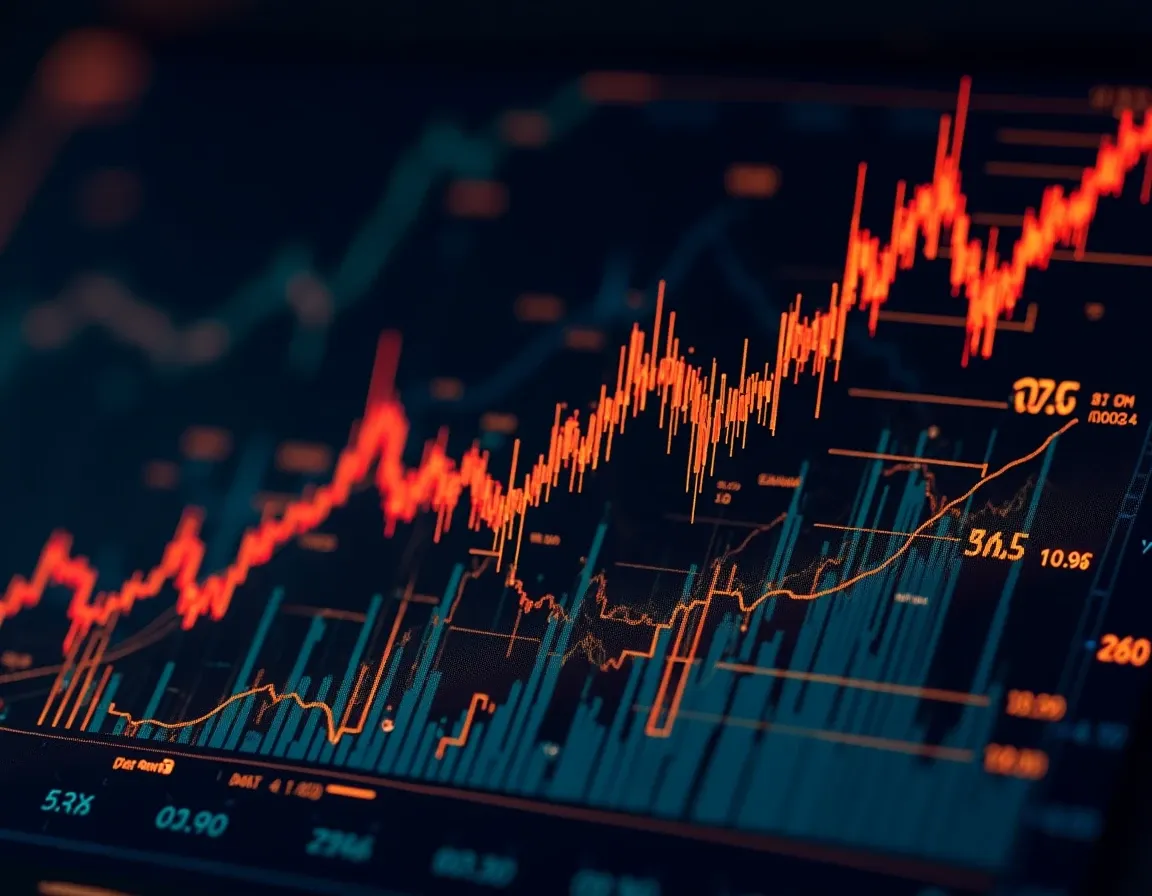
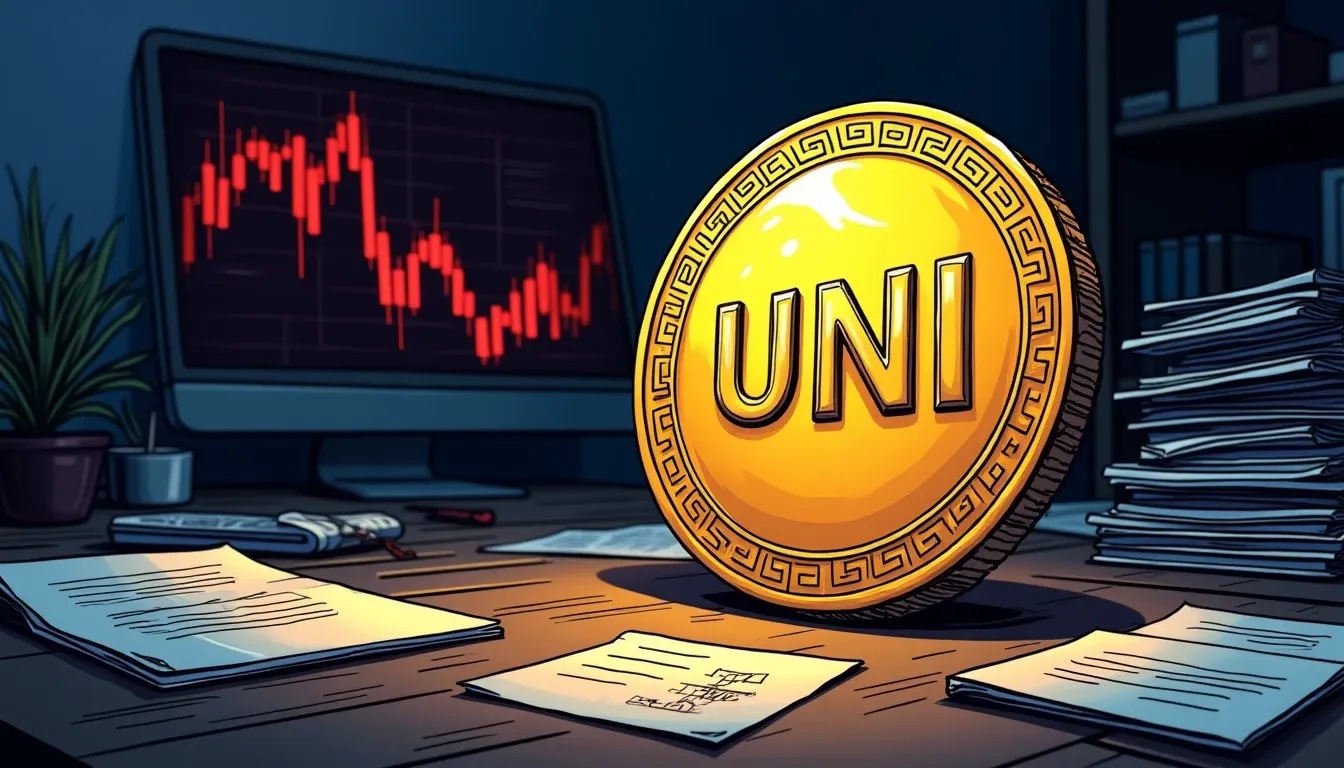
Uniswap (UNI) traded at $9.02 on September 18, 2026, marking gains of 18.0% in 24 hours, 45.4% over seven days, and 152.0% across 30 days. The token reached an intraday high of $8.80, its strongest level since November 2025, before pulling back. Market capitalization sat at $5.6 billion, ranking the governance token 21st by size. UNI remains 79.9% below its May 2021 all-time high of $44.92.
The September 18 session delivered the sharpest single-day gain in the recent rally. UNI surged over 25%, leading the entire cryptocurrency market that day and hitting a high of $8.8. Trading volume climbed 67% to $1.25 billion as the move accelerated through early U.S. hours.
The Catalyst: SEC Exemption for Permissioned AMMs
The primary driver of UNI's price surge was the implementation of regulatory standards for tokenized equities, with the U.S. Securities and Exchange Commission issuing an innovation exemption statement on September 17 allowing tokenized U.S. stocks to trade on permissioned AMM DEXs. The SEC opened the door for certain tokenized stocks to trade through permissioned AMMs, a development that positioned Uniswap v4's permissioned pool functionality as compliant infrastructure for regulated asset trading.
Uniswap launched permissioned pools in July 2026, which aligned with the regulatory tailwinds. The timing distinction matters: the infrastructure preceded the regulatory clarity by two months. Market participants reacted to the SEC announcement as confirmation that existing v4 architecture could support tokenized equity trading without further modification.
The rally did not start on September 17. UNI's price surged from $3.20 in mid-August to $6.25, clearing multiple key resistance levels before the SEC statement. That earlier August move was driven by a different catalyst.
The August Build: Fee Switch and Token Burns
The key catalyst for the August rally was Uniswap's fee-funded burn mechanism, with founder Hayden Adams stating the trailing seven-day pace implied about $263 million in annualized UNI burns. The burn mechanism was activated through the UNIfication governance proposal, which passed with 99.9% support in December 2025, receiving more than 125 million tokens in favor compared to just 742 against.
The fee switch redirects approximately one-sixth of swap fees, roughly 5 basis points on most pools, from liquidity providers to the protocol, with fees flowing into TokenJar contracts that accumulate revenue, convert it to ETH or USDC, and execute market buy orders for UNI before sending it to a burn address. Early data from January 2026 suggested roughly $26 million in annualized protocol fees.
August's move represented anticipation of deflationary tokenomics taking hold. September's surge came from regulatory clarity opening a new revenue stream. The two catalysts are distinct, and the price reflected both in stages.
Technical Setup and Liquidation Mechanics
The September 18 move was characterized as a 27.54% single-day surge on an asset trading at $8.70, described as a liquidation cascade working through a crowded short book, with the 24-hour range of $6.76 to $8.87 indicating every levered short from the past two weeks got forced out in one session. Open interest data supports this read: OI bled off during the sharp price surge, a textbook fingerprint of a short squeeze where longs weren't piling in aggressively but shorts were being violently forced out.
Before the September spike, the rally pushed the daily Relative Strength Index (RSI) to about 80, deep into overbought territory. By September 18, the RSI reached the overbought zone at 76.24, which is bullish but also attracts the risk of short-term consolidation.
The August rally followed a technical breakout. UNI broke a multi-year descending trendline and held the retest in August, with the setup needing $5.84 to hold to keep $7 and $8 in range. That trendline had capped price action since November 2024.
What the Risk Looks Like From Here
A 152% gain in 30 days does not happen without crowded positioning. Momentum across every short-term oscillator was described as screaming exhaustion, with the RSI at 77 deep in overbought territory, the Stochastic %K at 94.38 as stretched as it gets before a mean-reversion snap, and the MACD histogram printed at zero, indicating the bullish impulse that drove the surge was no longer accelerating.
The move required mechanical fuel. With the bulk of forced covers already processed, the next move will need genuine buy-side conviction to extend. Exchange withdrawal data showed some accumulation: wallets withdrew tokens from Binance, Bybit, and OKX during the rally, reducing immediately tradable supply. But withdrawals alone do not guarantee continuation.
For the move to hold, two things must remain true. First, tokenized equity volume on Uniswap v4 permissioned pools must grow beyond initial speculation. The $90 million annual burn estimate only holds if Robinhood Chain can sustain volumes close to its record $1.3 billion day, and if that surge came from short-lived interest in a few tokenized stocks and memecoins, the burn could quickly lose momentum, leaving UNI dependent on speculation again. Second, broader market liquidity must remain stable. Reversals after exhaustion-level RSI readings are typically as sharp as the rallies that created them.
What breaks it is simple: profit-taking from early buyers, a regulatory clarification that narrows the scope of the exemption, or a failure of tokenized stock trading to generate sustained fee revenue. Any of those would remove the narrative supporting current valuation.
What It Does Not Mean
A large move does not imply the move will continue. It does not mean UNI is undervalued at $9.02, and it does not mean current holders should add exposure. It especially does not mean new buyers should chase a token that printed an 18% gain in a single session after a 45% weekly run.
The SEC exemption is real. The permissioned pool infrastructure is live. The fee switch is operational and burning tokens. But none of those facts tell you what happens next to price. The fee switch captures value proportional to trading volume, which means UNI's deflationary pressure is procyclical: it accelerates during bull markets when trading volume surges and decelerates during bear markets when volume contracts, with the result being a token that amplifies market cycles instead of dampening them.
September 18 marked the day regulatory clarity arrived. It did not mark a floor, a breakout level that guarantees further upside, or a buy signal. Anyone treating it as such is confusing event-driven volatility with directional conviction.
The Bigger Picture: DeFi Token Economics Shifting
The UNIfication proposal and subsequent rally represent a structural shift in how DeFi governance tokens capture value. UNIfication nudges DeFi toward a world where governance tokens are expected to have clearer links to protocol economics, with burns like Uniswap's, direct fee distributions to stakers, vote escrow locks that share fees and bribes, and hybrids like Hyperliquid's perp model all versions of protocol-fee sharing aimed at tightening that link.
For years, a core challenge in DeFi has been the gap between strong protocols and weak tokens, with many protocols achieving clear product market fit, high usage and stable revenues, but their tokens often functioning mainly as governance with little direct claim on cash flows. Uniswap's move to activate the fee switch and implement deflationary mechanics attempts to close that gap.
But the valuation remains stretched by traditional metrics. Early data implies roughly $26M annualized protocol fees and a roughly 207x revenue multiple, with ongoing burns of roughly 4M UNI per year embedding high growth expectations into UNI's $5.4B valuation. That multiple only compresses if volume grows substantially, fee capture expands, or deflation accelerates beyond current rates.
The September rally does not change the fact that DeFi protocol tokens trade on future expectations, not current cash flows. The fee switch gives UNI a mechanical link between trading activity and supply reduction. The SEC exemption opens a potential new revenue stream. Neither guarantees the current price holds.
You just saw how a token moved 152% in 30 days across two catalysts with different timing. Those catalysts, that timing gap, and the overbought readings will all look different in six weeks.
Every Thursday: where crypto yield actually is - stablecoins, liquid staking and DeFi lending, with the risk named next to the rate and what changed since last week.
Get it free every ThursdayFree. No trade calls, no allocations, no hype. Unsubscribe in one click.