Table of Contents
What You Are Vetting And Why It Matters

A Uniswap V3 WBTC-USDT pool appears in your tracker at 19.42% APY. On a $100,000 position, that's $19,420 annual. The question is not whether the number is attractive. The question is whether the yield survives contact with impermanent loss, fee tier economics, and whale exit risk before you recoup your gas costs.
You have 48 hours. In that window, four checks separate sustainable fee yield from temporary arbitrage opportunity that will normalize within weeks. This article walks through liquidity depth verification, historical volatility analysis for IL projection, fee tier alignment, and on-chain concentration risk.
The premise: the pool appeared suddenly on tracking dashboards, which signals either newly-deployed liquidity, a tracker indexing update, or a volume spike that pushed APY above filtering thresholds. All three scenarios carry different risk profiles. Your job is to determine which one applies before capital moves.
Step 1: Verify Pool Liquidity Depth And Composition

Start with total value locked (TVL). The article premise references a $57M pool. As of late October 2026, the primary WBTC-USDT pool on Ethereum Mainnet holds $27.39M in liquidity at the 0.3% fee tier. If your tracker shows $57M, you are looking at either an aggregated view across multiple fee tiers, a Layer 2 deployment (Arbitrum, Optimism, Base), or stale data.
Navigate to GeckoTerminal or Uniswap Analytics and filter by chain and fee tier. Confirm which specific pool contract your tracker is indexing. A $27M pool offering 19.42% implies daily trading volume well above $100,000, which is plausible during volatility windows. A $57M pool at the same rate requires proportionally higher volume to sustain.
Next, verify liquidity distribution. In Uniswap V3, only in-range liquidity earns fees. If $27M is total TVL but only $8M sits within 2% of spot price, effective depth is $8M. Narrow concentration amplifies fee capture but also accelerates impermanent loss when price moves. Check the pool's liquidity distribution chart (available via Uniswap v3 documentation or third-party analytics). If 60% or more of liquidity clusters within a 5% price band, you are looking at aggressive range positioning by existing LPs, which means high yield but also high turnover risk.
Slippage is the final depth metric. Simulate a $50,000 swap on both sides of the pair. If slippage exceeds 0.5% for that size, the pool lacks resilience for institutional flow, and the high APY likely reflects temporary retail arbitrage rather than sustainable trading activity.
Step 2: Project Impermanent Loss From Historical Volatility
WBTC tracks Bitcoin spot price, which traded between $80,700 and $83,900 in the September-October 2026 window, with daily swings ranging from 0.46% to 2.68%. Year-to-date volatility sits at 41%. USDT is a stablecoin, so the pair behaves like a single-asset exposure with fiat-denominated volatility.
Impermanent loss formula: IL = 2 * sqrt(r) / (1 + r) - 1, where r is the price ratio change. A 2x move in either direction costs approximately 5.7% relative to holding both assets separately. A 10% WBTC price move costs roughly 0.5% IL. A 20% move costs approximately 2%.
Run the numbers for your expected holding period. If you plan to hold for 30 days and expect WBTC to trade in a 10% range (plausible given recent volatility), you face approximately 0.5% IL. Against 19.42% annual (1.62% monthly), that leaves 1.12% net of IL, assuming full-month fee accrual. If WBTC moves 20% in that month, IL rises to 2%, wiping out your fee income and leaving you underwater.
The critical benchmark: a 2025 Gauntlet Network study found that approximately 49.5% of Uniswap V3 positions in volatile pairs ended underwater because IL outpaced fee earnings. The same report noted that over 62% of low-fee-tier positions (0.05%) experienced permanent loss during high volatility. The WBTC-USDT pair is not a low-volatility stablecoin pair. If you deploy into a narrow range chasing the 19.42% headline, you need WBTC to trade flat or earn enough fees before price exits your range.
Check WBTC realized volatility over the past 14 days on TradingView or Deribit. If daily volatility exceeds 3%, the 19.42% APY will not compensate for the probability-weighted IL over a 30-day hold. If volatility sits below 1.5%, the trade looks sustainable, assuming fee tier alignment.
Step 3: Confirm Fee Tier Justification
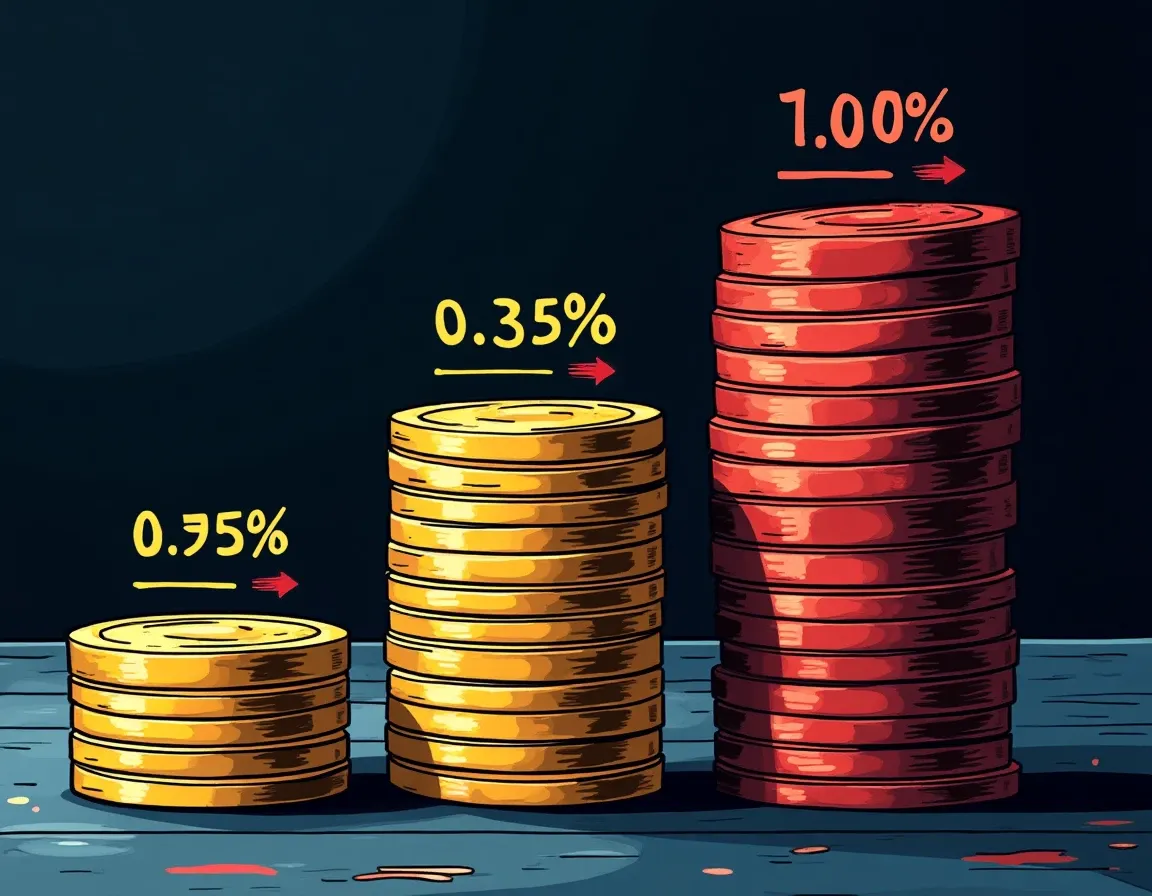
Uniswap V3 introduced multiple fee tiers for the same token pair: 0.05% for stablecoin pairs, 0.30% for volatile pairs like WBTC-ETH, and 1.00% for exotic or low-liquidity pairs. The WBTC-USDT pair should use either the 0.30% or 1.00% tier, depending on expected divergence and volume capture strategy.
The primary Ethereum Mainnet pool uses the 0.3% fee tier. That tier captures 30 basis points per trade. To generate 19.42% annual yield on $27M TVL, the pool needs approximately $1.74M in daily trading volume ($1.74M * 0.003 * 365 / $27M = 7.0% annually, which implies your tracker is showing a short-term spike, not a normalized rate).
Pull 7-day and 30-day average volume from GeckoTerminal or Uniswap Analytics. If average daily volume over the past 7 days is below $2M, the 19.42% rate reflects a temporary spike, likely driven by a single large arbitrage trade or CEX-DEX price dislocation. If 30-day average volume exceeds $3M daily, the rate is more likely sustainable, though still elevated relative to historical norms.
Compare fee tier selection to competing pools. If a 0.05% WBTC-USDT pool exists with higher TVL, LPs have mispriced volatility risk, and your 0.3% pool may be undercapitalized because sophisticated allocators avoid it. If the 1.00% tier holds comparable TVL, it signals that the market expects higher divergence than the 0.3% tier compensates for, and you should recalibrate your IL assumptions upward.
Fee tier mismatch is a common failure mode. High-volatility pairs need 0.30% or 1.00% tiers to ensure fee capture scales with divergence risk. If the pool you are evaluating uses 0.05%, exit immediately. The fee income will not cover impermanent loss over any reasonable holding period.
Step 4: Assess Whale Concentration And Exit Risk
Navigate to Etherscan and input the pool contract address. Pull the list of LP positions sorted by size. If the top three addresses control more than 50% of TVL, you face whale concentration risk. A single large LP can withdraw liquidity at any time, triggering slippage for subsequent exits and collapsing the effective APY for remaining LPs.
Check wallet age and transaction history for the top five LPs. If wallets are fewer than 90 days old or show rapid in-and-out patterns across multiple pools, those are mercenary LPs chasing short-term yields. They will exit the moment APY normalizes or IL accelerates, leaving you holding a less-liquid position.
Cross-reference LP addresses against known MEV bots and market makers using tools like Nansen or Dune Analytics. MEV bots provide genuine liquidity but also extract value through sandwiching and front-running. If the majority of TVL comes from MEV-adjacent wallets, the pool serves as a trading venue for sophisticated actors, not a passive income opportunity for retail. You can still participate, but your edge is minimal.
The safer profile: 10 to 20 LPs, each holding between 2% and 10% of TVL, with wallet ages exceeding six months and low turnover. That distribution implies conviction-based positioning rather than opportunistic arbitrage.
If your research shows concentrated holdings or recent rapid inflows (TVL doubled in the past week), treat the 19.42% as temporary. Plan for a 7-14 day hold, not a multi-month allocation.
Step 5: Cross-Check Price Oracle Reliability
Uniswap V3 provides time-weighted average price (TWAP) oracles on-demand for periods up to approximately nine days. Before you allocate, verify that the pool's quoted WBTC price matches Chainlink oracles and CEX spot prices (Binance, Coinbase, Kraken) within 0.2%.
If the pool shows WBTC at $82,000 while CEX spot trades at $81,500, you are looking at a 0.6% premium. That premium may attract arbitrage flow, which generates fees in the short term but also signals that the pool is mispriced. When arbitrage completes, the premium collapses, volume drops, and APY normalizes.
Pull TWAP data for the past 24 hours and compare it to CEX VWAP (volume-weighted average price) over the same period. Divergence greater than 0.3% indicates oracle lag or manipulation risk. In that scenario, the 19.42% APY may be inflated by temporary mispricing, and you should delay entry until prices converge.
Oracle reliability is non-negotiable. If the pool serves as a price reference for downstream DeFi protocols (lending markets, derivatives), even small mispricing can trigger cascading liquidations. Before you commit capital, ensure the pool reflects accurate spot pricing.
Common Failure Modes And How To Avoid Them
Out-of-range abandonment is the most frequent mistake. Once WBTC price moves outside your selected range, you earn zero fees and hold 100% of the depreciating asset. If you set a narrow 5% range to maximize fee capture and WBTC moves 8%, you are left holding USDT (if price rose) or WBTC (if price fell) while the pool continues trading without you. The 19.42% yield becomes irrelevant because you stopped earning it.
Solution: set a wider range (10-15% on each side of spot) and accept lower APY in exchange for sustained fee accrual. Alternatively, monitor the position daily and rebalance manually when price approaches range boundaries, though that incurs gas costs that erode net returns.
Fee tier mismatch is the second failure mode. If you deploy into a 0.05% tier expecting stable-pair behavior but WBTC experiences a 15% swing, IL will exceed fee income by a factor of three or more. Always match fee tier to expected volatility. For WBTC-USDT, the 0.3% tier is the floor. The 1.0% tier is appropriate if you expect Bitcoin to trade with daily volatility above 3%.
Sudden appearance signal confusion is the third risk. When a pool appears in tracking suddenly, it can indicate newly-deployed liquidity, a tracker indexing update, or a volume spike. Newly-deployed pools lack historical data, so you cannot verify sustained yield. Tracker updates mean the pool existed but was below filtering thresholds, which implies low volume and marginal yields. Volume spikes are temporary unless driven by structural catalysts (new CEX listing, protocol integration, macro volatility).
Distinguish between the three by checking pool creation date on Etherscan. If the pool is fewer than 30 days old, treat it as unproven. If it is older than 90 days but only recently appeared in trackers, pull historical volume data to confirm whether the current spike is an outlier or a trend.
What To Do After Vetting
If the pool passes all four checks (sufficient liquidity depth, manageable IL projection, appropriate fee tier, distributed LP base), allocate a test position no larger than 5% of your DeFi portfolio. Monitor daily for the first two weeks. Track effective APY (fees earned divided by capital deployed), price movement relative to your range, and any large LP withdrawals.
Set exit triggers in advance. If effective APY drops below 8%, impermanent loss exceeds 1.5%, or a single LP withdraws more than 20% of TVL, reduce position size by half within 24 hours. Do not wait for full thesis invalidation. Incremental exits preserve optionality.
If the pool performs as expected (stable volume, controlled IL, no whale exits), you can scale the position to 10-15% of DeFi allocation after 30 days. Beyond that, concentration risk outweighs marginal yield pickup.
For ongoing monitoring, set alerts for TVL changes (down 20% or more), volume changes (down 30% or more), and WBTC volatility spikes (daily moves exceeding 5%). Any of those triggers warrants a full re-vet within 24 hours.
What This Looks Like In Practice
Assume you identify a WBTC-USDT pool at $27.39M TVL offering 19.42% APY. You verify liquidity depth: $27M total, $12M in-range within 3% of spot. Slippage on a $50K trade is 0.3%. Depth check passes.
You pull WBTC volatility: 14-day realized vol is 2.1%, which implies a 6% move over 30 days is plausible. At 6% divergence, IL is approximately 0.18%. Monthly fee income at 19.42% annual is 1.62%, so net of IL you earn 1.44%. IL check passes.
Fee tier is 0.3%. Seven-day average daily volume is $2.8M. That generates approximately $8,400 in daily fees ($2.8M * 0.003), or 11.2% annualized ($8,400 * 365 / $27.39M). The 19.42% tracker number reflects a recent spike, but the normalized rate around 11% still exceeds competing DeFi protocols for comparable risk. Fee tier check passes with caveat.
You check LP concentration: top five wallets hold 48% of TVL, all aged 180+ days, low turnover. Whale risk is moderate. You proceed with a $10,000 test position (5% of your $200K DeFi allocation).
After 14 days, you have earned $53 in fees (0.53%), WBTC moved 3.2% (IL of approximately 0.05%), and TVL remains stable. Net performance: 0.48% over two weeks, or 12.5% annualized. You scale to $20,000.
After 30 days, a large LP withdraws $4M, dropping TVL to $23M. Volume holds steady, so APY rises slightly, but the withdrawal signals reduced conviction. You hold position size flat and set a trailing stop at 8% effective APY.
The Takeaway
A 19.42% APY is only attractive if it survives the IL calculation, the fee tier justification, and the whale exit scenario. The actual question is not whether the number is real, but whether it will still be real in 30 days after you have paid gas, absorbed volatility, and competed with LPs who entered earlier at lower prices. Vet liquidity depth, project IL from realized volatility, confirm fee tier alignment, and verify LP distribution before you allocate. The pools that look best on a tracker are often the ones that normalize fastest.
Frequently Asked Questions
Why does a Uniswap V3 pool suddenly appear at 19.42% APY?
Sudden high-yield appearances typically signal one of three scenarios: newly-deployed liquidity without historical data, a tracker indexing update that surfaces an existing pool above filtering thresholds, or a temporary volume spike from arbitrage or CEX-DEX price dislocation. Pull pool creation date from Etherscan and compare 7-day versus 30-day average volume to distinguish sustainable yield from temporary anomaly.
How much impermanent loss should I expect from a WBTC-USDT position?
WBTC tracks Bitcoin spot price with 41% year-to-date volatility and daily swings of 0.46% to 2.68%. A 10% WBTC price move costs approximately 0.5% IL. A 20% move costs approximately 2%. For a 30-day hold with expected 10% price range, you face roughly 0.5% IL against 1.62% monthly fee income at 19.42% annual, leaving 1.12% net if WBTC trades within that range.
What fee tier should WBTC-USDT use on Uniswap V3?
WBTC-USDT should use the 0.30% or 1.00% fee tier, not 0.05%. The pair is non-stablecoin with moderate volatility (41% YTD). The 0.30% tier is appropriate for daily volatility below 3%. The 1.00% tier suits higher divergence expectations. If you find the pool using 0.05%, exit immediately because fee income will not compensate for impermanent loss over any reasonable holding period.
How do I check for whale concentration risk in a Uniswap pool?
Navigate to Etherscan, input the pool contract address, and pull LP positions sorted by size. If the top three addresses control more than 50% of TVL, you face whale exit risk. Check wallet age and transaction history for the top five LPs. Wallets younger than 90 days or showing rapid in-and-out patterns signal mercenary capital that will exit when APY normalizes, collapsing liquidity and effective yield for remaining LPs.
What position size is appropriate for a newly-vetted high-yield pool?
Allocate no more than 5% of your DeFi portfolio as a test position even if all vetting checks pass. Monitor daily for two weeks, tracking effective APY, price movement relative to your range, and large LP withdrawals. If the pool performs as expected with stable volume, controlled IL, and no whale exits, scale to 10-15% after 30 days. Beyond that threshold, concentration risk outweighs marginal yield gains.
You just worked through liquidity depth, IL projection, fee tier alignment, and whale risk for a 19.42% pool. Those numbers and that TVL will be different next week.
Every Thursday: where crypto yield actually is - stablecoins, liquid staking and DeFi lending, with the risk named next to the rate and what changed since last week.
Get it free every ThursdayFree. No trade calls, no allocations, no hype. Unsubscribe in one click.