
Table of Contents
The Question: What Does Self-Custody Actually Mean?
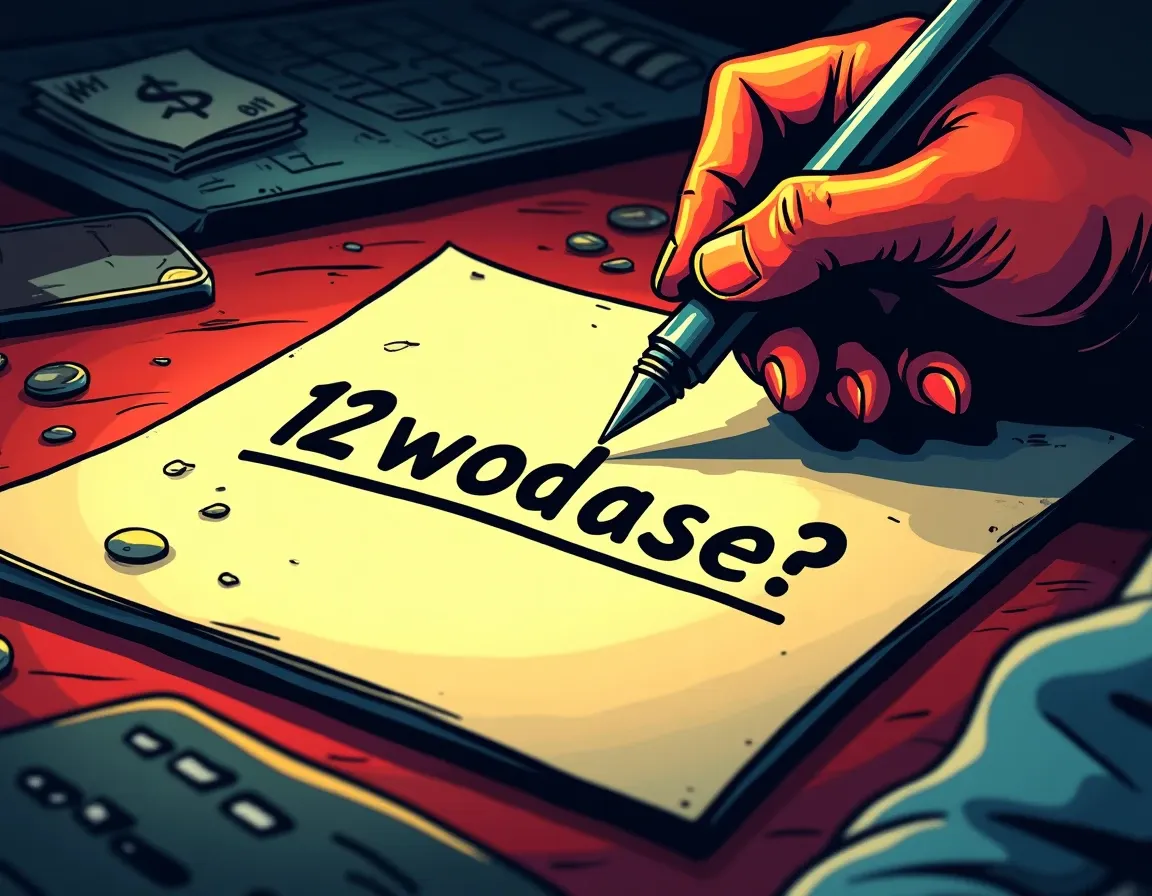
Self-custody means you personally hold the private key for your own wallet. You are the only one who can prove ownership of those funds and access those holdings. No exchange, no bank, no third party. If you have the key, you control the money. If someone else has the key, they control the money. That is the entire mechanism.
The slogan version says "not your keys, not your crypto." That is accurate but incomplete. The full version is: not your keys, not your crypto-and also, your keys, your problem.
How Self-Custody Works: The Seed Phrase Is Everything

When you set up a self-custody wallet, the wallet generates a seed phrase. That phrase is usually 12 or 24 words, following the BIP39 format, which uses a fixed list of 2,048 English words. The seed phrase is the upstream source of every private key in your wallet.
Lose your seed phrase with no backup copy, and you have permanently and irrecoverably lost every asset controlled by that wallet. There is no customer service department. There is no password reset. Chainalysis estimated in 2021 that approximately 20% of all Bitcoin (roughly 3.7 million BTC) may be permanently lost, largely due to lost keys and forgotten passwords.
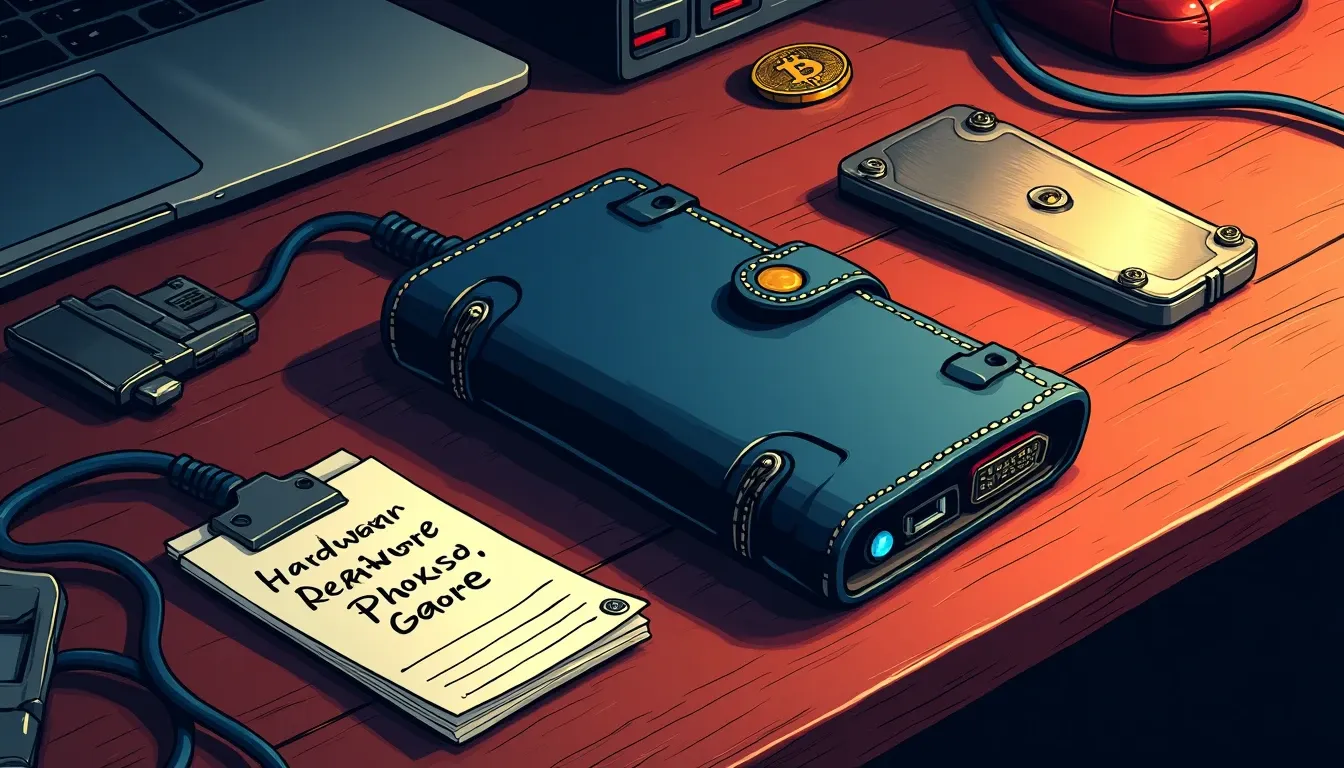
A hardware wallet is a physical device that stores your private keys completely offline in a chip separate from your internet connection. Hardware wallets are better protected from malware and spyware than software wallets, but the seed phrase backup is still the single point of failure. If you lose the hardware wallet and the backup, the funds are gone.
Your MetaMask password can unlock the browser extension on your laptop, but it cannot restore the wallet on a new computer if the Secret Recovery Phrase is lost. The password is local convenience. The seed phrase is the wallet.
Derivation Paths: A Technical Edge Case That Matters
Wallets use derivation paths to decide which private keys to generate from the seed. Ethereum wallets commonly use paths such as m/44'/60'/0'/0/0. Bitcoin wallets may use different paths depending on address type, such as legacy, nested SegWit, or native SegWit.
If you created a Bitcoin wallet in one app and restored it in another, the second app may scan a different address type by default. Your funds are not lost-they are sitting at addresses your new wallet is not looking at. This is a subtle but critical technical edge case.
The 25th Word: Passphrase-Protected Seeds
An optional passphrase (sometimes called the "25th word") is appended to the mnemonic as the PBKDF2 salt. Without a passphrase, an empty string is used as the salt. A user with a passphrase-protected seed who loses the passphrase will see an empty wallet on restoration. The seed phrase is correct. The wallet is correct. The passphrase is missing, so the wallet derives a completely different set of keys.
This is a feature, not a bug. The passphrase adds a layer of security against physical theft of the seed phrase. But it also adds a layer of user error.
What Self-Custody Eliminates: Counterparty Risk

Buying bitcoin and keeping it held at an exchange carries counterparty risk. The company could go bankrupt, or choose to seize, freeze, or block your withdrawals. Mt. Gox once handled over 70% of global Bitcoin transactions but lost approximately 850,000 BTC (worth billions today) through alleged hacks and mismanagement.
The implosion of FTX, once valued at $32 billion, revealed severe mismanagement of customer funds. The exchange reportedly mixed client assets with its trading arm, Alameda Research, causing an $8 billion shortfall. Customers who held funds on the platform at the time of collapse lost access. Some are still waiting for recovery distributions years later.
Agio Ratings has documented over 25 significant exchange defaults in the past few years alone. Celsius, Voyager, BlockFi, and others promised yield but delivered bankruptcy. Self-custody eliminates this entire category of risk. Your funds do not sit on the exchange's balance sheet. They sit in a wallet you control. If the exchange disappears tomorrow, your holdings are unaffected.
A January 2025 US executive order affirmed the right to self-custody digital assets and conduct peer-to-peer transactions. The rules now improve custodial safety without restricting the freedom to hold your own keys. But improved custodial standards do not eliminate custodial failures. They reduce the frequency. They do not eliminate the category.
What Self-Custody Does NOT Eliminate
Phishing and Social Engineering
You are susceptible to phishing attacks regardless of your level of experience. Phishing attacks occur when a bad actor dupes you into taking an action that compromises your crypto assets, like clicking a link or opening an email. Private key or seed phrase compromise accounted for 43.8% of stolen crypto funds in 2024-the single largest attack vector.
Even if you follow proper practices, there is still one major vulnerability: user error, typically in the form of signing a malicious transaction, is a major factor in users losing their crypto. You connect your wallet to a dApp that looks like Uniswap but is a phishing clone. You approve a token allowance. The attacker drains your wallet. This is not an exchange hack. This is not a protocol exploit. This is user error, enabled by the irreversible nature of blockchain transactions.
Blockchain transactions are irreversible. You only have one shot. If you lose your crypto because of a mistake or a scam, you are unlikely to get it back.
Smart Contract Risk
The risk exists that vulnerabilities in smart contracts, DeFi protocols, or cross-chain bridges result in loss of assets held or interacted with via self-custody wallets. In 2016, a coding flaw in the Decentralized Autonomous Organization (DAO) smart contract on the Ethereum platform led to a theft of $50 million worth of ether.
Over $2B was stolen from DeFi and smart contract exploits in 2024, largely from reentrancy, access control, and oracle manipulation flaws caught after deployment. Unlike exchange hacks, smart contract flaws result in immediate and large-scale financial loss with little opportunity for recovery.
Self-custody protects you from exchange failure. It does not protect you from protocol failure. If you deposit funds into a DeFi protocol and that protocol is exploited, your funds are gone. Your private key is secure. Your seed phrase is backed up. The smart contract is drained. You lose.
Operational Burden and Human Error
Operational failures and human errors are leading causes of crypto security breaches. Attackers increasingly use phishing and social engineering tactics, sidestepping even the most security measures. You are responsible for verifying transaction details before signing. You are responsible for distinguishing legitimate contract interactions from malicious ones. You are responsible for maintaining multiple secure backups of your seed phrase in geographically distributed locations.
Custodial providers can verify your identity and restore access to your account if needed. Self-custody does not offer that. Beginners often start with custodial options for convenience, but as users become more active on-chain, they may migrate to a self-custodial wallet to interact directly with decentralized applications.
When Self-Custody Makes Sense, and When It Doesn't
Self-custody makes sense when you need to interact with DeFi protocols, earn staking or liquidity mining income, or hold assets long-term without counterparty risk. If you are deploying capital to DeFi income strategies, you must use a self-custody wallet. The protocols do not interface with centralized exchanges.
Self-custody also makes sense when you hold significant value and want to eliminate the risk that a centralized platform freezes, seizes, or loses your funds. FTX customers are still recovering funds years after collapse. Mt. Gox creditors waited over a decade for partial repayment. Self-custody eliminates that timeline entirely.
Self-custody does not make sense when you are unfamiliar with seed phrase security, unable to securely store backup copies, or actively trading on short timeframes. Non-custodial users generally need to pay network blockchain fees, including potentially high "gas" fees on networks like Ethereum. By contrast, custodial services sometimes batch transactions or subsidize costs, making frequent activity cheaper.
Many holders settle on a hybrid approach: long-term reserves in self-custody, a smaller operating balance on an exchange for liquidity. That hybrid eliminates counterparty risk on the majority of holdings while maintaining access to exchange infrastructure for trading.
Inheritance and Recovery Planning
If you die without a documented recovery plan, your heirs will not have access to your self-custody holdings. There is no estate process for Bitcoin. There is no probate court that can unlock a seed phrase. If the seed phrase is lost, the funds are lost.
Some users store backup seed phrases in safe deposit boxes. Others use multi-signature wallets that require multiple keys to authorize a transaction, distributing control across trusted parties. Still others use specialized inheritance services designed for crypto, which release access after a time-locked trigger or other verification mechanism.
All of these approaches introduce trade-offs between security and recoverability. A seed phrase stored in a single location is vulnerable to fire, flood, or theft. A seed phrase distributed across multiple locations is vulnerable to partial compromise or coordination failure among heirs.
The point is: you must plan for this. Self-custody assets do not automatically transfer. They sit at an address. If no one knows how to access that address, the funds remain there permanently.
Fee Structures: Custodial vs. Self-Custody
Non-custodial wallets eliminate ongoing service fees, trading commissions, and withdrawal charges. Users pay only blockchain network fees. On Ethereum, that can mean $5 to $50 per transaction during periods of high network congestion. On Solana or Polygon, fees are typically under $0.01.
Custodial services charge withdrawal fees, trading spreads, and sometimes monthly account maintenance fees. They also batch transactions or subsidize costs in some cases, making frequent on-chain activity cheaper than a self-custody user making the same moves individually.
If you are moving funds once a month, the self-custody fee model is cheaper. If you are trading daily, the custodial fee model may be cheaper depending on the platform and the network.
What to Watch: Custody Failures Are Visible Before They Happen
Exchange failures do not happen without warning. They show up on-chain first. Large outflows from known exchange wallets. Paused withdrawals. Delayed deposits. Mismatches between reported reserves and on-chain balances.
I track exchange reserve wallets using Arkham and Nansen. When a platform's reserves drop by double digits in 72 hours, that is a signal. When withdrawals are "temporarily paused" for maintenance twice in a month, that is a signal. When on-chain balances do not match the publicly disclosed proof-of-reserves attestation, that is a signal.
The tools to verify these claims exist. Ledger Academy maintains reference material on custody risk and verification. Users who hold significant balances on custodial platforms should periodically verify reserve transparency and monitor large wallet movements.
The Takeaway
Self-custody means you eliminate the risk that an exchange loses, freezes, or mismanages your funds. It also means you assume the risk that you lose your seed phrase, sign a malicious transaction, or interact with a flawed smart contract. The trade-off is real. $3.4B was stolen in crypto hacks in 2025. 43.8% of that was via private key compromise-user error, phishing, and social engineering. Another significant portion was smart contract exploits. Exchange failures also occurred, and users lost access to funds held on centralized platforms. Both categories of risk are material. The question is which category you are better equipped to manage. If you can securely store a 12-word phrase, verify transaction details before signing, and avoid phishing links, self-custody eliminates counterparty risk entirely. If you cannot consistently do those things, a regulated custodian with insurance and identity recovery is the safer choice. Hybrid approaches-cold storage for long-term holdings, exchange balance for active trading-split the risk. The worst choice is pretending the trade-off does not exist.
Frequently Asked Questions
What happens if I lose my crypto seed phrase?
You permanently and irrecoverably lose every asset controlled by that wallet. There is no customer service, no password reset, and no recovery process. Chainalysis estimated in 2021 that approximately 20% of all Bitcoin (roughly 3.7 million BTC) may be permanently lost, largely due to lost keys and forgotten passwords. Hardware wallets, software wallets, and all other self-custody solutions rely on the seed phrase as the single upstream source of every private key. Lose the seed phrase, lose the funds.
Is self-custody safer than keeping crypto on an exchange?
Self-custody eliminates counterparty risk-the risk that an exchange goes bankrupt, freezes your account, or loses your funds. FTX, Mt. Gox, Celsius, Voyager, and over 25 other platforms have failed in recent years. However, self-custody introduces seed phrase loss risk, phishing risk, and smart contract exploit risk. Private key compromise accounted for 43.8% of stolen crypto funds in 2024. The safest approach depends on whether you can securely manage seed phrase backups, verify transactions before signing, and avoid phishing scams.
Can I recover my self-custody wallet if I forget my password?
A wallet password (like the one used to unlock MetaMask) is local device security. It cannot restore a wallet on a new device. Only the seed phrase can do that. If you lose your password but still have your seed phrase, you can restore the wallet on a new device and set a new password. If you lose both the password and the seed phrase, the wallet and all funds are permanently inaccessible. The seed phrase is the wallet. The password is convenience.
Does self-custody protect me from DeFi protocol hacks?
No. Self-custody protects you from exchange failure and counterparty risk. It does not protect you from smart contract vulnerabilities. Over $2B was stolen from DeFi and smart contract exploits in 2024, largely from reentrancy, access control, and oracle manipulation flaws. If you deposit funds into a DeFi protocol using your self-custody wallet and that protocol is exploited, your funds are gone. Your private key remains secure, but the protocol contract is drained. Self-custody eliminates custodian risk, not code risk.
Should I use self-custody for all my crypto holdings?
Many users adopt a hybrid approach: long-term reserves in self-custody (cold storage) and a smaller operating balance on a regulated exchange for liquidity and trading. Self-custody makes sense when you interact with DeFi protocols, hold significant value long-term, or want to eliminate counterparty risk. Custodial platforms make sense when you trade frequently, need identity-based recovery, or are unfamiliar with seed phrase security. The worst choice is holding all funds on an unregulated exchange or in a single self-custody wallet with no backup plan.
Ledger devices display the full transaction on their own screen before you approve it, which is what stops an approval exploit at the point it matters.
See Ledger devicesWe may earn a commission if you sign up through this link, at no cost to you. It does not change what gets recommended.
You just read the full trade-off between exchange counterparty risk and seed phrase user error. Those risks shift as platforms fail and attack vectors evolve.
Every Thursday: where crypto yield actually is - stablecoins, liquid staking and DeFi lending, with the risk named next to the rate and what changed since last week.
Get it free every ThursdayFree. No trade calls, no allocations, no hype. Unsubscribe in one click.




)