Table of Contents
What You Will Verify And Why It Matters

When WETH appears in tracking at 2.96% on Aave V3, you are looking at $7,400 in annual yield on $250,000 versus zero in cold storage. That spread justifies the verification work, but only if the rate is stable and not a utilization spike.
You need to confirm three things within twelve hours: whether the displayed supply rate matches the rate model calculation, whether borrow demand can sustain that rate, and whether the utilization level represents genuine activity or a temporary arbitrage window. This article walks you through the on-chain verification process using Aave's public parameters and real-time reserve data.
Prerequisites: you need a wallet with at least $250,000 in WETH or stablecoins available to deploy, access to Etherscan or equivalent block explorer, and the ability to read Aave V3 reserve data from AaveScan or directly from the protocol contracts. You do not need to deploy capital during verification.
Hour 0-2: Verify The Supply Rate Formula

Aave V3 calculates supply rate using a formula: supply rate equals borrow rate multiplied by utilization rate multiplied by one minus the reserve factor. For WETH on Ethereum mainnet, the reserve factor is 15%.
Go to DefiLlama's Aave V3 page and navigate to the Ethereum WETH market. Record the current borrow APR, utilization rate, and supply APR. Then calculate: if borrow APR is 3.48% and utilization is 84%, the supply rate should be 3.48% times 0.84 times 0.85, which equals 2.49%. If the tracker shows 2.96%, the math does not match.
When the displayed rate does not match the formula, check three sources: the tracker may be pulling stale data, the protocol may have just experienced a utilization spike that has not yet stabilized, or you are looking at a rewards-boosted APR that includes protocol incentives on top of lending yield. AaveScan separates protocol yield from rewards yield. Verify which number you are evaluating.
As of November 7, 2026, Ethereum V3 WETH showed $4.66 billion supplied at 1.46% supply APR with 83.7% utilization. Monad V3 WETH showed 1,700 WETH supplied at 2.75% total supply APR with 88.06% utilization. The Monad rate includes 1.14% in rewards on top of 1.61% protocol yield. Always separate rewards from base yield.
Hour 2-4: Check Borrow Demand Sustainability
Aave V3 uses a two-slope interest rate model. Below the optimal utilization point, borrow rates increase gradually along slope one. Above optimal utilization, rates climb steeply along slope two to incentivize repayment and new supply.
For Ethereum Core WETH, the optimal utilization is 92%. Slope one is 2.2%, and slope two is 7.8%. Base rate is 0%. When utilization sits at 84%, the borrow rate is calculated as: base rate plus (utilization divided by optimal utilization times slope one), which equals 0% plus (84% divided by 92% times 2.2%), approximately 2.01%.
If utilization pushes above 92%, the rate calculation switches to slope two. At 95% utilization, borrowers pay approximately 2.2% plus ((95% minus 92%) divided by (100% minus 92%) times 7.8%), which is 2.2% plus 2.93%, totaling 5.13%. That rate spike is unsustainable. Arbitrageurs deposit new supply to capture the elevated yield, pushing utilization back down and collapsing the borrow rate.
Track whether new supply is flowing in. On Etherscan, query the Aave V3 WETH reserve contract for recent deposit events. If you see ten or more deposits above $100,000 in the past two hours, arbitrage is already filling the gap. The 2.96% will not hold. If deposits remain sparse, borrow demand may genuinely sustain the rate, at least until the next liquidation cascade or rate parameter change.
Historical context: in August 2026, Aave governance reduced WETH slope one from 2.35% to 2.20% when utilization sat at 84.8% with a 2.17% borrow APR. Parameter changes like this directly affect yield sustainability. Always check the governance forum for pending or recently executed votes.
Hour 4-6: Compare Rates Across Chains
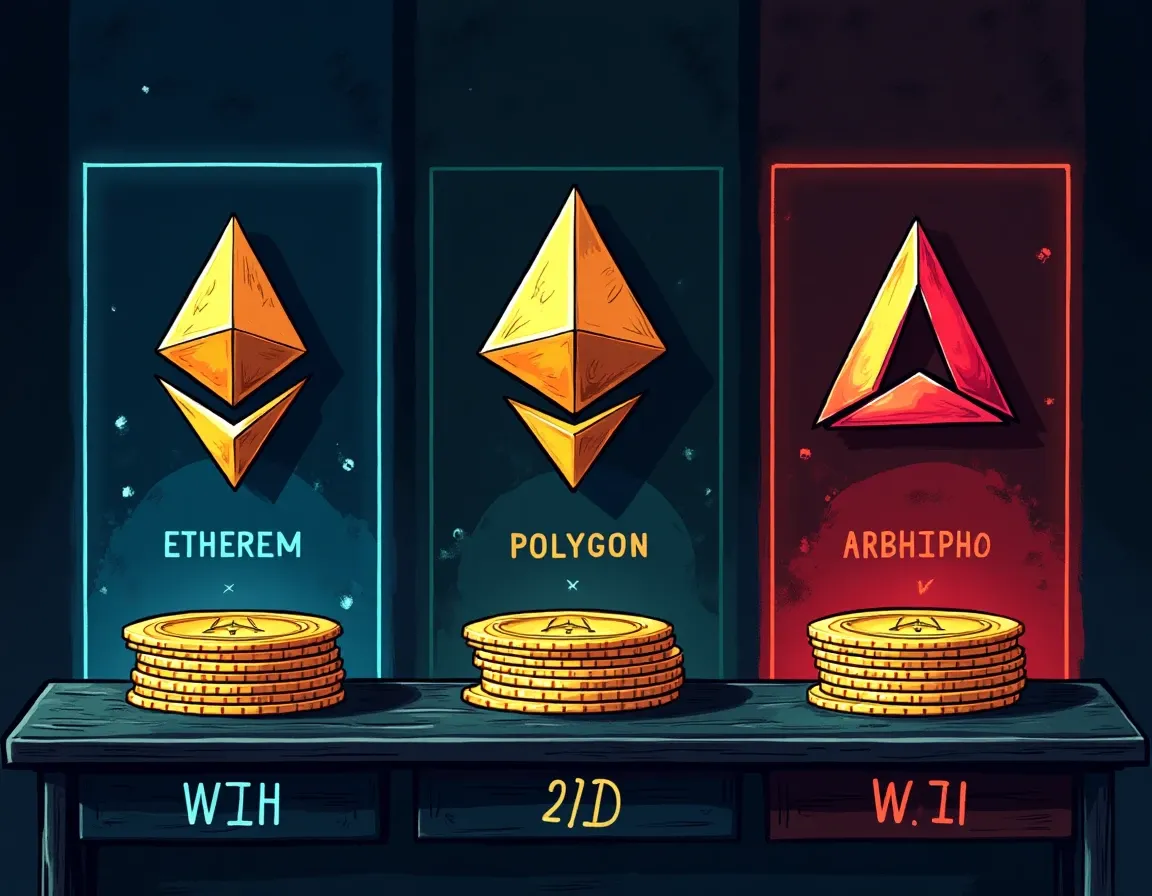
Aave V3 operates on Ethereum, Arbitrum, Optimism, Polygon, Base, and several other chains. WETH markets exist on most of them. If 2.96% appears on Ethereum but Arbitrum WETH shows 0.99%, the spike is chain-specific, not protocol-wide.
As of November 7, 2026, Arbitrum V3 WETH had $214.5 million supplied at 0.99% supply APR with 57.67% utilization. Ethereum V3 WETH had 83.7% utilization. The 26-percentage-point utilization gap explains the 0.47-percentage-point supply rate difference when you run the formula.
If Ethereum WETH suddenly shows 2.96% while all other chains remain under 1.5%, investigate Ethereum-specific events. Common causes: a large liquidation event that temporarily drained available liquidity, a whale borrowing position that spiked utilization, or a bridge exploit that reduced circulating WETH on mainnet. All three create temporary rate spikes that collapse within hours as supply rebalances across chains.
If the rate spike appears across all chains simultaneously, the cause is protocol-wide. Governance may have adjusted slope one or optimal utilization parameters. Check the Aave governance forum and the Aave risk repository on GitHub for recent parameter updates. Cross-chain coordination in rate changes suggests a deliberate risk adjustment, not a temporary liquidity event.
Hour 6-8: Verify Reserve Factor And Governance Changes
The reserve factor determines what percentage of borrow interest goes to the Aave DAO versus suppliers. WETH on Ethereum currently has a 15% reserve factor. If governance increases it to 20%, suppliers receive 80% of borrow interest instead of 85%, reducing your effective yield by approximately 6% of the total.
In August 2026, Gauntlet recommended increasing the WETH reserve factor from 15% to 20%. The proposal passed. If you verified yield before the change took effect but deployed capital afterward, your actual yield would have been lower than calculated.
Check the Aave governance portal for active proposals. Search for "WETH" and "reserve factor." If a proposal is in the voting phase or has passed but not yet executed, your yield calculation needs to account for the pending change. The difference between 15% and 20% reserve factor on a 2.96% supply rate is 0.15 percentage points in annual yield. On $250,000, that costs $375 per year.
Also verify slope one and optimal utilization have not changed. The rate model is stored on-chain in the Aave V3 pool configurator contract. Query the contract for the WETH reserve interest rate strategy address, then read the parameters from that strategy contract. If slope one reads 2.20% instead of the historical 2.35%, rates will be lower at equivalent utilization levels.
Hour 8-10: Monitor For Liquidation Cascades
Liquidations temporarily spike borrow rates because liquidated positions must be closed, which requires repaying borrowed assets. When WETH is the borrowed asset in a liquidation event, the liquidator buys WETH on the open market or borrows it from Aave, increasing borrow demand and utilization.
Track the liquidation history. On Etherscan, filter the Aave V3 pool contract for LiquidationCall events in the past 24 hours. If you see more than five WETH liquidations above $50,000 each, you are witnessing a cascade. Utilization will normalize within six to twelve hours as liquidators close their positions.
Compare current utilization to the seven-day average. If current utilization is 89% but the seven-day average is 78%, you are looking at a temporary spike. The 2.96% rate will not hold. If current utilization matches the seven-day average, borrow demand is stable, and the rate is more likely sustainable.
Liquidation cascades correlate with ETH price volatility. If ETH dropped more than 8% in the past 48 hours, expect elevated liquidations. If ETH price has been stable, liquidations should remain sparse, and any utilization spike is more likely driven by genuine borrow demand or arbitrage activity.
Hour 10-12: Check Oracle Dependency And Price Feed Lag
Aave relies on Chainlink as its primary oracle with fallback aggregators. If the Chainlink ETH/USD feed lags during high volatility, the protocol may under-collateralize positions or delay liquidations, creating artificial borrow demand as users exploit the lag.
Verify the Chainlink ETH/USD feed is updating normally. Go to Chainlink's data feeds page and check the timestamp of the most recent ETH/USD update on Ethereum mainnet. Updates should occur every ten minutes or whenever price moves more than 0.5%. If the last update was more than 30 minutes ago during a volatile period, oracle lag is affecting the protocol.
Cross-check the Chainlink price against Coinbase, Binance, and Kraken spot prices. If Chainlink shows $2,850 but exchanges show $2,920, the 2.4% lag creates arbitrage opportunities. Traders borrow underpriced collateral, sell it on exchanges, and repay later. This spikes borrow demand artificially.
Oracle lag-driven rate spikes collapse within two to six hours once the feed catches up. If your verification shows fresh Chainlink updates matching exchange prices, oracle lag is not the cause. If you see a multi-hour lag during volatility, the rate spike is temporary and unreliable for deployment decisions.
Common Failure Modes And How To Detect Them
The most common failure mode is confusing rewards APR with protocol APR. Trackers sometimes display total APY, which includes protocol incentives, governance token rewards, and third-party bribes. Monad V3 WETH at 2.75% total includes 1.14% in rewards. If those rewards are paid in a volatile governance token, your realized yield depends on token price, not just the displayed percentage.
Separate base yield from rewards. AaveScan shows protocol APR and rewards APR on separate lines. If you are evaluating a 2.96% rate, confirm whether that is base yield, rewards, or total. If it is total, check what token pays the rewards and whether you can sell it without slippage.
The second failure mode is deploying during a utilization spike. If you deposit $250,000 when utilization is 94% and earning 4.2%, but utilization drops to 80% within six hours, your yield falls to 1.8%. You paid gas to deploy and will pay gas again to migrate, burning $200 to $400 in transaction costs for no gain.
Wait for utilization to stabilize. Track it hourly for twelve hours. If utilization fluctuates more than 5 percentage points per hour, the rate is unstable. If utilization holds within a 3-point range for six consecutive hours, the rate is more likely to persist.
The third failure mode is ignoring reserve factor changes. A governance vote can reduce your yield by 6% to 10% overnight. Track governance proposals weekly. Subscribe to the Aave governance forum notifications or monitor the Discord governance channel. If a reserve factor increase is in the voting phase, do not deploy until the vote completes and you recalculate expected yield.
What To Watch On-Chain Next
After you deploy, monitor three on-chain metrics daily: utilization rate, borrow APR, and reserve factor. Set alerts for utilization dropping below 70% or climbing above 95%. Both thresholds indicate instability.
Track new supply inflows. If the reserve grows by more than 15% in a single week, expect rates to compress as new supply reduces utilization. If the reserve shrinks by more than 10% in a week, expect rates to climb as utilization increases.
Watch for governance proposals affecting WETH. Risk stewards can adjust slope one, optimal utilization, and reserve factor without a full DAO vote under certain conditions. The August 2026 rate change was executed by risk stewards, not full governance, and took effect within 72 hours of announcement.
Monitor Chainlink oracle updates during volatility. If ETH moves more than 10% in 24 hours, verify the Chainlink feed is updating every ten minutes. Lag creates liquidation delays, which spike borrow demand temporarily. When the feed catches up, demand normalizes and rates drop.
Set a calendar reminder to re-verify yield every 30 days. Rate model parameters change, borrow demand shifts, and governance adjusts reserve factors. A 2.96% rate today may be 1.8% in six weeks if utilization trends downward or reserve factor increases.
The 12-Hour Checklist
Hour 0-2: Verify the supply rate matches the formula. Calculate borrow rate times utilization times one minus reserve factor. If the displayed rate does not match, identify whether the discrepancy is stale data, rewards APR, or a calculation error.
Hour 2-4: Check whether new supply is flowing into the reserve. Query Etherscan for recent deposit events. If arbitrageurs are already filling the gap, the rate will collapse within hours.
Hour 4-6: Compare WETH rates across Ethereum, Arbitrum, and other chains. If the spike is chain-specific, investigate Ethereum-specific events. If it is protocol-wide, check governance for parameter changes.
Hour 6-8: Verify reserve factor and slope one parameters. Confirm no governance proposals are pending that would reduce your yield within 30 days.
Hour 8-10: Track liquidation events in the past 24 hours. If liquidations are elevated, utilization is temporarily spiked. Wait for it to normalize.
Hour 10-12: Check Chainlink oracle updates. If the ETH/USD feed is lagging, the rate spike is arbitrage-driven and temporary. If the feed is current, the rate is more likely sustainable.
The Takeaway
A 2.96% WETH rate on Aave V3 is worth $7,400 annually on $250,000, but only if utilization sustains above 80%, borrow demand remains stable, and governance does not increase the reserve factor. Verify the rate formula, track new supply inflows, compare cross-chain rates, and monitor for liquidation cascades within the first twelve hours. If utilization holds stable for six consecutive hours and the rate matches the formula with no pending governance changes, the yield is deployable. If utilization spikes above 90% or fluctuates more than 5 percentage points per hour, wait for stabilization before committing capital.
Frequently Asked Questions
How do I verify the Aave V3 WETH supply rate is accurate?
Calculate supply rate using the formula: borrow rate times utilization rate times one minus reserve factor. For Ethereum WETH with 15% reserve factor, if borrow APR is 3.48% and utilization is 84%, supply rate should be 3.48% times 0.84 times 0.85, equaling 2.49%. Compare your calculation to the displayed rate. If they do not match, check whether the tracker is showing rewards APR, stale data, or protocol yield. AaveScan separates protocol yield from rewards.
What causes Aave WETH rates to spike temporarily?
Temporary rate spikes occur when utilization exceeds optimal threshold, typically 92% for WETH. Common causes include liquidation cascades during ETH price drops, whale borrowing positions that drain available liquidity, or bridge exploits reducing circulating WETH. Arbitrageurs deposit new supply to capture elevated yields, pushing utilization back down within hours. Track deposit events on Etherscan. If you see ten or more large deposits in two hours, arbitrage is already collapsing the rate.
How does Aave's reserve factor affect my WETH lending yield?
Reserve factor determines what percentage of borrow interest goes to the Aave DAO versus suppliers. WETH currently has a 15% reserve factor, meaning suppliers receive 85% of borrow interest. If governance increases reserve factor to 20%, suppliers receive only 80%. On a 2.96% borrow rate at 84% utilization, the difference between 15% and 20% reserve factor is 0.15 percentage points in annual yield, costing $375 per year on $250,000 deployed.
What is the difference between protocol APR and rewards APR on Aave?
Protocol APR is yield generated from borrow interest paid by borrowers, distributed to lenders according to the rate model. Rewards APR comes from governance token incentives or third-party bribes paid on top of lending yield. Monad V3 WETH showing 2.75% total includes 1.61% protocol yield plus 1.14% rewards. Rewards are often paid in volatile tokens. Your realized yield depends on whether you can sell rewards without slippage. Always verify what token pays rewards and separate it from base protocol yield.
How long should I monitor Aave WETH rates before deploying capital?
Monitor utilization hourly for twelve hours before deploying. If utilization fluctuates more than 5 percentage points per hour, the rate is unstable. If utilization holds within a 3-point range for six consecutive hours, the rate is more likely to persist. Also verify no governance proposals are pending that would change reserve factor, slope one, or optimal utilization within 30 days. Track liquidation events in the past 24 hours. Elevated liquidations indicate temporary utilization spikes that normalize within six to twelve hours.
You just verified a 2.96% WETH rate using utilization math, cross-chain comparison, and governance tracking. Those numbers will be different next week.
Every Thursday: where crypto yield actually is - stablecoins, liquid staking and DeFi lending, with the risk named next to the rate and what changed since last week.
Get it free every ThursdayFree. No trade calls, no allocations, no hype. Unsubscribe in one click.