Table of Contents
What You Will Accomplish

You will build a quantitative framework for selecting airdrop farming targets based on TVL concentration, historical allocation patterns, and Sybil detection rigor. You will estimate breakeven capital requirements using on-chain deployment costs and opportunity cost from suboptimal base yields. You will construct a diversified portfolio across 5-10 protocols that accepts 60-70% underperformance while capturing the 10-20% that overperform by 10-100x.
This is not a speculative lottery approach. Airdrop farming as a calculated allocation strategy treats potential token distributions as bonus yield layered on top of deployed capital positions that already generate base APY through liquidity provision or lending. You deploy capital into protocols that pay sustainable fees while simultaneously qualifying for prospective airdrops. If the airdrop materializes, you capture upside. If it does not, you still earned the base yield minus gas costs.
Prerequisites: You need $5,000-$15,000 in deployable stablecoin capital, a self-custody wallet capable of multi-chain transactions, and six months of active transaction history to pass basic Sybil filters. You need access to DefiLlama for real-time TVL tracking and historical airdrop allocation data from Uniswap, Arbitrum, Optimism, and Hyperliquid to model expected returns.
Historical Airdrop Benchmarks And ROI Reality

Uniswap distributed 400 UNI tokens to every wallet that had used the platform before September 2020. At peak valuation, that airdrop reached $12,000 per recipient. The total peak value of the UNI distribution was $6.43 billion. Arbitrum distributed $1.97 billion worth of ARB tokens in 2023 to over 600,000 wallets, with individual allocations ranging from dust amounts to $10,000 depending on transaction depth and volume. Hyperliquid's HYPE token airdrop peaked at $19.82 billion total value in 2024, distributing an average of $200+ per wallet to approximately 94,000 recipients.
Those are the outliers. The median outcome is substantially worse. Historical data shows 60-70% of anticipated airdrops underperform expectations at launch, 20-30% meet expectations, and only 10-20% dramatically overperform. Among tokens that do distribute, 88% lose value within three months of the token generation event. Between 50-70% of airdropped tokens are sold within the first 30 days. Lido had the highest immediate liquidation rate at 65.75%, followed by 1inch at 58.67% and Optimism at 48.21%.
Successful airdrop farmers report earning $500-$5,000+ per high-quality project that actually distributes tokens. A 25-wallet learner farm costs $1,500-$3,500 per month in gas and opportunity cost, with typical ROI of 2-10x on success. A 100-wallet mid-tier farm costs $5,800-$13,000 per month with typical ROI of 5-50x. But those figures assume you selected protocols that (1) actually announce a token, (2) include retroactive rewards for early users, and (3) survive long enough to reach a token generation event.
The baseline assumption for ROI modeling is this: plan for 88% token value loss within three months. Count only 10-20% of your farming targets as potential overperformers. Model gas costs and opportunity cost from forgone yields as sunk expenses that must be recovered before you reach profitability.
Protocol Selection Criteria Using On-Chain Metrics

Start with TVL as a proxy for protocol confidence and capital commitment depth. Higher TVL means users are willing to lock more assets, which signals trust that can translate into sustained platform usage and token demand at launch. But TVL alone does not guarantee airdrop eligibility or size. You need to track TVL momentum before and after comparable airdrop events to distinguish genuine protocol adoption from mercenary farming behavior.
Pre-airdrop TVL often grows as users deploy capital to establish eligibility. Post-airdrop TVL changes reveal whether users view the protocol as a long-term allocation or just farmed it for rewards. Gradual TVL increase after an airdrop indicates retained user confidence. Sharp TVL declines immediately post-airdrop indicate mercenary behavior and suggest the token will face sustained sell pressure from recipients who never intended to hold.
As of October 2026, three protocols control $85.95 billion or 96.7% of all DeFi TVL. Lido holds $33.92 billion, AAVE holds $33.66 billion, and EigenLayer holds $18.37 billion. Ethereum dominates chain-level TVL with $54.25 billion (56%+ of total), followed by Solana at $6.71 billion and Base at $6.45 billion. Farming established high-TVL protocols like Lido or AAVE offers lower airdrop odds because they have already distributed tokens or explicitly ruled out future distributions. But these protocols provide deeper utility for sustained base yield, which offsets the opportunity cost of failed airdrop speculation.
Check DefiLlama for real-time protocol TVL, fees, and user count. Track TVL changes over trailing 7-day, 30-day, and 90-day windows. Protocols with rising TVL without public token announcements signal organic confidence. Protocols with declining TVL post-launch signal dump risk.
Sybil Resistance As A Filtering Advantage
Modern protocols employ advanced heuristic analysis, wallet clustering algorithms, and decentralized identity requirements to detect multi-wallet bot farms. LayerZero Labs manually removed 803,273 wallets (59% of applicants) as Sybil addresses before distributing ZRO tokens. Protocols like Arbitrum, Scroll, and Optimism now reward genuine on-chain activity depth rather than capital spread across dozens of throwaway wallets.
Higher Sybil filter rigor correlates with lower farmer saturation and higher per-wallet allocation odds. If a protocol announces integration with Gitcoin Passport, on-chain reputation systems, or Soulbound Token (SBT) requirements, that protocol is explicitly filtering out low-effort multi-wallet farmers. For single-wallet allocators deploying meaningful capital, this is an advantage. You face less competition from bot farms and capture a larger share of the airdrop pool.
Strategic airdrop positioning means mimicking genuine user behavior over extended time periods. If you are farming a lending protocol, borrow and repay across multiple market cycles, not just once. If you are farming an L2, bridge funds in, execute native transactions, and bridge some funds back out eventually. Single-transaction wallet patterns trigger Sybil detection. Sustained activity patterns that mirror real users pass filters.
Points Systems And Multi-Round Distribution Models
The single-snapshot airdrop is largely dead. Modern protocols use continuous on-chain points systems that accumulate over weeks or months and reward sustained engagement rather than one-time actions. LayerZero's first airdrop season distributed 8.5% of token supply to community users, with 38.3% of total supply earmarked for community distribution over time. That suggests roughly 30% of ZRO tokens remain for future airdrop seasons, which means early participants who continue transacting may qualify for multiple distributions.
Points-based allocation follows the formula: (your points / total points) * community token pool. Linear distribution models pay out in direct proportion to score. Double the points yields double the tokens. This favors whales who can deploy large capital, but it also means small wallets with limited capital receive dust allocations that may not cover gas costs to claim.
For yield allocators, the implication is clear: concentrate capital into fewer wallets with deeper transaction history rather than spreading thin across many wallets. A single wallet with $10,000 deployed and 50 transactions over six months will outperform ten wallets with $1,000 each and five transactions apiece, especially after Sybil filters remove the ten-wallet cluster.
Capital Allocation And Diversification Framework
Diversify across 5-10 protocols simultaneously. Do not concentrate on a single protocol. Accept that 60-70% of your targets will underperform while 10-20% overperform dramatically. The goal is to capture one or two outliers that return 10-50x while limiting downside from the majority that return nothing or lose value immediately.
Weight your allocation by anti-Sybil rigor and TVL momentum. Allocate larger capital to protocols with rising TVL, explicit Sybil resistance, and sustained fee generation. Allocate smaller speculative capital to testnet-only protocols with zero deployment cost but unknown timelines.
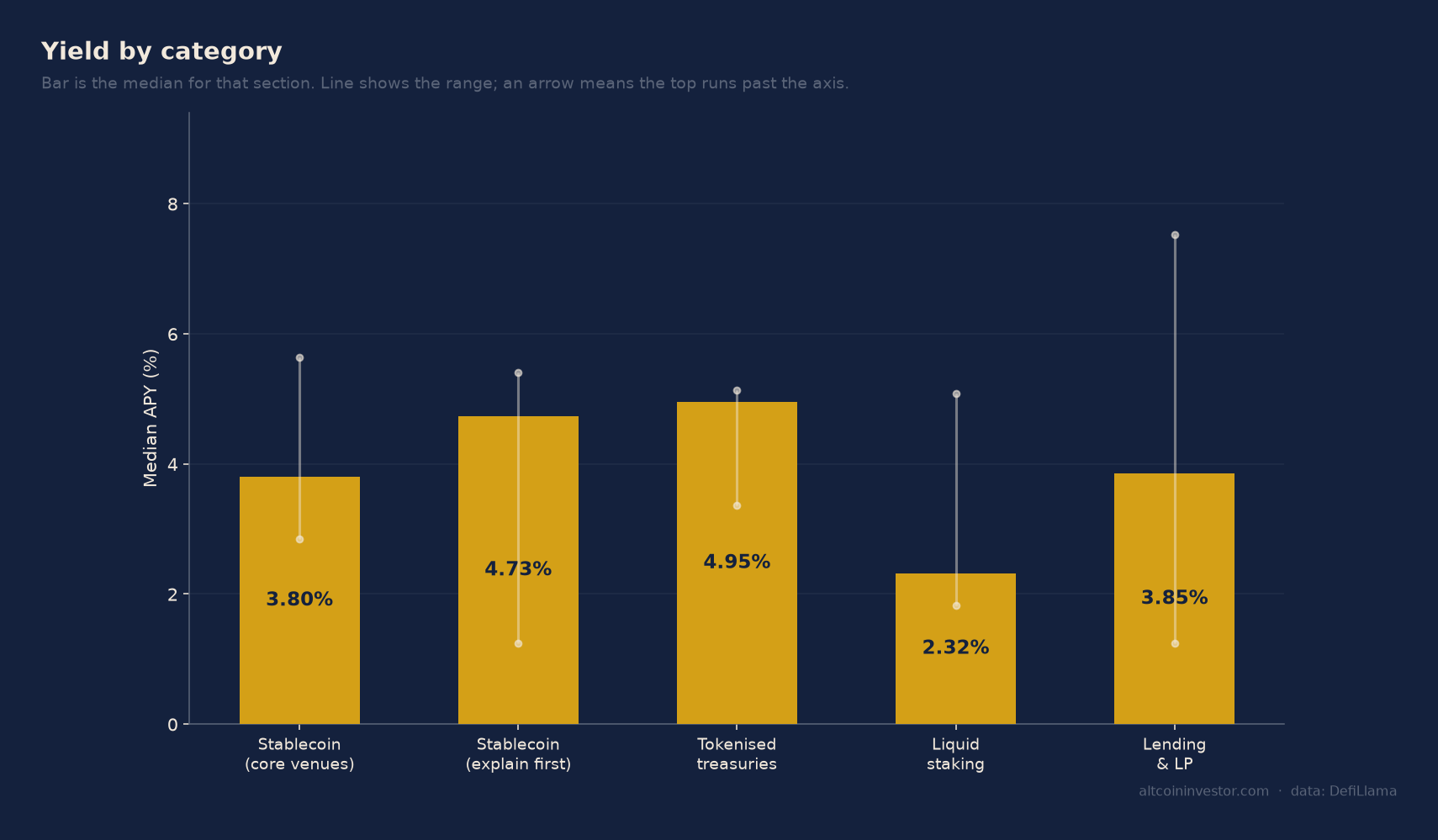
Deploy base yield positions alongside farming. Use liquidity provision, lending deposits, or liquid staking that generates APY independently of airdrop outcomes. Yield farming pays fees plus token rewards. The fees are sustainable income. The token rewards often dilute. Structure your airdrop farming so that even if zero airdrops materialize, you still earned 3-8% APY from the deployed positions minus gas costs.
2026 Airdrop Pipeline And Estimated Capital Requirements
Monad is a high-probability target with an estimated airdrop value exceeding $500 million. Capital requirement: $0, since it is currently testnet-only. Deploy test transactions now to establish early user status before mainnet launch.
Berachain is estimated at $300 million+ airdrop value. Capital requirement: $1,000+ deployed into testnet liquidity pools or validator delegation. Berachain uses a proof-of-liquidity model that rewards liquidity providers with governance weight, which likely translates into airdrop allocation.
Hyperliquid V2 is estimated at $1 billion+ for a second-season distribution. Capital requirement: $5,000+ deployed into perpetual futures positions or liquidity provision. Hyperliquid's first airdrop distributed to users with sustained trading volume and liquidity depth, so the allocation model for V2 will likely follow similar criteria.
MegaETH is estimated at $200 million+. Capital requirement: $0 for testnet participation. This is a high-throughput EVM-compatible L2 with venture backing and no mainnet launch yet. Early testnet users historically receive favorable treatment in allocation formulas.
Note that Optimism governance approved moving the remaining 546.9 million OP tokens out of the user airdrop allocation in August 2026. There is no active or planned Optimism airdrop. Do not farm Optimism expecting future distributions.
Gas Cost Accounting And Opportunity Cost
Ethereum mainnet gas costs for a single swap transaction range from $5-$50 depending on network congestion. Bridging between L1 and L2 costs $20-$100. Claiming an airdrop costs $10-$30 in gas. If you execute 50 transactions across six months to qualify for an airdrop, you spent $250-$2,500 in gas before accounting for opportunity cost.
Opportunity cost is the yield you forfeited by deploying capital into a speculative airdrop farming position instead of a known yield source. If you deployed $10,000 into an airdrop farming protocol that pays 3% APY when you could have deployed into a stablecoin lending pool paying 8% APY, your opportunity cost is 5% annually or $500 per year. Over six months, that is $250 in forgone yield.
Your breakeven threshold is gas costs plus opportunity cost. If you spent $500 in gas and forfeited $250 in yield, you need to receive at least $750 in airdrop value to break even. Most small wallets with limited capital do not clear this threshold. Airdrop farming costs $150-$3,000 in gas and capital across six months, and many campaigns return less than you spend.
ROI Modeling Using Historical Allocation Ratios
Use historical allocation data to estimate expected airdrop value per dollar of TVL deployed. Uniswap distributed $6.43 billion to users who collectively provided billions in liquidity. Arbitrum distributed $1.97 billion to 600,000+ wallets. Hyperliquid distributed $19.82 billion peak value to 94,000 wallets.
Calculate the TVL-to-airdrop ratio for comparable protocols. If a protocol holds $500 million in TVL and announces a 10% community allocation from a $2 billion fully diluted valuation, the airdrop pool is $200 million. If 100,000 wallets qualify, the average allocation is $2,000 per wallet. If you hold 0.1% of protocol TVL ($500,000 out of $500 million), you might expect 0.1% of the airdrop pool, or $200,000. But linear allocation assumptions break down quickly due to caps, minimums, and activity multipliers.
The more realistic model: assume you capture 0.01-0.05% of the airdrop pool if you are an early user with sustained activity. For a $200 million airdrop, that is $20,000-$100,000. But apply the 88% token loss assumption within three months. Your realized value is $2,400-$12,000 if you exit within the first 30 days. If you deployed $10,000 in capital and spent $500 in gas, your net return is -$8,100 to +$1,500. That is a wide range, and it depends entirely on whether you captured an outlier distribution or a median dust allocation.
Comparing Small vs Large Airdrops
Medium-sized airdrops (5-10% of total supply) tend to fare slightly better in short-term price stability. Large airdrops (greater than 10% of supply) perform best over longer time horizons because larger distributions foster stronger community ownership despite short-term selling pressure. Small airdrops to core users result in 4-8x more buyers because recipients have existing conviction and participate in governance or liquidity mining.
For yield allocators, this means large airdrop announcements create immediate sell pressure but offer better long-term hold potential if you believe in the protocol. Small airdrops to highly filtered user bases create less sell pressure but lower absolute dollar returns unless you captured significant allocation.
Common Failure Modes And Real Examples
Timing risk: You deploy capital six months before an expected airdrop. The protocol delays the token launch by 12 months. Your capital is locked in a suboptimal yield position for 18 months total. You forfeited 18 months of compounding yield elsewhere. Even if the airdrop materializes, the opportunity cost may exceed the airdrop value.
Sybil collapse risk: You run 50 wallets with $200 each to multiply eligibility. The protocol announces Gitcoin Passport integration and requires a minimum reputation score. Your 50 wallets are filtered out. You spent $1,500 in gas across 50 wallets and received zero allocation. Running parallel wallets multiplies airdrop eligibility in theory but triggers detection in practice.
Liquidation cliff risk: You receive $5,000 in airdrop tokens at TGE. You hold for three months expecting price appreciation. 65% of recipients sold immediately. The token is down 80% from TGE. Your $5,000 is now worth $1,000. You missed the exit window.
Post-airdrop TVL collapse: The protocol you farmed had $500 million TVL before the airdrop. Three days after TGE, TVL dropped to $150 million. That is a 70% decline, which signals that the majority of users were mercenary farmers. The token price collapsed in parallel. This pattern was visible in multiple 2023-2024 L2 airdrops including several smaller L2 launches that saw 60-80% TVL exits within one week.
What To Watch On-Chain Next
Track TVL changes on DefiLlama for protocols in your farming portfolio. Set alerts for 7-day TVL increases greater than 20%, which may indicate announcement anticipation or bot farm saturation. Set alerts for 7-day TVL decreases greater than 30%, which indicate user exodus and potential protocol risk.
Monitor wallet clustering patterns using Arkham Intelligence or Nansen. If a protocol you are farming starts flagging Sybil addresses publicly, review whether your wallet activity patterns could trigger filters. Genuine user behavior includes varied transaction sizes, irregular timing, interaction with multiple dApps on the same chain, and wallet age greater than six months.
Watch for governance proposals related to tokenomics or airdrop allocation. Protocols often telegraph airdrop plans through governance discussions months before official announcements. Uniswap's governance forum discussed potential V3 LP incentives for over a year before launching targeted campaigns. Arbitrum's governance discussed allocation formulas publicly before the snapshot date.
Track wallet-funded addresses from known venture capital firms or team multisigs. Large inbound transfers to exchange deposit addresses from team wallets signal potential sell pressure. Outbound transfers from team wallets to DeFi protocols signal genuine protocol usage or strategic liquidity deployment.
Building A Tax-Proof Record System
Every airdrop you claim is a taxable event in most jurisdictions. You received property with fair market value at the moment of the claim. That value is ordinary income. When you sell the token later, you realize capital gains or losses based on the difference between your cost basis (the value at claim) and the sale price.
Log every airdrop claim with the transaction hash, timestamp, token quantity, and USD value at the time of claim. Building a tax-proof record system captures what automated tax software cannot generate, especially for tokens that lack historical price data in the first hours after TGE.
Record gas costs as separate line items. Gas paid to claim an airdrop is a deductible expense against the income you recognized. If you paid $30 in gas to claim $500 worth of tokens, your net taxable income is $470, not $500.
Track opportunity cost separately for your own ROI calculations, but do not attempt to deduct it for tax purposes. Opportunity cost is not a realized loss. It is a comparative metric for evaluating whether your capital allocation strategy is working.
What To Do After Your First Successful Airdrop
Exit 50-70% of your allocation within the first 30 days. Historical data shows this is the liquidity window before sustained sell pressure drives price down 60-90%. Hold 30-50% if you believe in the protocol long-term, but accept that you are now holding a speculative position subject to the same 88% loss rate within three months.
Reallocate recovered capital into the next set of farming targets. Successful airdrop farmers treat this as a continuous cycle: deploy capital, farm for six months, claim and exit, redeploy into new targets. The worst outcome is letting airdrop proceeds sit idle in your wallet instead of redeploying into the next yield opportunity.
Review what worked. Which protocols distributed? Which Sybil filters did you pass? Which wallet behavior patterns qualified? Use that data to refine your selection criteria for the next cohort of farming targets. Airdrop farming is iterative. You improve ROI by learning which signals predict successful distributions and which signals predict disappointment.
Frequently Asked Questions
How much capital do I need to start airdrop farming?
$5,000-$15,000 in stablecoin capital is the baseline for meaningful allocation across 5-10 protocols. Smaller amounts ($1,000-$3,000) work for testnet-only farming, but you need deeper capital to deploy into mainnet positions that generate base yield while you wait for airdrop announcements. Gas costs and opportunity cost from suboptimal yields can exceed returns if your capital is too small to absorb those fixed expenses.
What is the expected ROI from airdrop farming?
Successful farmers report $500-$5,000 per high-quality project that distributes tokens, but 88% of tokens lose value within three months and 60-70% of anticipated airdrops underperform at launch. A 25-wallet farm costs $1,500-$3,500 per month with typical 2-10x ROI on success. ROI modeling should assume only 10-20% of your targets will overperform, and plan for the majority to return nothing or require immediate exit to avoid post-claim price collapse.
How do protocols detect Sybil farming wallets?
Modern protocols use wallet clustering algorithms that link addresses by funding sources, transaction timing patterns, and shared on-chain behavior. LayerZero removed 59% of applicants as Sybil addresses using these methods. Protocols also integrate Gitcoin Passport scores, Soulbound Token requirements, and decentralized identity systems to filter low-effort multi-wallet farms. Single-wallet concentration with sustained genuine activity over six months passes filters more reliably than spreading thin capital across many wallets.
Should I hold airdrop tokens or sell immediately?
Historical data shows 50-70% of recipients sell within 30 days, and tokens typically lose 60-90% of value within three months. Exit 50-70% of your allocation in the first 30 days to capture liquidity before sustained sell pressure. Hold 30-50% only if you have conviction in the protocol long-term, but accept you are now holding a speculative position with 88% probability of loss within three months. Immediate liquidation is the lower-risk path for most allocators.
What protocols are most likely to airdrop in 2026?
Monad (estimated $500M+ airdrop, $0 capital required on testnet), Berachain ($300M+ estimated, $1,000+ capital required), Hyperliquid V2 ($1B+ estimated, $5,000+ capital required), and MegaETH ($200M+ estimated, $0 testnet capital) are high-probability 2026 targets. Optimism has no planned airdrop after governance moved remaining OP tokens out of user allocation in August 2026. Focus on protocols with rising TVL, explicit Sybil resistance, and sustained fee generation rather than testnet-only speculation.
You have just reviewed historical allocation ratios from Uniswap, Arbitrum, and Hyperliquid and modeled breakeven thresholds across five 2026 protocols. Those TVL figures and Sybil filter methods will change next quarter.
Every Thursday: where crypto yield actually is - stablecoins, liquid staking and DeFi lending, with the risk named next to the rate and what changed since last week.
Get it free every ThursdayFree. No trade calls, no allocations, no hype. Unsubscribe in one click.