Table of Contents
What You'll Accomplish
You're going to earn small amounts of crypto by watching educational videos and completing quizzes on legitimate exchange-operated platforms. Typical range: $3 to $10 per completed module. Time investment: 5 to 15 minutes per module. Realistic monthly total across all platforms: $40 to $150 if you complete every available campaign.
This is not passive income. This is not a side hustle. This is pocket change in exchange for basic crypto education, and the educational content is often better than the reward itself.
Prerequisites: a verified account on at least one major exchange (Coinbase, Binance, or equivalent), basic KYC completed, and a non-custodial wallet if you want to participate in on-chain quest programs.
Step 1: Understand What Changed in 2025
Coinbase officially ended its quiz-based Learning Rewards program on May 27, 2025. Any guide that tells you to log into Coinbase, navigate to the Earn tab, and complete quizzes for $3 in random altcoins is outdated. That program no longer exists.
Coinbase now offers three income mechanisms: USDC Rewards (2 to 3.5 percent APY on stablecoin balances), Coinbase Staking (protocol-based rewards on ETH and SOL), and Coinbase Wallet Quests (on-chain task-based rewards, often requiring small gas fees). None of these are traditional learn-and-earn in the 2023 sense. The quiz model that made Coinbase Earn famous is gone.
If you want quiz-based learn-and-earn programs in 2026, you're looking at Binance Learn & Earn and CoinMarketCap Earn. Both are still active. Both rotate campaigns frequently. Both have limited slots.
Step 2: Binance Learn & Earn
Binance Learn & Earn is the most consistent quiz-based program still operating. You watch a video about a specific project (usually 3 to 8 minutes), complete a short quiz (5 to 10 questions), and receive tokens if you pass. Rewards range from $5 to $15 per campaign, paid in the project's native token.
The catch: campaigns are sponsored by the projects themselves, so you're learning about tokens that paid Binance for promotion. The educational content is better than most Twitter threads, but it's not neutral. You're getting the project's best-case narrative.
To participate, you need a verified Binance account with KYC completed. Campaigns appear under the Learn & Earn section of the Binance app or website. Slots are limited. When a new campaign launches, the first 10,000 to 50,000 users who complete it successfully receive the reward. If you're late, you get nothing.
The tokens you earn are deposited into your Binance spot wallet. You can sell them immediately, hold them, or transfer them off-exchange. Most participants sell within 24 hours. The tokens are often illiquid, thinly traded, and not listed on other major exchanges. If you wait too long, the token price may drop below the reward value you thought you earned.
Step 3: CoinMarketCap Earn
CoinMarketCap Earn operates similarly. Watch videos, complete quizzes, earn tokens. Rewards range from $5 to $50 per campaign, though the higher-paying campaigns are rare and fill instantly. CoinMarketCap is not an exchange, so you need to connect a Binance account (with KYC) to receive rewards. If you don't have a verified Binance account, you can't participate.
The process: navigate to the Earn section on CoinMarketCap, select an active campaign, watch the video, answer the quiz. If you pass and there are still slots available, you'll be prompted to enter your Binance user ID. Tokens are sent to your Binance wallet within 7 to 14 days.
CoinMarketCap campaigns rotate every few weeks. Some campaigns offer NFTs instead of tokens. Some require you to complete additional tasks (follow a Twitter account, join a Telegram group) before you're eligible for the reward. Read the fine print before you start.
Step 4: Calculate Your Realistic Hourly Rate
Assume you complete one Binance campaign at $8 and one CoinMarketCap campaign at $12 in a single week. Total time: 30 minutes. Your effective hourly rate: $40 per hour. That sounds excellent until you realize there are only 2 to 4 campaigns available per month across both platforms. You can't scale this. You can't repeat completed courses. Once you've done all available campaigns, you wait for new ones to launch.
Best-case scenario: you complete every available campaign on Binance, CoinMarketCap, and a few smaller platforms (Galxe, Layer3, RabbitHole) in a given month. Total realistic earnings: $40 to $150. Worst-case: you're late to every campaign, slots fill before you finish, and you earn $0.
This is why learn-and-earn is called pocket change, not income. The hourly rate is high, but the total available hours per month are extremely limited.
Step 5: Evaluate On-Chain Quest Programs
Coinbase Wallet Quests, Galxe, Layer3, and RabbitHole offer a different model: complete on-chain tasks (make a swap on a specific DEX, bridge assets to a new chain, mint an NFT) and earn tokens or NFTs as rewards. These are not quiz-based. You're interacting with live protocols.
The upside: rewards are often higher, ranging from $10 to $60 per quest. The downside: you pay gas fees. On Ethereum mainnet, a single transaction might cost $3 to $15 in gas during peak times. On Layer 2 networks (Arbitrum, Optimism, Base), gas is cheaper but still present. If you're completing a quest that pays $15 but costs $8 in gas, your net reward is $7.
You also need a non-custodial wallet (MetaMask, Rainbow, Coinbase Wallet) with enough ETH or the native token of the chain you're transacting on to cover gas. If you're starting from zero, you'll need to fund your wallet first, which adds friction and upfront cost.
On-chain quests are better suited for users who are already transacting on-chain and want to earn rewards for actions they'd take anyway. If you're new to crypto and trying to earn your first $20, quiz-based programs are simpler.
Common Failure Modes
The most common mistake: treating learn-and-earn tokens as long-term holds. You earned $12 worth of a token on the day you completed the quiz. Two weeks later, the token is worth $4. You still owe taxes on $12 of income (fair market value at the time you received it), even though your current balance is worth $4. This happens constantly.
If you're participating in learn-and-earn programs, sell the tokens immediately or within 24 hours unless you've done independent research and believe the project is worth holding. Most learn-and-earn tokens are low-liquidity altcoins with poor fundamentals and declining charts.
Second mistake: chasing every campaign without checking token liquidity. Some tokens earned through learn-and-earn programs are not listed on any major exchange. You can't sell them. You can't transfer them. They sit in your wallet, worthless. Before you spend 15 minutes on a campaign, verify that the reward token is listed on at least one exchange with real volume.
Third mistake: not tracking your earnings for tax purposes. Every token you earn is taxable income at fair market value on the day you received it. If you earn $80 across 8 campaigns in a year, that's $80 of taxable income. The IRS does not have a minimum threshold for reporting crypto income. Even $1 earned must be reported on Schedule 1 (Form 1040). Most people don't realize this until they're filing taxes and scrambling to reconstruct their earnings history.
Tax Implications You Need to Know Now
Crypto rewards are taxed as ordinary income, not capital gains. The taxable amount is the fair market value of the token in USD at the exact moment you received it, not the moment you sell it. If you earn 50 tokens worth $10 on Tuesday and sell them for $8 on Friday, you owe income tax on $10 and can claim a $2 capital loss when you sell. The IRS treats this the same way it treats staking rewards or mining proceeds.
If the token crashes to $0 before you sell, you still owe income tax on the original value. You can claim the loss when you dispose of the tokens, but the income event already happened. This mismatch between taxable income and actual liquidity is one of the most painful traps in crypto taxation.
You're responsible for tracking every reward you earn, the USD value at the time of receipt, and the cost basis for any subsequent sale. Most exchanges do not provide tax forms for learn-and-earn rewards because the rewards are distributed by third-party projects, not by the exchange itself. You'll need to use a crypto tax tool (CoinLedger, Koinly, TokenTax) or manually track your earnings in a spreadsheet.
For more on portfolio tracking across wallets and exchanges, including read-only API integration for tax-ready reporting, see How To Track Your Crypto Portfolio Across Wallets And Exchanges.
Programs to Avoid
Any platform that promises rewards dramatically exceeding $15 per 10-minute task is either a scam or a bait-and-switch. Legitimate learn-and-earn programs are subsidized by project marketing budgets, and those budgets are finite. If someone offers you $50 for watching a 3-minute video, the tokens are either worthless, locked behind a long vesting period, or require you to deposit funds first.
Red flags: platforms that ask you to send crypto before you can claim rewards, platforms that require you to invite 5 friends before you can withdraw, platforms with no KYC that promise high rewards (this is often a data-harvesting scam), and platforms with oversimplified educational content that omits all risks and only highlights upside. If the quiz has no wrong answers and everyone passes, you're not learning, you're being marketed to.
Also avoid any platform that claims you can "make a living" from learn-and-earn. No legitimate platform makes that claim. The total addressable monthly income from all active learn-and-earn programs combined is under $200 for a highly motivated participant who completes every campaign instantly. That's not a living. That's barely a phone bill.
What to Do Next
If you want to maximize your learn-and-earn income in 2026, follow this sequence:
- Complete KYC on Binance. This unlocks both Binance Learn & Earn and CoinMarketCap Earn.
- Set a calendar reminder to check for new campaigns every Monday. Campaigns launch weekly, and slots fill fast.
- Sell earned tokens within 24 hours unless you've independently verified the project is worth holding.
- Track your earnings in a spreadsheet or crypto tax tool from day one. Record the token name, amount, USD value, and date received.
- If you're comfortable with on-chain transactions, explore Galxe and Layer3 quests, but factor gas fees into your expected return.
- Set a monthly cap on time spent. If you've already earned $100 this month and no new campaigns are live, stop checking. Diminishing returns kick in fast.
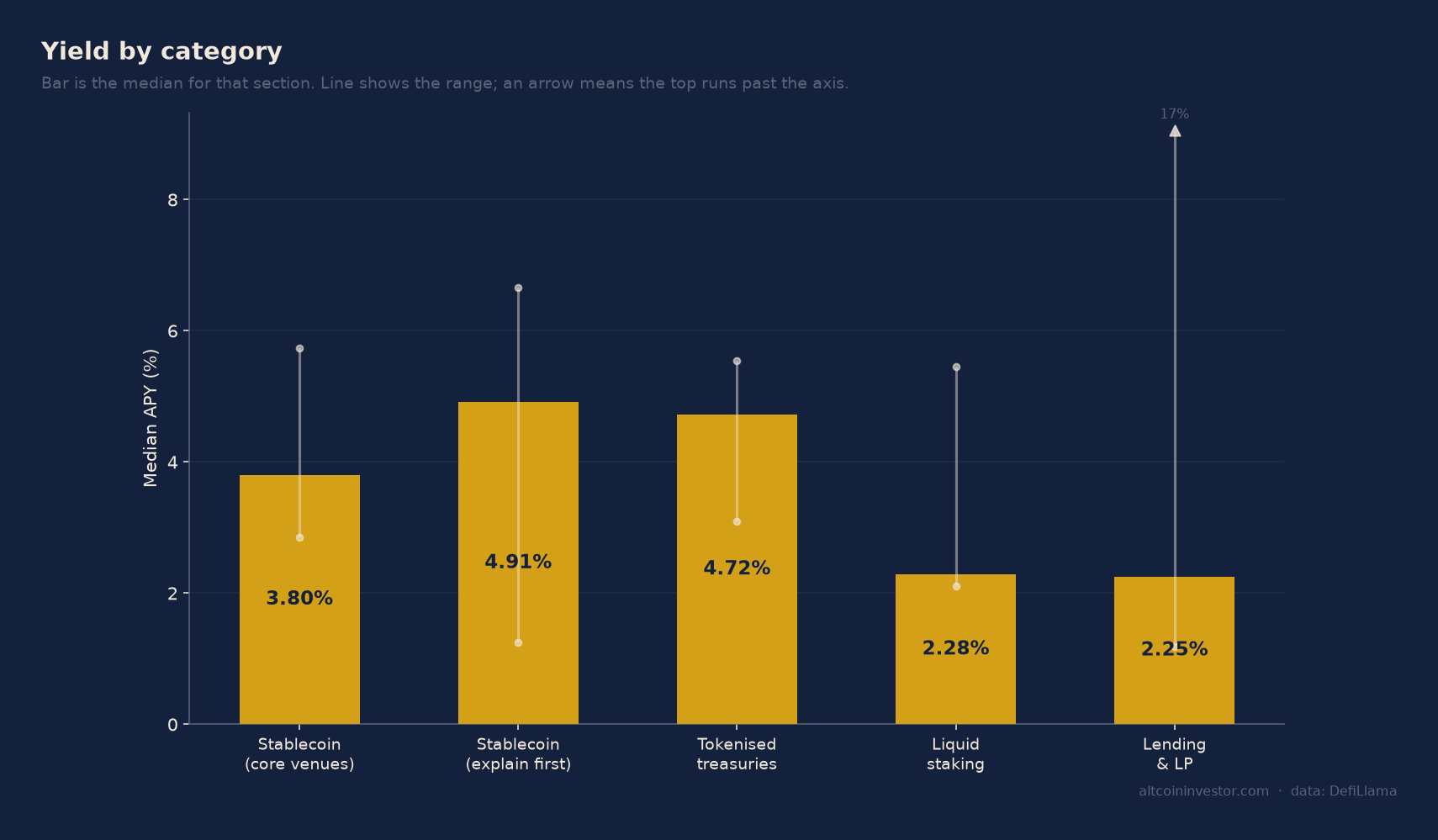
If you're looking for higher and more scalable yield, learn-and-earn is not the answer. Consider stablecoin yield farming, lending protocols, or liquidity provision instead. For a comparison of staking vs. lending as income strategies, see Staking vs Lending: Where To Earn Yield On Crypto.
The Takeaway
Learn-and-earn programs are legitimate, but they're not scalable. You'll earn $40 to $150 per month if you complete every available campaign, and $0 if you're late or miss launch windows. The hourly rate is attractive, but the total available hours are capped. The tax obligation is real, immediate, and based on the token value at receipt, not at sale. If you're treating this as supplementary income and tracking everything properly, it works. If you're expecting this to replace even part-time income, you'll be disappointed. The blockchain doesn't lie about this, either. The total value flowing through learn-and-earn reward pools is publicly visible on-chain, and it's small. Manage your expectations accordingly.
Frequently Asked Questions
Can you actually make money from learn-and-earn crypto programs in 2026?
Yes, but only $40 to $150 per month total across all platforms if you complete every available campaign. Binance Learn & Earn and CoinMarketCap Earn are the two largest active programs, paying $5 to $15 per campaign. Campaigns are limited, slots fill fast, and you cannot repeat completed courses. This is supplementary pocket change, not scalable income. Once you've completed all available campaigns, you wait for new ones to launch.
Is Coinbase Earn still active in 2026?
No. Coinbase ended its quiz-based Learning Rewards program on May 27, 2025. The platform now offers USDC Rewards (2 to 3.5% APY on stablecoin balances), Coinbase Staking (protocol-based rewards on ETH and SOL), and Coinbase Wallet Quests (on-chain task-based rewards requiring gas fees). The traditional watch-video-and-quiz model that made Coinbase Earn popular no longer exists on that platform.
Do I owe taxes on learn-and-earn crypto rewards?
Yes. Crypto rewards are taxed as ordinary income at fair market value on the day you received them, not when you sell. If you earn $10 worth of tokens and the price crashes to $4 before you sell, you still owe income tax on $10 and can claim a $2 capital loss later. There is no minimum threshold. Even $1 in rewards must be reported on Schedule 1 (Form 1040). Track every reward with the token name, amount, USD value, and date received.
Which learn-and-earn platforms are legitimate in 2026?
Binance Learn & Earn and CoinMarketCap Earn are the two most active and legitimate quiz-based programs. Both require KYC verification. Campaigns are sponsored by crypto projects and pay $5 to $15 per completed quiz. On-chain quest platforms like Galxe, Layer3, and Coinbase Wallet Quests are also legitimate but require gas fees and non-custodial wallets. Avoid any platform promising rewards over $15 for minimal effort or requiring upfront deposits.
What should I do with tokens earned from learn-and-earn programs?
Sell them within 24 hours unless you've independently researched the project and believe it's worth holding. Most learn-and-earn tokens are low-liquidity altcoins with declining charts. You owe taxes on the token value at receipt, even if the price crashes later. Verify the token is listed on at least one exchange with real volume before completing the campaign. If the token is illiquid or not listed anywhere, it's effectively worthless.