Table of Contents
Introduction
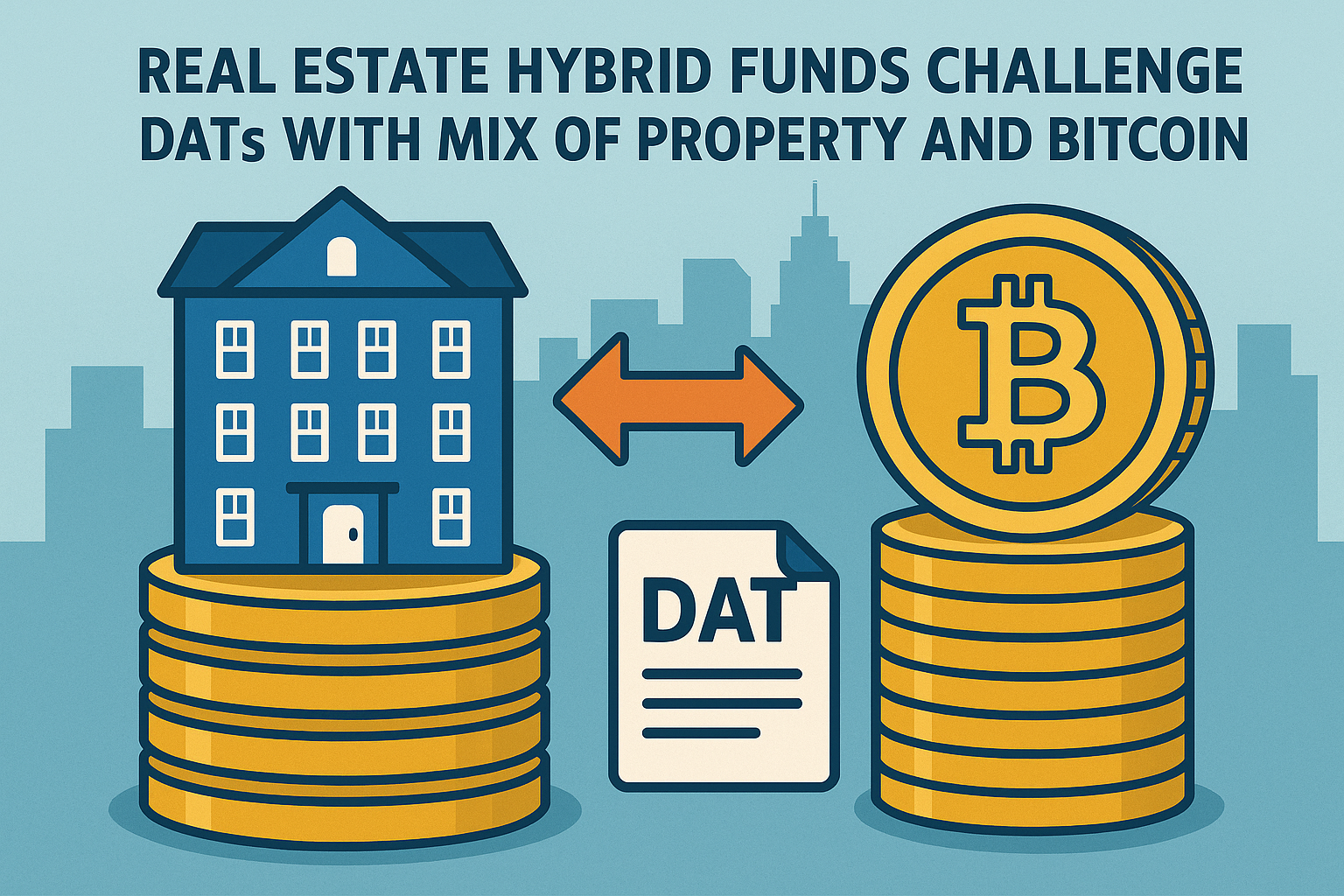
In today's rapidly evolving financial landscape, institutional and retail investors alike are searching for innovative ways to diversify portfolios and improve risk-adjusted returns. One of the most intriguing developments gaining momentum is the emergence of real estate hybrid funds that combine traditional property investments with Bitcoin exposure. This modern investment vehicle represents a convergence of two seemingly opposite asset classes: the tangible reliability of real estate and the digital dynamism of cryptocurrency.
As the lines between digital and traditional finance blur, this hybrid approach is reshaping portfolio construction ideology. More than a novelty, hybrid funds represent a contrarian method of diversification—an approach that could serve as both a hedge against inflation and a tool for growth in a challenging economic environment. However, blending such distinct asset classes presents both unique opportunities and complexities that should not be overlooked.
Real Estate Hybrid Funds Overview
Historically, real estate funds have been structured to balance exposure between different property types—such as commercial, residential, and infrastructure—to mitigate risk and maximize long-term returns. These funds have traditionally provided a reliable stream of income through rental yields and asset appreciation. Yet, over the past decade, increasing interest rates, inflation, and economic stagnation have eroded returns, prompting fund managers to innovate.
Enter Bitcoin. Unlike traditional assets, Bitcoin operates on a decentralized blockchain, has a capped supply of 21 million coins, and is not influenced by decisions from any central authority. Recognized increasingly as a hedge against fiat currency depreciation, Bitcoin offers characteristics that appeal to modern investors and financial professionals alike. Real estate hybrid funds are now integrating Bitcoin allocations—often ranging from 10% to as high as 50%—into their traditional AUM (Assets Under Management), crafting an investment model built for the future.
This approach is driven by data-backed forecasting. Historical Bitcoin market cycles have demonstrated its capability for outsized returns, particularly during bull runs. Coupled with lower correlation to traditional markets, Bitcoin provides exposure to a distinct set of growth dynamics. When strategically layered into real estate portfolios, it has the potential to enhance both income and growth in a balanced, risk-aware manner. Such allocations reflect a strategic evolution in portfolio theory—akin to the 60/40 stock/bond split of past generations now being updated for the digital age.
Challenges and Opportunities
While the advantages of real estate and Bitcoin hybrids are enticing, merging these two asset classes is far from straightforward. On one end, real estate is highly illiquid. Property transactions can take weeks or months, often entangled in bureaucracy, tax structures, and regulatory compliance. On the other end lies Bitcoin—a fundamentally liquid, borderless asset traded 24/7 with price discovery occurring in real time. Reconciling these differences poses significant operational and strategic hurdles.
Managing investor expectations is one such challenge. Investors are accustomed to the stable but slow-growth nature of real estate, whereas Bitcoin’s hallmark is high volatility. Aligning cash flow expectations, liquidity requirements, and regulatory compliance—especially around crypto custody and investor protections—requires a well-thought-out governance framework.
Nonetheless, the hybrid model brings powerful opportunities. Bitcoin equips these funds with an instrument that can be swiftly rebalanced in response to macroeconomic changes without needing fire sales of less liquid property. This dynamic risk management tool enables agile portfolio adjustments—something legacy REITs and digital asset trusts (DATs) generally cannot provide.
Moreover, hybrid funds are resonating strongly with younger, tech-savvy investors who are more likely to understand blockchain technology and embrace Bitcoin’s ethos. As generational wealth transitions continue over the next two decades, the demand for such forward-leaning investment products is expected to surge. Institutional interest is also growing, particularly as regulatory clarity improves and financial products like the Spot Bitcoin ETF open the door to simplified crypto exposure.
Navigating Regulatory and Custody Concerns
When incorporating digital assets into a traditionally regulated space like real estate, compliance becomes a critical component. Custody rules, reporting requirements, and investor transparency must be tightly monitored. In the United States, entities like the SEC and FINRA are still working through the framework needed to regulate such funds effectively.
Hybrid real estate funds must work with qualified custodians to ensure the safety of Bitcoin holdings. Multi-signature wallets, insurance coverage, and compliance with AML/KYC protocols are non-negotiables. Furthermore, fund structures must be updated to include language around crypto exposure, risk disclosures, and asset rebalancing mechanisms to remain transparent and legally robust.
Impact on Investors
For investors seeking diversification beyond equities and fixed income, real estate hybrid funds with Bitcoin exposure offer a compelling solution. The dual-track return potential—income from real estate, coupled with digitally-driven growth—enhances a portfolio’s overall metrics. This is especially true in environments where traditional yields are under pressure and capital preservation is a growing concern.
Hybrid funds also remove the technical and educational barriers typically associated with direct Bitcoin investment. Retail investors, institutions, and family offices no longer need to understand complex digital wallets, private keys, or exchange integrations. Instead, they gain exposure through familiar fund structures, managed professionally with reporting, compliance, and liquidity considerations deeply embedded.
Another advantage lies in sharpened risk-adjusted returns. While Bitcoin increases volatility, real estate serves as a volatility buffer. Stable rental income and the tangibility of physical assets create a floor against drastic valuation swings. Blended appropriately, this asset mix produces a smoother ride with potential for upside—a winning combination for contrarian investors who seek market mispricings and inefficiencies. More insights into this philosophy can be found in the Contrarian Investor Guide.
The Evolution Toward Tokenization and On-Chain Real Estate
Looking ahead, one of the most transformative forces in hybrid real estate funds is the trend toward blockchain-based tokenization. By dividing real estate assets into fractionalized digital tokens, ownership becomes more liquid, democratized, and transparent. This evolution could enable individual investors to buy $100 worth of a property in Manhattan, with transaction costs and management streamlined through smart contracts.
This shift not only enables more efficient capital allocation, but also opens the door to global investment flows—unrestricted by national taxation, banking systems, or paperwork. In tandem, Bitcoin's growing legitimacy across governments and institutions further anchors its role in the portfolios of tomorrow. Tokenization and digital asset integration may even become a regulatory standard as securities laws adapt to distributed ledger technologies.
Future Outlook
Real estate hybrid funds combining Bitcoin exposure represent the future of alternative investing. This isn’t a passing experiment, but a paradigm shift that could reset the foundation of multi-asset portfolio construction. Over the next decade, we are likely to see the thread of blockchain technology and digital assets deeply embedded into every aspect of investment management—from fund operations and investor relations to asset acquisition and profit distribution.
With fiscal policies trending toward continual debt expansion and monetary debasement, having a stake in BTC could enhance long-term capital preservation. Meanwhile, owning income-producing real estate provides a buffer against downside volatility and inflation. The synergy is clear, and the path forward is being carved by early adopters and visionary fund managers. For more context on where this trend might head, dive into this deeper Bitcoin Price Prediction Analysis.
Conclusion
The traditional 60/40 portfolio allocation may no longer suffice in the age of economic uncertainty and digital transformation. Real estate hybrid funds with Bitcoin exposure offer a groundbreaking alternative, combining the concrete value of physical property with the innovative potential of decentralized digital currency.
This dual-asset strategy provides investors with the potential for both high yield and robust growth, minimizing concentrated risks while opening the door to previously untapped returns. As blockchain innovation progresses and regulatory frameworks mature, this investment hybrid stands to become a cornerstone of diversified, future-proof portfolios.
If you're aiming to stay ahead of financial trends, it’s time to explore this innovative investing frontier. Empower your decisions, stay informed, and update your portfolio strategy for a digitized economy driven by decentralized assets and global liquidity.