Table of Contents
The Move: 12.2% in One Day

Solana posted a 12.2% gain in the 24 hours ending September 18, 2026, bringing the token to $113.53 according to CoinGecko data. The move lifted SOL to its highest level in seven months and nearly doubled Bitcoin's daily percentage gain. Trading volume climbed as the token pushed through $100 and held above key technical levels that had capped rallies earlier in the month.
The 24-hour range ran from $100.78 to $112.79. With a market cap of $66.69 billion, Solana remains ranked seventh by market capitalization. The token sits 61.3% below its all-time high of $293.31 set on January 19, 2025. The broader context shows gains of 12.8% over seven days and 38.7% over 30 days, but the news that drove yesterday's rally appeared during the last 48 hours.
What Happened: SEC Ruling and Network Upgrade

Three distinct catalysts converged within a 24-hour window. The first was regulatory. On September 17, 2026, the SEC issued an Innovation Exemption granting temporary relief to tokenized securities venues from exchange registration requirements. The five-year exemption permits approved platforms to trade tokenized National Market System stocks through permissioned automated market makers and liquidity pools.
Solana holds roughly $465 million in tokenized stock supply, the largest position of any blockchain. The SEC announcement arrived two days after the Senate rejected the CLARITY Act by a vote of 49 to 50, demonstrating the regulator's willingness to act independently. Chairman Paul Atkins described the move as bringing capital markets into the digital age, though the exemption imposes strict conditions on which tokens qualify.
The second catalyst was technical. On September 18, 2026, Solana activated the third stage of its SIMD-0525 upgrade, reducing target slot time from 300ms to 250ms. The change increases block production frequency by nearly 17%, allowing wallets and decentralized applications to receive network updates faster. The upgrade is part of a staged rollout within the Agave 4.2 release, with a final target of 200ms planned for later phases.
The third factor was mechanical. According to CoinDesk, short positions worth approximately $470 million were forcibly closed within 24 hours. Leveraged traders who bet on falling prices were forced to buy back, amplifying upward momentum. The scale of the liquidation suggests positioning was heavily one-sided heading into the regulatory announcement.
The Timing: Catalyst Before or After?
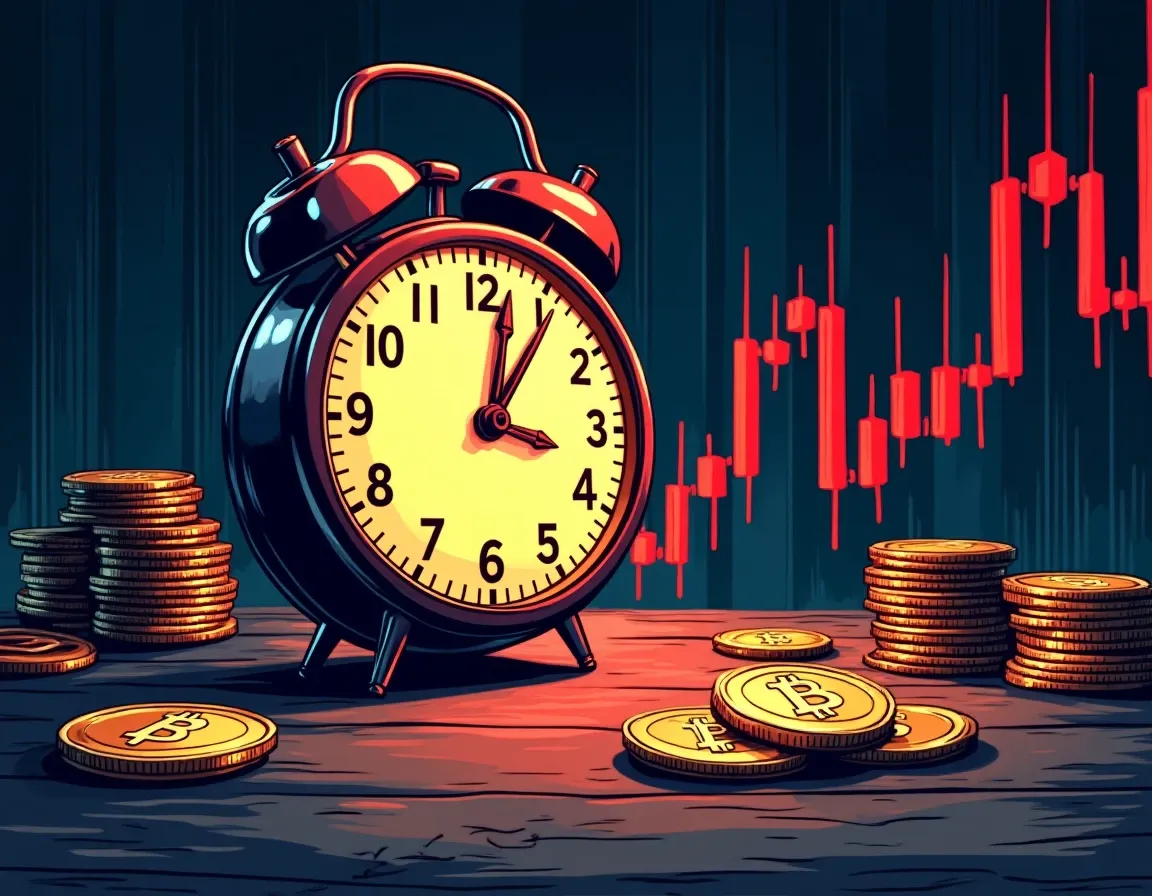
The rally began before the upgrade went live. SOL climbed from near $99.53 on September 17 to over $104 by the close of trading that day, hours before the slot-time reduction activated on September 18. The SEC exemption announcement occurred on September 17 at 1:10 PM Eastern, meaning the regulatory news preceded both the technical upgrade and the bulk of the short squeeze.
This sequence matters. The price move was a response to new information, not speculation about an upgrade that traders had known about for weeks. The slot-time change had been announced on August 29, 2026 by Jacob Creech, vice president of technology at the Solana Foundation. The fact that SOL rallied sharply only after the SEC ruling suggests the regulatory development carried more weight than the network improvement.
Ecosystem tokens amplified the move. Jupiter and Raydium, two Solana-based protocols, gained 15% to 20% according to CoinDesk. Investors rotated capital into the broader network rather than isolating exposure to SOL alone. On the same day the rally peaked, Solana ETF holdings reached 10.58 million SOL, a new all-time high, according to staking provider Everstake citing Artemis data. ETF inflows for the week ending September 5 totaled $153.87 million, the strongest week since October 2025.
What Could Break It
The rally stacked three tailwinds in rapid succession. Regulatory clarity removed uncertainty. The upgrade delivered a tangible performance improvement. The short squeeze eliminated a large block of selling pressure. But each of these tailwinds is either temporary or conditional.
The SEC exemption is not a blanket approval. It applies only to tokenized stocks that provide holders with the same rights and privileges as traditional shares, including voting and dividends. Tokens offering only price exposure do not qualify. The exemption is temporary and subject to conditions that include limits on the number of symbols and trading volume per venue. The framework can change with the next commission.
The upgrade improves speed but does not fundamentally alter Solana's competitive position. Ethereum Layer 2 networks and other high-throughput chains continue to operate. The slot-time reduction enhances user experience for trading and decentralized applications, but it does not create new demand on its own. Faster block times help existing activity run more smoothly. They do not guarantee that activity will grow.
The short squeeze removed sellers from the market, but it also removed liquidity. A $470 million liquidation event in 24 hours signals that leverage was concentrated. When leverage unwinds in one direction, it often rebuilds in the other. If SOL fails to hold above $100, a new wave of long liquidations could reverse the rally as quickly as it developed. The move from $100 to $113 in less than two days created crowded positioning at elevated levels.
For the rally to extend, SOL must clear resistance at $118.84 and $132 on sustained volume. A break above those levels would open a path toward $150. But resistance at $118.84 has capped multiple attempts this year. A rejection there without follow-through buying would put the September breakout at risk and expose support at $94.40, then $82.19.
What It Does Not Mean
A 12.2% daily gain does not imply the start of a new bull market. It means three specific catalysts arrived in a narrow time window and removed sellers faster than buyers could be absorbed. The size of the move reflects the scale of the positioning imbalance, not a fundamental revaluation of the network.
The SEC exemption does not make Solana the default blockchain for tokenized equities. The ruling applies to any permissionless ledger that meets the conditions, and venues can choose Ethereum, Solana, or other networks as settlement layers. Solana's $465 million in tokenized stock supply gives it a head start, but the exemption does not lock in that advantage. Institutional platforms evaluating blockchain infrastructure will weigh factors beyond current market share, including validator diversity, custody infrastructure, and regulatory precedent.
The upgrade does not eliminate the risks that have defined Solana's history. The network experienced multiple outages in 2021 and 2022, including a 17-hour downtime in September 2021 caused by a fork in validator consensus. While uptime has improved significantly since then, the architectural choices that enable high throughput also introduce systemic dependencies. Faster block times do not change that tradeoff.
Most importantly, a large fast move upward carries the same risks as a large fast move downward. The same leverage that amplified gains on the way up will amplify losses if sentiment reverses. Crowded positioning at elevated levels creates liquidation cascades in both directions. The fact that $470 million in shorts were liquidated in 24 hours means the market can move just as violently in the opposite direction if conditions change.
What Would Have to Be True
For this rally to hold, several conditions must remain in place. ETF inflows must continue at or above the recent pace of $153.87 million per week. A reversal in institutional demand would remove a structural bid and force the price back toward technical support levels. Exchange supply must continue to decline. According to CryptoRank data cited in market reports, SOL supply on exchanges fell 4.91% during the week ending September 5. If that trend reverses, it signals holders are moving to sell rather than stake or hold.
Decentralized exchange volume must remain elevated. Solana recorded $2.9 billion in daily DEX volume in mid-September 2026, holding 36% of global spot DEX trading volume. That throughput supports the narrative that the network is gaining real usage. If DEX volume drops below $2 billion daily, it would indicate that speculative interest is fading and the rally lacks follow-through demand.
Broader market conditions must remain supportive. Bitcoin held above $80,000 during Solana's rally, providing a stable macro backdrop. A Bitcoin pullback below $75,000 would likely drag altcoins lower regardless of network-specific developments. Federal Reserve policy also matters. Any hawkish turn that tightens liquidity would pressure risk assets, including SOL. The rally occurred against a backdrop of stable to easing financial conditions. A shift in that backdrop would test whether the rally can sustain itself.
The SEC exemption must survive legal and political scrutiny. The five-year temporary relief is conditional, and the framework could be challenged or revised. If Congress passes comprehensive digital asset legislation, the exemption could be superseded. If a future SEC commission reverses course, platforms operating under the current framework would face renewed uncertainty. The rally priced in regulatory clarity. Anything that reintroduces uncertainty would unwind part of the move.
Reading the Data, Not the Story
The 12.2% gain reflects the arrival of specific, identifiable catalysts within a narrow window. The SEC granted a five-year exemption for tokenized securities trading on September 17. Solana activated a slot-time upgrade on September 18. Short positions worth $470 million were liquidated in 24 hours. Those are facts. The narrative that Solana is now positioned to dominate tokenized equities is speculation.
The data shows institutional interest increasing. ETF holdings reached an all-time high. Weekly inflows posted the strongest pace since October 2025. But data also shows that large moves in short time frames create fragile structures. When positioning becomes crowded, reversals happen fast. The same 12.2% gain that drew attention today can evaporate in a single session if any of the supporting conditions change.
For income-focused holders, the upgrade offers a tangible improvement. Faster block times mean staking rewards and transaction confirmations arrive more quickly. But that improvement does not justify chasing price. For traders watching resistance levels, $118.84 is the line. A clean break above that level on volume would shift the technical picture. A rejection would confirm that the rally ran into supply and the next move is likely lower.
The move happened. The catalysts are documented. What comes next depends on whether the conditions that supported the rally remain in place or begin to erode. The size of the gain means the size of the potential reversal is equally large. That is not a prediction. It is a description of how leveraged markets behave when positioning becomes one-sided.
You just read about three catalysts that converged in 24 hours to drive a 12.2% move. Those catalysts can reverse or evaporate just as quickly.
Every Thursday: where crypto yield actually is - stablecoins, liquid staking and DeFi lending, with the risk named next to the rate and what changed since last week.
Get it free every ThursdayFree. No trade calls, no allocations, no hype. Unsubscribe in one click.