Table of Contents
Why Cycle Awareness Matters More Than Entry Timing
The question is always the same: when should I buy altcoins? The better question, the one that survives contact with three or four market cycles, is this: where are we in the cycle, and what does that mean for allocation?
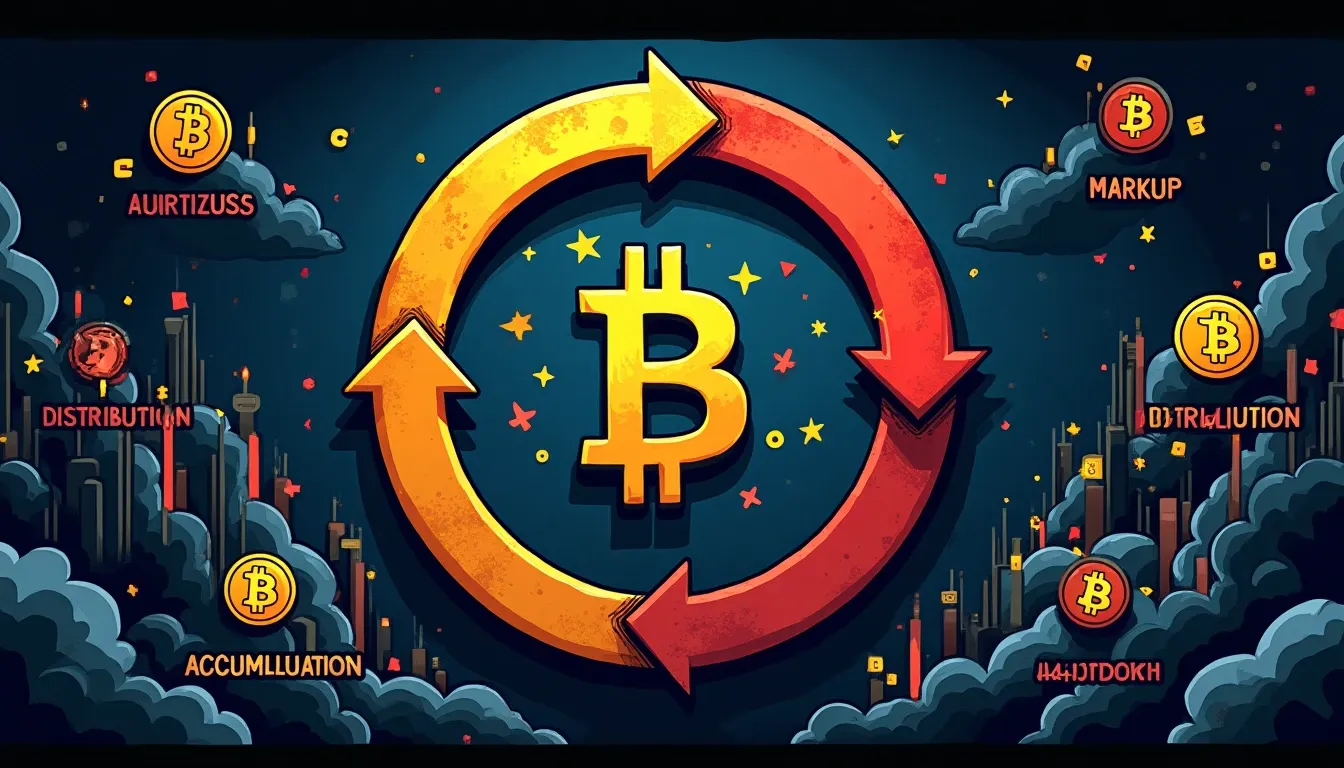
I have watched this pattern repeat four times. The cycle structure holds. Accumulation gives way to markup. Markup gives way to distribution. Distribution gives way to markdown. The wrappers change. The yield mechanisms change. The narrative themes change. But the underlying rhythm, the four-phase structure anchored to Bitcoin's halving schedule, has remained recognizable across 2013, 2017, 2021, and now heading into 2026.
The specific insight that matters for altcoin allocation is this: the same asset behaves differently depending on where it sits in the cycle. A quality Layer 1 altcoin accumulated during the 2019 capitulation phase produced different returns than the same asset accumulated during the 2021 euphoria phase. The asset did not change. The cycle position changed. Your allocation framework needs to account for that.
Most investors treat altcoin allocation as a static decision. They identify a quality project, allocate capital, and hold. This works poorly. The historical data shows that cycle-aware allocation adjustments outperform static buy-and-hold for altcoin positions. Not by timing daily moves, but by recognizing which phase you are in and adjusting exposure accordingly.
The Four Phases and What They Mean for Altcoin Allocation
Crypto markets move through four recognizable phases: accumulation, markup, distribution, and markdown. Each phase has specific characteristics. Each phase rewards different allocation strategies. Confusing them costs capital.
Accumulation: Building Positions When No One Cares
Accumulation phases follow capitulation. Prices have collapsed. Retail investors have left. Media coverage has disappeared. Trading volume is low. Sentiment is deeply negative. This is when quality assets become available at cost basis or below.
The on-chain signature of accumulation is clear: whale wallets increase holdings while exchange balances decline. Coins move off exchanges into cold storage. The MVRV Ratio (market value versus realized value) falls below 1.0, signaling that the aggregate market is holding assets below their average cost basis. Funding rates on perpetual futures contracts stay neutral or slightly negative, indicating no speculative leverage.
In 2019, accumulation lasted roughly 12 months. In 2023, it lasted approximately 14 months. These are not short windows. They require patience. But they are the periods when professional allocators build the positions that pay during the next markup phase.
The allocation framework during accumulation: 70% Bitcoin and Ethereum as base positions, 30% quality altcoins. Focus on projects with structural revenue, real usage, and teams that kept building through the prior bear market. Accumulate steadily. Do not chase. The markup phase will come.
Markup: The Phase Most Investors Mistake for the Entire Cycle
Markup begins quietly. Bitcoin breaks through key resistance levels. Altcoins start moving, but not uniformly. Early markup favors large-cap altcoins. Ethereum typically leads. Layer 1 alternatives follow. Only later in markup do mid-cap and small-cap assets begin their runs.
The on-chain signature shifts. Exchange inflows decline further as holders move assets into self-custody, expecting price appreciation. The MVRV Ratio climbs above 1.0 and continues rising. Funding rates turn positive as leverage enters the market. Whale accumulation patterns that began during the prior phase now show up in price action.
In the first half of 2026, we saw whale Bitcoin holdings rebound to 7.56 million BTC, representing one of the fastest accumulation episodes since late 2022. This type of whale behavior during subdued price action consistently precedes markup phases. Whales accumulate early. Retail participates late.
The allocation adjustment during markup: hold your base positions. This is not the time to reduce exposure. Early markup can feel uncertain. You will question whether the move is real. The answer is in the on-chain data. If whale wallets are holding, if exchange balances continue declining, if the MVRV Ratio is rising steadily without overheating, the markup is real. Hold.
As markup matures, you can gradually increase altcoin exposure. A professional framework at this stage allocates 40-50% to large-cap altcoins (Ethereum, Solana, established Layer 1s), 30-35% to mid-cap growth assets (DeFi protocols with real revenue, Layer 2 scaling solutions), and 10-15% to small-cap speculation for asymmetric upside. This is not gambling. This is calculated risk allocation during the one phase when small-cap altcoins reliably outperform.
Distribution: When the Crowd Arrives and the Smart Money Rotates
Distribution phases are loud. Media coverage peaks. Retail participation surges. Friends who have never owned crypto start asking questions. New projects launch daily. Valuations detach from fundamentals. APY promises reach absurd levels. Social media mentions spike. This is not the beginning of the cycle. This is the end.
The on-chain signature reverses. Exchange inflows increase sharply as holders move assets onto platforms to sell. The MVRV Ratio climbs into overvaluation territory, often exceeding 3.0 or higher. Funding rates on perpetual futures contracts turn sharply positive, signaling overleveraged long positions. Bitcoin dominance often falls below 40% as capital rotates desperately into smaller and smaller altcoins.
In 2021, the distribution phase peaked in November. Every signal was visible: exchange inflows spiked, funding rates stayed elevated for weeks, retail social mentions hit all-time highs, and projects with no product achieved billion-dollar valuations. The data was clear. Most investors ignored it.
The allocation adjustment during distribution: reduce positions in batches. Start with your small-cap speculation. Then rotate out of mid-cap positions. Preserve your large-cap altcoin core but reduce exposure. Move capital back into Bitcoin and stablecoins. The goal is not to time the exact top. The goal is to have rotated 40-60% of your altcoin exposure before the markdown phase begins.
This is the hardest adjustment emotionally. Everything feels bullish during distribution. Prices are rising. Your portfolio is at all-time highs. The urge to hold for "just a bit more" is powerful. But if you neglect position sizing during distribution, gains accumulated over the entire cycle evaporate within weeks when markdown begins.
Markdown: Capitulation and the Return to Accumulation
Markdown is the mirror of markup. Prices fall. Volume declines. Leverage unwinds violently. Projects that raised millions disappear. Tokens that promised 50% APY stop paying. Retail investors capitulate. Media declares crypto dead. This phase is brutal and necessary.
The on-chain signature: exchange inflows spike initially as panic selling occurs, then decline as holders who remain move assets back into cold storage. The MVRV Ratio falls toward 1.0 and often below. Funding rates turn negative as short positions dominate. Whale wallets begin accumulating again, quietly, while retail sells.
The allocation framework during markdown: preserve capital. Hold your Bitcoin and stablecoin positions. Begin identifying quality altcoins for the next accumulation phase, but do not rush. Markdown transitions into accumulation slowly. The bottom is a process, not a single moment. Wait for confirmation in the on-chain data before deploying significant capital.
On-Chain Signals That Actually Correlate With Cycle Phases
Price alone does not tell you where you are in the cycle. Bitcoin can be at $50,000 during accumulation or during distribution. The context matters. On-chain signals provide that context.
MVRV Ratio: Aggregate Market Cost Basis
The MVRV Ratio measures market value versus realized value. Realized value represents the aggregate cost basis of all coins, weighted by when they last moved. When MVRV is below 1.0, the market is collectively underwater. When MVRV exceeds 3.0, the market is collectively sitting on significant unrealized gains.
Historically, MVRV below 1.0 has marked late markdown and early accumulation phases. MVRV above 3.5 has marked late distribution phases. The ratio is not a precise timer. But it provides probability context. Accumulating altcoins when Bitcoin's MVRV is below 1.2 has historically produced strong returns. Accumulating when MVRV exceeds 3.0 has historically produced poor returns.
Exchange Inflows and Outflows: Holder Behavior at Scale
Coins moving onto exchanges signal intent to sell. Coins moving off exchanges signal intent to hold. Sustained outflows during price consolidation mark accumulation. Sustained inflows during price rallies mark distribution.
In early 2026, Bitcoin exchange balances declined steadily even as whale wallets accumulated $3.2 billion in BTC between January and March. This divergence between whale accumulation and retail capitulation is the classic setup for explosive markup phases. Whales do not accumulate during distribution. They accumulate during the transition from markdown to early markup.
You can track exchange flow data at CryptoQuant and Glassnode. Both platforms offer free tiers with delayed data. For cycle-level decisions, delayed data is sufficient.
Funding Rates: Leverage and Sentiment
Funding rates measure the cost of holding perpetual futures positions. When funding rates are high and positive, longs are paying shorts. This signals overleveraged bullish positioning. When funding rates are negative, shorts are paying longs, signaling bearish positioning.
Persistently high positive funding rates (above 0.05% per 8 hours for weeks) have historically marked late markup or early distribution phases. The market is overleveraged long. Corrections become sharp and liquidation-driven. This is not the time to increase altcoin exposure.
Neutral or slightly negative funding rates during price consolidation mark accumulation. The leverage has been flushed. Positioning is light. This is the environment where the next markup phase builds.
Bitcoin Dominance and Altseason Thresholds
Bitcoin dominance measures Bitcoin's market cap as a percentage of total crypto market cap. When dominance rises, capital is flowing into Bitcoin and out of altcoins. When dominance falls, capital is rotating from Bitcoin into altcoins.
The threshold that matters: Bitcoin dominance below 52% has historically signaled the beginning of sustained altcoin rotation. Below 45% marks deep altseason, where even mid-cap and small-cap altcoins rally broadly. Above 60% marks Bitcoin-dominant phases where altcoin allocation underperforms.
The Altcoin Season Index formalizes this. The index tracks what percentage of the top 50 altcoins outperformed Bitcoin over the prior 90 days. An index above 75 confirms altseason. Below 25 confirms Bitcoin season. Between 25 and 75 is mixed.
As of September 2026, the index remains in mixed territory. This is typical during late accumulation and early markup. Altseason does not begin immediately. It builds as markup matures and Bitcoin dominance begins its sustained decline.
Cycle-Aware Allocation Adjustments That Historically Outperformed
The framework is not complicated. It requires discipline.
During accumulation (2019, 2023, likely 2026): Allocate 70% to Bitcoin and Ethereum. Allocate 30% to quality altcoins with structural revenue, real usage, and teams that kept building through the bear market. Do not chase moves. Accumulate steadily. If you deployed this framework in 2019, your altcoin positions appreciated 5x to 20x by late 2021, depending on selection.
During early markup (2020, early 2024, potentially late 2026): Hold your positions. Do not reduce exposure. Early markup feels uncertain. On-chain data provides confirmation. If whale wallets are holding and exchange outflows continue, the move is real. Begin identifying mid-cap altcoins for gradual allocation increases.
During late markup and early distribution (late 2020, mid-2021, potentially 2027): This is when you rotate from conservative base positions into higher-risk altcoin exposure. Allocate 40-50% to large-cap altcoins, 30-35% to mid-cap growth assets, 10-15% to small-cap speculation. This is the phase where altcoin allocation historically outperforms. It does not last long. Altcoin rallies typically run 4 to 12 weeks at full intensity.
During distribution (late 2021, potentially 2027-2028): Reduce positions in batches. Start with small-cap speculation. Rotate out of mid-cap positions. Reduce large-cap altcoin exposure by 40-60%. Move capital into Bitcoin and stablecoins. You will not time the top. That is not the goal. The goal is to have reduced exposure before markdown begins.
During markdown (2022, potentially 2028): Preserve capital. Hold Bitcoin and stablecoins. Wait. Identify quality projects for the next accumulation phase, but do not deploy significant capital until on-chain signals confirm the transition.
This framework is not market timing. It is cycle recognition. The difference matters. Market timing tries to predict daily or weekly moves. Cycle recognition identifies which phase you are in and adjusts allocation accordingly. The former fails reliably. The latter has worked across multiple cycles.
What Changed in the 2024-2026 Cycle
The halving-driven four-year cycle structure remains intact. But institutional adoption and Bitcoin ETF approval in early 2024 altered some dynamics.
Institutional participation has compressed volatility in Bitcoin. The violent capitulation events that marked prior bear markets became less severe. ETF flows provided steady demand that smoothed price action. This is structurally bullish long-term but changes the timing and intensity of altcoin rotations.
The classic altseason playbook from 2017 and 2021 did not work cleanly in 2024-2025. Altcoin rallies were shorter and more sector-specific. The broad, indiscriminate rallies where everything appreciated 5x to 10x became rarer. Sector rotation became more important. Narrative rotation (DeFi, then Layer 1s, then Layer 2s, then AI-crypto hybrids) became more pronounced.
This does not invalidate the cycle framework. It refines it. The four phases still hold. But within each phase, sector-specific allocation and narrative awareness now matter more than they did in prior cycles. You cannot simply allocate to "altcoins" broadly and expect uniform results. You need to allocate to the sectors and narratives that fit the current phase and the current institutional positioning.
Mistakes Repeated at Every Cycle Turn
I have watched the same mistakes repeat four times. The names change. The mechanism details change. The fundamental errors do not.
Mistake one: Accumulating during distribution. In late 2021, retail investors bought aggressively as Bitcoin dominance fell below 40% and funding rates stayed elevated for weeks. Every on-chain signal indicated distribution. Prices kept rising, so they kept buying. Six months later, those positions were down 70% to 90%.
Mistake two: Confusing structural yield with cyclical yield. In 2021, CeFi lending programs offered 10% to 20% APY. The yield source was not structural protocol revenue. It was new capital inflows. When the cycle turned and inflows stopped, the yield disappeared and several platforms collapsed. The same pattern repeated with pool2 liquidity mining in 2018 and with certain DeFi yield farms in 2020-2021. Structural yield survives cycle turns. Cyclical yield evaporates at the moment you need it most.
Mistake three: Holding through distribution because "it's a long-term hold." Long-term conviction does not require holding through a predictable 80% drawdown. If on-chain signals indicate distribution, rotating 40-60% of altcoin exposure into Bitcoin or stablecoins preserves capital for redeployment during the next accumulation phase. You can still maintain long-term conviction in a project while managing cycle exposure.
Mistake four: Waiting for "confirmation" during accumulation. By the time mainstream media declares the bear market over, you are no longer in accumulation. You are in early markup, and prices have already appreciated 50% to 100% from the lows. Accumulation requires acting when sentiment is negative and on-chain data is neutral to slightly positive. It feels uncomfortable. That discomfort is the signal.
Tools for Framework Application
You do not need expensive subscriptions to apply this framework. Free and low-cost tools provide sufficient data for cycle-level decisions.
Glassnode offers a free tier with delayed on-chain metrics including MVRV, exchange flows, and whale wallet tracking. The delay does not matter for cycle recognition. You are not day trading. You are identifying which phase you are in. Delayed data is sufficient.
CryptoQuant provides exchange flow analytics and derivatives positioning data. Free tier available. Useful for tracking funding rates and exchange balance trends.
Messari offers structured research on token fundamentals and project financials. Free articles and reports provide sector-level context for narrative rotation within cycles.
CoinMarketCap tracks Bitcoin dominance, the Altcoin Season Index, and basic market structure data. All free. Sufficient for identifying dominance thresholds and confirming altseason transitions.
If you want deeper coverage, paid tiers at Glassnode or CryptoQuant provide real-time data and more granular metrics. But the free tools are enough to apply the core framework.
The Takeaway
The cycle repeats. The phases remain recognizable. Accumulation, markup, distribution, markdown. Each phase rewards different allocation strategies. Each phase punishes strategies appropriate to other phases.
The investors who outperform across cycles are not the ones with the best daily trade timing. They are the ones who correctly identify which phase they are in and adjust allocation accordingly. They accumulate quality altcoins during capitulation when no one cares. They hold through early markup when uncertainty dominates. They increase exposure during late markup when the on-chain data confirms the move. They reduce exposure during distribution when the crowd arrives. They preserve capital during markdown and prepare for the next accumulation.
This framework does not guarantee perfect timing. No framework does. But it provides a probability-based structure for altcoin allocation that has worked across multiple cycles. It reduces the emotional decision-making that destroys capital. It replaces urgency with patience and panic with discipline.
Where are we now, in late 2026? The on-chain data suggests late accumulation transitioning into early markup. Whale wallets have accumulated aggressively over the past nine months. Exchange balances have declined. The MVRV Ratio has recovered but remains below euphoric levels. Funding rates are neutral. Bitcoin dominance remains elevated but is beginning to show signs of potential rotation.
If this pattern holds, the appropriate allocation framework is clear: maintain your 70% Bitcoin and Ethereum base. Hold your 30% quality altcoin positions. Begin identifying mid-cap growth assets for gradual allocation increases if and when Bitcoin dominance begins its sustained decline below 52%. Do not chase. Do not rush. The markup phase, if it comes, will provide ample time to adjust. And if the cycle turns differently than expected, your conservative base allocation protects capital.
The next 12 to 18 months will clarify which scenario unfolds. Until then, the appropriate action is the same action that works at most points in most cycles: patience.
Frequently Asked Questions
What are the four phases of crypto market cycles?
Crypto markets move through accumulation, markup, distribution, and markdown phases. Accumulation follows capitulation when prices are low and sentiment is negative. Markup is the appreciation phase when prices rise steadily. Distribution occurs when retail participation peaks and smart money rotates out. Markdown is the decline phase when leverage unwinds and prices fall. Each phase lasts months to over a year and requires different allocation strategies.
How do I know which cycle phase we are currently in?
Use on-chain signals rather than price alone. MVRV Ratio below 1.0 suggests accumulation; above 3.0 suggests distribution. Exchange outflows indicate accumulation; sustained inflows indicate distribution. Neutral funding rates suggest accumulation; persistently high positive rates suggest late markup or distribution. Bitcoin dominance above 60% favors Bitcoin; below 52% signals altcoin rotation. Combine multiple signals for higher probability context.
What is the optimal altcoin allocation during accumulation phases?
During accumulation, allocate 70% to Bitcoin and Ethereum as base positions and 30% to quality altcoins with structural revenue and real usage. Focus on projects that continued building through the bear market. Accumulate steadily rather than chasing moves. This conservative allocation protects capital while positioning for the next markup phase. Historical data from 2019 and 2023 accumulation periods shows this framework produced strong returns during subsequent markup phases.
When should I reduce altcoin positions during a cycle?
Begin reducing altcoin positions during distribution phases when multiple signals converge: exchange inflows increase sharply, MVRV exceeds 3.0, funding rates stay persistently high and positive, Bitcoin dominance falls below 40%, and retail social mentions spike. Reduce in batches, starting with small-cap speculation, then mid-cap positions. The goal is not timing the exact top but rotating 40-60% of altcoin exposure into Bitcoin or stablecoins before markdown begins.
Do crypto market cycles still work with institutional adoption and ETFs?
Yes, the halving-driven four-year cycle structure remains mechanically intact despite institutional adoption. Bitcoin ETF approval in 2024 compressed volatility and smoothed price action but did not eliminate the cycle phases. Institutional participation has made sector rotation and narrative awareness more important within each phase. Altcoin rallies became shorter and more sector-specific. The framework still works, but requires more attention to which sectors and narratives fit the current phase and institutional positioning.