Mastercard Global Money Platform: Stablecoin Utility Analysis
Mastercard's $1.8B BVNK acquisition enables stablecoin spending at hundreds of millions of merchants. The mechanism creates new fiat-to-stablecoin velocity paths, not yield.
Mastercard's $1.8B BVNK acquisition enables stablecoin spending at hundreds of millions of merchants. The mechanism creates new fiat-to-stablecoin velocity paths, not yield.
ICX Global review covering its multi-asset trading platform, available markets, account tiers, leverage, trading tools, fees, and key risks.
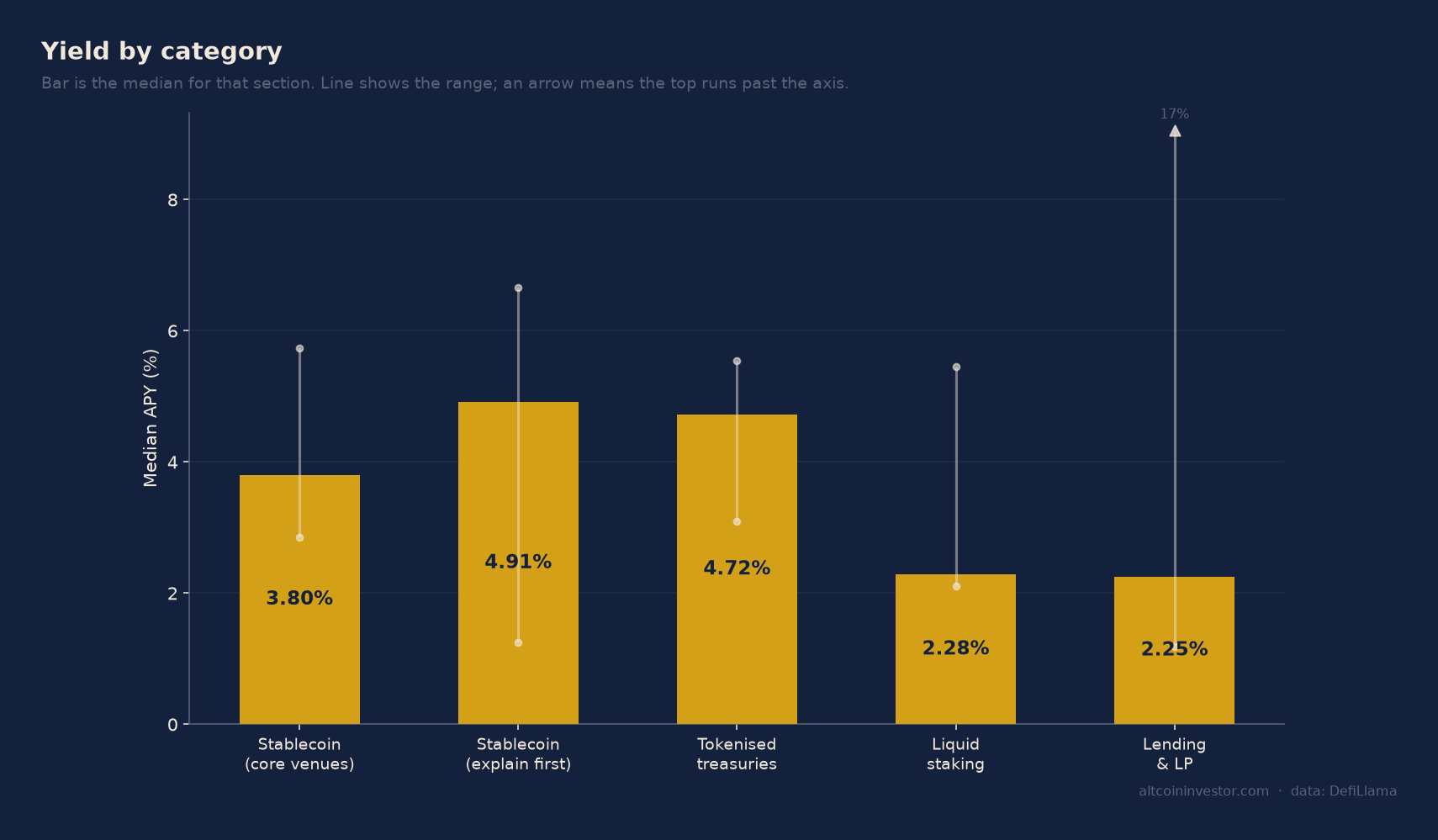
Sky's new STUSDS offering pays 5.6%, while Compound USDC climbed back to 5.74%. Six venues dropped out this week, mostly high-emission LP pools that no longer meet minimum bars.

Binance Pool closes Nov. 10 after 65% hashrate drop, forcing miners to choose among three pools that already control 64% of Bitcoin's network.

Airdrop farming costs $150-$3,000 in gas and capital across six months. Many campaigns return less than you spend. Here is the real cost breakdown by chain.
Validator staking pays 3.5-20% APY. Lending protocols offer 2.6-8%. LP fees depend on volume. Airdrop farming has no guaranteed return. Here is what each method actually requires.
Tangem's NFC card model costs $59.90 but removes transaction screens, creating phone-trust dependencies that matter when you're signing across eight positions weekly.

Airdrop wallet separation multiplies eligibility but triggers clustering algorithms. Here is the cost-benefit math for wallet count, contamination vectors, and gas overhead.

LBPs use declining price curves to discourage front-running and reveal fair value. Understanding the parameters tells you whether the team intends extraction or distribution.
Coinbase charges 0.50%/0.90% in the US while MEXC charges 0%/0.05%. Security track records, custody models, and staking yields matter as much as fees.
Staking, stablecoin yield, DeFi lending, LP farming, and mining compared. Real yields net of fees, capital requirements, and what each approach actually costs you.
Strive bought 3,311 BTC for $280 million using warrant exercises and share issuance, increasing outstanding shares by 9.4% while avoiding debt financing.

A lending APY and a funded trading account both promise crypto income, but one prices your capital and the other prices your fee. The units do not match.

When the day finally slows down, how do you spend those free moments?

Points programs are zero-coupon bonds with default risk. Direct yield pays known rates with known counterparties. Here's the valuation framework and decision rule.

Most wallet comparisons ignore what matters for yield capital: transaction simulation accuracy, RPC privacy leaks, and multi-L2 balance tracking under real load.