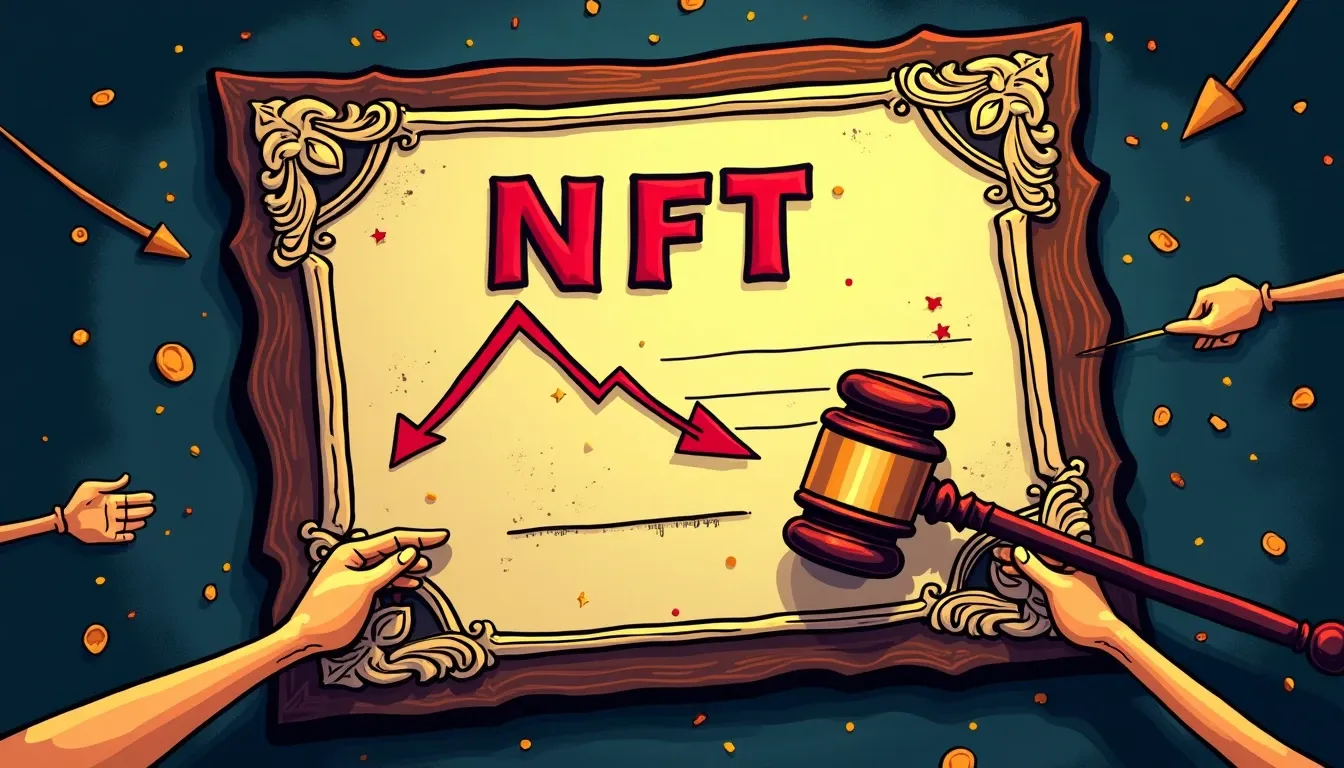
NFT-Backed Lending: What Happens During Default And Liquidation
When NFT loan defaults occur, liquidation losses average 46.1% of collateral value. Grace periods, auction mechanics, and recovery rates differ across platforms.
When NFT loan defaults occur, liquidation losses average 46.1% of collateral value. Grace periods, auction mechanics, and recovery rates differ across platforms.
Most crypto tax calculators handle exchange trades but fail on autocompounding, LP rebalancing, and cross-chain bridges. Here's what actually works.
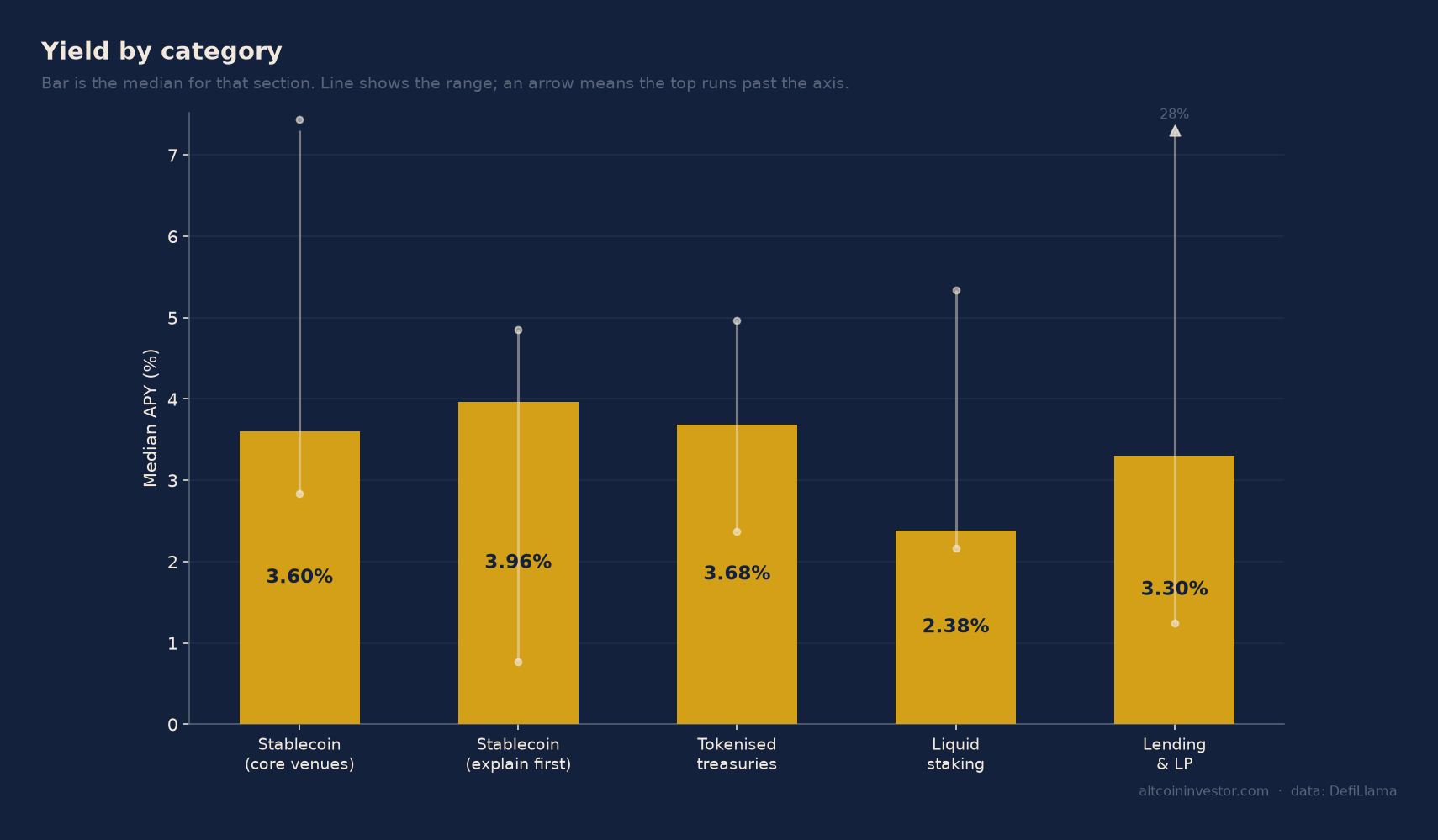
Four new pools joined the report this week, including a Uniswap v4 ETH-USDC pair yielding 27.64% from trading fees, and Maple's USDG credit pool at 4.97%.

Aave V4 crossed $900 million in deposits six months after mainnet launch, while V3 still holds $19.4 billion. The slow migration signals risk isolation appeal.

Flash loans are the only genuinely uncollateralized crypto borrowing, but they repay within one transaction. Everything else is overcollateralized or a scam.

Coinbase and Moov's stablecoin integration reaches over 1,000 community banks as the CLARITY Act faces a Senate vote, creating new compliant yield infrastructure.

Structural yield from protocol fees survived 2018-19 and 2022-23. Emissions-based strategies collapsed. Here are the tests to apply before committing capital.

Free portfolio trackers cover the basics but break on concentrated liquidity, rebasing tokens, and locked positions - exactly what's worth the most in DeFi.

Five conditions justify exit: TVL diverging from market, yield rising without mechanism explanation, audit expiration, team silence, yield source mutation.

sUSDe pays 7.1%, sUSDS pays 6-7%, USDY pays 4.65%. Three entirely different risk models. Here's the breakdown by yield mechanism, failure mode, and who holds what.

32 ETH minimum, 24/7 uptime, hardware costs, and fee drag. Here's the break-even calculation between solo and pooled ETH staking after all costs.

Complete walkthrough for your first DeFi deposit. MetaMask setup, Base network configuration, Aave USDC deposit, transaction approval reading, and the $100-500 strategy that limits tuition costs.
Restaking stacks AVS yield on ETH staking but adds slashing risk from every protocol you opt into. How the security-sharing mechanism works, real yields, and where the risk hides.

The correct position size is the one where a total loss is annoying rather than ruinous. Here is the framework by portfolio size and protocol maturity.

Liquid staking tokens represent staked ETH plus accumulated rewards. Learn how stETH, rETH, and cbETH work, when the peg breaks, and why LSTs differ from LRTs.

Bitcoin traditionally generates no native yield. Babylon staking, wrapped BTC DeFi, CEX accounts, and Lightning network channels offer real paths in 2026.