
Which Liquid Staking Token To Actually Hold
The APYs are within basis points. What matters: fee structure, peg behaviour under stress, exit liquidity depth, and DeFi integration, not headline numbers.
The APYs are within basis points. What matters: fee structure, peg behaviour under stress, exit liquidity depth, and DeFi integration, not headline numbers.

Lido consolidates 8 million ETH into 2,048 ETH validators and adds bond requirements. The move changes staking economics and introduces new operator failure modes.

Every aggregator shows today's rate. Almost none show the series. A 12% yield that held for six months is a different proposition from a 12% that was 4% last week.

Three venues paying 4% carry entirely different risks. The rate is not the decision. The risk behind it is.

Hardware wallets, approval management, and multi-wallet separation for users who interact with yield positions regularly. Security that survives use.
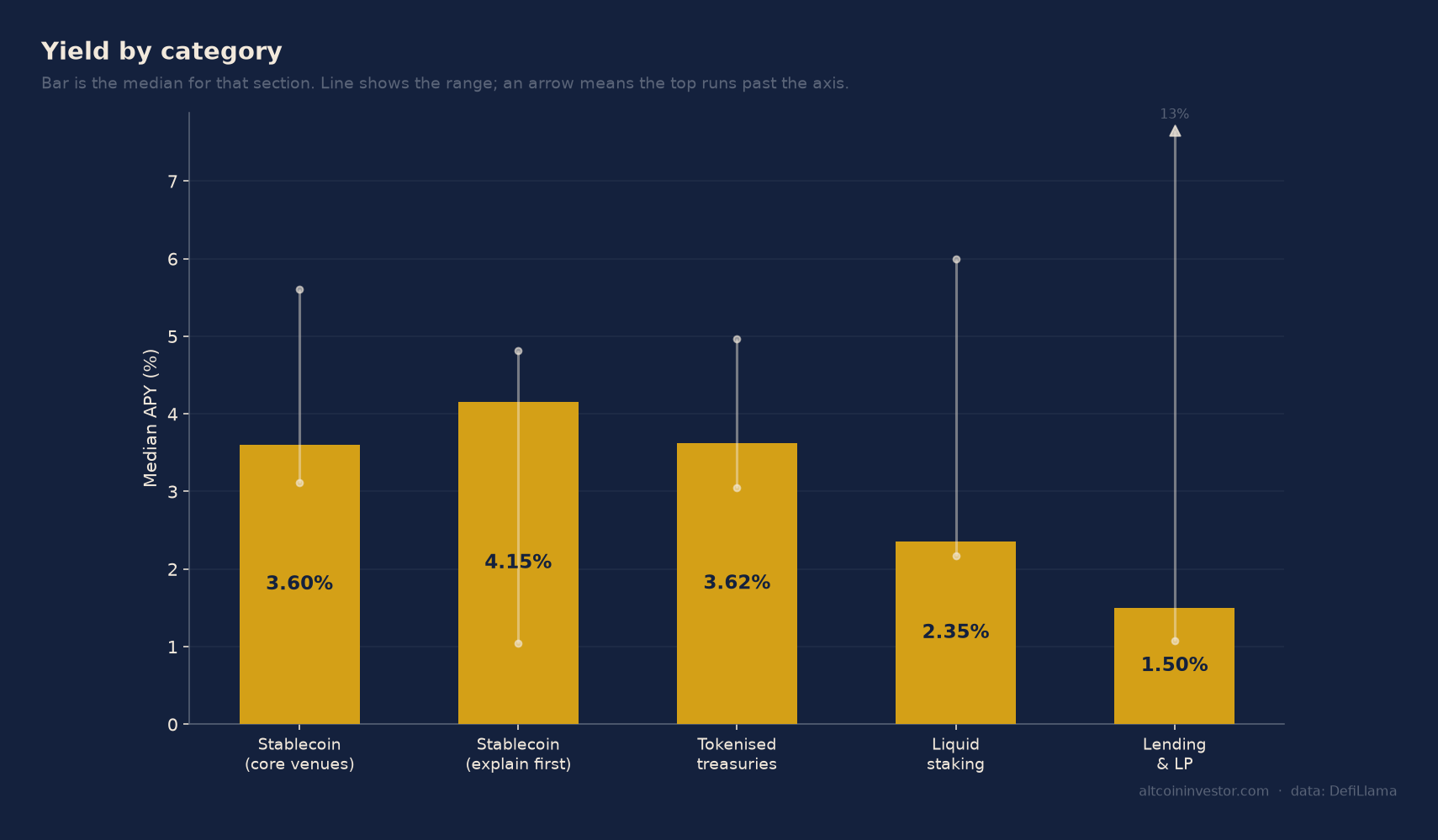
Stablecoin yields on major lending protocols cluster between 3.6% and 3.85%, with outliers at 5.61% requiring more risk examination.

How Argentine users acquire USDC, earn 4-6% yield, and preserve purchasing power against peso devaluation. The ground-truth playbook from a market few cover.

Visa has opened VisaNet settlement data to blockchain lenders, financing more than $20 billion annually in stablecoin card settlement with zero defaults recorded.

The 3-5% LST yield breaks down into three components: issuance, MEV, and priority fees. Here's what would compress those components below sustainable levels.

The $320 million Liquid Network breach exposed bridge risks that hit Argentine and Turkish savers hardest. Here's why sidechain vulnerabilities threaten real income flows.

Framework for evaluating yield before you deposit: source-of-return test, sustainability signals, risk stack, and the specific stress tests to apply.

Which DeFi protocols US users can access legally in 2026. Covers IP blocks, SEC enforcement risk, the distinction between using vs. providing service, and how to evaluate new protocols.

Ethena advertises 18% APY. The question is where that 18% comes from, and what happens when funding rates stay negative long enough to exhaust the reserve fund.

Liquid Restaking Tokens stack on top of Liquid Staking Tokens. Additional layer, additional yield, additional risk. Here's the real yield breakdown.

The SEC and CFTC launched joint leverage rules September 2, 2026. Platforms offering margined crypto face compliance costs that reshape income access for traders and LPs.

Yield farming in 2026 is not the same degen play as 2021. Here's the due diligence framework, position sizing rules, and red flags that separate sustainable yield from Ponzi mechanics.