Table of Contents
What Form 8949 Does And Why It Matters For Crypto Filers
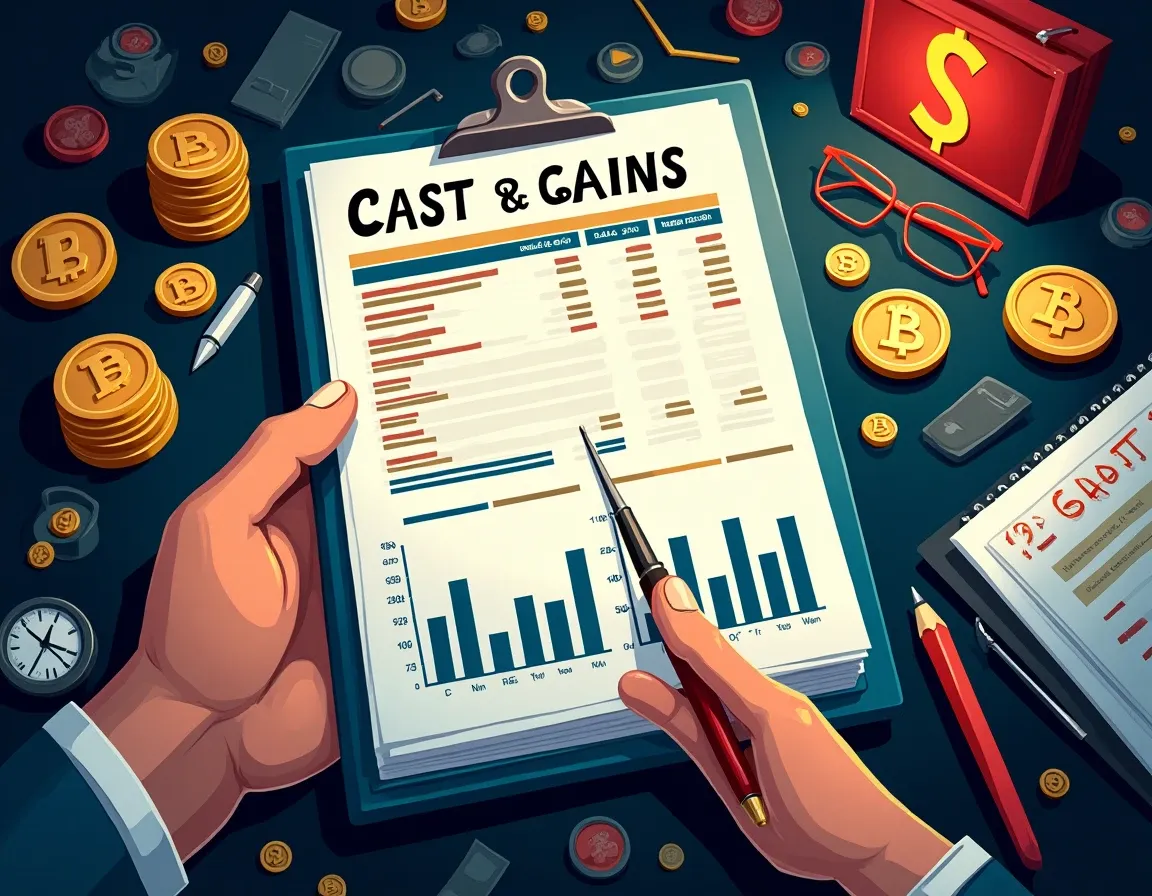
Form 8949 is the IRS document that lists every sale, swap, or disposition of capital assets, including cryptocurrency. Each transaction requires its own line entry with acquisition date, disposal date, proceeds, cost basis, and gain or loss. The totals from Form 8949 flow into Schedule D, which calculates your final capital gains tax.
For crypto filers in 2026, Form 8949 carries an additional complication. Brokers must report proceeds to the IRS on Form 1099-DA, but they do not have to report cost basis for transactions that occurred in 2025. That gap creates a scenario where the IRS sees $50,000 in proceeds but no offsetting cost basis. If you do not file Form 8949 with your actual cost basis documented, the IRS may assess tax on the full proceeds as if your cost was zero.
This is not a theoretical risk. Leaving the basis column blank or copying the 1099-DA without adjustments leads to overstated gains. You are responsible for supplying your own cost basis, and if you cannot substantiate it, FIFO applies by default. Accurate Form 8949 completion with proper cost basis tracking is the legal mechanism that reduces your tax burden. Incorrect reporting either triggers an audit or results in overpayment.
How Form 8949 Is Structured For Short-Term And Long-Term Gains
Form 8949 is divided into two parts. Part I covers short-term transactions, meaning you held the asset for one year or less. Part II covers long-term transactions, meaning you held it longer than one year. The distinction matters because short-term gains are taxed as ordinary income at rates up to 37%, while long-term gains face capital gains rates of 0%, 15%, or 20% depending on your income bracket.
Each part includes three checkbox options. For Part I (short-term), the boxes are A, B, and C. For Part II (long-term), the boxes are D, E, and F. Most crypto filers in 2026 will use Box B or Box C. Box B applies if proceeds were reported to the IRS on a 1099-DA but basis was not. Box C applies when neither proceeds nor basis were reported, which is the case for DeFi activity, self-custody wallets, and any platform that does not issue a 1099-DA.
Each transaction line on Form 8949 requires the following columns:
- Description of property (e.g., "0.5 BTC")
- Date acquired
- Date sold or disposed
- Proceeds (sale price)
- Cost basis (original purchase price plus fees)
- Adjustment code and amount, if applicable
- Gain or loss (proceeds minus cost basis)
If you traded BTC for ETH, that is a taxable event. The BTC sale goes on Form 8949 with proceeds equal to the fair market value of the ETH you received. The cost basis is what you originally paid for the BTC. Each swap, sale, or spend creates a separate line entry.
For more background on how different holding periods and income types are taxed, see Crypto Tax Rates 2025: Short-Term, Long-Term, And Income.
Cost Basis Methods: FIFO, Specific ID, And The Per-Wallet Rule
Cost basis is the original purchase price of an asset plus any fees. When you sell or swap crypto, your taxable gain equals proceeds minus cost basis. The challenge arises when you have acquired the same asset multiple times at different prices. Which lot are you selling?
The IRS allows two methods for crypto: FIFO and Specific Identification. FIFO is the default. It assumes you sell the oldest lots first. In a rising market, FIFO produces higher taxable gains because you are disposing of coins purchased when prices were lower. Specific Identification allows you to designate which specific lot you are selling, potentially reducing your gain by selecting higher-cost lots.
LIFO and HIFO are not separate IRS-approved methods. They are strategies applied through Specific Identification, which means they carry the same documentation burden. LIFO is not an IRS-permitted method for crypto. Any tax return using LIFO is technically non-compliant and may be challenged on audit.
Starting January 1, 2025, the IRS requires that you identify the disposed asset no later than the time of the transaction. You cannot retroactively choose Specific ID when filing your tax return if you did not document the lot selection at the time of sale. The per-wallet rule also went into effect on January 1, 2025. Each cost basis method must be applied on a per-wallet or per-account basis. You cannot use FIFO for one wallet and Specific ID for another within the same asset.
Selecting "HIFO" or "LIFO" in tax software does not satisfy Specific Identification requirements. The software may calculate gains using those methods, but if you cannot produce lot-level records showing you designated specific lots at the time of each transaction, FIFO applies by default. Many popular crypto tax tools allow LIFO selection, but FIFO and Specific ID are the only methods officially supported by the IRS.
For a detailed comparison of these methods and their impact on taxable income, read Best Crypto Tax Software For DeFi Yield And Staking Income.
How To Report Staking Rewards And LP Tokens: Schedule 1 Line 8v, Not Form 8949
Staking rewards, liquidity pool rewards, and yield farming income are not reported on Form 8949 at the time you receive them. These are ordinary income events, taxed at your marginal income tax rate based on the fair market value of the tokens when you gain control. You report the total value on Schedule 1, line 8v, labeled "other income."
Revenue Ruling 2023-14 clarified the IRS position: staking rewards are taxable when you gain dominion and control over them. That is the moment you can transfer, sell, or otherwise dispose of the tokens. If rewards remain locked or vested, they are not taxable until the lockup ends.
The fair market value at the time of receipt becomes your cost basis for future capital gains calculations. When you later sell, swap, or spend those reward tokens, that transaction goes on Form 8949 with the cost basis set at the value you reported as ordinary income.
Here is an example. On March 15, you receive 10 SOL in staking rewards when SOL is trading at $120. You report $1,200 as ordinary income on Schedule 1, line 8v. On June 10, you sell those 10 SOL for $150 each, receiving $1,500. The sale goes on Form 8949 with proceeds of $1,500, cost basis of $1,200, and a long-term or short-term capital gain of $300 depending on whether you held the SOL for more than one year after receipt.
Double-counting is a common error. If you report staking rewards as income and then fail to use that same value as cost basis when you sell, you pay tax twice on the same value.
Solana pays staking rewards at every epoch boundary, roughly every two to three days. A year of staking produces well over 100 separate income events, each requiring its own fair market value snapshot. Using year-end price instead of receipt-date price is incorrect and may result in underreported income or overstated cost basis.
Casual yield farmers report rewards on Schedule 1, line 8v. If your farming activity rises to a trade or business with significant time, regularity, and profit motive, it may need to be reported on Schedule C and could attract self-employment tax. Most retail stakers do not meet that threshold.
For the full explanation of when staking rewards become taxable and how the IRS defines "dominion and control," see Crypto Staking Tax Treatment: What The IRS Actually Says.
Step-By-Step: Filling Out Form 8949 For A Crypto Sale
You will need transaction records showing the date you acquired each asset, the date you disposed of it, the amount you paid, and the amount you received. Most exchanges provide transaction history exports, but you are responsible for reconciling transfers between wallets and calculating cost basis across platforms.
Step 1: Determine whether each transaction is short-term or long-term. Count the holding period from the day after acquisition to the day of disposal. If you bought BTC on January 5, 2024, and sold it on January 5, 2025, that is exactly one year and qualifies as short-term. One day later, on January 6, 2025, it becomes long-term.
Step 2: Group transactions by holding period and reporting status. Use Part I for short-term, Part II for long-term. Within each part, use Box B if the exchange reported proceeds to the IRS but not basis. Use Box C for DeFi, self-custody, and non-reporting platforms.
Step 3: Enter each transaction on its own line. In column (a), describe the property. "0.5 BTC" or "250 USDC" is sufficient. In column (b), enter the date you acquired it. In column (c), enter the date you sold or swapped it. In column (d), enter the proceeds, which is the fair market value in USD at the time of disposal. In column (e), enter your cost basis.
Step 4: If you received a 1099-DA and the proceeds listed do not match your records, or if the basis is blank, enter your own calculated figures. You may need to add an adjustment in column (g) with code B to explain the difference. The IRS expects the final totals on Form 8949 to reconcile with the totals on all 1099-DA forms you received.
Step 5: Subtract cost basis from proceeds to calculate gain or loss in column (h). A positive number is a gain, a negative number is a loss. Total all gains and losses for each part and carry the totals to Schedule D.
If you have hundreds or thousands of transactions, you do not need to list each one individually. You can attach a summary statement showing total proceeds, total cost basis, total adjustments, and total gain or loss for each checkbox category. The IRS accepts summary reporting as long as you retain the underlying transaction records and can produce them on request.
For practical filing guidance that integrates staking income and complex DeFi yield into TurboTax, read TurboTax Crypto Import: File Staking, Lending, And LP Income Without Errors.
Common Pitfalls: Cost Basis Mismatches, Double-Counting, And Missing DeFi Activity
The most frequent error is leaving cost basis blank or relying entirely on what the 1099-DA shows. For 2025 transactions, brokers do not have to report cost basis. If you do not fill in column (e) on Form 8949, the IRS computes your gain as 100% of proceeds. A $50,000 sale with no documented basis results in a $50,000 taxable gain, even if your actual cost was $45,000.
The second common mistake is double-counting income. When you receive an airdrop or staking reward, that is taxable as ordinary income at the fair market value on the date you gain control. That value becomes your cost basis. When you sell the asset, you report the sale on Form 8949 with that same value as basis. If you report the airdrop as income but then list zero basis on the sale, you pay tax on the same value twice.
The third pitfall is ignoring DeFi activity. Notice 2024-57 temporarily exempts six categories of DeFi transactions from 1099-DA reporting: staking, liquidity provision, wrapping and unwrapping, digital lending, short sales, and notional contracts. The exemption applies to broker reporting, not to your tax liability. You still owe tax on gains and income from these activities, and you must report them on Form 8949 and Schedule 1 even if you received no 1099-DA.
Users with positions on Uniswap, SushiSwap, Compound, Aave, Lido, or similar protocols receive no 1099-DA but must track every swap, deposit, withdrawal, and reward claim. Each swap is a taxable event. LP token deposits are generally not taxable, but redeeming LP tokens for the underlying assets is. Impermanent loss does not offset taxable gains unless you actually realize it by withdrawing from the pool.
The fourth issue is wallet-to-wallet transfers. Moving crypto from Coinbase to your Ledger hardware wallet is not a taxable event, but you must track the cost basis through the transfer. If you later sell from the Ledger, the cost basis is the original purchase price on Coinbase, not the value at the time of transfer. Failing to track transfers across wallets breaks the cost basis chain and may force you into FIFO by default.
The fifth error is misclassifying transaction types. Paying gas fees in ETH is a taxable disposal of ETH. Swapping reward tokens for stablecoins is a sale. Spending crypto on goods or services is a sale at fair market value. Each of these goes on Form 8949, not on Schedule 1.
For a clear explanation of which crypto events trigger capital gains versus ordinary income, see Crypto Taxes On Yield Income: What Triggers A Taxable Event.
How To Handle High Transaction Volume Without Filing Thousands Of Lines
If you made hundreds of swaps on a DEX or thousands of microtransactions, listing each one individually on Form 8949 is impractical. The IRS permits summary reporting. Instead of individual lines, you attach a separate statement with column totals: total proceeds, total cost basis, total adjustments, and total gain or loss.
The summary must still be separated by holding period (short-term versus long-term) and by reporting category (Box A/D, B/E, or C/F). You cannot combine a short-term gain from Coinbase with a long-term gain from Uniswap in a single summary line.
Most crypto tax software generates this summary automatically. The software imports transaction data from exchanges and wallets, calculates cost basis using your chosen method, applies the per-wallet rule, and outputs a summary statement formatted for IRS submission. You attach the summary PDF to your e-filed return or mail it with your paper return.
The key requirement is that you retain the underlying transaction records. If the IRS audits your return, you must be able to produce the full transaction log showing every acquisition date, disposal date, proceeds, and cost basis calculation. The summary is a filing convenience, not a substitute for record-keeping.
If you use software, verify that it correctly handles the per-wallet rule and does not retroactively apply Specific ID without documentation. Some platforms allow you to switch methods at filing time, but that does not satisfy IRS requirements if you did not designate lots at the time of each transaction.
Where To Enter LP Token Redemptions, Wrapped Tokens, And Gas Fees
Liquidity pool token redemptions are capital gain events. When you deposit ETH and USDC into a Uniswap v2 pool, you receive LP tokens. The deposit itself is not taxable. When you redeem those LP tokens for the underlying assets, you are disposing of the LP tokens. The fair market value of the ETH and USDC you receive is the proceeds. Your cost basis is the fair market value of the assets you originally deposited. The difference is your gain or loss, reported on Form 8949.
Wrapped tokens (wBTC, wETH, stETH) create a gray area. Wrapping ETH into wETH or unwrapping it back is arguably a non-taxable event under the IRS's current guidance, because you retain the same economic exposure. Notice 2024-57 exempts wrapping and unwrapping from 1099-DA reporting. However, the exemption does not explicitly state that wrapping is non-taxable. Conservative filers may choose to report wrapping as a taxable swap and track separate cost basis for the wrapped token.
Paying gas fees in ETH is a taxable disposal. Each transaction that consumes ETH for gas is a sale of ETH at fair market value. If you paid 0.01 ETH in gas when ETH was $2,000, you disposed of $20 worth of ETH. The proceeds are $20, the cost basis is whatever you originally paid for that 0.01 ETH, and the difference is a capital gain or loss reported on Form 8949.
For active DeFi users, gas fees alone can produce dozens of taxable events per month. Most tax software automatically categorizes gas as a disposal and calculates the gain or loss using your selected cost basis method.
For additional guidance on tracking DeFi yield and ensuring accurate cost basis in complex LP and autocompounding strategies, see Best Crypto Tax Software For DeFi Yield And Staking Income.
What To Do If You Cannot Substantiate Cost Basis
If you lost your transaction records, closed an exchange account before exporting data, or acquired crypto years ago without documentation, you may not be able to substantiate your cost basis. In that case, FIFO applies by default, and you must use the earliest possible acquisition date and the lowest defensible cost basis.
The IRS does not accept "I forgot" as a basis method. If you cannot prove what you paid, the safest approach is to estimate conservatively. Use blockchain explorers to reconstruct wallet activity. Request transaction history from exchanges, even if your account is closed. Some platforms retain records for several years.
If reconstruction is impossible, consider reporting zero basis. This results in the highest possible taxable gain, but it eliminates audit risk related to unsubstantiated basis claims. It is better to overpay than to underreport and face penalties.
For assets acquired before exchanges tracked cost basis, you may be able to use historical price data from CoinGecko or CoinMarketCap to estimate fair market value on the acquisition date. Document your methodology and retain the source data in case of audit.
Capital Loss Harvesting And Carryforward Rules
Capital losses offset capital gains. If your total losses exceed your total gains, you can deduct up to $3,000 of net capital loss against ordinary income each year. Any excess loss carries forward to future tax years indefinitely.
This creates a tax optimization opportunity called loss harvesting. If you hold crypto that has declined in value, you can sell it to realize the loss, offset gains elsewhere, and immediately repurchase the same asset. The wash sale rule, which prohibits claiming a loss if you repurchase the same security within 30 days, does not currently apply to crypto. The IRS has not classified cryptocurrency as a security for wash sale purposes.
However, this may change. Proposed regulations have suggested extending the wash sale rule to digital assets. Until that happens, crypto loss harvesting remains a legal and effective way to reduce taxable gains.
To claim a loss, you must actually dispose of the asset. Unrealized losses (assets you still hold) do not reduce your tax liability. The loss must be reported on Form 8949 with the same detail as a gain: acquisition date, disposal date, proceeds, cost basis, and loss amount.
The Takeaway
Form 8949 is where your crypto tax liability is calculated, line by line. Exchanges report proceeds but not basis, which means the IRS sees the sale but not the cost. If you do not document your own cost basis, you risk paying tax on 100% of proceeds. Staking rewards go on Schedule 1 as ordinary income when received, then on Form 8949 as capital gains when sold. Cost basis methods must be chosen at the time of each transaction, not retroactively at filing time. Summary reporting is allowed for high transaction volume, but you must retain the underlying records. The difference between FIFO and Specific ID can mean thousands of dollars in tax savings, but only if you document lot selection at the time of disposal. This is not optional bookkeeping. It is the legal mechanism that determines what you owe.
You have just walked through the exact columns, checkboxes, and documentation requirements that separate compliant filing from audit risk. Those rules will evolve as broker reporting expands in 2027 and beyond.
Frequently Asked Questions
Do I need to file Form 8949 if I only staked crypto and did not sell?
No. Staking rewards are reported as ordinary income on Schedule 1, line 8v, when you receive them. You only file Form 8949 when you later sell, swap, or spend those reward tokens. The sale creates a capital gain or loss event. Until you dispose of the staked tokens, no Form 8949 entry is required.
What happens if my 1099-DA shows proceeds but no cost basis?
For 2025 transactions, brokers do not have to report cost basis. You must calculate and enter your own cost basis in column (e) of Form 8949. If you leave it blank, the IRS may assess tax on the full proceeds, treating your cost as zero. This results in significantly overstated gains and potential overpayment.
Can I use LIFO or HIFO instead of FIFO for crypto cost basis?
LIFO is not an IRS-permitted method for cryptocurrency. HIFO is a strategy applied through Specific Identification, which requires you to document which specific lot you are selling at the time of each transaction. If you cannot substantiate Specific ID with contemporaneous records, FIFO applies by default.
How do I report hundreds of DeFi swaps without listing them individually?
The IRS allows summary reporting. Attach a statement showing total proceeds, total cost basis, and total gain or loss for each category (short-term Box B, long-term Box E, etc.). You must retain the detailed transaction records and be able to produce them if audited. Most crypto tax software generates the required summary automatically.
Are gas fees paid in ETH reported on Form 8949?
Yes. Paying gas fees is a disposal of ETH at fair market value. Each gas payment is a taxable event with proceeds equal to the dollar value of the ETH consumed and cost basis equal to what you originally paid for that ETH. The resulting gain or loss is reported on Form 8949.
Koinly imports from 800+ exchanges and wallets and handles the DeFi cases most tools get wrong - rebasing tokens, LP positions, staking rewards.
Try KoinlyWe may earn a commission if you sign up through this link, at no cost to you. It does not change what gets recommended.
You have just reviewed the exact columns, cost basis rules, and staking classifications that determine your 2026 crypto tax liability. Broker reporting requirements and IRS guidance will expand further in 2027.
Every Thursday: where crypto yield actually is - stablecoins, liquid staking and DeFi lending, with the risk named next to the rate and what changed since last week.
Get it free every ThursdayFree. No trade calls, no allocations, no hype. Unsubscribe in one click.