
Zcash Ships Quantum-Resistant Signatures in January 2027
Zcash will deploy post-quantum signature opcodes in January 2027, protecting 70% of issued ZEC supply in transparent transactions while shielded payments await late 2027.
Zcash will deploy post-quantum signature opcodes in January 2027, protecting 70% of issued ZEC supply in transparent transactions while shielded payments await late 2027.

DeFi wallet is marketing language, not a technical category. Every non-custodial wallet accesses DeFi protocols. What matters: MEV protection, gas optimization, and approval management.
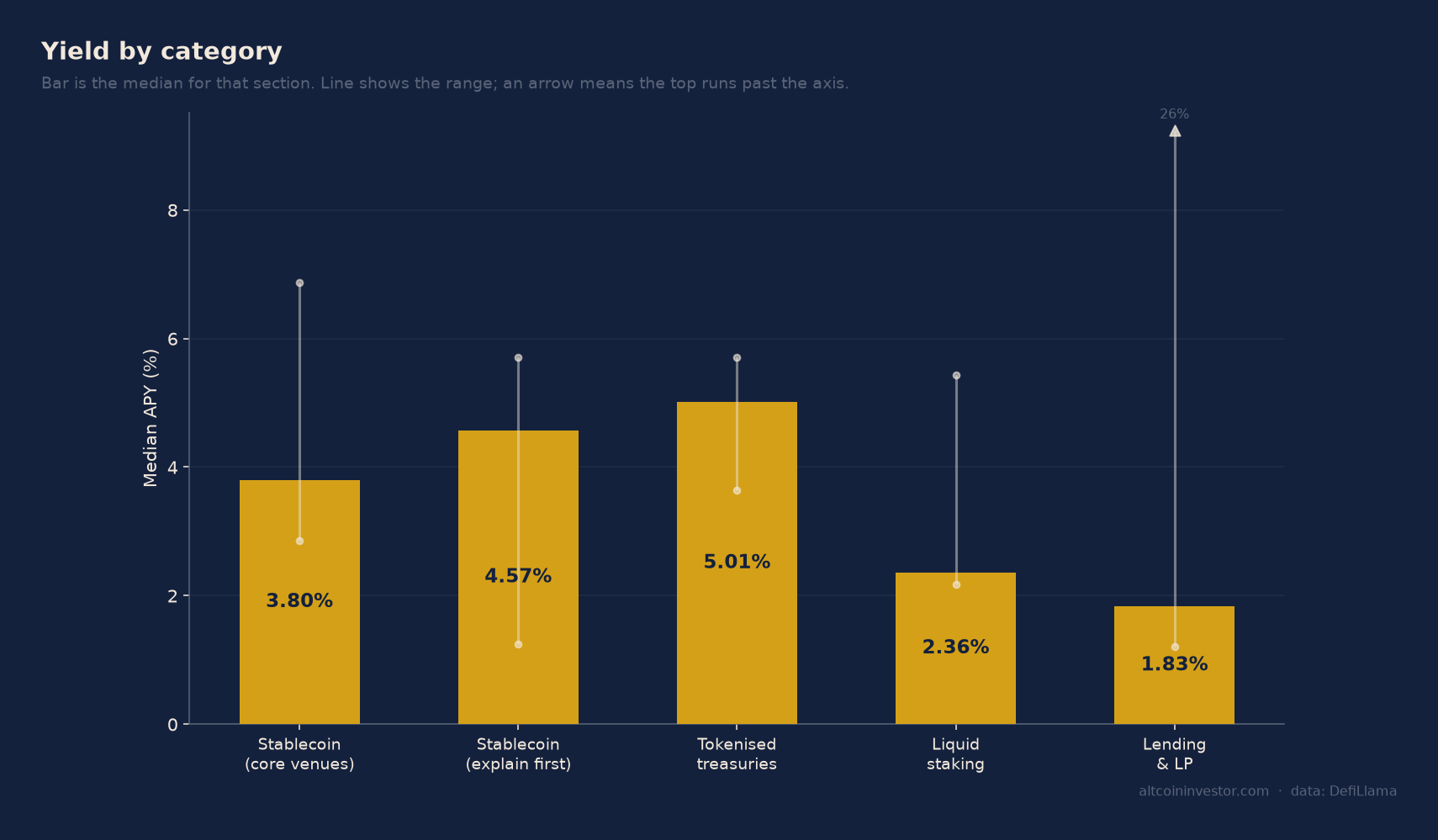
Compound USDC at 6.87% now tops all major stablecoin lending venues, while a Uniswap V3 BTC-USDT pair is showing 25.54% fee yield with full impermanent loss exposure.

MiCA Title III and IV provisions shape which yield strategies EU users can deploy. Which vehicles remain compliant, which are grey-zone, and what changed July 1, 2026.

Structural yield comes from protocol fees and persists across cycles. Cyclical yield comes from emissions and disappears when the market turns. Confusing them costs capital.

Robinhood disclosed $25M in Bitcoin on its balance sheet, marking its first corporate holding. The move signals institutional legitimacy for BTC treasury allocation and shifts regulated income access.
Argentina peso-USDC flows, Turkey lira-USDT platforms, Nigeria naira routing. Where stablecoin yield is survival infrastructure, not financial optimization.
Learn to decode cliff periods, linear unlocks, and allocation tables to predict when insider sell pressure will hit the tokens you stake or LP against.
High yields on low cap tokens mean nothing if you can't exit. Here are the quantitative liquidity thresholds, slippage calculations, and order book depth metrics that determine whether you can actually extract your returns.
Analyze vesting contracts, cliff periods, and linear unlock schedules to forecast when large token supplies hit the market and depress staking yields.

Morpho vaults deliver 4-8.5% on USDC against Aave's 3.8-6.2%. The spread holds when utilization is high but curator risk matters more than most depositors realize.
Earn 3.6-8.5% APY on stablecoins via DeFi lending, yield aggregators, and CeFi platforms. Compare realistic rates, fees, and risk factors that determine which venue fits your capital.

Platforms claiming uncollateralized crypto loans require KYC, credit checks, or soft collateral lock. Here's what they don't tell you about Nexo, Ledn, and flash loans.

CoinLedger wins on pricing, CoinTracker wins on DeFi accuracy. Here is what actually breaks when you hand each platform a multi-protocol yield wallet.

Uncollateralized crypto loans don't exist in DeFi. Flash loans work only within one transaction. Here's why the model fails and what limited alternatives remain.

Hardware wallets secure your keys but slow your transaction flow. Mobile wallets sign fast but expose you to phishing. For yield allocators moving capital across chains, here is what matters.