
Mining Pool Selection: How To Actually Evaluate Fee Structures
FPPS vs PPLNS vs PPS mechanics, hidden fee identification, and the specific variables that shift real mining returns by 5-15% between pools.
Real crypto income, honestly assessed: stablecoin yield, staking, and DeFi lending. What earns, what breaks and how to verify before you deposit.
FPPS vs PPLNS vs PPS mechanics, hidden fee identification, and the specific variables that shift real mining returns by 5-15% between pools.

sUSDe pays 7.1%, sUSDS pays 6-7%, USDY pays 4.65%. Three entirely different risk models. Here's the breakdown by yield mechanism, failure mode, and who holds what.

The U.S. CLARITY Act vote collapses with just 16% passage odds, leaving crypto in regulatory limbo until 2029. For users in Argentina, Nigeria, and Turkey, this changes nothing.

Every depeg looks obvious afterward. The signals that mattered were visible beforehand, but ambiguous. Here's what was actually observable at the time.

Complete walkthrough for your first DeFi deposit. MetaMask setup, Base network configuration, Aave USDC deposit, transaction approval reading, and the $100-500 strategy that limits tuition costs.

The correct position size is the one where a total loss is annoying rather than ruinous. Here is the framework by portfolio size and protocol maturity.

USDC on Aave Base pays 3.52% APY as of August 2026. Here's the specific chain, platform, and $500 first-position setup that limits downside while teaching yield mechanics.

Configure on-chain and price feed monitoring with Telegram/Discord webhooks to alert within minutes when a stablecoin breaks 0.5% from peg. Free and paid tools.

Every aggregator shows today's rate. Almost none show the series. A 12% yield that held for six months is a different proposition from a 12% that was 4% last week.
Three venues paying 4% carry entirely different risks. The rate is not the decision. The risk behind it is.
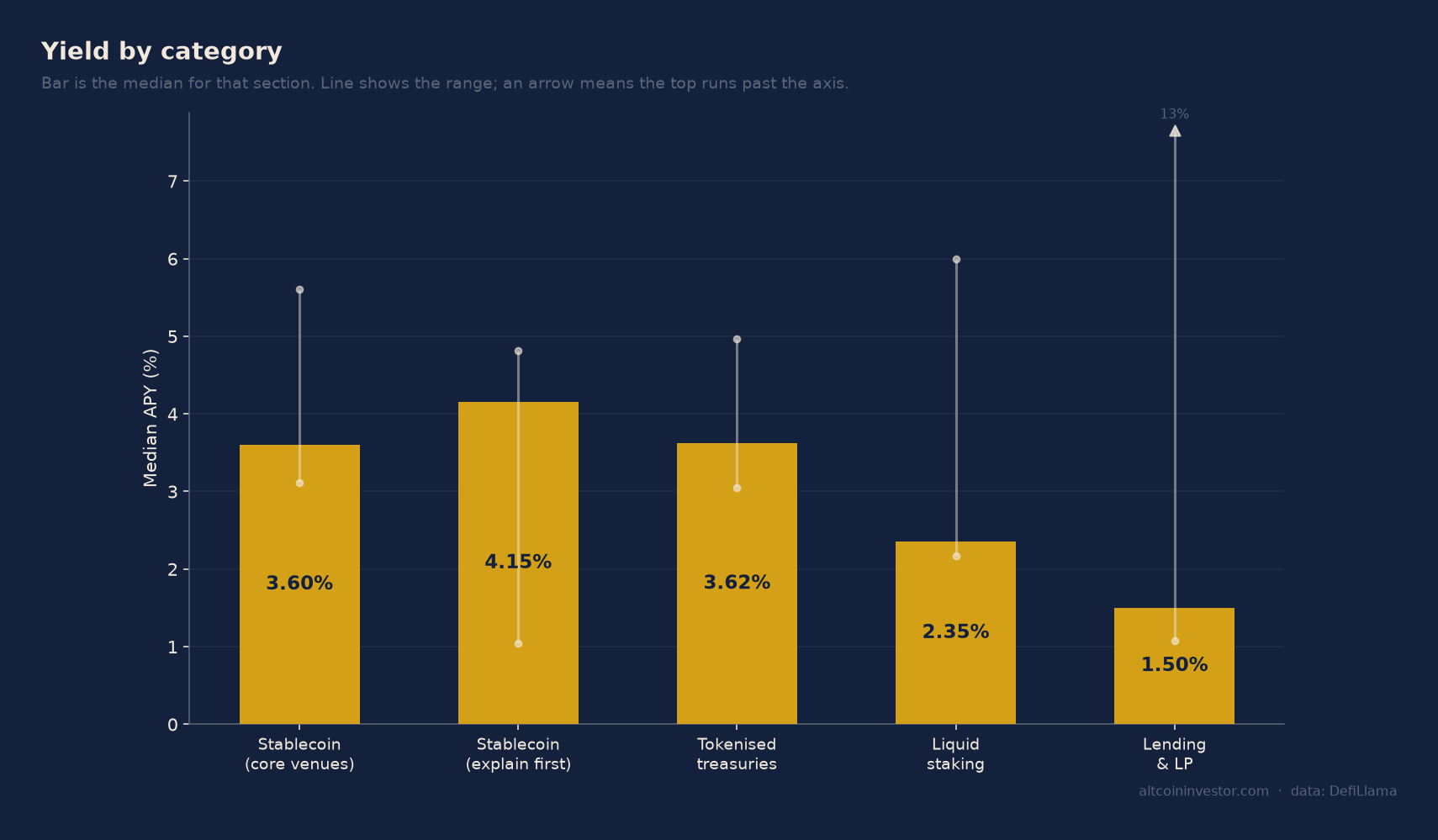
Stablecoin yields on major lending protocols cluster between 3.6% and 3.85%, with outliers at 5.61% requiring more risk examination.

How Argentine users acquire USDC, earn 4-6% yield, and preserve purchasing power against peso devaluation. The ground-truth playbook from a market few cover.

Visa has opened VisaNet settlement data to blockchain lenders, financing more than $20 billion annually in stablecoin card settlement with zero defaults recorded.

The $320 million Liquid Network breach exposed bridge risks that hit Argentine and Turkish savers hardest. Here's why sidechain vulnerabilities threaten real income flows.

Framework for evaluating yield before you deposit: source-of-return test, sustainability signals, risk stack, and the specific stress tests to apply.

Which DeFi protocols US users can access legally in 2026. Covers IP blocks, SEC enforcement risk, the distinction between using vs. providing service, and how to evaluate new protocols.